Squirrels
Which Squirrel Buster should you buy?
Eight models, one mechanism, and a price range wide enough to matter. The differences are smaller than the catalog suggests.
By Scooter M. · Published · Last updated
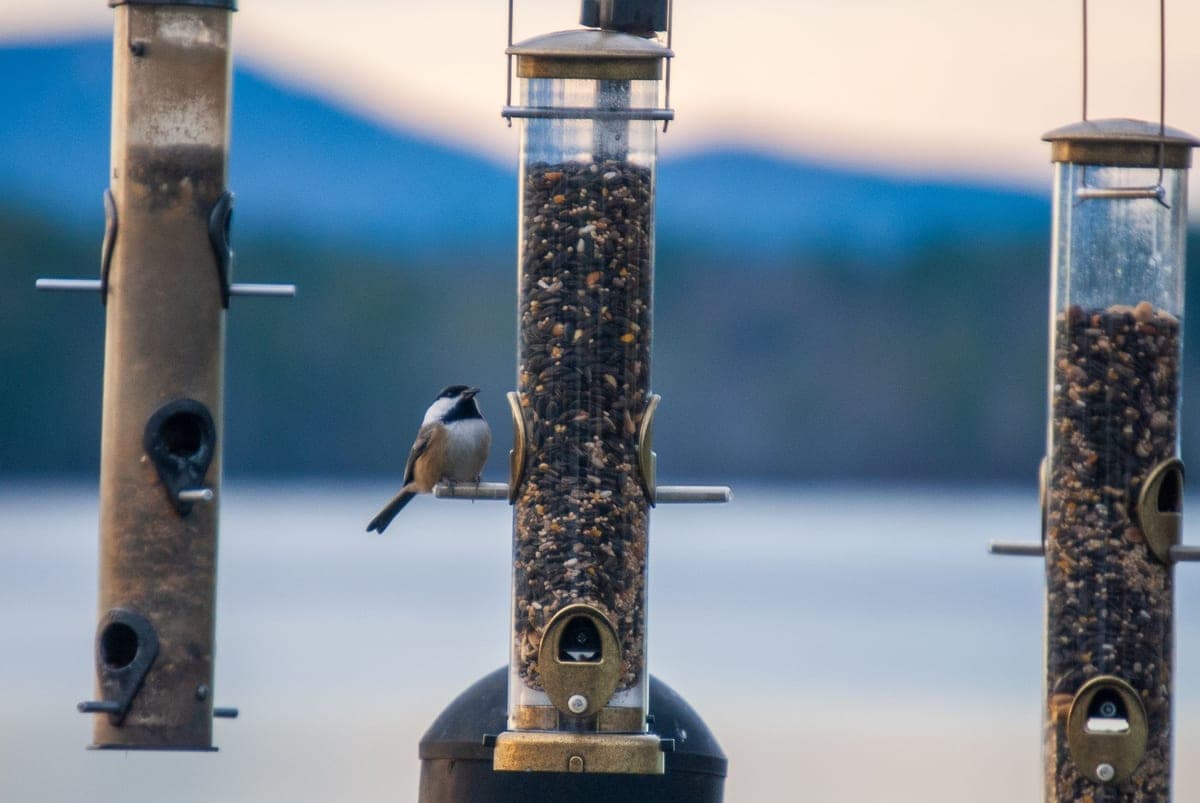
Every Squirrel Buster uses the same weight-closing shroud, so the choice is about capacity, perching and price rather than effectiveness. The Plus suits most yards and cardinals; the Legacy is the cheaper way into the same mechanism; the Mini is the smallest sensible entry point.
Seed & Sprig earns a commission when you buy through the links on this page, at no extra cost to you. It does not change which products we pick or the order we put them in — here is how we pick and here is how we are funded.
Quick picks
| # | Product | Best for | Price |
|---|---|---|---|
| 1 | 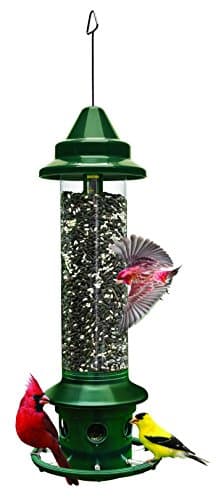 Brome Squirrel Buster Plus 5.1 lb, six ports and a cardinal ring. The one to buy if you are only buying one. | Best for most yards | $128.79 · View on Amazon #ad How we are funded · Price as of September 21, 2026 |
| 2 | 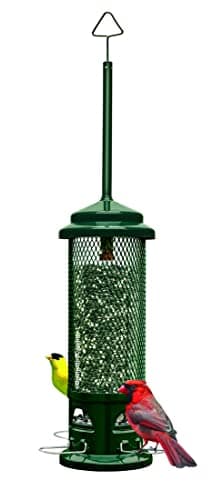 Brome Squirrel Buster Legacy Same mechanism, 2.6 lb, no cardinal ring. Most small yards need nothing more. | Best value in the range | $66.20 · View on Amazon #ad How we are funded · Price as of September 21, 2026 |
| 3 | 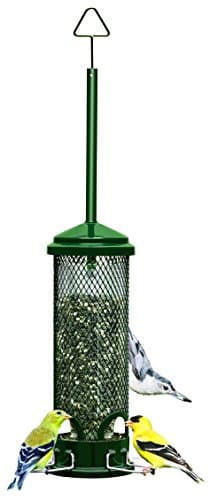 Brome Squirrel Buster Mini One pound and four perches. Small, but it is a genuine Squirrel Buster. | Cheapest way in | $36.98 · View on Amazon #ad How we are funded · Price as of September 21, 2026 |
| 4 | 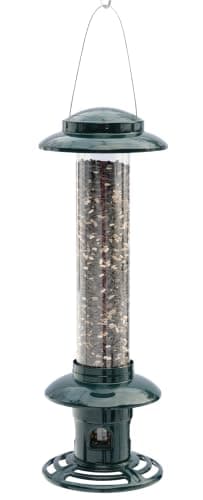 Brome Squirrel Buster Evolution A water-diversion system built for no-mess mixes and sunflower hearts. | Best for hulled seed in a wet climate | $73.18 · View on Amazon #ad How we are funded · Price as of September 21, 2026 |
| 5 | 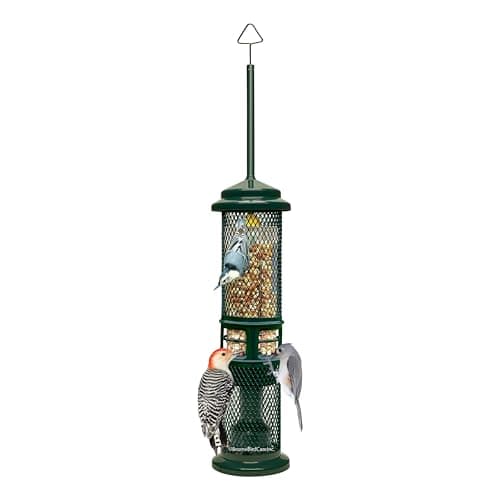 Brome Squirrel Buster Nut Feeder The same shroud around a mesh nut cage, which is the one feeder squirrels want most. | Best for peanuts | $88.76 · View on Amazon #ad How we are funded · Price as of September 21, 2026 |
| 6 | 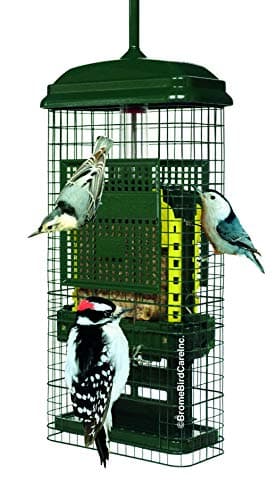 Brome Squirrel Buster Suet Feeder (model 1106) Two cakes behind a weight-closing shroud. Nothing else in suet does this. | Best for suet | $100.20 · View on Amazon #ad How we are funded · Price as of September 21, 2026 |
Rows link to the full write-up further down this page. The price button goes to Amazon.
Brome's Squirrel Buster range is the most recommended squirrel-resistant feeder line in North America, and the catalog is genuinely confusing: Plus, Legacy, Classic, Standard, Mini, Evolution, plus dedicated nut and suet models. The names do not tell you the size, the prices overlap, and the marketing for each one claims to be squirrel-proof.
The useful thing to know before you compare anything: they all work the same way. This page is about which one fits your yard. If you want the argument for the brand at all, our Squirrel Buster Plus review goes into the mechanism in depth, and our squirrel-resistant roundup compares Brome against other makers.
One mechanism, eight bodies
Every model here uses a weight-adjustable spring shroud. Openings in the shroud line up with the feeding ports; when something heavy lands, its weight pulls the shroud down and the ports close. A spring sets the threshold, and you can tune it.
That is the entire squirrel defense across the range. A Mini and a Plus present a squirrel with the same problem. So when you are comparing models, you are not comparing squirrel resistance — you are comparing how much seed it holds, which birds can perch on it, and how much you want to spend.
The range, compared
| Model | Capacity | Perching | Best suited to |
|---|---|---|---|
| Plus | 5.1 lb | 6 ports plus a cardinal ring | Most yards; the default |
| Legacy | 2.6 lb | 4 removable metal perches | Small yards wanting the same mechanism for less |
| Classic | 2.4 lb | 4 ports plus a wire mesh shroud | Clinging birds and mixed flocks |
| Evolution | 1.9 lb | Double cardinal ring | Hulled seed and wet climates |
| Standard | 1.3 lb | 4 metal perches | Balconies and small spaces |
| Mini | 1 lb | 4 perches | The cheapest entry to the mechanism |
| Nut | 1.3 lb | Mesh cage for shelled peanuts | Peanut feeding |
| Suet | 2 cakes | Shroud and crumb ports | Suet |
Two patterns are worth noticing. Capacity does not track price in a straight line — the Evolution holds less than the Legacy and costs more, because you are paying for the water system rather than volume. And the cardinal ring, which sounds like a detail, is the single biggest functional difference in the seed range: cardinals will not use a small port with no ledge, so a feeder without a ring quietly excludes the bird most people most want.
How we compared them
On Brome's own published specifications, checked against live listings in September 2026 so that every model here is currently purchasable. We have not run a squirrel trial and are not claiming one; the mechanism is identical across the range by the maker's own description, which is the fact this page is built on. We weighed capacity against spoilage risk (a big feeder is not automatically better), perching against the species most people want, and cleaning, because every one of these comes apart by hand and that is a real advantage worth spending words on. Our full criteria are here.
Capacity is a trade, not an upgrade
The instinct is to buy the biggest feeder in the range. That is right if your feeder runs empty in a day and wrong if it does not.
Five pounds of seed is a week or more of feeding in a quiet yard, and seed sitting in a tube for a week in humid weather is how mold starts. FeederWatch asks for cleaning every week or two and more often in wet weather or heavy use, which is a schedule a large feeder makes no easier. The Plus is the right buy for a busy yard that empties it; the Legacy or Classic is the right buy for a yard with a handful of regulars.
A useful test: if you currently refill your feeder more than twice a week, size up. If a feeder sits half full for days, size down and enjoy the cheaper purchase.
Which perching style suits your birds
- Cardinals, jays, grosbeaks: you need a ring. The Plus has one, the Evolution has a double one, and everything else in the range effectively does not cater for them. This is the reason the Plus stays our default recommendation.
- Chickadees, finches, titmice: any model. Small perching birds are happy on four perches, which makes the Legacy and Mini excellent value.
- Woodpeckers and nuthatches: clinging birds want a surface rather than a perch. The Classic's mesh shroud suits them; the Legacy's shroud gives clingers a grip too, by Brome's description.
- Everything at once: the Plus, or two smaller feeders in different spots, which usually beats one large one.
The specialist models
The Nut and Suet feeders are not variations on the seed feeders; they are the only weight-closing products of their kind that we have found.
The Nut feeder matters because shelled peanuts are the most squirrel-attractive food in the shed. An ordinary mesh nut feeder is emptied in a day where squirrels are active, and peanuts are expensive enough for that to sting.
The Suet feeder matters for the same reason in the other direction: every competing suet product is a cage that obstructs rather than closes, as our suet comparison sets out. If you are already buying into the Brome mechanism and squirrels are taking your suet, it is the consistent choice.
Both cost more than the food-specific alternatives, and both are only worth it if squirrels are actually raiding those feeders. If they are not, buy a plain cage and spend the difference elsewhere.
Setting the weight adjustment
The spring is adjustable on every full-size model, and it is the setting most owners never touch. It deserves five minutes, because it decides which birds can feed.
Set too light, the shroud closes under birds you wanted: a jay, a grosbeak, a red-bellied woodpecker, sometimes a dove leaning in. People read that as a faulty feeder when it is a tuning problem. Set too heavy, a large squirrel can feed without triggering it, and the mechanism you paid for does nothing.
The method is dull and it works. Hang the feeder, set the adjustment in the middle, and watch it for a few days. If squirrels are feeding, tighten one step. If the birds you want are being shut out, loosen one step. Expect to land on a setting within a fortnight, and to revisit it if you change seed — a feeder full of dense sunflower behaves slightly differently from one holding light hulled chips.
Two notes people miss. The adjustment does not distinguish between a squirrel and a heavy bird; there is no clever sensing, only weight. And a feeder swinging violently in wind can trip the mechanism, which is one more argument for a pole rather than a branch.
Which seed suits which model
Brome's range is built around sunflower and mixes, and the model you choose slightly changes what works in it.
- Black-oil sunflower in the shell: everything in the range handles it, and it is the default we recommend across the site.
- Sunflower hearts and no-mess mixes: these are the seeds that clump when damp, which is what the Evolution's water diversion is for. In a wet climate that is a real advantage; in a dry one it is a feature you will not notice.
- Safflower: works in any of them, and is worth trying if squirrels are still getting in — most leave it alone.
- Nyjer: no. The ports are wrong and it pours. Finch feeders are a separate purchase.
- Peanuts: only in the Nut model, which has mesh rather than ports.
- Cheap mixes with milo and red millet: avoid in any feeder with a weight mechanism. Rejected seed sits in the base, stays damp and clogs the shroud travel, which is how a mechanism starts sticking.
Cleaning, and what Brome's guarantee covers
The whole range dismantles by hand, and this is the practical reason we keep recommending the brand: a feeder that comes apart in thirty seconds gets washed on schedule, and a feeder that needs a screwdriver does not.
There is a mechanical reason too. The shroud slides on the body, and a build-up of seed dust and damp residue in that gap is what makes a mechanism sluggish. Most reports of a Squirrel Buster that has stopped closing properly are a cleaning problem rather than a failure. Strip it, rinse it, dry it completely, reassemble.
Brome publishes what it calls Lifetime Care on the newer listings and warrants its products against material and manufacturing defects, with damage caused by animals or weather excluded — the suet model's listing spells that exclusion out. Read that before you assume a chewed part is covered; a raccoon pulling a feeder off a hook is not a manufacturing defect. Keep the receipt, and contact the maker directly for spare parts, which is a genuine advantage over the unbranded feeders this range competes with.
What every model shares
Three things are true across the range and worth knowing before you buy any of them.
They come apart by hand. No tools, every component separable. This is the most underrated thing about the brand: a feeder that is easy to strip is a feeder that actually gets cleaned, and cleaning is the part of feeding that affects bird health.
The weight threshold is adjustable, and you have to set it. Too light and you exclude jays, grosbeaks and larger woodpeckers you might want. Too heavy and a squirrel feeds. Expect to watch the feeder for a few days after hanging it and move the setting once.
None of them survives bad placement. A weight mechanism does nothing about a squirrel that drops onto the feeder from above. The 5-7-9 rule — five feet up, seven feet clear, nine feet below a branch — decides whether the mechanism ever gets tested. A Mini on a well-placed baffled pole beats a Plus hanging from a branch, every time.
What Brome does not make
Worth knowing before you shop the range expecting to solve every feeding problem with one brand.
There is no large-capacity hopper. The biggest seed model here holds about five pounds, so if you want a feeder that runs for a fortnight between refills you are looking at a hopper from someone else, with the weaker squirrel defense that implies. There is no open tray, which means ground-feeding birds and some cardinals are served better by a platform feeder alongside. There is no finch or nyjer feeder in the range, and no camera model.
There is also nothing cheap. The Mini is the entry point and it still costs several times a plain plastic tube. If the budget is the binding constraint, the honest advice is the same one we give on the budget page: an ordinary feeder on a baffled pole beats a cheap feeder with a gimmick, and it beats stretching for a mechanism you then hang in the wrong place.
What we would buy
- One feeder, mixed birds, cardinals wanted: the Plus. It is the default for a reason.
- Small yard, a few regulars, watching the budget: the Legacy. Same mechanism, two-thirds the seed, noticeably less money.
- Balcony or a tight space: the Standard or Mini.
- You feed sunflower hearts or a no-mess mix and it rains a lot: the Evolution.
- Squirrels are raiding a peanut or suet feeder specifically: the Nut or Suet model.
- You already own any Squirrel Buster and squirrels still win: buy a baffle and a taller pole, not another feeder.
The last line is the one that saves people money. Brome's mechanism is real, and it is the same mechanism at every price in the range. Once you own it, the next improvement is never a bigger feeder — it is what the feeder hangs from.
The picks in full
#1 · Best for most yards
Brome Squirrel Buster Plus
Brome · The one feeder to buy if you only buy one
A weight-closing tube feeder with a large capacity and a cardinal ring, and the closest thing to a genuinely squirrel-resistant feeder that a beginner can hang up and stop thinking about.
Published specifications
- Seed capacity
- 5.1 lb
- Height
- 28" base to hanger
- Feeding ports
- 6, plus a cardinal ring
- Mechanism
- Weight-adjustable spring shroud
- Materials
- Chew-proof, UV-resistant components
- Warranty
- Brome Lifetime Care
What it does well
- The spring tension is adjustable, so you can shut out heavy birds as well as squirrels
- Comes apart by hand for cleaning, which means it actually gets cleaned
- 5.1 lb is enough that a busy fall week does not mean daily refills
What it does not
- The most expensive feeder in this roundup by a wide margin
- The shroud collects seed dust and needs a full strip-down every couple of weeks
- A squirrel that can reach the top hanger still wins, so this is not a substitute for a baffle
Specifications above come from the manufacturer's own published listing: Brome — Squirrel Buster Plus (manufacturer store).
#ad How we are funded · Price as of September 21, 2026
#2 · Best value in the range
Brome Squirrel Buster Legacy
Brome · The Squirrel Buster mechanism without the Plus price
Brome's middle model: the same weight-closing shroud as the Plus, 2.6 pounds of seed, four removable metal perches and no cardinal ring. For most small yards this is the sensible Squirrel Buster.
Published specifications
- Seed capacity
- 2.6 lb
- Perches
- 4 removable metal perches
- Mechanism
- Weight-adjustable spring shroud that closes the ports
- Dimensions
- 5.5" x 5.5" x 16"
- Cleaning
- Tool-free: every component comes apart by hand
- Ventilation
- Seed ventilation system, per Brome
- Model
- 1082-V01
What it does well
- The same closing mechanism as the Plus, which is the part you are actually paying Brome for
- 2.6 lb suits a yard with a few regular birds better than the Plus's 5.1 lb, which can sit and stale
- Removable perches and tool-free disassembly make cleaning genuinely quick
What it does not
- No cardinal ring, so cardinals have nowhere comfortable to stand — that is the Plus's advantage
- Still costs several times a plain tube feeder
- Like every weight feeder, it is defeated by a squirrel that can reach it from above
Specifications above come from the manufacturer's own published listing: Brome Squirrel Buster Legacy (1082) — published listing (capacity, perches, mechanism, dimensions, cleaning).
#ad How we are funded · Price as of September 21, 2026
#3 · Cheapest way in
Brome Squirrel Buster Mini
Brome · The cheapest way into a weight-closing feeder
The entry point to Brome's mechanism: four ports, one pound of seed, and the same shroud that closes under a squirrel's weight.
Published specifications
- Seed capacity
- 1 lb
- Feeding ports
- 4
- Materials
- Chew-proof and UV-resistant components, transparent seed tube
- Warranty
- Brome Lifetime Care
What it does well
- The least expensive feeder in Brome's line, so the mechanism is testable without committing
- Tool-free disassembly, same as the bigger models
What it does not
- One pound is a day or two of feeding at a busy station
- Too small to be your only feeder if you want variety
Specifications above come from the manufacturer's own published listing: Brome — Squirrel Buster Mini (manufacturer store).
#ad How we are funded · Price as of September 21, 2026
#4 · Best for hulled seed in a wet climate
Brome Squirrel Buster Evolution
Brome · Sunflower hearts and no-mess mixes in a wet climate
The newest model, built around a water-diversion system and a double cardinal ring, and aimed at the hulled seed that spoils fastest when it gets wet. A narrow purpose, well served.
Published specifications
- Seed capacity
- 1.9 lb
- Perching
- Double cardinal ring
- Water handling
- Two-part diverter with trough, spout and a drip edge above each port
- Intended seed
- No-mess and mixed seed, sunflower hearts (listing)
- Dimensions
- 6.5" x 6.5" x 22.5"
- Model
- 1134-V03
What it does well
- The water diverter targets the exact failure of hulled seed, which absorbs damp and clumps
- A double ring means cardinals and jays can perch, not just cling
- Same tool-free cleaning and weight mechanism as the rest of the range
What it does not
- 1.9 lb is the smallest capacity of the full-size Squirrel Busters, so it needs refilling more often
- You are paying a premium for rain protection that a simple weather dome also provides
- Newest model in the range, so there is less long-term owner feedback than the Plus or Classic
Specifications above come from the manufacturer's own published listing: Brome Squirrel Buster Evolution (1134) — published listing (capacity, cardinal ring, water diversion, dimensions).
#ad How we are funded · Price as of September 21, 2026
#5 · Best for peanuts
Brome Squirrel Buster Nut Feeder
Brome · Shelled peanuts without feeding the entire local squirrel population
A peanut feeder with the weight-closing shroud, which matters more here than anywhere else, because peanuts are the single most squirrel-attractive thing you can hang up.
Published specifications
- Capacity
- 1.3 lb
- Food
- Shelled peanuts, other nuts, or dried fruit
- Mechanism
- Weight-closing shroud
What it does well
- Peanuts draw woodpeckers, jays, titmice and nuthatches faster than seed does
- The mechanism is the only realistic way to run peanuts near squirrels
What it does not
- Expensive for a feeder that holds 1.3 lb
- Shelled peanuts spoil in damp weather and have to be kept dry
Specifications above come from the manufacturer's own published listing: Brome — Squirrel Buster Nut Feeder (manufacturer store).
#ad How we are funded · Price as of September 21, 2026
#6 · Best for suet
Brome Squirrel Buster Suet Feeder (model 1106)
Brome · The one suet feeder with a mechanism rather than an obstacle
Two suet cakes behind a weight-adjustable shroud that drops over the ports when a squirrel's weight lands on it, from the maker of the Squirrel Buster seed feeders. It is the only suet feeder we found that closes rather than merely getting in the way.
Published specifications
- Capacity
- 2 suet cakes, 5 x 5 inch
- Mechanism
- Weight-adjustable spring shroud; extra weight closes the feeding ports
- Dimensions
- 8.68" W x 4.5" D x 18.63" H
- Extras
- Two crumb ports that catch falling suet
- Cleaning
- Dismantles by hand into components, no tools
- Model
- 1106
- Warranty
- Against material and manufacturing defects; damage caused by animals or weather is excluded, per Brome
What it does well
- The shroud closes under weight, which is a mechanism; every cage on this page is only an obstacle
- Comes apart by hand, and a greasy suet feeder only gets cleaned if cleaning is easy
- Crumb ports keep broken suet in the feeder instead of on the ground, where it feeds rodents
What it does not
- It costs several times what a plain steel suet cage costs, and that is the real decision
- Two cakes is the entire capacity; in hard weather it needs refilling like anything else
- A weight mechanism does nothing about a squirrel that reaches the feeder from a branch or a rail, so placement still decides the result
- Brome's own warranty excludes animal damage, which is worth reading before you hang it somewhere exposed
Specifications above come from the manufacturer's own published listing: Brome Squirrel Buster Suet (1106) — published listing (mechanism, capacity, dimensions, crumb ports, warranty).
#ad How we are funded · Price as of September 21, 2026
Common questions
Are the expensive Squirrel Busters more squirrel-proof?
No. Every model uses the same weight-adjustable shroud. The extra money buys seed capacity, perching for cardinals and, on the Evolution, water diversion — not a better squirrel defense.
What is the difference between the Squirrel Buster Plus and Legacy?
Capacity and perching. The Plus holds 5.1 lb and has a cardinal ring; the Legacy holds 2.6 lb with four removable perches and no ring. The mechanism is identical.
Which Squirrel Buster is best for cardinals?
The Plus, or the Evolution. Cardinals need somewhere to stand, and the cardinal ring is the feature that provides it. Models without a ring largely exclude them.
Is the Squirrel Buster Mini worth buying?
Yes, as the cheapest genuine entry to the mechanism. One pound of seed means frequent refills, but it stops squirrels exactly the way the larger models do.
Do I still need a baffle with a Squirrel Buster?
If the feeder can be reached from above or from a fence, yes. The weight mechanism only works when a squirrel has to climb onto the feeder itself.