Feeder Types
Bird feeder materials, and which parts must be metal
The question is not which material is best. It is which part is made of what.
By Scooter M. · Published · Last updated
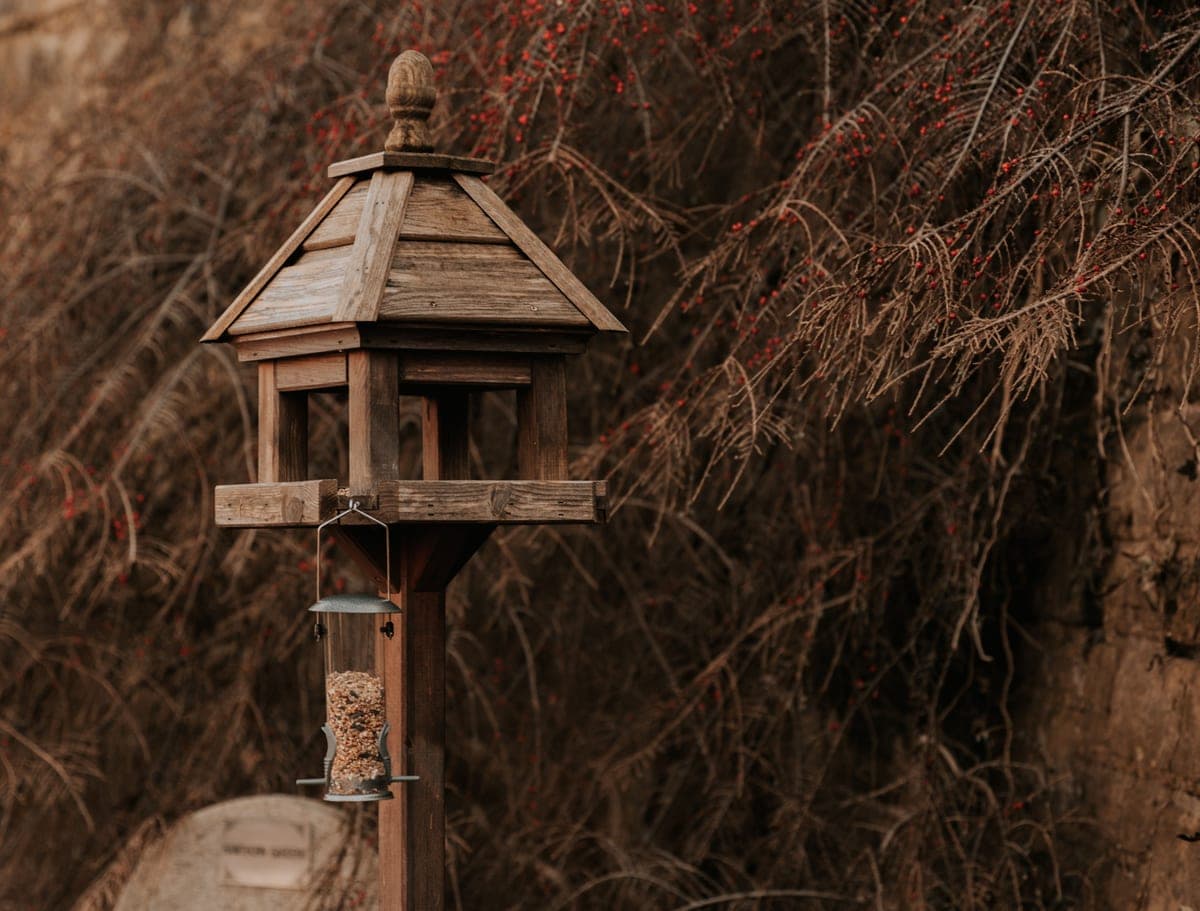
The parts squirrels chew — ports, caps and hangers — should be metal. The body can be UV-stabilized polycarbonate or cedar without penalty. Avoid all-plastic feeders with molded ports: squirrels open them, and thin plastic goes brittle in a freeze.
Seed & Sprig earns a commission when you buy through the links on this page, at no extra cost to you. It does not change which products we pick or the order we put them in — here is how we pick and here is how we are funded.
“Best bird feeder material” is a real search and the useful answer is component-level rather than product-level. Almost every feeder worth buying is a mix, and what matters is which material is used where.
The three materials
| Material | Good at | Fails at | Use it for |
|---|---|---|---|
| Powder-coated metal | Chew resistance, freeze resistance, longevity | Weight, cost, and it can rust where the coating is chipped | Ports, caps, bases, hangers, poles, baffles |
| UV-stabilized polycarbonate | Seeing the seed level, light weight, not shattering | Squirrel teeth; cheap grades yellow and craze in sun | Tube bodies |
| Cedar | Rot resistance without treatment, looks, no condensation | Chewing, and it needs drainage designed in | Trays, hoppers, suet cage panels |
| Thin untreated plastic | Being cheap | Everything else — chewing, UV, freezing | Nothing you intend to keep |
The rule that matters
Metal wherever a squirrel puts its teeth. That means the feeding ports, the cap and the hanger. A polycarbonate tube with metal ports survives; the identical tube with molded plastic ports gets opened, and you buy it twice.
Droll Yankees publishes exactly that combination for the Onyx line: a UV-stabilized polycarbonate tube with a black cap, base and ports made of heavy metal and powder-coated. That is the shape to look for.
Cedar, and why it is not just decorative
Cedar is naturally rot-resistant, which is why it is used for trays and hoppers that sit in the rain — Nature's Way publishes premium cedar with stainless steel screws and a powder-coated galvanized steel seed tray on its platform feeder. The wood handles the weather; the metal handles the part that holds wet seed.
What cedar does not handle is chewing. A cedar feeder in a squirrel yard needs a baffle more than a plastic one does, because a squirrel will widen a cedar port rather than crack it.
Materials and cleaning
The material decides how easy the every-week-or-two clean is. Smooth polycarbonate wipes out. Powder-coated metal takes hot soapy water fine. Cedar cannot be soaked indefinitely and should be scrubbed, rinsed and dried rather than left in a bucket. Whatever the material, it must come apart — the cleaning routine is here.
What about glass, ceramic and copper?
They exist, they look good, and they are decorative purchases rather than functional ones. Glass and ceramic break when a full feeder comes off a hook in a gale. Copper looks excellent and is soft. None of them is wrong; just buy them knowing you are buying the look. If cedar is what you are after, our wooden feeder picks are here.
The short version
- Metal ports, cap and hanger. Non-negotiable if squirrels exist.
- Polycarbonate or cedar body, both fine.
- Stainless or coated hardware, because rust seizes the parts you need to open.
- Drainage designed in, whatever it is made of.
- Nothing thin, cheap and unrated — you will buy it again in a year.
What we would buy for this
#1 · Best material mix
Droll Yankees Onyx Clever Clean 18" Sunflower Tube Feeder
Droll Yankees · A plain, well-made first tube feeder
A straightforward polycarbonate tube whose base twists off in seconds, which is the single feature that decides whether a feeder gets cleaned or quietly turns into a health problem.
Published specifications
- Seed capacity
- 2 lb
- Height
- 18"
- Feeding ports
- 4
- Materials
- UV-stabilized polycarbonate tube; powder-coated metal cap, base and ports
- Cleaning
- Twist-and-release removable base; one-touch top opening
What it does well
- The removable base turns cleaning from a chore into a two-minute job
- Metal ports resist squirrel chewing better than all-plastic tubes
- Short perches keep grackles and jays off without excluding finches
What it does not
- No squirrel mechanism at all, so this feeder needs a baffle or a pole
- Four ports fill up quickly at a busy station
Specifications above come from the manufacturer's own published listing: Droll Yankees Onyx Clever Clean published specifications.
#2 · Best cedar build
Nature's Way Cedar Platform Tray Feeder (CWF3)
Nature's Way · Cardinals, jays, doves and anything that will not use a tube
An open cedar tray with a removable screen bottom, which is the honest answer for the big ground-feeding birds a tube feeder quietly excludes.
Published specifications
- Dimensions
- 12" x 12" x 2.25"
- Capacity
- 3 quarts
- Materials
- Premium cedar, stainless steel screws, powder-coated galvanized steel seed tray
- Drainage
- Removable screen tray for drainage and airflow
What it does well
- Cardinals and jays use it immediately; they often will not use a small tube port
- The screen bottom drains, which is the difference between a tray and a puddle
- Nothing to break, and it cleans in a minute
What it does not
- Completely open to squirrels, so this one belongs on a baffled pole or nowhere
- Seed is exposed to rain even with drainage, so put out small amounts
Specifications above come from the manufacturer's own published listing: Nature's Way CWF3 published specifications.
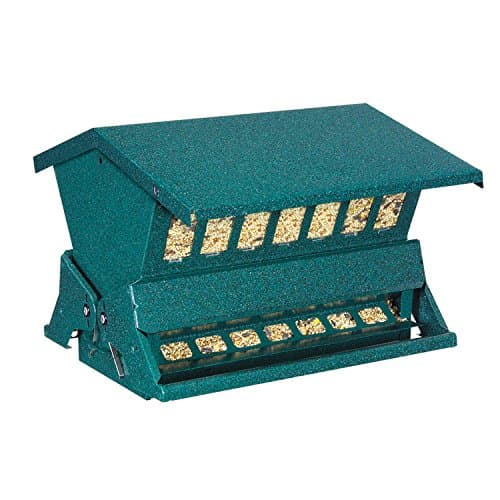
#3 · Best steel build
Woodlink Absolute II (model 7536)
Woodlink · Big capacity and cardinals — the hopper answer to squirrels
A double-sided steel hopper whose counterweighted perches drop a shield over the seed tray when something heavy lands, and it holds twelve pounds so it barely needs attention.
Published specifications
- Seed capacity
- 12 lb
- Dimensions
- 16" W x 11.25" H x 13.5" D
- Feeding ports
- 6 (both sides)
- Mechanism
- Two counterbalanced perches, adjustable to three weight settings
- Materials
- Steel and acrylic
What it does well
- 12 lb capacity means refills measured in weeks, not days
- Perch tension adjusts for light, medium or heavy birds
- The long perch rail suits cardinals, which will not use a small tube port
What it does not
- Twelve pounds of seed is heavy, so the hook or pole has to be rated for it
- Seed sitting for weeks in wet weather is how mold starts; a big hopper needs the same cleaning discipline as a small one
Specifications above come from the manufacturer's own published listing: Woodlink Absolute II published specifications.
#ad How we are funded · Price as of October 22, 2026
Common questions
What is the best bird feeder material?
A mix: metal ports, cap and hanger with a UV-stabilized polycarbonate or cedar body. Material choice matters per component, not per feeder.
Are metal bird feeders better than plastic?
For the parts squirrels chew, yes. For the body, a good polycarbonate tube is lighter, lets you see the seed level, and does not rust.
Are cedar bird feeders any good?
Cedar is naturally rot-resistant and excellent for trays and hoppers. It is not chew-resistant, so it needs a baffle where squirrels are active.
Do plastic bird feeders last?
UV-stabilized polycarbonate does. Thin untreated plastic goes brittle in a freeze and yellows in sun, and squirrels open molded plastic ports.