Squirrels
Squirrel-proof feeders cardinals will actually use
Solving squirrels usually costs you cardinals. It does not have to, but only a handful of feeders get both right.
By Scooter M. · Published · Last updated
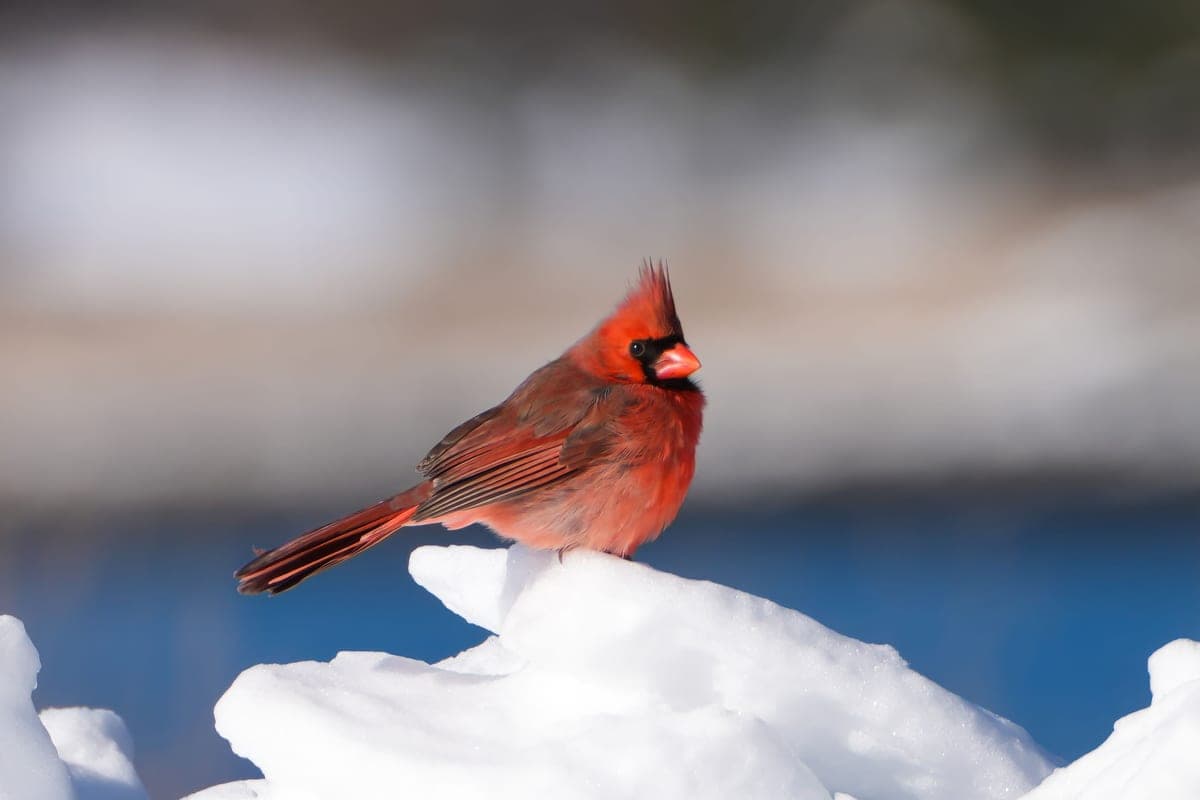
Cardinals need somewhere to stand, so a squirrel-resistant feeder only works for them if it has a cardinal ring, a long perch rail or a tray. Set the weight threshold on the heavy side, because a cardinal is heavy enough to trip a mechanism tuned for chickadees.
Seed & Sprig earns a commission when you buy through the links on this page, at no extra cost to you. It does not change which products we pick or the order we put them in — here is how we pick and here is how we are funded.
Quick picks
| # | Product | Best for | Price |
|---|---|---|---|
| 1 | 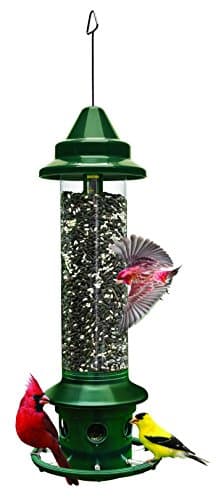 Brome Squirrel Buster Plus The cardinal ring is the feature that matters, and the spring is adjustable to keep them. | Best overall | $124.00 · View on Amazon #ad How we are funded · Price as of October 3, 2026 |
| 2 | 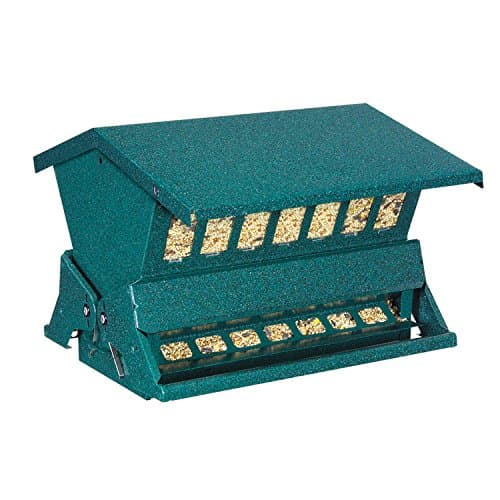 Woodlink Absolute II (model 7536) Full-length rails on both sides, twelve pounds, weight-adjustable closure. | Best for a group of cardinals | $84.00 · View on Amazon #ad How we are funded · Price as of October 3, 2026 |
| 3 | 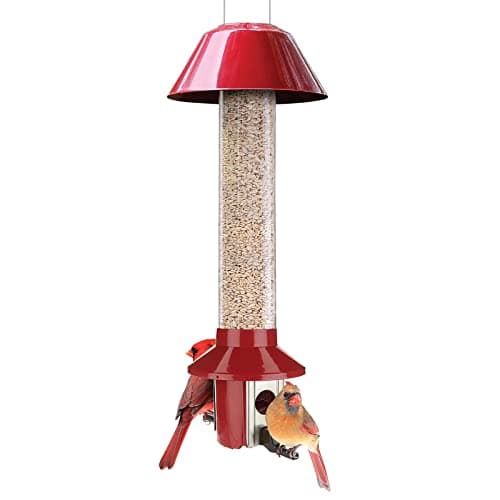 Roamwild PestOff Cardinal Feeder (Sunflower Heart Version) Built around cardinals on sunflower hearts, with sprung ports and dual baffles. | Best value | $44.99 · View on Amazon #ad How we are funded · Price as of October 3, 2026 |
| 4 | 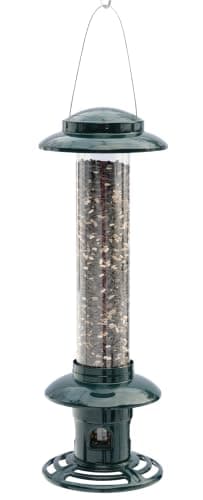 Brome Squirrel Buster Evolution Double cardinal ring plus a water diverter, for hearts and no-mess mixes. | Best in a wet climate | $73.08 · View on Amazon #ad How we are funded · Price as of October 3, 2026 |
| 5 | NWno photo Nature's Way Cedar Platform Tray Feeder (CWF3) An open tray. Not squirrel-resistant at all, which is why it needs the baffle below. | What cardinals actually prefer | |
| 6 | Eno photo Erva SB1D Cylindrical (Torpedo) Squirrel Baffle A baffle under any of them beats every mechanism above them. | The part that does the real work |
Rows link to the full write-up further down this page. The price button goes to Amazon.
Cardinals are the bird most people start feeding for, and squirrel-proofing is the problem most people solve second. The two goals pull against each other more than anyone selling feeders admits: a great many squirrel-resistant feeders work by excluding anything heavier than a finch, and a cardinal is heavier than a finch.
This page is about the overlap — which squirrel-resistant designs keep cardinals, and how to set them up so they do. If your question is the broader one of attracting cardinals at all, our cardinal feeder and seed roundup covers that, and our squirrel-resistant roundup covers mechanisms without the cardinal constraint.
Why cardinals get excluded
Two reasons, and they are both about the bird's body rather than its temperament.
Cardinals perch, they do not cling. A chickadee or a nuthatch will hang off a short peg or grip a mesh surface at any angle. A cardinal wants to stand on something flat and reasonably wide, facing the food. Audubon's account of the Northern Cardinal is of a bird that forages low and on the ground, which is the behavior a tray or a wide ring satisfies and a stubby tube perch does not.
Cardinals are heavy enough to trip mechanisms. A weight-activated feeder closes at a threshold. Set that threshold low enough to stop a squirrel reliably and you are close to the weight of a cardinal, especially two cardinals at once. People then report that the feeder “does not work” when in fact it is working exactly as configured.
Which gives the two design features worth paying for: somewhere to stand, and a threshold you can move.
What works, by design
| Design | Cardinals? | Why |
|---|---|---|
| Weight-closing tube with a cardinal ring | Yes | The ring is a continuous perch at the right height below the ports |
| Weight-closing hopper with long rails | Yes, several at once | A rail along each side is the closest thing to a tray with a mechanism attached |
| Sprung-port tube sold for cardinals | Yes | Ports close individually and the perch is sized for a bigger bird |
| Weight-closing tube with short perches only | Rarely | Nowhere to stand; cardinals land, shuffle and leave |
| Caged feeder | No | Mesh sized for small birds excludes them by definition |
| Open tray on a baffled pole | Best of all | No mechanism to trip, and the shape cardinals prefer — but the baffle does all the work |
Note the last row, because it is the honest answer for a lot of yards. If you are willing to put a pole in the ground and baffle it properly, an open tray feeds cardinals better than any squirrel-resistant feeder, and the squirrel problem is solved by geometry rather than by the feeder. The mechanisms matter most when a pole is not available.
How we chose these
On published manufacturer specifications, checked against live listings in October 2026 so every pick is currently purchasable. No testing claim: we have not run feeders against squirrels or counted cardinals, and nobody should trust a site that says it has without showing the method. Ranking went: is there a genuine perch a cardinal can stand on; is the weight threshold adjustable or at least published; does the design tolerate the seed cardinals actually eat; and then price. Our full criteria are here.
Two picks are deliberately not squirrel-resistant feeders. The tray is there because it is what cardinals prefer, and the baffle is there because it is what makes the tray viable. Leaving them out would make the page tidier and less useful.
Setting the threshold so cardinals stay
If you buy an adjustable feeder, this section is the one that decides your result — and it is the step most owners skip entirely.
The spring sets how much weight closes the ports. Tune it tight and you will exclude grackles, jays, doves and, at the limit, cardinals. Tune it loose and a thin squirrel feeds happily. There is no sensor distinguishing species; there is only mass.
The method: hang the feeder, set the adjustment mid-range, and watch for a few days. If cardinals land and the ports shut, loosen one step. If squirrels feed, tighten one step. Expect to land on a setting inside a fortnight. A pair of cardinals arriving together weighs more than one, so test against the behavior you actually see rather than a single visit.
Two practical notes. A feeder swinging hard in wind can trip its own mechanism, which is another argument for a pole over a branch. And if you cannot get a setting that admits cardinals and excludes squirrels, the problem is almost never the spring — it is that the squirrel can reach the feeder without using the perch, which is a placement problem.
Seed matters as much as the feeder
You can shift this contest with the bag as well as the hardware, and it is the cheapest lever available.
Safflower is the classic move: cardinals take it readily and most squirrels leave it alone. It is a preference rather than a rule — a hungry squirrel with no alternative will eat it — but in a yard with other food around it genuinely reduces raiding. The honest version of the safflower claim is here.
Black-oil sunflower is what cardinals want most, and what squirrels want most. It is the right seed if your hardware is sound and the wrong one if it is not.
Sunflower hearts suit cardinals and leave no shells, which matters on a deck. They spoil faster, so fill part-way — the hulled-seed trade is here.
Cheap mixes with milo and red millet are the worst choice on this page: cardinals discard the filler, the rejected seed collects in the base of a weight feeder, and damp filler is what makes a mechanism sticky. How to read the bag is here.
The cheapest answer: a tray on a baffled pole
Before spending on a mechanism, it is worth being honest about what the mechanism is for. Weight-activated feeders exist because many people cannot put a pole in the ground — renters, paved yards, decks, borrowed gardens. If you can put a pole in the ground, the calculation changes completely.
An open cedar tray is the feeder cardinals prefer: a flat surface at a comfortable height, wide enough for two birds, with no mechanism to trip and no threshold to tune. On a pole with a proper baffle, sited to the clearance distances, the squirrel never reaches it. The combined cost of a tray, a pole and a baffle is comparable to one premium weight feeder, and the result is better for the bird.
The trade-offs are real and worth stating. An open tray gets wet, so it needs a drainage screen rather than a solid pan, and it needs sweeping out. It feeds everything that lands — jays, doves, grackles — which is a feature if you like them and a problem if you do not. And it drops more seed on the ground, so the patch underneath needs attention.
Our honest ranking for a yard with ground available: tray plus baffled pole first, weight feeder second. For everyone else, the weight feeders above. Tray and platform options are compared here.
Jays, grackles and the collateral damage
Here is the complication nobody warns you about: the threshold that admits a cardinal usually admits everything a cardinal's size and up.
A blue jay is in the same weight neighborhood. So is a grackle, a dove and a red-winged blackbird. Tune a feeder generously enough for cardinals and you have effectively tuned it for the whole large-bird cohort — which is fine if you enjoy jays, and frustrating if your actual complaint was a grackle flock stripping the feeder in a morning.
If that is your situation, the answer is not the threshold. It is to run two feeders with different jobs: a caged or short-perch tube that only small birds can use, plus a cardinal-friendly feeder you accept the jays will share. The full bully-bird playbook is here, and two separated feeders usually beat one compromise.
The other lever is timing and quantity. Flocks hit a full feeder hardest; putting out less, more often, makes a yard less worth a grackle's time while barely affecting the resident cardinals that visit all day.
If you already own a feeder cardinals avoid
Do not replace it yet. Three cheap checks first, in this order.
- Loosen the weight setting if it has one, one step at a time, and watch for a few days. A great many “cardinals will not use it” reports are a spring tuned for chickadees.
- Add a tray underneath. A seed catcher tray below a tube feeder gives a cardinal somewhere to stand and catches what the small birds flick out. It is the cheapest way to make a tube cardinal-friendly, and the options are here.
- Move it closer to cover. Cardinals are wary and will skip an exposed feeder they can see no escape from. Ten feet from a shrub changes behavior more than new hardware does.
If all three fail, then buy a feeder with a ring or a rail. But in our experience the order above solves it more often than a purchase does, and the general empty-feeder checklist covers the rest of the diagnosis.
The placement half, which is free
Every mechanism on this page is a second line of defense. The first line costs nothing and is published: the 5-7-9 rule — five feet of height, seven feet of clearance from anything a squirrel can launch off, nine feet below an overhanging branch.
There is a cardinal-specific refinement worth adding. Cardinals are wary birds that like cover within a short flight, and FeederWatch's general guidance is for feeders near natural cover at roughly ten feet from dense branches — close enough for an escape route, far enough that nothing can jump in. That distance is also what the squirrel rule asks for, which is convenient: the placement that keeps squirrels off is the placement cardinals like.
Height is the other cardinal detail. They will use a feeder at five or six feet happily, and they will use a tray at waist height even more happily. Our placement guide has the distances, and the baffle guide has the hardware.
When cardinals feed, and why it matters here
One timing detail makes a measurable difference and costs nothing.
Cardinals are famously the first birds at a feeder in the morning and the last to leave at dusk — they tolerate low light better than most feeder birds. Squirrels, by contrast, are daytime animals. That partial separation is a free advantage: a feeder that is full at first light serves cardinals at the hour squirrels are least active.
The practical version: top up in the evening rather than mid-morning, so the feeder is full for the dawn visit. If squirrels are emptying it by noon, you have at least given the birds you bought it for the best part of the day. In a bad squirrel yard, some people go further and bring feeders in overnight for raccoons — which is a different animal and a different page — but the dawn-fill habit is worth having regardless.
What we would buy
- One feeder, cardinals and squirrels both: the Squirrel Buster Plus. The ring plus the adjustable spring is the combination, and it is why it is our default everywhere.
- Several cardinals, or cardinals and jays: the Absolute II, for rails on both sides and capacity to match the traffic.
- Watching the budget: the PestOff Cardinal version. A real mechanism, cardinal-sized perching, a third of the Brome price.
- Hulled seed in a wet climate: the Evolution, for the double ring and the water diverter.
- You can put a pole in the ground: an open cedar tray on a baffled pole, and skip the mechanisms entirely. It is what cardinals prefer and it costs less.
The thing to take away is that this tension is a design problem with known solutions, not a trade-off you have to accept. A cardinal needs a perch and a threshold set in its favor. Get both, put the feeder where a squirrel has to climb to reach it, and you do not have to choose between the bird you wanted and the animal you did not.
The picks in full
#1 · Best overall
Brome Squirrel Buster Plus
Brome · The one feeder to buy if you only buy one
A weight-closing tube feeder with a large capacity and a cardinal ring, and the closest thing to a genuinely squirrel-resistant feeder that a beginner can hang up and stop thinking about.
Published specifications
- Seed capacity
- 5.1 lb
- Height
- 28" base to hanger
- Feeding ports
- 6, plus a cardinal ring
- Mechanism
- Weight-adjustable spring shroud
- Materials
- Chew-proof, UV-resistant components
- Warranty
- Brome Lifetime Care
What it does well
- The spring tension is adjustable, so you can shut out heavy birds as well as squirrels
- Comes apart by hand for cleaning, which means it actually gets cleaned
- 5.1 lb is enough that a busy fall week does not mean daily refills
What it does not
- The most expensive feeder in this roundup by a wide margin
- The shroud collects seed dust and needs a full strip-down every couple of weeks
- A squirrel that can reach the top hanger still wins, so this is not a substitute for a baffle
Specifications above come from the manufacturer's own published listing: Brome — Squirrel Buster Plus (manufacturer store).
#ad How we are funded · Price as of October 3, 2026
#2 · Best for a group of cardinals
Woodlink Absolute II (model 7536)
Woodlink · Big capacity and cardinals — the hopper answer to squirrels
A double-sided steel hopper whose counterweighted perches drop a shield over the seed tray when something heavy lands, and it holds twelve pounds so it barely needs attention.
Published specifications
- Seed capacity
- 12 lb
- Dimensions
- 16" W x 11.25" H x 13.5" D
- Feeding ports
- 6 (both sides)
- Mechanism
- Two counterbalanced perches, adjustable to three weight settings
- Materials
- Steel and acrylic
What it does well
- 12 lb capacity means refills measured in weeks, not days
- Perch tension adjusts for light, medium or heavy birds
- The long perch rail suits cardinals, which will not use a small tube port
What it does not
- Twelve pounds of seed is heavy, so the hook or pole has to be rated for it
- Seed sitting for weeks in wet weather is how mold starts; a big hopper needs the same cleaning discipline as a small one
Specifications above come from the manufacturer's own published listing: Woodlink Absolute II published specifications.
#ad How we are funded · Price as of October 3, 2026
#3 · Best value
Roamwild PestOff Cardinal Feeder (Sunflower Heart Version)
Roamwild · Cardinals, on a feeder squirrels and large birds cannot work
A tough tube with dual baffles and spring-loaded ports that close under weight, sold specifically for cardinals and mixed seed. The one squirrel-resistant feeder built around the bird most people want.
Published specifications
- Capacity
- Listed as 3 lb in the title and up to 4 lb in the features
- Mechanism
- Patented spring-loaded ports close when a larger animal lands, reopening for songbirds; no settings to adjust
- Baffles
- Dual baffles against squirrels and large birds
- Weather
- Integrated rain guard
- Dimensions
- 20.5" x 7.5" x 7.5" with hanger, per the title
- Seed
- Sunflower heart and mixed seed version
- Model
- RF001
What it does well
- Nothing to adjust: the ports are individually sprung, so there is no weight setting to get wrong
- A rain guard as standard, which matters more with sunflower hearts than with seed in the shell
- Cheaper than the comparable Brome models while using a mechanism of the same kind
What it does not
- The listing gives two different capacities, which is sloppy and makes the real figure unclear
- Sunflower hearts spoil faster than seed in the shell, so the capacity is best used part-full
- A fixed spring has no adjustment, which cuts both ways: nothing to misconfigure, nothing to tune
Specifications above come from the manufacturer's own published listing: Roamwild PestOff Cardinal Feeder (RF001) — published listing (mechanism, baffles, rain guard, dimensions).
#ad How we are funded · Price as of October 3, 2026
#4 · Best in a wet climate
Brome Squirrel Buster Evolution
Brome · Sunflower hearts and no-mess mixes in a wet climate
The newest model, built around a water-diversion system and a double cardinal ring, and aimed at the hulled seed that spoils fastest when it gets wet. A narrow purpose, well served.
Published specifications
- Seed capacity
- 1.9 lb
- Perching
- Double cardinal ring
- Water handling
- Two-part diverter with trough, spout and a drip edge above each port
- Intended seed
- No-mess and mixed seed, sunflower hearts (listing)
- Dimensions
- 6.5" x 6.5" x 22.5"
- Model
- 1134-V03
What it does well
- The water diverter targets the exact failure of hulled seed, which absorbs damp and clumps
- A double ring means cardinals and jays can perch, not just cling
- Same tool-free cleaning and weight mechanism as the rest of the range
What it does not
- 1.9 lb is the smallest capacity of the full-size Squirrel Busters, so it needs refilling more often
- You are paying a premium for rain protection that a simple weather dome also provides
- Newest model in the range, so there is less long-term owner feedback than the Plus or Classic
Specifications above come from the manufacturer's own published listing: Brome Squirrel Buster Evolution (1134) — published listing (capacity, cardinal ring, water diversion, dimensions).
#ad How we are funded · Price as of October 3, 2026
#5 · What cardinals actually prefer
Nature's Way Cedar Platform Tray Feeder (CWF3)
Nature's Way · Cardinals, jays, doves and anything that will not use a tube
An open cedar tray with a removable screen bottom, which is the honest answer for the big ground-feeding birds a tube feeder quietly excludes.
Published specifications
- Dimensions
- 12" x 12" x 2.25"
- Capacity
- 3 quarts
- Materials
- Premium cedar, stainless steel screws, powder-coated galvanized steel seed tray
- Drainage
- Removable screen tray for drainage and airflow
What it does well
- Cardinals and jays use it immediately; they often will not use a small tube port
- The screen bottom drains, which is the difference between a tray and a puddle
- Nothing to break, and it cleans in a minute
What it does not
- Completely open to squirrels, so this one belongs on a baffled pole or nowhere
- Seed is exposed to rain even with drainage, so put out small amounts
Specifications above come from the manufacturer's own published listing: Nature's Way CWF3 published specifications.
#6 · The part that does the real work
Erva SB1D Cylindrical (Torpedo) Squirrel Baffle
Erva · Pole-mounted feeders
A long steel cylinder a squirrel cannot get around or hug past, and the single most effective thing you can buy after the feeder itself.
Published specifications
- Length
- 16.75"
- Diameter
- 6.25"
- Type
- Pole-mounted cylindrical baffle
What it does well
- Length is what defeats a squirrel here: it cannot reach past the top
- Steel, so it survives winters and chewing
What it does not
- Useless if the pole sits within jumping distance of a fence, wall or branch
- Must be mounted high enough that a squirrel cannot leap over it entirely
Specifications above come from the manufacturer's own published listing: Erva SB1D published dimensions.
Common questions
Do squirrel-proof feeders keep cardinals out?
Many do, unintentionally. Feeders with only short perches give a cardinal nowhere to stand, and a weight threshold set tight enough for squirrels can be light enough to close under a cardinal. Look for a cardinal ring or a long rail.
What is a cardinal ring?
A continuous circular perch below the feeding ports, wide enough for a bird to stand on facing the seed. It is the single feature that decides whether a tube feeder works for cardinals.
Will cardinals use a caged feeder?
Generally no. The mesh is sized to admit small birds and exclude larger ones, and a cardinal counts as larger. Cages are for keeping grackles and starlings off, not for cardinals.
How should I set the weight adjustment for cardinals?
On the heavier side, then tighten only if squirrels feed. Watch for a few days: if cardinals land and the ports close, loosen one step. A pair arriving together weighs more than one.
What seed keeps squirrels off but still attracts cardinals?
Safflower. Cardinals take it readily and most squirrels leave it alone, though a hungry squirrel with no alternative will eat it. It shifts the odds rather than settling the question.
Is a tray feeder better for cardinals?
Yes, by some margin — it is the shape they prefer. It has no squirrel resistance at all, so it only works on a properly baffled pole in open ground.