Feeder Types
Platform feeders, and the cardinals you have been missing
The simplest feeder there is, the most inclusive, and the most exposed.
By Scooter M. · Published · Last updated
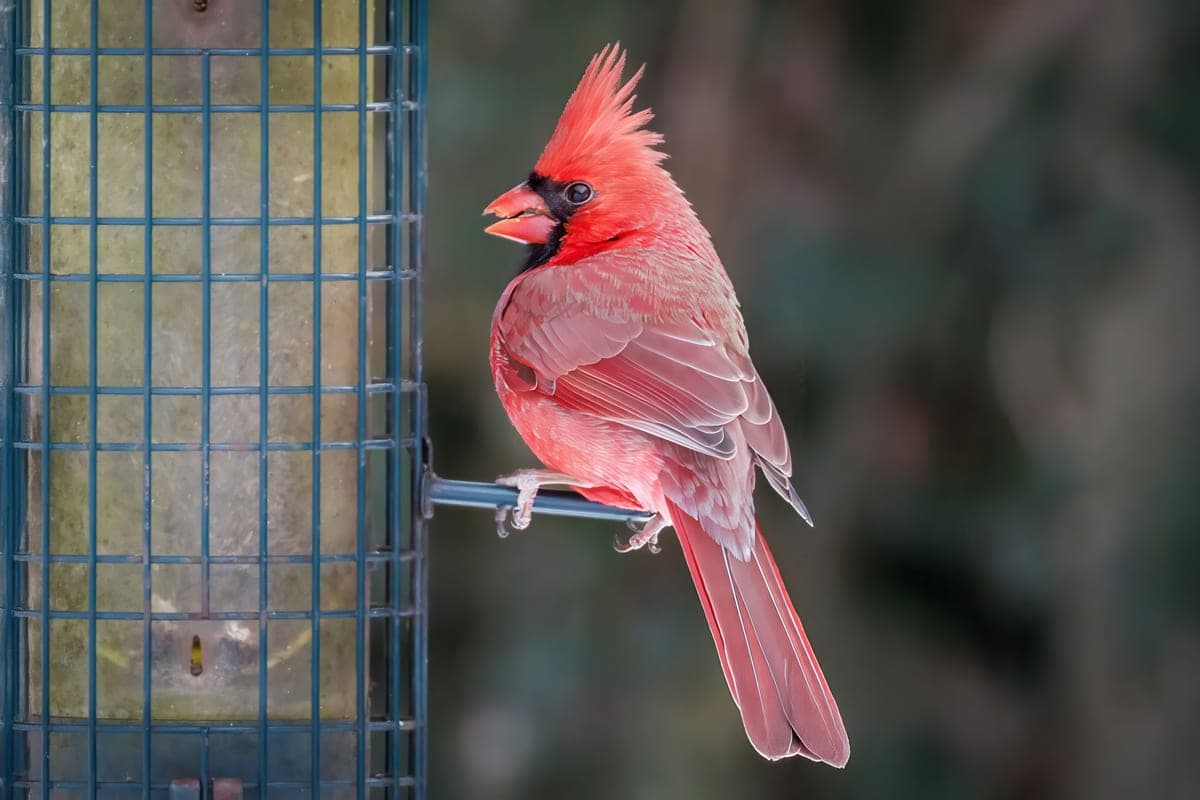
A platform feeder is a flat raised surface with drainage holes. Project FeederWatch says trays attract most species of feeder birds, and near the ground they are most likely to attract juncos, doves and sparrows. It is the feeder cardinals and jays will actually use, and it is completely open to squirrels.
Seed & Sprig earns a commission when you buy through the links on this page, at no extra cost to you. It does not change which products we pick or the order we put them in — here is how we pick and here is how we are funded.
Quick picks
| # | Product | Best for | Price |
|---|---|---|---|
| 1 | NWno photo Nature's Way Cedar Platform Tray Feeder (CWF3) 12" x 12", 3 quarts, with a removable screen bottom that actually drains. | Best platform tray | |
| 2 | 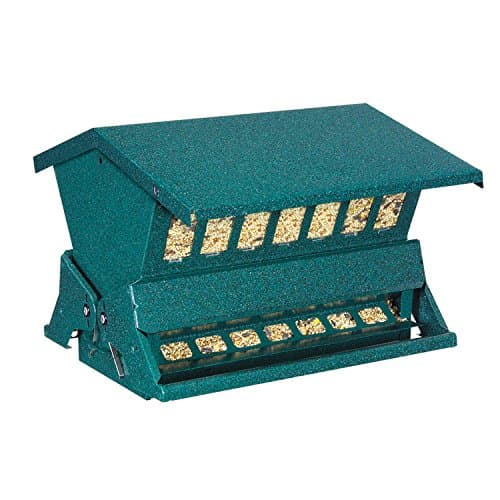 Woodlink Absolute II (model 7536) A hopper with a long perch rail, if an open tray is too exposed for your yard. | Best alternative for cardinals | $84.00 · View on Amazon #ad How we are funded · Price as of October 22, 2026 |
| 3 | Eno photo Erva SB1D Cylindrical (Torpedo) Squirrel Baffle A tray without a baffle is a squirrel dish. This is the fix. | The part you must not skip |
Rows link to the full write-up further down this page. The price button goes to Amazon.
There is a specific disappointment familiar to new feeder-watchers: cardinals in the neighborhood, a tube feeder in the yard, and no cardinals at the tube feeder. The cause is not the seed. It is that a cardinal is a heavy, broad bird that wants to stand on something while it feeds, and a two-inch tube perch is not that.
A platform tray is.
What it is
Project FeederWatch defines a platform feeder as “any flat, raised surface onto which bird food is spread,” and adds the design requirement that matters most: “the platform should have plenty of drainage holes to prevent water accumulation.”
That is the whole product. There is nothing to break and nothing to adjust, which is part of its appeal.
Who it brings
Trays attract most species of feeder birds. Placed near the ground they are most likely to attract juncos, doves and sparrows — species that, as FeederWatch notes, will rarely land on a feeder but readily eat fallen seed.
Raised on a pole, a tray brings cardinals, jays, grosbeaks and everything that already uses your tube. It is the least selective feeder there is, which is either its best or its worst feature depending on your view of grackles.
The two rules
1. It must drain
A screen bottom, or plenty of holes. Nature's Way publishes a removable screen tray that encourages drainage and airflow; that removable part is also what makes cleaning quick. Standing water plus seed equals mold within days, and mold is the one thing at a feeder that genuinely harms birds.
2. It must be baffled
A tray is an open dish of seed. There is no mechanism, no port size, no perch length — nothing between the food and whatever climbs up to it. On a baffled pole in the open, a tray is fine. Anywhere else it is a squirrel feeder with a bird-shaped logo. Baffles here.
Use it differently from a tube
- Put out small amounts. A tray has no roof. Fill it with what will be eaten in a day, not a week.
- Empty it before rain if you can, or accept a clean-out afterwards.
- Clean it more often than a tube. It is exposed, droppings land in it, and it is used by more birds. The upside is that it cleans in about a minute.
- Vary what goes in it. Striped sunflower, safflower, peanuts, fruit and mealworms all work on a tray and would not work in a tube.
Ground-level trays
A tray set low or on the ground is the honest way to feed juncos, doves and towhees, which largely will not use a hanging feeder — the full case for and against ground feeding is here. It also feeds every rodent in the neighborhood, so use small amounts, clear leftovers each evening, and read rodents and unwanted visitors first.
Platform or hopper for cardinals?
Both work. A tray is cheaper, more inclusive and more exposed; a hopper keeps seed dry and can be made squirrel-resistant with counterweighted perches. If you already run a tube and want to add cardinals cheaply, add the tray. If you want one feeder to do everything, buy the hopper. Both are ranked against the seed and the baffle in our roundup of the best bird feeders for cardinals. Cedar trays and hoppers are here.
The picks in full
#1 · Best platform tray
Nature's Way Cedar Platform Tray Feeder (CWF3)
Nature's Way · Cardinals, jays, doves and anything that will not use a tube
An open cedar tray with a removable screen bottom, which is the honest answer for the big ground-feeding birds a tube feeder quietly excludes.
Published specifications
- Dimensions
- 12" x 12" x 2.25"
- Capacity
- 3 quarts
- Materials
- Premium cedar, stainless steel screws, powder-coated galvanized steel seed tray
- Drainage
- Removable screen tray for drainage and airflow
What it does well
- Cardinals and jays use it immediately; they often will not use a small tube port
- The screen bottom drains, which is the difference between a tray and a puddle
- Nothing to break, and it cleans in a minute
What it does not
- Completely open to squirrels, so this one belongs on a baffled pole or nowhere
- Seed is exposed to rain even with drainage, so put out small amounts
Specifications above come from the manufacturer's own published listing: Nature's Way CWF3 published specifications.
#2 · Best alternative for cardinals
Woodlink Absolute II (model 7536)
Woodlink · Big capacity and cardinals — the hopper answer to squirrels
A double-sided steel hopper whose counterweighted perches drop a shield over the seed tray when something heavy lands, and it holds twelve pounds so it barely needs attention.
Published specifications
- Seed capacity
- 12 lb
- Dimensions
- 16" W x 11.25" H x 13.5" D
- Feeding ports
- 6 (both sides)
- Mechanism
- Two counterbalanced perches, adjustable to three weight settings
- Materials
- Steel and acrylic
What it does well
- 12 lb capacity means refills measured in weeks, not days
- Perch tension adjusts for light, medium or heavy birds
- The long perch rail suits cardinals, which will not use a small tube port
What it does not
- Twelve pounds of seed is heavy, so the hook or pole has to be rated for it
- Seed sitting for weeks in wet weather is how mold starts; a big hopper needs the same cleaning discipline as a small one
Specifications above come from the manufacturer's own published listing: Woodlink Absolute II published specifications.
#ad How we are funded · Price as of October 22, 2026
#3 · The part you must not skip
Erva SB1D Cylindrical (Torpedo) Squirrel Baffle
Erva · Pole-mounted feeders
A long steel cylinder a squirrel cannot get around or hug past, and the single most effective thing you can buy after the feeder itself.
Published specifications
- Length
- 16.75"
- Diameter
- 6.25"
- Type
- Pole-mounted cylindrical baffle
What it does well
- Length is what defeats a squirrel here: it cannot reach past the top
- Steel, so it survives winters and chewing
What it does not
- Useless if the pole sits within jumping distance of a fence, wall or branch
- Must be mounted high enough that a squirrel cannot leap over it entirely
Specifications above come from the manufacturer's own published listing: Erva SB1D published dimensions.
Common questions
What is the best bird feeder for cardinals?
A platform tray, or a hopper with a long perch rail. Cardinals need somewhere to stand; they will rarely use a short tube perch.
Do platform feeders attract squirrels?
Completely — there is nothing between the seed and anything that reaches it. A platform belongs on a properly baffled pole or nowhere.
What seed goes in a platform feeder?
Almost anything: black oil or striped sunflower, safflower, peanuts, fruit, mealworms. It is the most flexible feeder for that reason.
How often should I clean a platform feeder?
More often than a closed feeder — it is exposed to rain and droppings. The upside is that a screen-bottom tray rinses out in about a minute.