Care & Season
The easiest bird feeders to clean
You are going to wash this object a hundred times. Buy the one that comes apart.
By Scooter M. · Published · Last updated
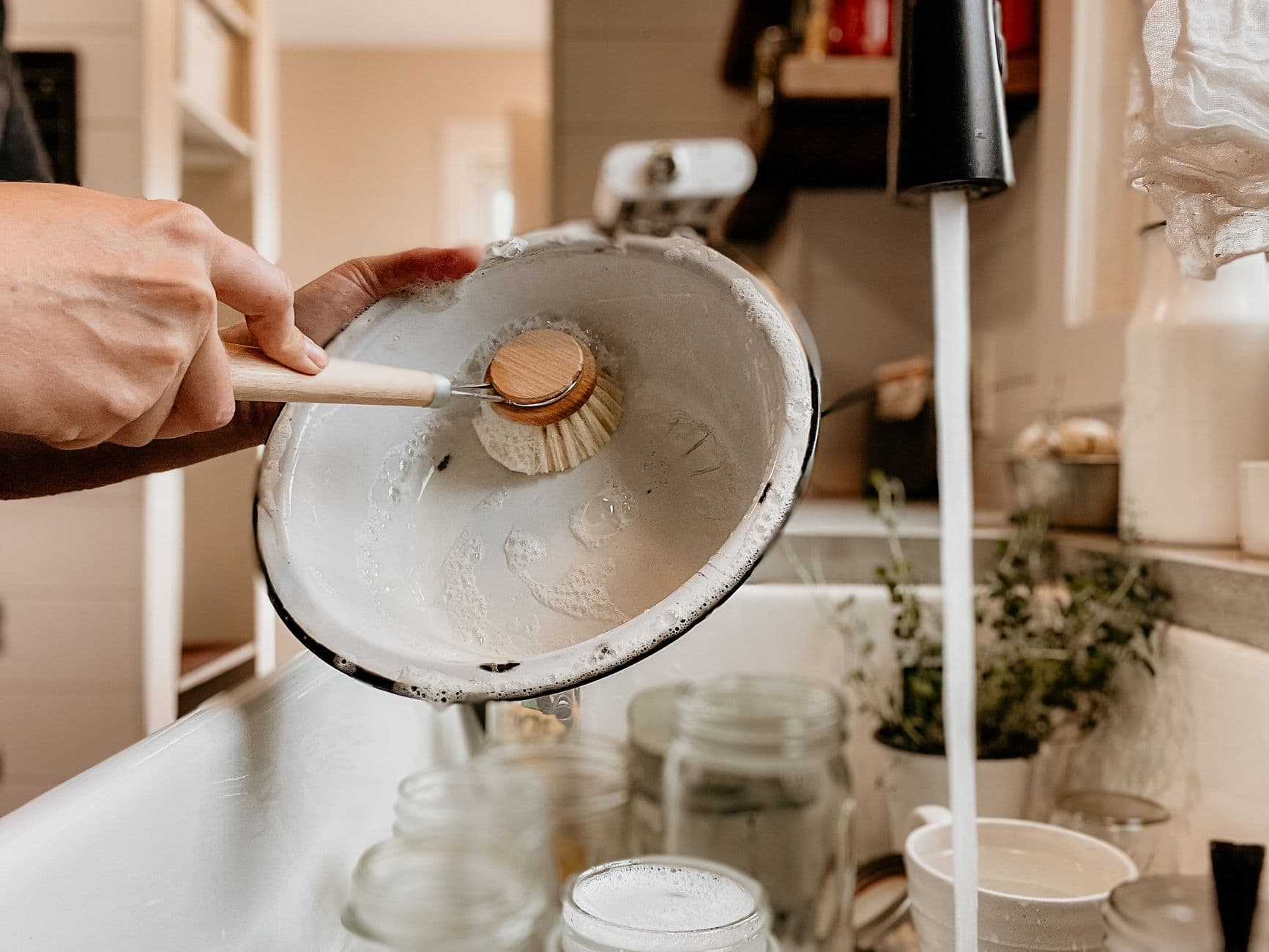
Buy a feeder whose base comes off without tools: the Brome Mega 600 twists apart so the tube can be brushed through and dried, which is the one feature that decides whether a feeder ever gets properly cleaned. An open cedar tray with a screen bottom is easier still, and a suet cage is the easiest of all.
Seed & Sprig earns a commission when you buy through the links on this page, at no extra cost to you. It does not change which products we pick or the order we put them in — here is how we pick and here is how we are funded.
Quick picks
| # | Product | Best for | Price |
|---|---|---|---|
| 1 | 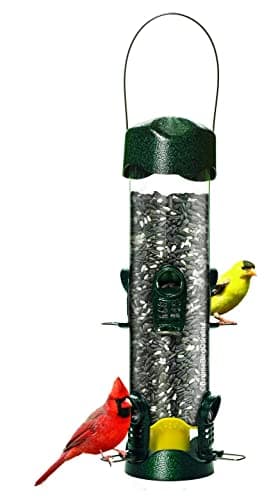 Brome Mega 600 Bird Feeder A plain seed tube whose base twists off. Brome publishes the washing instructions. | Best overall | $59.38 · View on Amazon #ad How we are funded · Price as of October 22, 2026 |
| 2 | NWno photo Nature's Way Cedar Platform Tray Feeder (CWF3) An open tray with a screen bottom. Nothing to disassemble, hose it and move on. | Easiest design there is | |
| 3 | 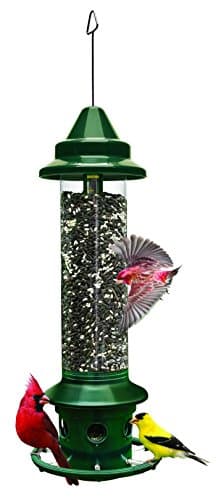 Brome Squirrel Buster Plus More parts, but they separate by hand with no tools and go in a dishwasher. | If squirrels are also a problem | $125.90 · View on Amazon #ad How we are funded · Price as of October 22, 2026 |
| 4 | 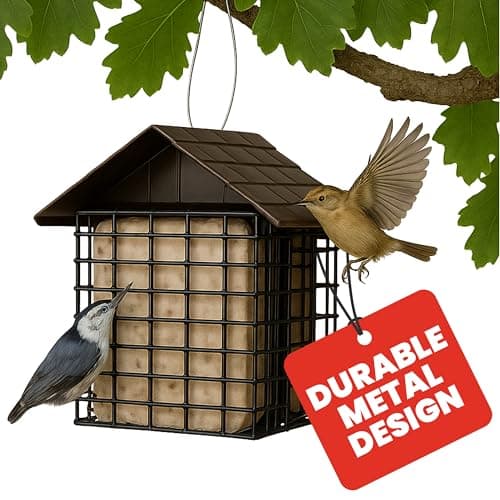 More Birds Double Suet Cake Feeder (38070) A suet cage is a wire box. There is nowhere for anything to accumulate. | Easiest category | $14.71 · View on Amazon #ad How we are funded · Price as of October 22, 2026 |
| 5 | 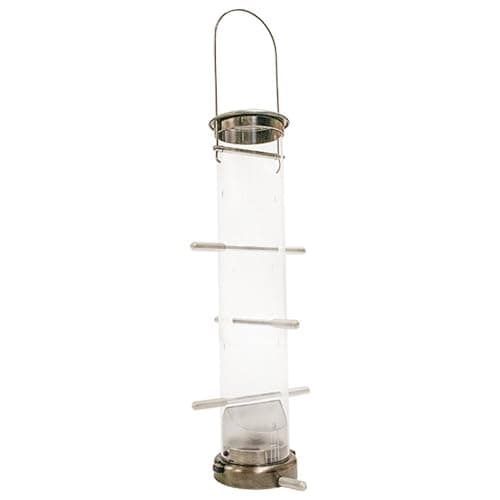 Aspects 400 Quick-Clean Thistle Tube Feeder, Medium The Quick-Clean base releases, so the tube drains and dries instead of holding a wet plug. | Best for nyjer | $51.96 · View on Amazon #ad How we are funded · Price as of October 22, 2026 |
| 6 | 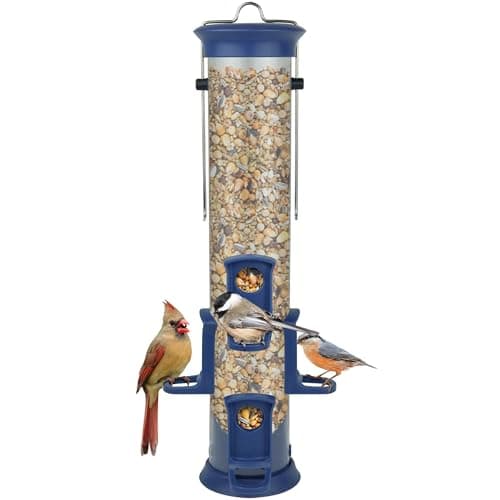 Nature's Way Plastic Seed Tube Feeder, 1.2 Quart Small capacity, plain plastic. Seed turns over before it can spoil. | Cheapest sensible tube | $14.47 · View on Amazon #ad How we are funded · Price as of October 22, 2026 |
Rows link to the full write-up further down this page. The price button goes to Amazon.
Nobody shops for a feeder by asking how easy it is to clean, and everybody wishes they had. You will wash this object every week or two for years, in cold weather, often outdoors, and the difference between a good design and a bad one is the difference between two minutes and a resented twenty.
It also matters more than convenience. Project FeederWatch's instruction is to clean seed or suet feeders regularly — every week or two — and more often during heavy use or in wet weather, by taking the feeder apart, scrubbing off debris and washing the parts in warm water and dish soap. A feeder that cannot be taken apart cannot be cleaned to that standard, and a dirty feeder spreads disease between the birds you put it up for.
The four features that decide it
Everything on this page comes down to these, in order of how much they matter:
- A base that comes off without tools. The single most important feature in a feeder. It turns the inside of a tube from an unreachable cavity into an open cylinder, and it lets water drain instead of pooling.
- Few parts, and no hidden cavities. Internal baffles, double walls and decorative moldings are all places damp seed sits where you cannot see it.
- Dishwasher-safe materials. Not essential, but a feeder that goes on the top rack removes the whole chore.
- Capacity matched to your yard. Counter-intuitive, and the one people get wrong: a big feeder in a quiet yard means seed sits for weeks. The cleanest feeder is one that empties.
| Design | Effort | Why |
|---|---|---|
| Suet cage | Trivial | A wire box. Rinse, scrub, hang. Nothing accumulates anywhere |
| Open tray with a screen bottom | Trivial | Hose it through; the screen drains. Needs doing often because it is exposed |
| Tube with a removable base | Easy | Base off, tube rinsed through, everything dries |
| Weight-closing feeder designed to disassemble | Easy | More parts, but they separate by hand and go in a dishwasher |
| Hopper with a lift-off roof | Moderate | Big and awkward; corners and the seed channel need attention |
| Tube with a fixed base | Hard, and never done properly | The bottom two inches are unreachable. This is where mold starts |
| Nectar feeder | Easy but constant | Simple shape, needs doing every two or three days rather than every two weeks |
How we chose these
On published manufacturer specifications, checked against live listings in October 2026 so every pick is currently purchasable. No testing claim: we have not scored feeders on a stopwatch at the sink, and nobody should trust a site that says it has without showing the method.
Ranking went: does the base or bottom come away without tools; how many separate parts and how many unreachable cavities; does the maker publish dishwasher safety; and is the capacity sensible for a normal yard. Then price. Our full criteria are here.
The honest hierarchy: cage, tray, tube
If cleaning is your main criterion, the ranking is not by brand. It is by shape.
A suet cage is a wire box with a cake in it. There is no reservoir, no base, no channel — you scrub the wire and you are done. If you want a feeder that is never a chore, this is it, and the suet feeder comparison is here.
An open tray with a screen bottom is next. It drains, you can reach every surface, and a hose does most of the work. The trade is frequency: an open tray is exposed to rain and droppings, so it needs doing more often than a covered tube — but each clean is trivial. Tray options are compared here.
A tube with a removable base is the best of the enclosed designs, and a plain seed tube is the cleanest version of it: fewer parts than a squirrel mechanism, a base that twists off, and a maker that publishes its own washing instructions. If squirrels are also a problem, the weight-closing Brome feeders come apart by hand too and are published as dishwasher safe — you buy squirrel resistance and get the cleaning win as a side effect. Our full review of that one is here.
How often, and the method
The published guidance is consistent and not onerous:
- Seed and suet feeders: every week or two, and more often in heavy use or wet weather, per Project FeederWatch.
- A monthly disinfection. WSU Extension gives a specific recipe: disinfect feeders about once a month with a weak solution of bleach, one-quarter cup bleach to two gallons of water, scrubbing or soaking the feeder, then rinsing and allowing it to dry completely before refilling.
- Before every refill, deal with the old seed. The same guidance says to shake and dislodge any compacted seed and discard it. That compacted layer is the actual problem; the rest is housekeeping.
- Nectar feeders: every two or three days. A different regime entirely — covered on the hummingbird page.
Maryland's DNR puts the whole thing in four words in its feeding tips: keep all your feeders clean. The step-by-step method, with the drying and the siting that keeps seed dry in the first place, is in how to clean a bird feeder.
The fix nobody mentions: keep it dry and keep it small
Two upstream decisions cut your cleaning workload more than any feature on a product page.
Keep the seed dry. Wet seed is what compacts, molds and welds itself to the bottom of a tube. A feeder with a decent roof overhang, sited out of driving rain, or under a dome, stays clean far longer than the same feeder in the open. The rain options are compared here.
Buy less capacity than you think you need. A feeder that empties every few days never gets the chance to develop a problem. A four-pound hopper in a yard with six chickadees is a seed-storage container with a hole in it, and the seed at the bottom will be a month old. Store the surplus in a sealed container instead, and refill often.
Those two habits, plus a base that comes off, are the whole of feeder hygiene. The products below just make it easier.
Three cleaning details worth knowing
- Dry completely before refilling. WSU Extension is explicit about this step, and it is the one most people skip. Damp seed added to a damp feeder starts the problem over.
- Keep a dedicated brush. A bottle brush that lives with the bird things, not the kitchen things. A long-handled one reaches a tube a short one cannot.
- Clean the perches and ports, not just the reservoir. The ports are where birds put their faces, and the perches are where droppings land. They matter more for disease than the inside of the tube does.
What we would buy
- One seed feeder, and you want the easy life: the Mega 600. The base twists off, there is no mechanism to work around, and Brome publishes how to wash it.
- Squirrels too: a Squirrel Buster, which separates by hand and whose parts are published as dishwasher safe.
- You genuinely hate cleaning: a suet cage and an open cedar tray. Between them they feed most of the birds a tube does and neither takes more than a minute.
- A finch feeder you will not neglect: a Quick-Clean nyjer tube, because nyjer is the seed most often left to spoil.
- Cheapest route: a small plain plastic seed tube, replaced every few seasons. A feeder that is cheap enough to replace is never an old dirty feeder.
The thing to take away is to ask one question before you buy anything: does the bottom come off in my hands? Everything else about feeder hygiene follows from the answer.
The picks in full
#1 · Best overall
Brome Mega 600 Bird Feeder
Brome · A seed feeder bought specifically to be easy to wash
Brome's plain seed tube: six ports, four pounds, and a base that twists off so the tube can be brushed through and dried. No squirrel mechanism, which keeps the part count down and the cleaning fast.
Published specifications
- Capacity
- 2.36 quarts / 4 lb, per Brome
- Dimensions
- 6" x 6" x 18.5"; 23" tall with the hanger
- Ports
- 6, per the listing
- Cleaning
- Pull the cover up, remove the base, wash; Brome suggests a bottle brush for tight spots
- Mounting
- Hangs, or pole-mounts on any 1" outside-diameter pole
- Squirrel proof
- No — Brome states plainly that this feeder is not squirrel proof
- Recommended seed
- Black oil sunflower, per Brome
What it does well
- The base comes off, which is the single feature that decides whether a tube feeder ever gets properly cleaned
- No weight mechanism means fewer parts to separate, rinse and dry than on a squirrel-resistant feeder
- Brome publishes its own washing instructions and sells parts, which is rarer than it should be
- Pole-mountable on a standard 1" pole, so it can go on a baffled pole rather than a branch
What it does not
- Brome says outright that it is not squirrel proof, and in a squirrel yard on a branch it will be emptied
- It costs what a cheap squirrel-resistant feeder costs, and it is not one
- Four pounds is more seed than a quiet yard gets through quickly, so fill it part way
- Brome does not publish the materials or a warranty on its support page for this model
Specifications above come from the manufacturer's own published listing: Brome Bird Care — Mega 600 product support (capacity, dimensions, cleaning and removable base, pole fitting, not squirrel proof, recommended seed), Brome Mega 600 Wild Bird Feeder, 6 feeding ports, 4 lb capacity — published listing.
#ad How we are funded · Price as of October 22, 2026
#2 · Easiest design there is
Nature's Way Cedar Platform Tray Feeder (CWF3)
Nature's Way · Cardinals, jays, doves and anything that will not use a tube
An open cedar tray with a removable screen bottom, which is the honest answer for the big ground-feeding birds a tube feeder quietly excludes.
Published specifications
- Dimensions
- 12" x 12" x 2.25"
- Capacity
- 3 quarts
- Materials
- Premium cedar, stainless steel screws, powder-coated galvanized steel seed tray
- Drainage
- Removable screen tray for drainage and airflow
What it does well
- Cardinals and jays use it immediately; they often will not use a small tube port
- The screen bottom drains, which is the difference between a tray and a puddle
- Nothing to break, and it cleans in a minute
What it does not
- Completely open to squirrels, so this one belongs on a baffled pole or nowhere
- Seed is exposed to rain even with drainage, so put out small amounts
Specifications above come from the manufacturer's own published listing: Nature's Way CWF3 published specifications.
#3 · If squirrels are also a problem
Brome Squirrel Buster Plus
Brome · The one feeder to buy if you only buy one
A weight-closing tube feeder with a large capacity and a cardinal ring, and the closest thing to a genuinely squirrel-resistant feeder that a beginner can hang up and stop thinking about.
Published specifications
- Seed capacity
- 5.1 lb
- Height
- 28" base to hanger
- Feeding ports
- 6, plus a cardinal ring
- Mechanism
- Weight-adjustable spring shroud
- Materials
- Chew-proof, UV-resistant components
- Warranty
- Brome Lifetime Care
What it does well
- The spring tension is adjustable, so you can shut out heavy birds as well as squirrels
- Comes apart by hand for cleaning, which means it actually gets cleaned
- 5.1 lb is enough that a busy fall week does not mean daily refills
What it does not
- The most expensive feeder in this roundup by a wide margin
- The shroud collects seed dust and needs a full strip-down every couple of weeks
- A squirrel that can reach the top hanger still wins, so this is not a substitute for a baffle
Specifications above come from the manufacturer's own published listing: Brome — Squirrel Buster Plus (manufacturer store).
#ad How we are funded · Price as of October 22, 2026
#4 · Easiest category
More Birds Double Suet Cake Feeder (38070)
More Birds · Yards where squirrels are not actually the problem
A plain two-cake steel cage with a shingle-pattern weather guard over it. If squirrels are not raiding your suet, this is the honest amount to spend on hanging some up.
Published specifications
- Capacity
- 2 suet cakes in separate cages
- Roof
- Shingle-patterned weather guard
- Materials
- Powder-coated steel
- Closure
- Double-locking closure for cake changes
- Dimensions
- 6.75" L x 5" W x 7" H
- Model
- 38070
What it does well
- The least you can sensibly spend, and it still includes a roof, which budget cages usually skip
- Powder-coated steel rather than plastic, so it will not be chewed apart
- Separate cages let you run two different cakes at once
What it does not
- No squirrel resistance whatsoever — a squirrel clings to the cage and eats straight through the mesh
- Nothing catches the crumbs, so expect drops underneath and the rodents that come with them
- Two small cakes empty quickly in cold weather
Specifications above come from the manufacturer's own published listing: More Birds Double Suet Cake Feeder (38070) — published listing (capacity, roof, materials, closure, dimensions).
#ad How we are funded · Price as of October 22, 2026
#5 · Best for nyjer
Aspects 400 Quick-Clean Thistle Tube Feeder, Medium
Aspects · A nyjer feeder whose base comes off in one movement
The Quick-Clean name is the feature: the base releases so the tube drains, dries and scrubs through instead of trapping a wet plug of seed at the bottom. For nyjer, which spoils faster than any other seed, that is the whole ballgame.
Published specifications
- Seed
- Nyjer (thistle)
- Size
- Medium
- Base
- Quick-Clean removable base
- Finish
- Brushed nickel
- Model
- 400
What it does well
- A removable base is the single feature that decides whether a tube feeder gets cleaned or quietly rots
- Nyjer is the seed most often left to spoil, and a feeder that opens is the fix for the commonest complaint about finch feeders
- Aspects hardware is built to be taken apart repeatedly rather than once
What it does not
- Expensive for a finch feeder, and the price is the main reason not to buy it
- Nyjer only: it is the wrong feeder for sunflower or a mix
- The listing publishes the model, size, finish and the Quick-Clean base and no dimensions or capacity figure
Specifications above come from the manufacturer's own published listing: Aspects 400 Quick-Clean Thistle Tube Feeder, Medium, Brushed Nickel — published listing.
#ad How we are funded · Price as of October 22, 2026
#6 · Cheapest sensible tube
Nature's Way Plastic Seed Tube Feeder, 1.2 Quart
Nature's Way · A cheap tube you will not resent scrubbing
A small, plain plastic seed tube at a price where cleaning it properly every fortnight does not feel like a chore you are protecting an investment from. Modest capacity is a feature on a feeder you are meant to empty.
Published specifications
- Capacity
- 1.2 quart
- Material
- Plastic
- Type
- Seed tube
What it does well
- Small capacity means the seed turns over before it can go stale, which is the real hygiene problem at a feeder
- Cheap enough that replacing it after a few seasons is reasonable, and a feeder that is replaced is never a dirty feeder
- Plain plastic with no textured decorative surfaces for mold to sit in
What it does not
- Plastic ports are chewable: this is not a feeder for a yard with a squirrel problem
- 1.2 quarts needs refilling every few days in a busy yard
- The listing publishes capacity, material and type and nothing about the base, so check it comes apart before you rely on that
Specifications above come from the manufacturer's own published listing: Nature's Way Plastic Seed Tube Bird Feeder, 1.2 Quart — published listing.
#ad How we are funded · Price as of October 22, 2026
Common questions
How often should I clean a bird feeder?
Every week or two for seed and suet feeders, more often in heavy use or wet weather, per Project FeederWatch. Nectar feeders need doing every two or three days, which is a different regime altogether.
What is the easiest type of bird feeder to clean?
A suet cage, then an open tray with a screen bottom, then a tube with a removable base. The hardest is any tube with a fixed base, where the bottom two inches cannot be reached.
Can you put a bird feeder in the dishwasher?
Some, if the maker says so — Brome publishes its Squirrel Buster feeders as dishwasher safe. Never assume it: heat warps thin plastics and can craze polycarbonate that is not rated for it.
What should I use to clean a bird feeder?
Warm water, dish soap and a brush for routine cleaning. About once a month, WSU Extension recommends a weak bleach solution — a quarter cup of bleach to two gallons of water — scrubbing or soaking, then rinsing and drying completely before refilling.
Does a smaller feeder stay cleaner?
Yes, and it is the most overlooked part of this. A feeder that empties every few days never holds seed long enough to compact or mold. Buy for your yard's traffic, not for the longest possible gap between refills.
What are the black specks in the bottom of my feeder?
Usually mold on compacted seed dust and hulls. Discard the old seed, scrub the feeder rather than rinsing it, disinfect, and dry it fully. Then site the feeder somewhere drier, because damp is the cause.
Sources
- Cornell Lab of Ornithology, Project FeederWatch — clean seed and suet feeders every week or two, more in wet weather; take apart and wash in warm soapy water
- Washington State University Extension — Winter Feeding Birds (monthly bleach dilution, discard compacted seed, dry completely before refilling)
- Maryland Department of Natural Resources — Supplemental Feeding Wild Birds (keep all your feeders clean)