Setup & Placement
Your first bird feeder, start to finish
Everything from the empty box to the first chickadee, in the order it actually happens.
By Scooter M. · Published · Last updated
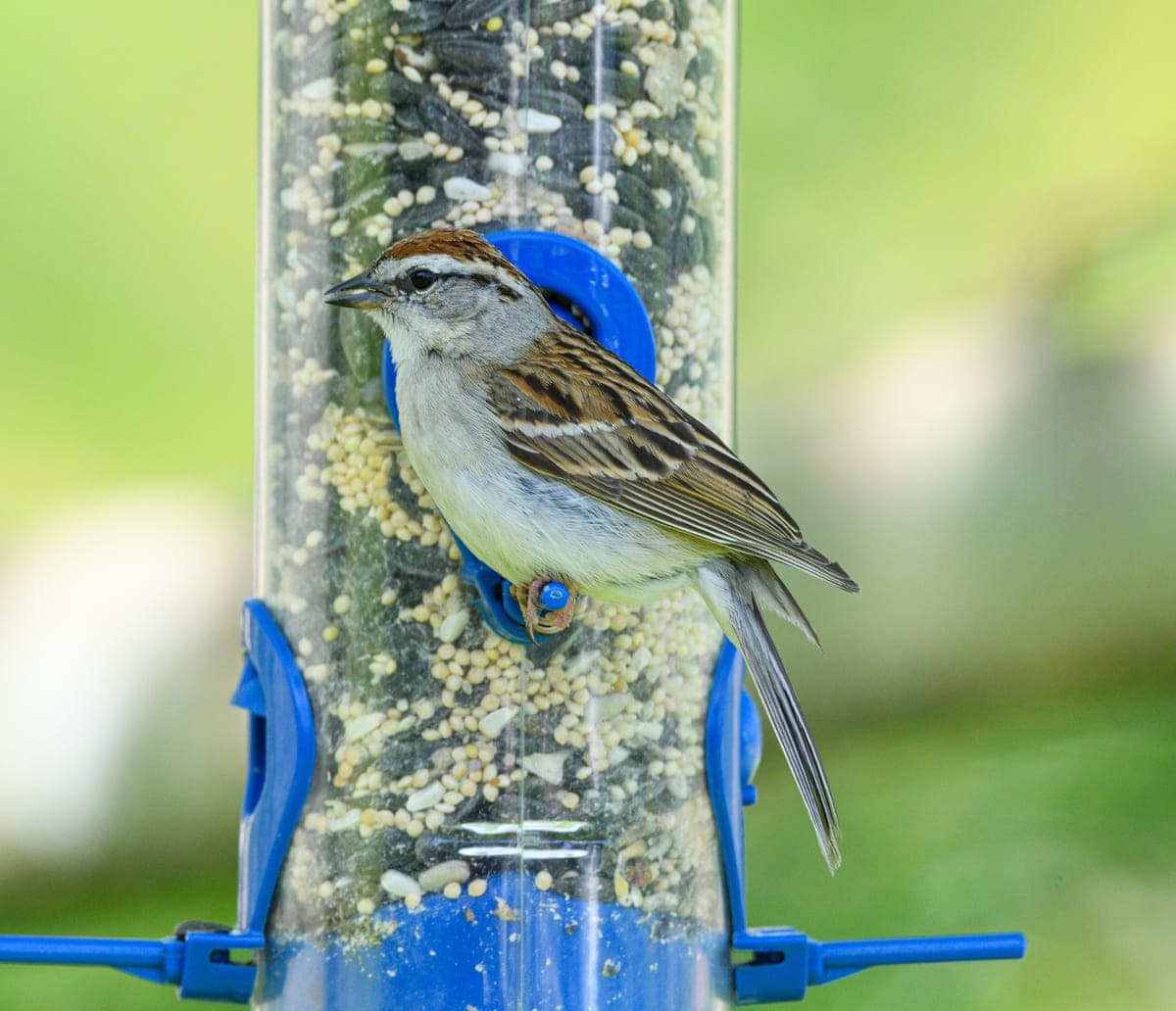
Buy one tube feeder, one bag of black oil sunflower seed, and a pole with a baffle. Site the pole in the open, about ten feet from cover and five to six feet off the ground. Fill the feeder halfway. Then leave it alone for two weeks — birds commonly take days to a few weeks to find a new feeder.
Seed & Sprig earns a commission when you buy through the links on this page, at no extra cost to you. It does not change which products we pick or the order we put them in — here is how we pick and here is how we are funded.
Nobody needs a course in this. You need four objects and three distances, and most of the things that go wrong go wrong in the first hour. Here is the whole job.
Step 1 — buy four things, not one
The universal beginner mistake is buying only the feeder. The list is:
- A feeder. A tube for the widest appeal, a hopper if you want big birds too. Detail in feeder types, picks in best feeders for beginners.
- Black oil sunflower seed. Not a bargain mix. Project FeederWatch calls black oil sunflower “the preferred food item for a wide variety of birds.”
- A pole and a baffle, if you have any ground at all. This is the part that decides whether you spend the winter fighting squirrels.
- A bottle brush. Unglamorous and genuinely necessary — see step 6.
If you want that decided for you, the starter kit page lists it as one purchase.
Step 2 — pick the spot before you assemble anything
Stand where you will actually watch from — the kitchen window, the desk — and look for a spot that satisfies three distances at once:
| Distance | Target | Why |
|---|---|---|
| Height off the ground | 5 to 6 ft | Above a squirrel's standing jump, which Duncraft puts at 4 to 5 ft, and still refillable without a ladder |
| From cover (shrubs, trees) | About 10 ft | Project FeederWatch calls about ten feet “a good compromise” — close enough for birds to escape a hawk, far enough that squirrels cannot jump across |
| From windows | Under 3 ft, or over 30 ft | The middle distance is where a startled bird builds up enough speed for a collision to be fatal |
If no single spot satisfies all three, the window distance is the one to prioritize: it is a safety rule, and the others cost you seed rather than birds. More on that in keeping birds safe.
Step 3 — install the pole properly
Get it vertical and get it firm. A leaning pole is a ramp, and a wobbling one drops feeders. Then mount the baffle with its top at least four and a half feet from the ground — the published guidance — and measure it rather than eyeballing it. This one measurement is the difference between a baffle that works and an ornament.
Step 4 — fill it halfway, not to the top
A full feeder in an empty yard is a feeder full of seed that will be stale before anyone finds it. Half-fill it for the first fortnight. Once birds are visiting daily, fill it properly.
Do not mix seed types in one tube. Sunflower and nyjer need different ports, and a mixed-seed tube usually ends with birds flicking out everything they do not want. Seed types are here.
Step 5 — wait, and do not move it
This is the hardest step. Birds find food by watching each other, so in a yard with no feeding history nothing happens until the first chickadee finds you. That can be a day or it can be several weeks. Every time you move the feeder, the clock restarts.
Give it two weeks minimum. If a month passes with nothing at all, work through why no birds are coming — and if you want to speed it up, this is how.
Step 6 — set up the cleaning habit now
Project FeederWatch recommends cleaning seed and suet feeders every week or two, more often in wet weather or heavy use, and disinfecting by soaking cleaned parts for ten minutes in one part bleach to nine parts water.
Do it on a fixed day — the same day you take the bins out — and it becomes automatic. Do it “when it needs it” and it will not happen. Full method in how to clean a bird feeder.
The first month, honestly
- Week 1: probably nothing. This is normal and is not a sign you did something wrong.
- Week 2: a chickadee or a house finch finds it. Chickadees are usually first; they are bold and they investigate everything.
- Week 3-4: word spreads. Expect a small regular cast, then bigger birds if you have a surface they can stand on.
- Somewhere in there: a squirrel. If the baffle is at the right height and the pole is in the open, it will try and fail. That is the system working.
Five mistakes to skip
- Buying a bargain mixed seed. Most of it ends up on the ground.
- Hanging the feeder from a branch because it looks nicer. It is a squirrel escalator.
- Moving the feeder every few days.
- Filling a large feeder to the top before birds have found it.
- Skipping the baffle to afford a better feeder. This is backwards.
What we would buy for this
#1 · The feeder
Droll Yankees Onyx Clever Clean 18" Sunflower Tube Feeder
Droll Yankees · A plain, well-made first tube feeder
A straightforward polycarbonate tube whose base twists off in seconds, which is the single feature that decides whether a feeder gets cleaned or quietly turns into a health problem.
Published specifications
- Seed capacity
- 2 lb
- Height
- 18"
- Feeding ports
- 4
- Materials
- UV-stabilized polycarbonate tube; powder-coated metal cap, base and ports
- Cleaning
- Twist-and-release removable base; one-touch top opening
What it does well
- The removable base turns cleaning from a chore into a two-minute job
- Metal ports resist squirrel chewing better than all-plastic tubes
- Short perches keep grackles and jays off without excluding finches
What it does not
- No squirrel mechanism at all, so this feeder needs a baffle or a pole
- Four ports fill up quickly at a busy station
Specifications above come from the manufacturer's own published listing: Droll Yankees Onyx Clever Clean published specifications.
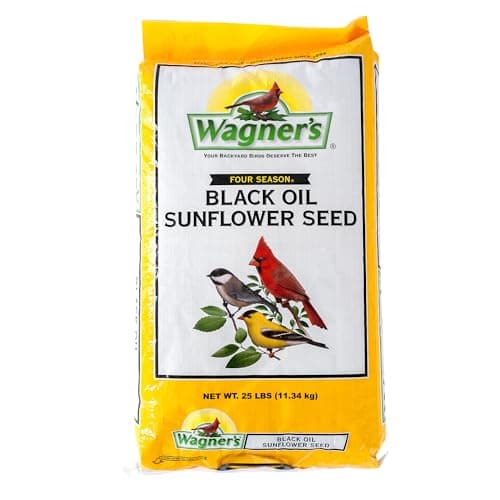
#2 · The seed
Wagner's Black Oil Sunflower Seed
Wagner's · The first bag of seed you should buy
One hundred percent black oil sunflower with nothing else in the bag, which is the seed the widest range of feeder birds actually eats, at the lowest cost per bird you will find.
Published specifications
- Ingredients
- 100% black oil sunflower
- Crude protein
- 14.0% min
- Crude fat
- 24.0% min
- Crude fiber
- 35.0% max
- Moisture
- 15.0% max
What it does well
- One ingredient, so there is nothing in the bag birds will throw on the ground
- Cardinals, chickadees, finches and sparrows all take it
- The cheapest way to fill a feeder that birds will actually empty
What it does not
- The hulls make a mess under the feeder and can kill the grass
- Squirrels like sunflower as much as birds do
Specifications above come from the manufacturer's own published listing: Wagner's Four Season black oil sunflower published analysis, Project FeederWatch — seed preferences.
#ad How we are funded · Price as of October 22, 2026
#3 · The part people skip
Erva SB1D Cylindrical (Torpedo) Squirrel Baffle
Erva · Pole-mounted feeders
A long steel cylinder a squirrel cannot get around or hug past, and the single most effective thing you can buy after the feeder itself.
Published specifications
- Length
- 16.75"
- Diameter
- 6.25"
- Type
- Pole-mounted cylindrical baffle
What it does well
- Length is what defeats a squirrel here: it cannot reach past the top
- Steel, so it survives winters and chewing
What it does not
- Useless if the pole sits within jumping distance of a fence, wall or branch
- Must be mounted high enough that a squirrel cannot leap over it entirely
Specifications above come from the manufacturer's own published listing: Erva SB1D published dimensions.
Common questions
How do I fill a bird feeder for the first time?
Half-fill it with black oil sunflower seed. A full feeder in a yard where birds have not found you yet just means stale seed. Fill it properly once there is daily traffic.
How long before birds come to a new feeder?
Days to a few weeks. It depends almost entirely on whether anyone nearby already feeds. Leave it in one place for at least two weeks.
Do I need a bird feeder pole, or can I hang it from a tree?
You can hang it from a branch, but it is much harder to defend from squirrels. A pole with a baffle is the more reliable setup and it works with every feeder you buy later.
How much does it cost to start feeding birds?
A feeder, a bag of seed, a pole and a baffle. We break the running costs down in what it costs to feed birds rather than quoting prices that go stale.