Feeder Types
The best wooden bird feeders
Cedar looks better in a garden than anything else and cleans worse than everything else. Both of those are worth knowing before you buy.
By Scooter M. · Published · Last updated
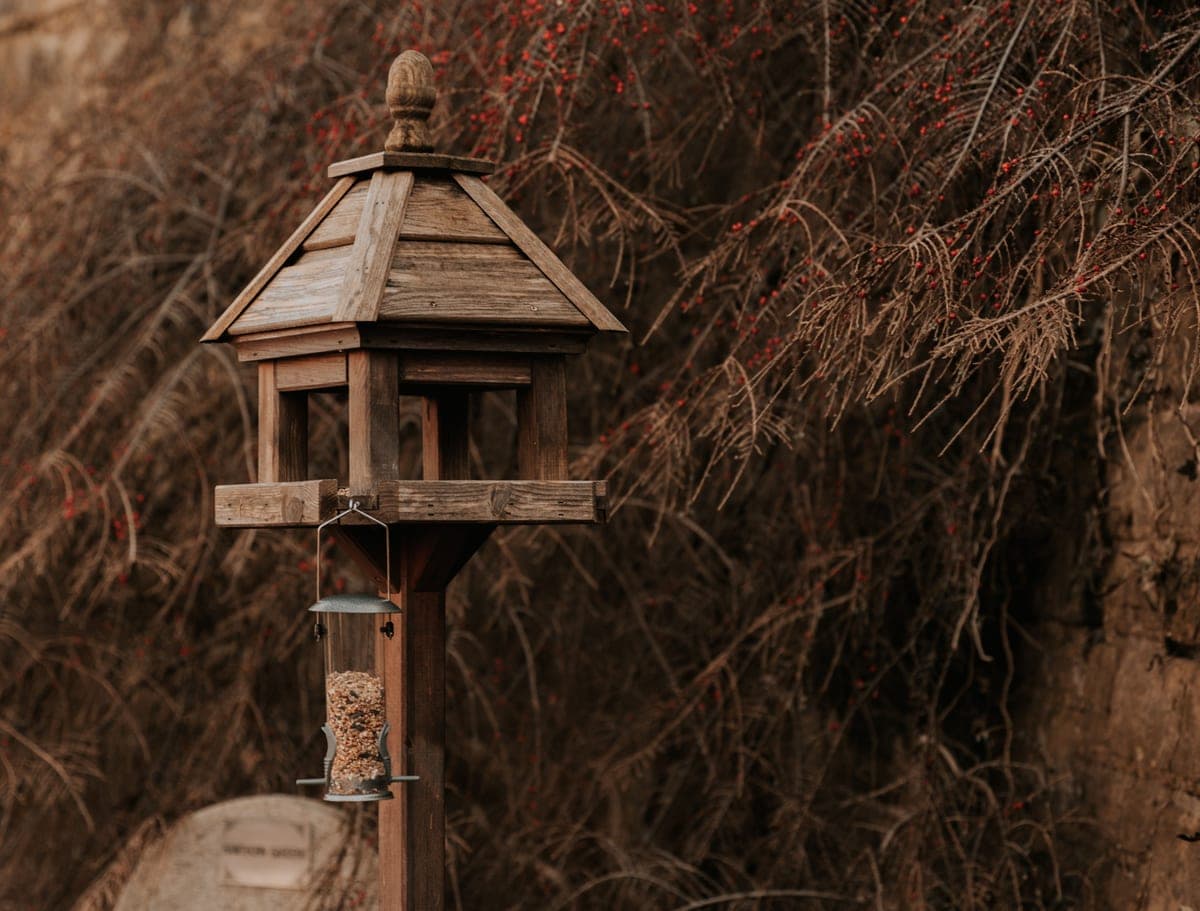
Buy cedar rather than painted softwood, and choose a design with a removable or ventilated tray so the feeder can drain and be cleaned. Wooden feeders suit dry, shaded sites and people who want the look; in a wet climate, plastic or metal is the more hygienic choice.
Seed & Sprig earns a commission when you buy through the links on this page, at no extra cost to you. It does not change which products we pick or the order we put them in — here is how we pick and here is how we are funded.
Quick picks
| # | Product | Best for | Price |
|---|---|---|---|
| 1 | 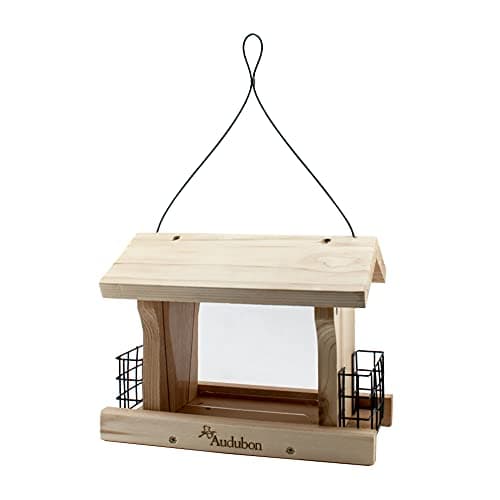 Woodlink Audubon Cedar Ranch Feeder (NARANCH3) Five pounds of seed plus two suet cages, in cedar, from the established name. | Best overall | $40.67 · View on Amazon #ad How we are funded · Price as of September 21, 2026 |
| 2 | 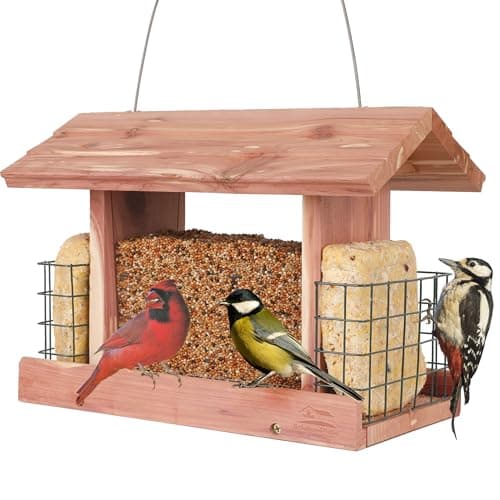 Solution4Patio Cedar Hopper Feeder with Dual Suet Holders Similar capacity and dual suet holders for noticeably less, with a ventilated tray. | Best value | $36.99 · View on Amazon #ad How we are funded · Price as of September 21, 2026 |
| 3 | 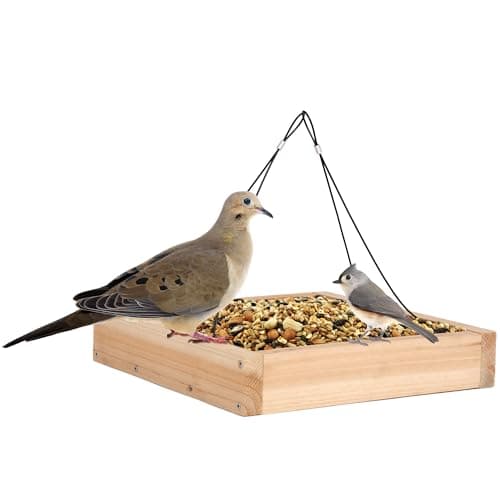 Wild Wings Cedar Hanging Tray Feeder (WWCF23) A lift-out draining tray, which is the feature that decides whether a wooden feeder stays hygienic. | Best for cleaning | $15.55 · View on Amazon #ad How we are funded · Price as of September 21, 2026 |
| 4 | 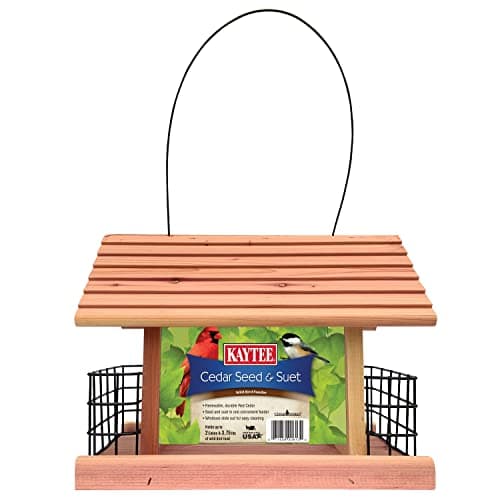 Kaytee Cedar Seed and Suet Feeder Small, Amish-made, and about the price of a plastic hopper. | Cheapest real cedar | $24.79 · View on Amazon #ad How we are funded · Price as of September 21, 2026 |
| 5 | 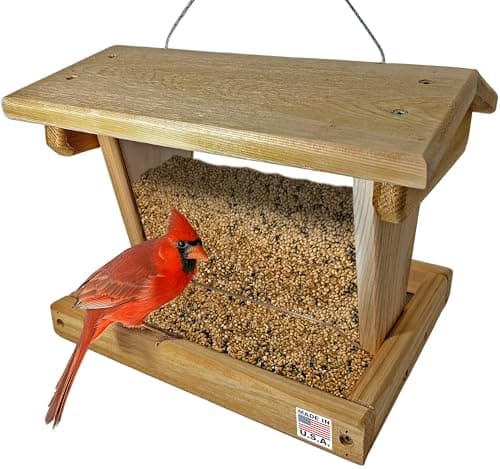 DutchCrafters Amish Cedar Hopper Bird Feeder Handmade in Indiana with clear panels and a hinged roof. The one to buy once. | Best made | $70.99 · View on Amazon #ad How we are funded · Price as of September 21, 2026 |
| 6 | 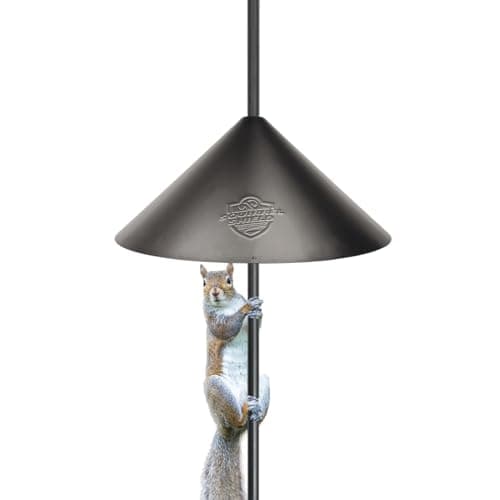 Nature's Way Squirrel Shield 18" Wrap-Around Baffle No wooden feeder resists squirrels. A baffle on the pole is the other half of this purchase. | What it needs underneath | $41.98 · View on Amazon #ad How we are funded · Price as of September 21, 2026 |
Rows link to the full write-up further down this page. The price button goes to Amazon.
Wooden feeders are bought for a reason nobody says out loud: they look right. A cedar hopper in a garden looks like it belongs there in a way that a plastic tube does not, and that is a legitimate thing to want from an object you will look at every day for years.
It is also the category where the gap between what looks good and what works is widest. This page is about which wooden feeders are worth buying and what wood costs you in practice. If you are still deciding between materials at all, our comparison of metal, plastic and cedar is the wider argument.
Cedar, or nothing
The first filter removes most of the market. Outdoor feeders are wet for months at a time, and softwood that is painted or stained to look pretty will fail: the coating lifts, water gets underneath, and the joints go.
Cedar is the exception, which is why every pick here is cedar. It contains natural oils that resist rot and insects, it needs no treatment, and left alone it weathers to a gray that most people like as much as the original color. Kaytee's listing notes the natural oils help resist cracking; DutchCrafters sells its cedar unfinished precisely so you can leave it or seal it as you prefer.
The hardware matters as much as the wood. Look for stainless or rust-free fixings — the Wild Wings tray publishes stainless screws and a vinyl-coated cable — because rust stains cedar permanently and a corroded screw is how a feeder comes apart in year three.
The picks, compared
| Feeder | Capacity | Suet | Cleaning feature |
|---|---|---|---|
| Woodlink Audubon Cedar Ranch | 5 lb | 2 cages | Listed as easy to fill and clean |
| Solution4Patio cedar hopper | 5.18 lb | 2 cakes | Ventilated seed tray |
| Wild Wings cedar tray | Open 10" tray | None | Removable draining tray insert |
| Kaytee cedar seed and suet | Not published | Yes | None published |
| DutchCrafters cedar hopper | Several cups | None | Hinged roof, clear panels |
Notice the column that separates them. Two of these publish a drainage or removable-tray feature and two do not publish a capacity figure at all. In wooden feeders, drainage is the specification that matters most, and it is the one most makers are quietest about.
How we chose these
On published manufacturer specifications, checked against live listings in September 2026 so every pick was in stock. We have not weather-tested these feeders and make no durability claim beyond what the makers state about materials. Ranking went: material first (cedar, unpainted), then drainage and whether the tray comes out, because that decides hygiene; then capacity against realistic turnover; then published hardware quality; then price. Looks were explicitly not a ranking factor, which is worth saying on a page about the category people buy for looks. Our full criteria are here.
The honest problem with wood
Here is the part the product photography does not cover. Project FeederWatch's cleaning guidance — wash feeders every week or two, more often in wet weather or heavy use — is written for feeders you can scrub and dry. Wood is porous. It absorbs moisture and the residues in it, it cannot be soaked and disinfected the way a plastic tube can, and it stays damp longer.
That does not make wooden feeders unsafe. It makes them higher-maintenance, and it makes two design features non-negotiable:
- Drainage. Either a ventilated tray, a mesh floor or a lift-out insert. A solid wooden floor holds water against seed, and that is where mold starts.
- Access. A hinged roof or a removable tray, so you can actually get into every corner. A feeder you can only reach through a fill hole will not be cleaned properly, whatever you intend.
In practice: brush the feeder out at every refill, wash it properly on the same schedule you would use for any feeder, and let it dry fully before refilling — the routine is here. In a genuinely wet climate, consider whether a plastic or metal hopper is the more responsible purchase, however much better the cedar looks.
Hopper or tray?
The two shapes serve different birds and different problems, and the choice matters more than the brand.
A hopper holds several pounds, keeps most of the seed dry under a roof and feeds from a small tray at the bottom. It suits a yard where you do not want to refill often, and the roof is doing real work in rain. The trade is spoilage: seed sitting in the bottom of a hopper through a damp week is the classic wooden-feeder failure.
A tray holds little, drains well if it is built properly, and is the most inclusive feeder there is — cardinals, jays, juncos and anything that will not use a perch can feed from it. It needs refilling constantly, everything in the yard can reach it, and it must be raked under. Our platform feeder page covers that trade in full.
For most people buying one wooden feeder, a cedar hopper with suet cages on the ends is the most useful single object: it covers seed and suet, it has a roof, and it holds enough to matter in cold weather.
Wood and squirrels
No wooden feeder on this page resists squirrels, and two of the listings use the phrase “squirrel-proof” anyway. A wooden box with an open tray gives a squirrel a place to sit and something to chew, and cedar is soft.
The answer is the same as everywhere else on this site and it is not a different feeder: a baffle on a pole, with the feeder placed out of jumping range. Which baffle to buy is here, and the placement rules are in where to hang a bird feeder. If squirrels are heavy where you live and you are unwilling to run a pole, buy a weight-closing plastic feeder and accept the aesthetic loss — those picks are here.
Why cedar and not the other woods
Wooden feeders turn up in several timbers, and the differences are not cosmetic.
Cedar is the standard for good reason: naturally rot-resistant and insect-resistant without treatment, light for its strength, and stable enough that joints stay tight through wet and dry cycles. Left alone it silvers. Kaytee's listing points to the natural oils that help it resist cracking, and the Amish workshops that make several feeders in this category have used it for decades.
Pine and other softwoods are what cheap feeders are built from, usually painted or stained to hide it. Untreated, they absorb water and rot within a season or two; treated, you are relying on a coating that will fail at the edges first.
Recycled poly lumber is the honest alternative to wood rather than a wood at all. It looks similar from a distance, it cleans properly, and it does not rot or fade. If your objection to plastic is aesthetic rather than material, this is the category to look at — it costs more than cedar and lasts longer.
Bamboo and thin plywood feeders exist at the very cheap end. They delaminate. Avoid.
One more point that applies to all of them: check the fixings rather than only the timber. Stainless or coated screws and a vinyl-coated hanging cable outlast plain steel by years, and a feeder that fails at the hardware is just as broken as one that rots.
Hanging or pole mounting
Wooden feeders are heavy, and that changes the mounting decision in a way plastic feeders do not.
The DutchCrafters hopper is about five pounds empty; add five pounds of seed and you are hanging ten pounds off whatever you chose. A thin shepherd's hook will bend, and a branch that flexes will swing the feeder in wind, spilling seed and unsettling birds. Use a proper pole with a wide base, or a substantial hook rated for the load — our pole guide covers the options.
Pole mounting is also the only way to make a wooden feeder squirrel-resistant, since the feeder itself contributes nothing. Several cedar hoppers, including two here, are sold with a mount that accepts a pole rather than only a hanging cable; check which you are buying, because converting one to the other afterward is awkward.
If you hang it, keep it out of the worst of the weather. Under the edge of a tree canopy or a porch overhang, a wooden feeder stays drier, dries faster after rain and lasts appreciably longer than one in the open.
What to put in a wooden hopper
Seed choice matters more in a wooden feeder than a plastic one, because the consequences of a bad choice sit in a porous box.
- Black-oil sunflower in the shell is the right default. It flows well, it is what most birds want, and the shells keep the seed itself protected while it waits.
- Avoid filler-heavy mixes. Milo and red millet get rejected, and rejected seed sits in the bottom of the hopper absorbing damp until it molds. In a wooden feeder that residue also stains and holds moisture against the timber. How to read the bag is here.
- Be careful with hulled seed. No-mess mixes and sunflower hearts spoil faster when damp, which is exactly the weakness of a wooden hopper. They work if you fill shallow and turn the seed over quickly.
- Fill part-way in wet spells. The single most useful habit with any hopper, and more so with wood: half-fill in damp weather so the column moves through before it can sit.
The suet cages that come on several of these feeders are a genuine bonus rather than a gimmick — they put two foods on one hook — but they drip fat down the timber in warm weather. Use no-melt dough outside winter, and expect the wood beneath a cage to darken.
How long a cedar feeder lasts
Honestly: longer than a cheap plastic one and less long than the marketing implies. Cedar is rot-resistant, not rot-proof, and the parts that fail are predictable — the base, where water sits, and the fixings. A feeder that drains, that gets emptied rather than topped up, and that is not hung where it stays soaked will last many seasons. One with a solid floor, kept full in a wet spot, will be soft at the corners in two or three.
Two habits extend it more than any product choice. Let it dry out completely between washes rather than refilling a damp feeder. And take it down for a proper clean at the end of a wet season rather than leaving it up year-round without inspection.
What we would buy
- One wooden feeder for a mixed yard: the Woodlink Audubon cedar ranch. Seed and suet, five pounds, from a maker that has been doing this for decades.
- Same job, less money: the Solution4Patio hopper, which publishes a ventilated tray — the feature that matters most.
- You care most about hygiene: the Wild Wings tray, because a lift-out draining insert beats every other cleaning feature in this category.
- You want to buy once: the DutchCrafters hopper. It costs the most and it is the best-built thing here.
- Dipping a toe in: the Kaytee cedar feeder, at close to plastic prices.
Buy the baffle at the same time. A cedar feeder is the kind of object people are pleased with for years, and the fastest way to sour that is to watch a squirrel chew the corner off it in the first fortnight.
The picks in full
#1 · Best overall
Woodlink Audubon Cedar Ranch Feeder (NARANCH3)
Woodlink · Five pounds of seed plus two suet cages, in cedar
Woodlink's Audubon-branded cedar ranch feeder: a five-pound hopper with a suet cage on each end. The capacity pick among wooden feeders, from the established name in cedar feeders.
Published specifications
- Seed capacity
- 5 lb
- Suet
- Two cages, one each end
- Dimensions
- 12" x 9" x 10.25"
- Materials
- Handcrafted natural cedar
- Model
- NARANCH3
What it does well
- Five pounds and two suet cakes covers a busy yard for several days
- Woodlink has been making cedar feeders for decades, and the build shows it
- Easy to fill and clean, per the listing, which is not true of every wooden hopper
What it does not
- Woodlink publishes very little detail beyond capacity and materials
- A big wooden hopper holding five pounds through a damp week is a mold risk
- No squirrel resistance of any kind; this needs a baffled pole
Specifications above come from the manufacturer's own published listing: Woodlink Audubon Cedar Ranch Feeder (NARANCH3) — published listing (capacity, suet cages, dimensions, materials).
#ad How we are funded · Price as of September 21, 2026
#2 · Best value
Solution4Patio Cedar Hopper Feeder with Dual Suet Holders
Solution4Patio · Running seed and suet from one wooden feeder
A US cedar hopper holding a little over five pounds of seed with a suet cage on each end, so one feeder covers the two foods most yards actually use. The most feeder per dollar of the wooden options.
Published specifications
- Seed capacity
- 5.18 lb
- Suet
- Holds 2 suet cakes, one each end
- Feeding sides
- Four-sided access
- Materials
- US cedar with a ventilated seed tray
- Dimensions
- 11.2" x 6.1" x 9.8"
- Model
- G-8534
What it does well
- Seed and suet in one unit, which saves a second hook and a second cleaning job
- A ventilated tray is the specification that decides whether a wooden hopper grows mold
- Cedar weathers outdoors without treatment, unlike softwood feeders
What it does not
- The listing calls it squirrel-proof; it is a wooden box with a wide tray, and it is not
- Wood cannot be scrubbed and disinfected the way plastic or metal can
- Five pounds of seed sitting in a damp spell is a spoilage risk in any hopper this size
Specifications above come from the manufacturer's own published listing: Solution4Patio Cedar Hopper Feeder (G-8534) — published listing (capacity, suet holders, materials, dimensions).
#ad How we are funded · Price as of September 21, 2026
#3 · Best for cleaning
Wild Wings Cedar Hanging Tray Feeder (WWCF23)
Wild Wings · Cardinals, jays and anything that will not use a tube
A ten-inch cedar tray with a removable draining seed insert. Open trays are the most inclusive feeder there is, and the removable insert fixes the reason people avoid wooden ones.
Published specifications
- Size
- 10" x 10"
- Tray
- Removable fresh-seed tray that lifts out for cleaning
- Drainage
- Tray drains and allows airflow, per the listing
- Hardware
- Stainless steel screws, rust-free hardware, vinyl-coated hanging cable
- Materials
- Premium cedar with a water-based protective stain
- Model
- WWCF23
What it does well
- The lift-out tray is the single best feature a wooden feeder can have for hygiene
- Drainage and airflow directly address the wet-seed problem that ruins trays
- Takes seed, dried fruit, in-shell peanuts and corn, so it doubles as a peanut or mealworm platform
What it does not
- An open tray feeds squirrels, jays and ground birds as readily as the birds you want
- No roof: seed gets wet in rain unless you add a dome or hang it under cover
- Ten inches of open seed needs raking underneath and frequent cleaning
Specifications above come from the manufacturer's own published listing: Wild Wings WWCF23 Cedar Hanging Tray Feeder — published listing (size, tray, drainage, hardware, materials).
#ad How we are funded · Price as of September 21, 2026
#4 · Cheapest real cedar
Kaytee Cedar Seed and Suet Feeder
Kaytee · A first wooden feeder, cheaply
A small Amish-made cedar feeder that takes seed and suet, from a brand most people already know from the seed aisle. The least you can spend on real cedar rather than stained pine.
Published specifications
- Dimensions
- 11.81" x 6.88" x 8"
- Materials
- Cedar; the listing notes natural oils help resist cracking
- Construction
- Hand-crafted by the Amish, per Kaytee
- Model
- 100545959
What it does well
- Real cedar at close to the price of a plastic hopper
- Takes both seed and suet, so it suits a yard that is still working out what the birds want
- Small enough that the seed inside actually turns over
What it does not
- Kaytee publishes almost no specifications for it — no capacity figure at all
- Small capacity means frequent refills in cold weather
- As with every wooden feeder, cleaning is wiping rather than disinfecting
Specifications above come from the manufacturer's own published listing: Kaytee Cedar Seed and Suet Feeder — published listing (dimensions, materials, construction).
#ad How we are funded · Price as of September 21, 2026
#5 · Best made
DutchCrafters Amish Cedar Hopper Bird Feeder
DutchCrafters · Buying one wooden feeder that will outlast several cheap ones
Handmade cedar from Amish woodworkers in Indiana, with clear side panels and a hinged roof. It is the craftsmanship pick: unfinished cedar, five pounds empty, built to be repaired rather than replaced.
Published specifications
- Dimensions
- 13" L x 10" W x 10" H
- Weight
- About 5 lb empty
- Panels
- Clear side panels to show the seed level
- Roof
- Hinged, for refilling
- Materials
- Unfinished cedar, handcrafted in the USA
- Model
- CLBF-3
What it does well
- Genuinely solid construction, and the hinged roof makes refilling a one-handed job
- Clear panels mean you can see the seed level without opening it
- Unfinished cedar can be left to silver or sealed to taste
What it does not
- The most expensive feeder on this page by a wide margin
- Five pounds empty is heavy: the hook, branch or pole has to be rated for it
- No baffle, no weight mechanism and a big open tray — squirrels are entirely unhindered
Specifications above come from the manufacturer's own published listing: DutchCrafters Cedar Wood Hopper Bird Feeder (CLBF-3) — published listing (dimensions, weight, panels, roof, materials).
#ad How we are funded · Price as of September 21, 2026
#6 · What it needs underneath
Nature's Way Squirrel Shield 18" Wrap-Around Baffle
Nature's Way · Retrofitting a pole or shepherd's hook you already own
An 18-inch steel baffle that wraps around a pole or shepherd's hook and fastens with a metal coupler, so you can add squirrel defense without dismantling a feeder station that already works.
Published specifications
- Diameter
- 18"
- Height
- 7.25"
- Materials
- Steel with a weather-resistant finish
- Fitting
- Wraps around poles or shepherd's hooks 1/2" to 1-1/2" in diameter; secured with a metal coupler
- Included
- Baffle, 1 pole adapter, 2 screws
- Model
- SPBAF-1
What it does well
- Installs without moving the pole or taking the feeders down
- The 1/2 to 1-1/2 inch fit range covers slim shepherd's hooks and thicker feeder poles alike
- Steel, so it will not go brittle in a freeze or be chewed the way plastic baffles are
What it does not
- Eighteen inches across looks bulky on a slim decorative hook
- It is only as secure as the coupler and adapter you fit, so check it after the first windy week
- It stops climbing and nothing else — useless if the pole is within jumping distance of a fence, wall or branch
Specifications above come from the manufacturer's own published listing: Nature's Way Squirrel Shield (SPBAF-1) — published listing (diameter, materials, fit range, contents).
#ad How we are funded · Price as of September 21, 2026
Common questions
Are wooden bird feeders better than plastic?
They look better and, in cedar, last well. Plastic and metal are easier to clean and disinfect, which matters for bird health. In a wet climate the hygiene argument favors plastic or metal.
What is the best wood for a bird feeder?
Cedar. Its natural oils resist rot and insects without treatment, and it weathers to gray rather than peeling the way painted softwood does.
Should I seal or paint a wooden bird feeder?
Leave cedar unfinished, or seal the outside only if you want to keep the color. Never coat the inside surfaces or the tray where seed and birds make contact.
How do you clean a wooden bird feeder?
Empty it, brush it out, wash it, and let it dry completely before refilling. Wood cannot be soaked and disinfected like plastic, so frequency and thorough drying do the work instead.
Are wooden feeders squirrel proof?
No, including the ones described that way. Cedar is soft enough to chew and most designs give a squirrel somewhere to sit. A baffled pole is the fix.