Bird Seed
Suet and suet cakes
The highest-energy thing you can hang up, and the one food with a temperature rule attached.
By Scooter M. · Published · Last updated
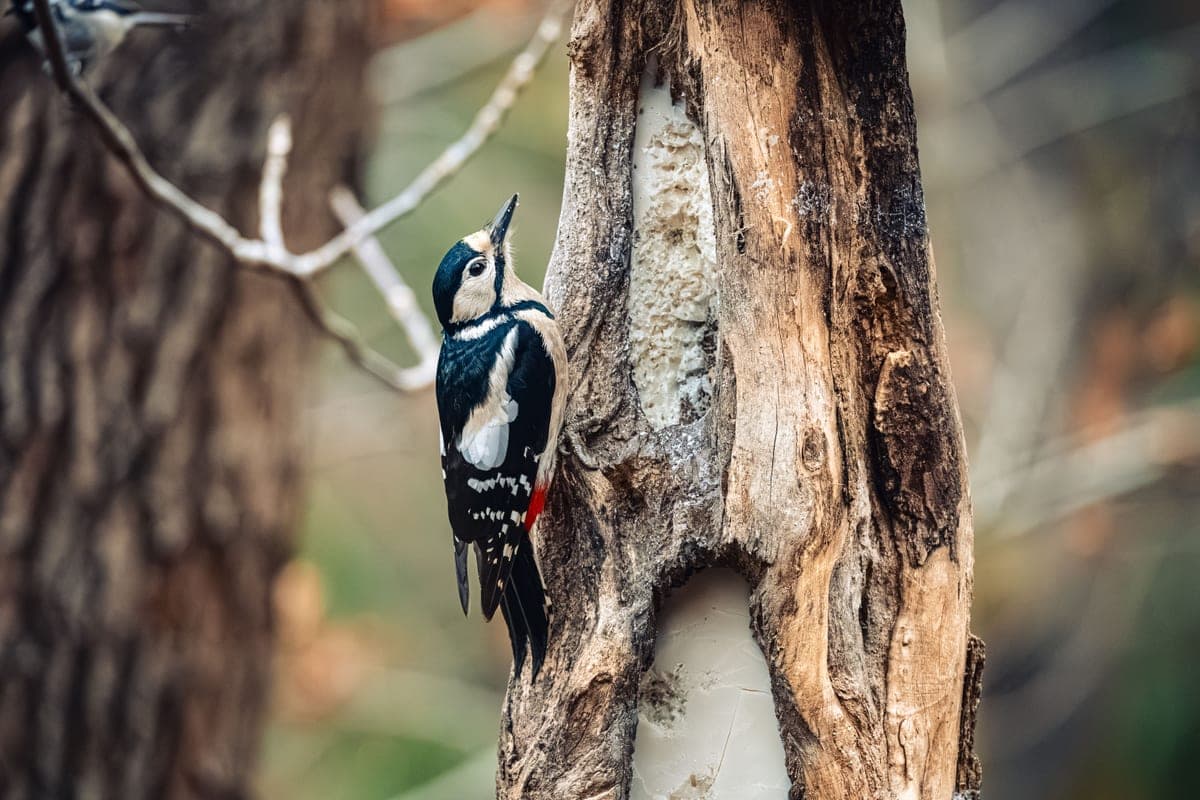
Suet is rendered fat, usually pressed into a cake with seed, nuts or mealworms. It is the highest-energy food you can offer and the fastest way to bring in woodpeckers. Use no-melt suet dough in warm weather: plain suet turns to grease that can coat a bird's feathers.
Seed & Sprig earns a commission when you buy through the links on this page, at no extra cost to you. It does not change which products we pick or the order we put them in — here is how we pick and here is how we are funded.
Quick picks
| # | Product | Best for | Price |
|---|---|---|---|
| 1 | 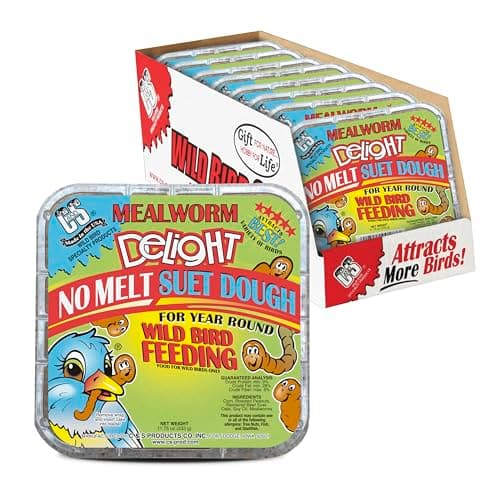 C&S Mealworm Delight No Melt Suet Dough No-melt dough with mealworms in it. Holds shape when the weather turns warm. | Best all-round cake | $19.69 · View on Amazon #ad How we are funded · Price as of October 22, 2026 |
| 2 | NWno photo Nature's Way Tail-Prop Suet Feeder (CWF1) Extended cedar back panel gives a woodpecker somewhere to brace its tail. | Best cage for woodpeckers | |
| 3 | NWno photo Nature's Way Upside-Down Suet Feeder (CWF2) Access from underneath only. Woodpeckers manage it; starlings mostly do not. | Best against starlings |
Rows link to the full write-up further down this page. The price button goes to Amazon.
Suet is the second thing to hang up, after a seed feeder, and in autumn it is arguably the first. It is rendered animal fat — usually beef — pressed into a cake, often with seed, nuts, fruit or mealworms mixed in. Per gram it carries more energy than anything else you can offer, which is exactly what a small bird needs on a cold night.
Who turns up for suet
Project FeederWatch names woodpeckers, nuthatches and chickadees as the birds a suet cage attracts. Woodpeckers are the reason most people put suet out: they are large, striking, and they will often visit a suet cage within days of it appearing when they have ignored a seed feeder for weeks.
Starlings also love it, in numbers, which is the standard suet problem and has a standard solution — see below.
Plain suet or no-melt dough?
| Plain rendered suet | No-melt suet dough | |
|---|---|---|
| What it is | Rendered fat, sometimes with seed | Fat blended with corn, oats and oil so it holds shape |
| Best temperature | Cold weather only | Warm and cold |
| Warm-weather risk | Softens, can go rancid, can coat feathers | Holds shape; still not heatproof |
| Typical fat content | Higher | C&S publishes 24% min fat for its mealworm dough |
| Best for | Deep winter feeding | Fall, spring, and anywhere temperatures swing |
The practical rule: from late spring through early autumn, buy no-melt dough. In deep winter either works. In a genuine hot spell, take suet down altogether — no formulation is truly heatproof, and it is not a food birds are short of in summer.
Reading a suet cake's ingredients
The same discipline applies as with seed. C&S publishes its Mealworm Delight ingredients as corn, roasted peanuts, rendered beef suet, oats, soy oil and mealworms — note that corn is listed first, which tells you how much of the cake is filler and partly explains why starlings and grackles find suet cakes so easy.
Cakes with nuts, mealworms or fruit high in the list bring in a wider range of birds. Cakes that are mostly corn bring in mostly starlings.
Keeping starlings off it
The reliable answer is an upside-down feeder: suet is accessible only from below. Woodpeckers, nuthatches and chickadees hang underneath comfortably; starlings are far less willing to. It is one of the few genuinely selective mechanisms in bird feeding, and it costs no more than a standard cage.
Some woodpeckers take a week to work it out. Give it time before deciding it has failed. See suet feeders.
Suet and everything else that likes fat
Suet attracts squirrels, raccoons and — in some regions — bears. Project FeederWatch recommends against feeding at all in bear country except when bears are hibernating. Squirrels will take a whole cake given the chance, so a suet cage on a baffled pole is worth far more than a suet cage on a branch — which suet feeders actually resist squirrels.
If you like the idea of a solid block but want seed rather than fat, seed cylinders and cakes are the same principle without the rendered suet. Suet also raises the mice-and-rats question. Fat crumbs under the cage are as attractive to rodents as spilled seed — how to handle that.
When to start
October is the natural moment: temperatures are dropping, insects are disappearing, and the woodpeckers that will use you all winter are working out their routes now. See the fall feeding calendar.
The picks in full
#1 · Best all-round cake
C&S Mealworm Delight No Melt Suet Dough
C&S · Suet that survives a warm afternoon
A no-melt suet dough with mealworms in it, which is the version to buy whenever the temperature climbs, because plain rendered suet turns to grease and coats birds' feathers.
Published specifications
- Ingredients
- Corn, roasted peanuts, rendered beef suet, oats, soy oil, mealworms
- Crude protein
- 11.0% min
- Crude fat
- 24.0% min
- Crude fiber
- 12.0% max
- Format
- Standard cake, fits a single-cake cage
What it does well
- The no-melt formulation holds its shape in warm weather, unlike plain suet
- Mealworms in the dough pull in birds that ignore a plain seed cake
What it does not
- Corn is the first ingredient, so a share of it goes to starlings and grackles
- No suet is truly heatproof; in a hot spell, take it down
Specifications above come from the manufacturer's own published listing: C&S Mealworm Delight published ingredients and analysis.
#ad How we are funded · Price as of October 22, 2026
#2 · Best cage for woodpeckers
Nature's Way Tail-Prop Suet Feeder (CWF1)
Nature's Way · Woodpeckers, including the big ones
A single-cake suet cage with an extended cedar back panel that gives a woodpecker somewhere to brace its tail, which is the difference between a visit and a feeding session.
Published specifications
- Dimensions
- 12" H x 7.875" L x 3" W
- Capacity
- 1 standard suet cake
- Materials
- Premium cedar with rust-free hardware
What it does well
- The tail prop is not marketing: woodpeckers brace their tails when they feed
- One cake at a time means suet does not sit out going rancid
What it does not
- The open cage is easy for squirrels and starlings
- Holds one cake, so it needs refilling in cold weather
Specifications above come from the manufacturer's own published listing: Nature's Way CWF1 published specifications.
#3 · Best against starlings
Nature's Way Upside-Down Suet Feeder (CWF2)
Nature's Way · Keeping starlings off the suet
Suet reachable only from underneath, which woodpeckers, nuthatches and chickadees manage easily and starlings mostly do not.
Published specifications
- Dimensions
- 8.5" L x 8.5" W x 4.13" H
- Capacity
- 1 suet cake (8 oz)
- Materials
- Premium cedar with rust-free hardware
What it does well
- Genuinely reduces starling monopolies without excluding the birds you want
- The roof shades the cake, which slows melting
What it does not
- Some woodpeckers take a week to work it out
- Not squirrel-resistant in any way
Specifications above come from the manufacturer's own published listing: Nature's Way CWF2 published specifications.
Common questions
Do suet feeders work?
Yes, and they are usually the fastest way to bring woodpeckers to a new feeding station. Suet is the highest-energy food you can offer.
When should I feed suet?
From autumn through winter as a matter of course. In warm weather use a no-melt dough, and in a hot spell take it down.
Do suet feeders attract mice or rats?
Crumbs under the cage can. The cake itself is out of reach; what draws rodents is what falls. Keep the ground under it clear.
Do suet feeders make a mess?
Less than seed does, though fat crumbs fall and can mark a patio. A cage over grass or a tray is easier to keep tidy than one over paving.