Bird Seed
Can birds eat bread? And what else from the kitchen
The honest answer on bread is no, and the honest answer on three other kitchen staples is yes. Here is which is which.
By Scooter M. · Published · Last updated
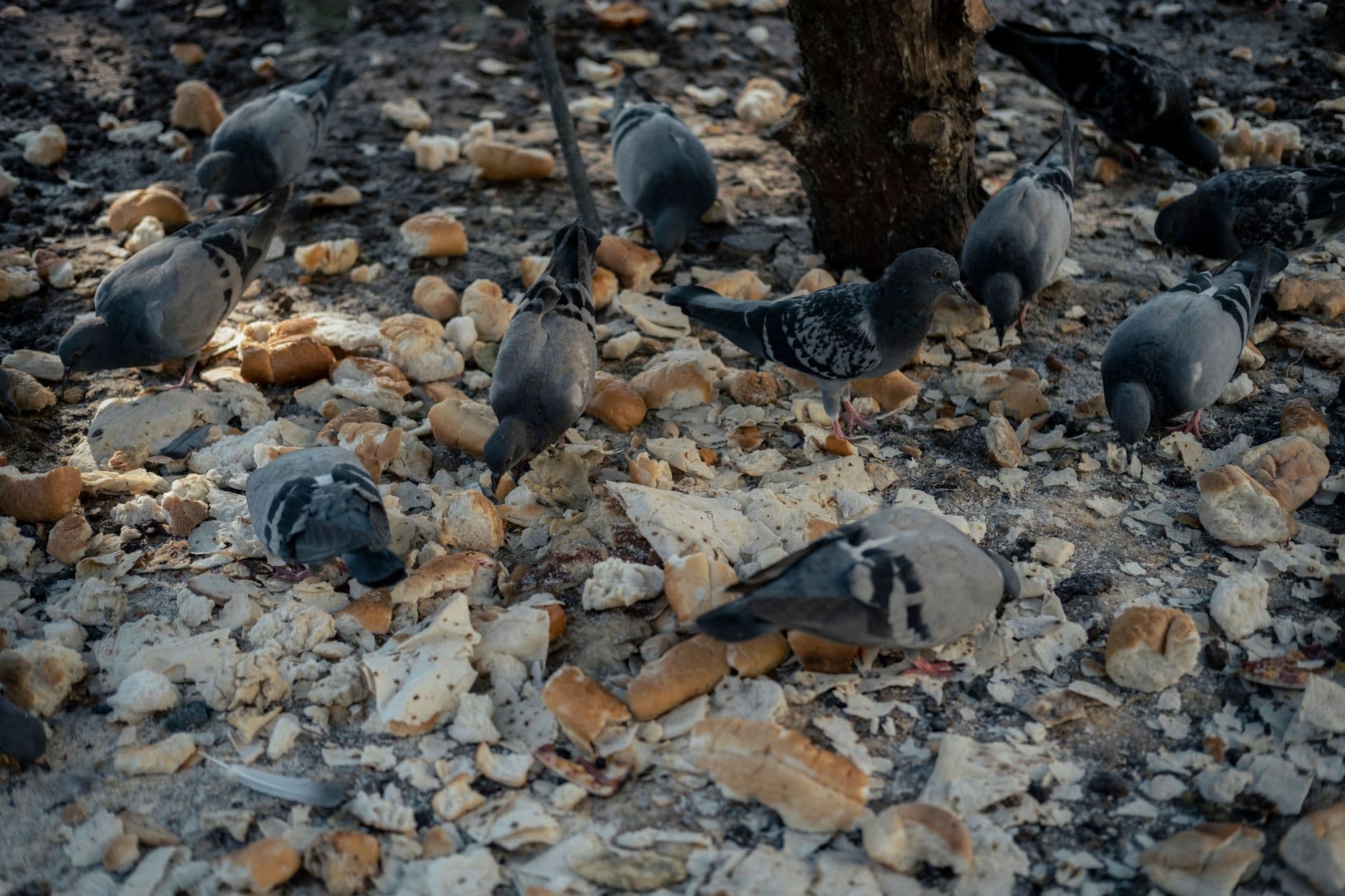
No, do not feed bread. Maryland's wildlife agency puts it plainly: avoid bread and table scraps because they spoil quickly and grow bacteria and mold that can harm or kill songbirds, and bread is junk food that does not provide proper nutrition. Plain uncooked oats, unsalted nuts and plain cooked rice are genuinely fine in small amounts.
Seed & Sprig earns a commission when you buy through the links on this page, at no extra cost to you. It does not change which products we pick or the order we put them in — here is how we pick and here is how we are funded.
This question usually arrives at one of two moments: the seed bag is empty and the birds are waiting, or there is half a loaf going stale and feeding it to the birds feels like the decent thing to do. The answers below are per-food, because “kitchen scraps” is not one category — some of it is fine and some of it is actively bad.
One framing to start with. A chickadee weighs about as much as four paperclips. The portion of bread you would think of as a treat is, to that bird, a meal — and a meal it ate instead of the insects and seeds it actually needed. That is the mechanism behind almost everything on this page.
The short answer table
| Food | Verdict | Why |
|---|---|---|
| Bread, crackers, cake, pastry | No | Spoils fast, grows mold, and displaces real food. Maryland's DNR calls it junk food for birds |
| Plain uncooked porridge oats | Yes, small amounts | A recognized winter food. WSU Extension lists it alongside seed; dry oats only, never cooked and sticky |
| Plain cooked rice, unseasoned | Yes, small amounts | Harmless and edible. Nutritionally thin, so it is a filler not a food |
| Peanut butter | Yes, mixed | WSU Extension says to mix it with suet, seed or cracked corn to lessen the chance of choking on it |
| Unsalted plain nuts, chopped | Yes | Real bird food. Salted, roasted or flavoured nuts are not |
| Raw pumpkin or squash seeds | Yes, unsalted | Rinsed and dried, no salt or oil. Chickadees and jays take them |
| Popcorn | No, in practice | Plain air-popped is not toxic, but buttered or salted is, and it molds in a day |
| Fresh fruit: apple, orange, grape | Yes | Named by Maryland's DNR as an attractant. Fresh only, swapped before it molds |
| Dried fruit | No | Many dried fruits have added sugars that Maryland's DNR says are harmful to birds |
| Bacon grease, cooking fat, drippings | No | Salted, often seasoned, and it goes rancid. Buy suet, which is the clean version of this idea |
| Cooked eggshell, baked and crushed | Yes | Maryland's DNR notes it provides calcium and grit — cooked, or baked 20 minutes at 250 degrees to sterilize |
| Milk, cheese, anything dairy | No | Birds do not digest lactose; cheese rind is also salt |
Why bread is the one to actually avoid
There are two independent problems with bread, and the second is the one people have not heard.
It is empty. Maryland's Department of Natural Resources tells backyard feeders to avoid feeding bread or other table scraps and says bread is similar to junk food for birds and does not provide the proper nutrition. Washington State University Extension's winter feeding guidance is equally direct: avoid feeding any bakery foods like crackers and breads, and sweetened products.
It spoils where it lands. The same Maryland guidance explains the real hazard: these foods can spoil quickly and grow bacteria and mold which can harm or even kill songbirds. Bread holds moisture, sits in a lump, and goes furry in a day in warm weather. Mold at a feeding station is not an aesthetic problem — FeederWatch warns that some molds create toxins harmful to birds.
Nobody is saying one crust will kill a bird. The problem is a habit: a yard where bread goes out regularly is a yard where birds are filling up on something with no fat and no protein going into a cold night, and where moldy lumps accumulate under the feeder.
The three kitchen foods that genuinely work
Dry porridge oats. Plain, uncooked, straight from the tub. WSU Extension lists nutmeats, cracked corn, thistle and white millet as good winter food sources alongside seed, and dry oats behave the same way — a carbohydrate that ground-feeding birds take readily. Scatter a handful on a tray, not a pile on the ground. Never cooked: wet oats go gluey and sour.
Peanut butter, mixed. This is the kitchen food with the best evidence behind it and a specific instruction attached. WSU Extension recommends suet and peanut butter as fatty winter foods, and says peanut butter should be mixed with suet or seed, or cracked corn for instance, to lessen the chance of birds choking on the sticky, thick peanut butter. Smear the mixture into a pine cone or the crevices of a log feeder. Plain peanut butter in a lump is the version to avoid.
Unsalted nuts and raw pumpkin seeds. Chopped, unsalted, unseasoned. These are bird food that happens to be in your cupboard — peanuts and sunflower hearts are sold as bird food for exactly this reason. Rinse and dry pumpkin seeds from a carving pumpkin and put them on a tray. Our peanut guide covers the forms and the mold rule.
The eggshell exception, which is worth knowing
One kitchen item is not a substitute for bird food but a genuine supplement. Maryland's DNR notes that ground hard-boiled egg shells can provide calcium and grit essential for birds, with the instruction to make sure the eggs are cooked before providing the shells, or to bake the shells for twenty minutes at 250 degrees to sterilize them.
Grit matters more than people realize for the seed-eaters: doves swallow small gravel to grind hard seeds, and calcium matters most to females in the nesting season. Baked, crushed eggshell on a tray costs nothing and does something no seed does. The ground-feeding crowd this is aimed at is covered here.
Raw shells are the part to get right. Bake them, crush them, and put out a small amount — this is a mineral supplement, not a meal.
What to buy instead, when the bag runs out
The honest reason most people reach for bread is that the seed has run out on a cold day. The structural fix is a second bag in the shed, and the cheapest version of the right answer is a single-ingredient one.
Black oil sunflower is the default: one ingredient, roughly 24% fat, and the widest appeal of any single seed. If you buy one thing after reading this page, buy that. Our seed roundup explains why.
Suet is the thing that bacon grease and cooking fat are a bad imitation of: the same high-fat idea, without the salt, the seasoning or the rancidity. A no-melt dough cake survives warm spells. The suet comparison is here.
Peanut pieces cover the nut impulse properly — shelled, unsalted, sold as bird food. And if the appeal of bread was that it left no shells underneath, a hulled no-mess mix is the version of that which actually feeds the birds.
The ground-feeding problem, whatever you put out
Every food on this page tends to be thrown on the ground, and that is its own hazard regardless of whether the food is good. WSU Extension puts it simply: extra feed on the ground will likely attract rats and mice, so make a habit of feeding only enough for each day.
So the rule that makes the “yes” column safe: a measured handful on a tray you can sweep, gone by dusk, rather than a pile left out overnight. Oats, rice and chopped nuts on a swept tray are fine. The same foods heaped on bare ground are a rodent problem and a mold problem within days. The full rodent playbook is here.
What about ducks and geese?
Worth a paragraph, because this is where most bread actually goes. Everything above applies with more force at a pond: bread is nutritionally empty, it fouls the water, and uneaten bread rots in the shallows. The kinder version of a trip to the duck pond is defrosted peas or sweetcorn, or plain oats — not a bag of crusts.
This site is about backyard feeders rather than waterfowl, so we will not pretend to a thorough answer on ducks. The bread answer is the same answer.
The one-line version
If a food is a single plain ingredient, unsalted, unsweetened, dry and fresh, it is probably fine in a small amount on a tray you sweep. If it is processed, salted, sweetened, cooked into a sticky mass, or going moldy, it is not. Bread fails on three of those at once, which is why it is the one food every wildlife agency names.
What we would buy for this
#1 · Instead of bread
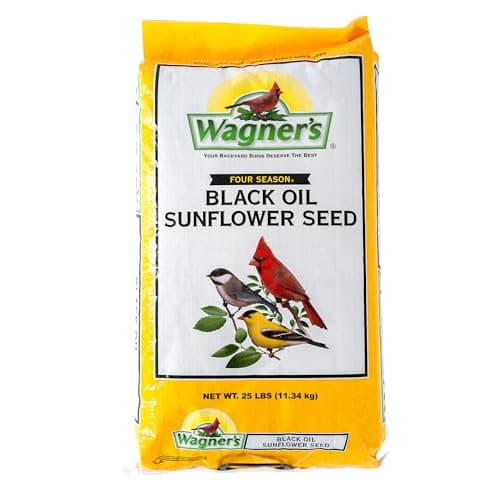
Wagner's Black Oil Sunflower Seed
Wagner's · The first bag of seed you should buy
One hundred percent black oil sunflower with nothing else in the bag, which is the seed the widest range of feeder birds actually eats, at the lowest cost per bird you will find.
Published specifications
- Ingredients
- 100% black oil sunflower
- Crude protein
- 14.0% min
- Crude fat
- 24.0% min
- Crude fiber
- 35.0% max
- Moisture
- 15.0% max
What it does well
- One ingredient, so there is nothing in the bag birds will throw on the ground
- Cardinals, chickadees, finches and sparrows all take it
- The cheapest way to fill a feeder that birds will actually empty
What it does not
- The hulls make a mess under the feeder and can kill the grass
- Squirrels like sunflower as much as birds do
Specifications above come from the manufacturer's own published listing: Wagner's Four Season black oil sunflower published analysis, Project FeederWatch — seed preferences.
#ad How we are funded · Price as of October 22, 2026
#2 · Instead of fat scraps
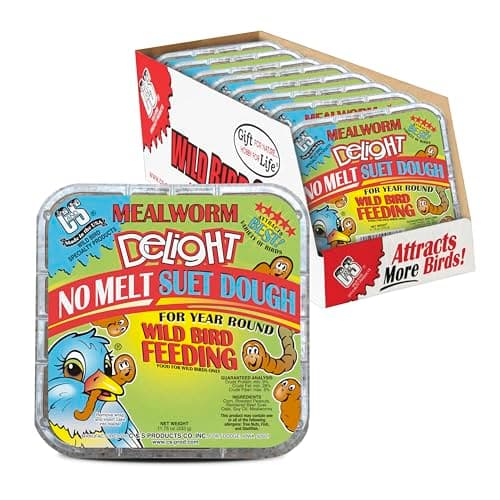
C&S Mealworm Delight No Melt Suet Dough
C&S · Suet that survives a warm afternoon
A no-melt suet dough with mealworms in it, which is the version to buy whenever the temperature climbs, because plain rendered suet turns to grease and coats birds' feathers.
Published specifications
- Ingredients
- Corn, roasted peanuts, rendered beef suet, oats, soy oil, mealworms
- Crude protein
- 11.0% min
- Crude fat
- 24.0% min
- Crude fiber
- 12.0% max
- Format
- Standard cake, fits a single-cake cage
What it does well
- The no-melt formulation holds its shape in warm weather, unlike plain suet
- Mealworms in the dough pull in birds that ignore a plain seed cake
What it does not
- Corn is the first ingredient, so a share of it goes to starlings and grackles
- No suet is truly heatproof; in a hot spell, take it down
Specifications above come from the manufacturer's own published listing: C&S Mealworm Delight published ingredients and analysis.
#ad How we are funded · Price as of October 22, 2026
#3 · Instead of salted nuts
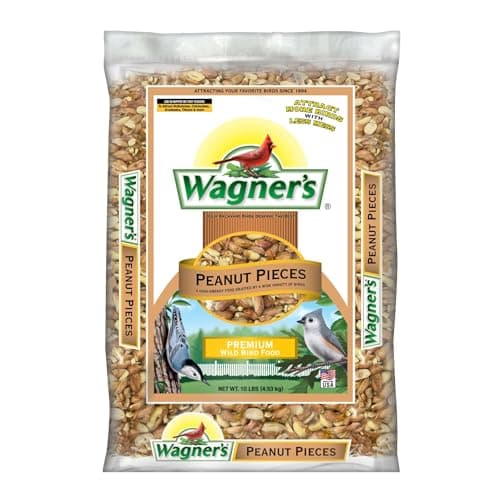
Wagner's Shelled Peanut Pieces, 10 lb
Wagner's · Mesh peanut feeders and no-waste feeding
Shelled peanut pieces sized for a mesh feeder, with no shells to rake up. This is the form that actually feeds small birds rather than just entertaining the jays.
Published specifications
- Weight
- 10 lb
- Form
- Shelled peanut pieces, no shells
- Attracts
- Woodpeckers, chickadees, jays, nuthatches (listing)
- Use
- Sized for feeder use, per the listing
- Model
- 57055
What it does well
- No shells means no litter under the feeder and nothing wasted
- Pieces are small enough for chickadees and nuthatches, which cannot manage a whole peanut
- Works in the mesh peanut feeders that whole nuts jam in
What it does not
- Shelled nuts have no protective shell, so they spoil faster and must be kept dry
- Ten pounds is more than a single feeder gets through before freshness matters
- Squirrels empty a mesh peanut feeder faster than any other feeder you own
Specifications above come from the manufacturer's own published listing: Wagner's 57055 Shelled Peanut Pieces — published listing (weight, form, species, feeder use).
#ad How we are funded · Price as of October 22, 2026
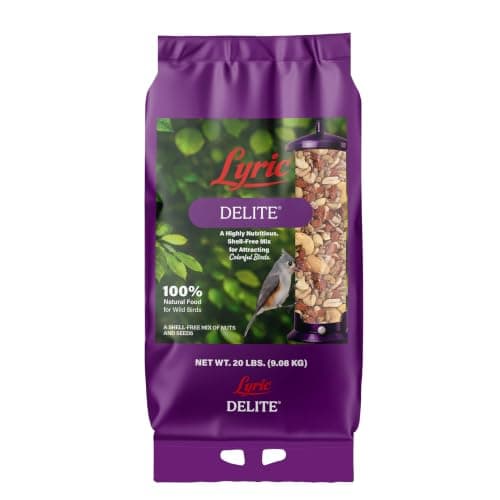
#4 · If mess was why you used bread
Lyric Delite No Waste Mix
Lyric · The genuinely filler-free no-mess bag
Shelled peanuts, sunflower kernels, pecans, pistachios and pumpkin seed: an expensive bag with no corn, no millet and nothing that ends up on the ground.
Published specifications
- Ingredients
- Shelled peanuts, sunflower kernels, pecans, pistachios, shelled pumpkin seed
- Crude protein
- 20% min
- Crude fat
- 35% min
- Crude fiber
- 10% max
- Moisture
- 12% max
What it does well
- No corn, no millet, no milo — nothing in the bag is filler
- Shell-free seed will not sprout under the feeder
- The highest fat content of any mix here, which matters in cold weather
What it does not
- Expensive per pound, though far less of it is wasted
- Nut-heavy mixes are exactly what squirrels want most
Specifications above come from the manufacturer's own published listing: Lyric Delite published ingredients and analysis.
#ad How we are funded · Price as of October 22, 2026
Common questions
Can birds eat bread?
They can swallow it, and they should not be given it. Maryland's DNR advises avoiding bread and table scraps because they spoil quickly and grow bacteria and mold which can harm or even kill songbirds, and says bread is similar to junk food and does not provide proper nutrition.
Can birds eat rice?
Plain cooked rice, unseasoned and unsalted, is harmless in small amounts. It is nutritionally thin, so it is a filler rather than a food, and it spoils quickly — put out a little on a tray and clear what is left.
Can birds eat oats?
Yes — plain, dry, uncooked porridge oats are a recognized cold-weather food and ground-feeding birds take them readily. Never cooked: wet oats turn gluey and sour fast.
Is peanut butter safe for birds?
Yes, mixed rather than neat. WSU Extension recommends mixing peanut butter with suet, seed or cracked corn to lessen the chance of birds choking on the sticky, thick peanut butter, and suggests packing the mixture into pine cones.
Can I put out pumpkin seeds?
Yes, if they are raw, rinsed, dried and unsalted. Chickadees, jays and nuthatches will take them. Salted or oiled seeds from a snack packet are not suitable.
What can I feed birds if I have run out of bird seed?
Dry oats, chopped unsalted nuts, raw unsalted seeds, fresh apple or orange, and peanut butter mixed with oats or cornmeal. A measured handful on a tray, cleared the same day — and buy a bag of black oil sunflower seed, which is the real fix.
Are kitchen scraps bad for birds generally?
Processed, salted, sweetened and cooked-fatty scraps are. Maryland's DNR warns that salted and sugared foods can be dangerous for small birds. Single plain ingredients, dry and fresh, in small amounts, are a different thing.
Sources
- Maryland Department of Natural Resources — Supplemental Feeding Wild Birds (bread and table scraps, salted and sugared foods, fresh fruit only, eggshells for calcium and grit)
- Washington State University Extension — Winter Feeding Birds (avoid bakery foods, peanut butter mixed to prevent choking, ground feed attracts rodents)
- Cornell Lab of Ornithology, Project FeederWatch — moldy food creates toxins harmful to birds