Feeder Types
The best bird feeders, one per type
Seven categories, seven picks, and the reason each one wins its category rather than the whole page.
By Scooter M. · Published · Last updated
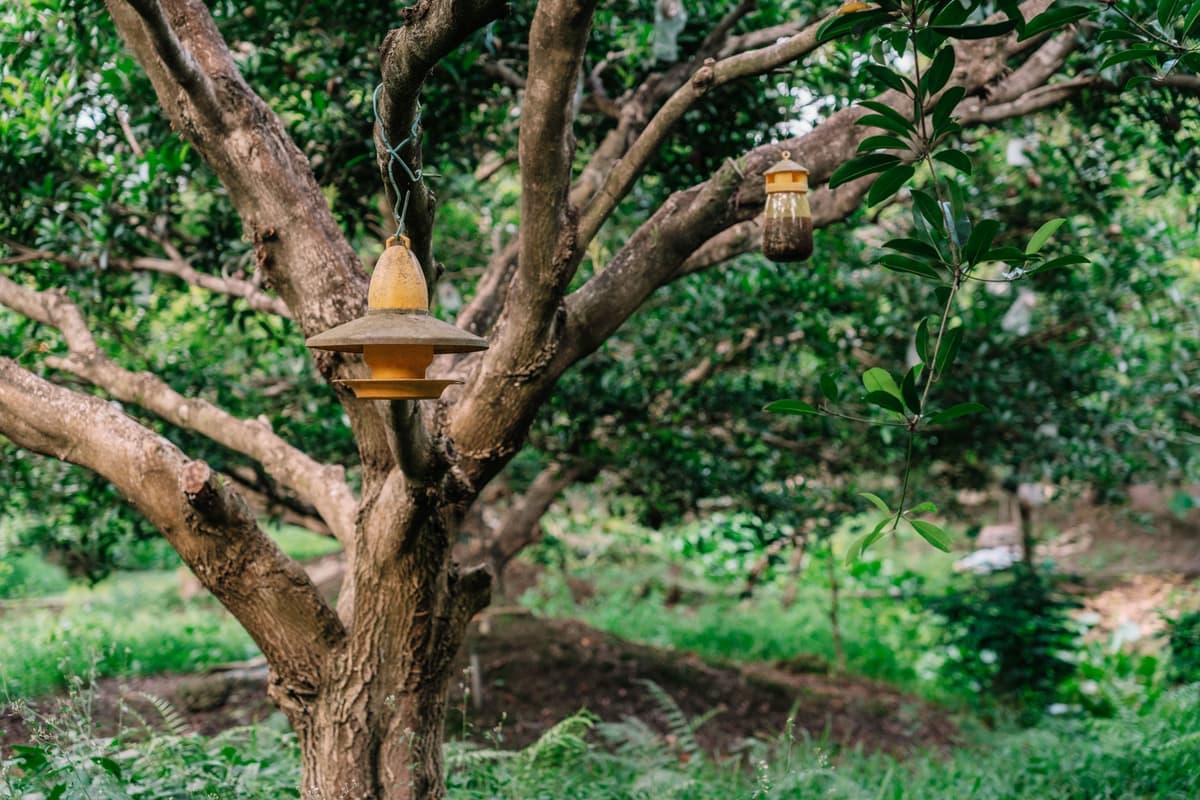
There is no single best bird feeder, because the types exclude different birds on purpose. For most yards the best first buy is a plain tube feeder on a baffled pole. If squirrels are established, buy a weight-closing feeder. If you want cardinals, buy a platform tray or a hopper with a perch rail.
Seed & Sprig earns a commission when you buy through the links on this page, at no extra cost to you. It does not change which products we pick or the order we put them in — here is how we pick and here is how we are funded.
Quick picks
| # | Product | Best for | Price |
|---|---|---|---|
| 1 | DYno photo Droll Yankees Onyx Clever Clean 18" Sunflower Tube Feeder 2 lb, four ports, and a base that twists off so cleaning actually happens. | Best tube feeder | |
| 2 | 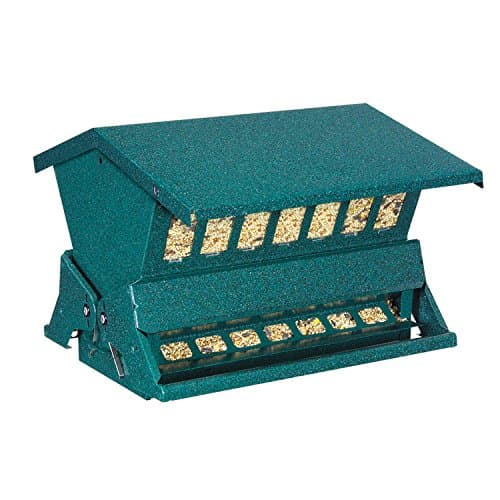 Woodlink Absolute II (model 7536) 12 lb, six ports, counterweighted perches with three weight settings. | Best hopper feeder | $84.00 · View on Amazon #ad How we are funded · Price as of October 22, 2026 |
| 3 | 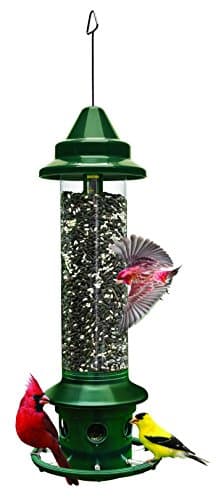 Brome Squirrel Buster Plus 5.1 lb and an adjustable weight shroud — the mechanism that fights back. | Best squirrel-resistant feeder | $125.90 · View on Amazon #ad How we are funded · Price as of October 22, 2026 |
| 4 | NWno photo Nature's Way Cedar Platform Tray Feeder (CWF3) 12" x 12" of cedar with a screen bottom that drains. The cardinal answer. | Best platform tray | |
| 5 | NWno photo Nature's Way Tail-Prop Suet Feeder (CWF1) A tail-prop panel, which is what turns a woodpecker visit into a meal. | Best suet feeder | |
| 6 | DYno photo Droll Yankees Onyx Clever Clean 18" Finch Feeder Narrow nyjer ports and the same removable base. Nyjer needs both. | Best finch feeder | |
| 7 | 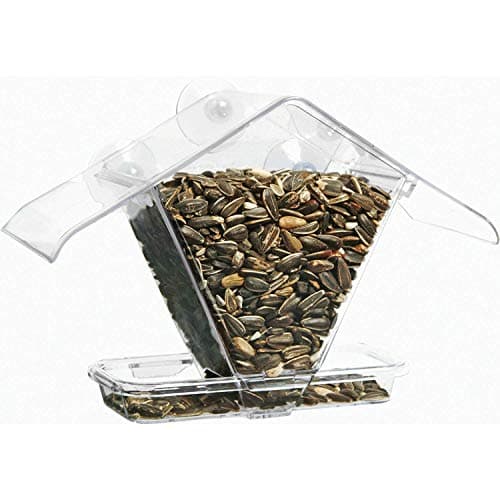 Aspects Window Cafe Window Feeder (model 155) 1.5 lb on three suction cups, and the body slides out to refill from inside. | Best window feeder |
Rows link to the full write-up further down this page. The price button goes to Amazon.
“Best bird feeder” is the question everyone types, and it does not have a single answer, because feeder types are not competing versions of the same product. Each one admits some birds and excludes others deliberately. So this page picks a winner per category, and then tells you which category you are actually in.
Which category are you in?
| If this is you | Buy | Then read |
|---|---|---|
| First feeder, ordinary yard | A tube feeder plus a pole and baffle | The first-setup walkthrough |
| Squirrels already winning | A weight-closing feeder | What squirrel-proof actually means |
| You want cardinals and jays | A platform tray or a hopper with a rail | Platform feeders |
| Starting in autumn | Add a suet cage to whatever else you buy | The fall calendar |
| You want goldfinches | A narrow-port nyjer feeder | Finch feeders |
| No yard at all | A window feeder or a small rail-mounted tube | Balcony feeding |
What we ranked on
Within each category: whether the design solves the problem that category exists for, whether it can be cleaned in about two minutes, whether the capacity matches a realistic refill habit, and what the manufacturer commits to in writing. Full criteria on the methodology page.
Cleaning weighs unusually heavily here, and it is not fussiness. Project FeederWatch asks for cleaning every week or two, and more often in heavy use or wet weather. A feeder that takes twenty minutes to strip is a feeder that gets cleaned twice a season, and a dirty feeder is worse for birds than no feeder.
Which feeder attracts the most birds?
If the goal is raw variety, the answer is not one feeder — it is two. A tube of black oil sunflower plus an open platform tray covers almost the whole cast: the tube serves chickadees, titmice, nuthatches and finches, and the tray serves cardinals, jays, doves and juncos, which mostly will not use a tube port.
Add a suet cage in October and you have covered woodpeckers as well. That is three items and it is the complete answer for most yards. (A camera does not belong on that list — what a smart feeder actually adds is photographs, not birds.) The longer version is here.
The pick that is not on this list
A baffle. Every feeder above except the window feeder works better on a baffled pole, and unlike a feeder, a baffle never becomes obsolete — it protects whatever you hang on it for the next decade. If your budget covers one good feeder or one plain feeder plus a baffle, buy the second combination.
What each winner costs you
- The tube excludes cardinals and jays. That is the trade for keeping grackles off — if cardinals are the whole point, start with the cardinal picks instead.
- The hopper holds twelve pounds, which means seed can sit for weeks in damp weather if you are not disciplined about emptying it.
- The weight-closing feeder is the most expensive item here, and it is still defeated by a squirrel that reaches its top from above.
- The platform tray is completely open — to weather and to squirrels.
- The suet cage attracts starlings as readily as woodpeckers unless you buy the upside-down version.
- The finch feeder serves one family of birds and uses the most expensive seed on the shelf.
- The window feeder holds very little and its suction cups fail in a hard freeze.
None of those is a reason not to buy the thing. They are the reasons the categories exist, and knowing them in advance is most of what separates a feeder that works from one that gets moved three times and then put in the shed.
The picks in full
#1 · Best tube feeder
Droll Yankees Onyx Clever Clean 18" Sunflower Tube Feeder
Droll Yankees · A plain, well-made first tube feeder
A straightforward polycarbonate tube whose base twists off in seconds, which is the single feature that decides whether a feeder gets cleaned or quietly turns into a health problem.
Published specifications
- Seed capacity
- 2 lb
- Height
- 18"
- Feeding ports
- 4
- Materials
- UV-stabilized polycarbonate tube; powder-coated metal cap, base and ports
- Cleaning
- Twist-and-release removable base; one-touch top opening
What it does well
- The removable base turns cleaning from a chore into a two-minute job
- Metal ports resist squirrel chewing better than all-plastic tubes
- Short perches keep grackles and jays off without excluding finches
What it does not
- No squirrel mechanism at all, so this feeder needs a baffle or a pole
- Four ports fill up quickly at a busy station
Specifications above come from the manufacturer's own published listing: Droll Yankees Onyx Clever Clean published specifications.
#2 · Best hopper feeder
Woodlink Absolute II (model 7536)
Woodlink · Big capacity and cardinals — the hopper answer to squirrels
A double-sided steel hopper whose counterweighted perches drop a shield over the seed tray when something heavy lands, and it holds twelve pounds so it barely needs attention.
Published specifications
- Seed capacity
- 12 lb
- Dimensions
- 16" W x 11.25" H x 13.5" D
- Feeding ports
- 6 (both sides)
- Mechanism
- Two counterbalanced perches, adjustable to three weight settings
- Materials
- Steel and acrylic
What it does well
- 12 lb capacity means refills measured in weeks, not days
- Perch tension adjusts for light, medium or heavy birds
- The long perch rail suits cardinals, which will not use a small tube port
What it does not
- Twelve pounds of seed is heavy, so the hook or pole has to be rated for it
- Seed sitting for weeks in wet weather is how mold starts; a big hopper needs the same cleaning discipline as a small one
Specifications above come from the manufacturer's own published listing: Woodlink Absolute II published specifications.
#ad How we are funded · Price as of October 22, 2026
#3 · Best squirrel-resistant feeder
Brome Squirrel Buster Plus
Brome · The one feeder to buy if you only buy one
A weight-closing tube feeder with a large capacity and a cardinal ring, and the closest thing to a genuinely squirrel-resistant feeder that a beginner can hang up and stop thinking about.
Published specifications
- Seed capacity
- 5.1 lb
- Height
- 28" base to hanger
- Feeding ports
- 6, plus a cardinal ring
- Mechanism
- Weight-adjustable spring shroud
- Materials
- Chew-proof, UV-resistant components
- Warranty
- Brome Lifetime Care
What it does well
- The spring tension is adjustable, so you can shut out heavy birds as well as squirrels
- Comes apart by hand for cleaning, which means it actually gets cleaned
- 5.1 lb is enough that a busy fall week does not mean daily refills
What it does not
- The most expensive feeder in this roundup by a wide margin
- The shroud collects seed dust and needs a full strip-down every couple of weeks
- A squirrel that can reach the top hanger still wins, so this is not a substitute for a baffle
Specifications above come from the manufacturer's own published listing: Brome — Squirrel Buster Plus (manufacturer store).
#ad How we are funded · Price as of October 22, 2026
#4 · Best platform tray
Nature's Way Cedar Platform Tray Feeder (CWF3)
Nature's Way · Cardinals, jays, doves and anything that will not use a tube
An open cedar tray with a removable screen bottom, which is the honest answer for the big ground-feeding birds a tube feeder quietly excludes.
Published specifications
- Dimensions
- 12" x 12" x 2.25"
- Capacity
- 3 quarts
- Materials
- Premium cedar, stainless steel screws, powder-coated galvanized steel seed tray
- Drainage
- Removable screen tray for drainage and airflow
What it does well
- Cardinals and jays use it immediately; they often will not use a small tube port
- The screen bottom drains, which is the difference between a tray and a puddle
- Nothing to break, and it cleans in a minute
What it does not
- Completely open to squirrels, so this one belongs on a baffled pole or nowhere
- Seed is exposed to rain even with drainage, so put out small amounts
Specifications above come from the manufacturer's own published listing: Nature's Way CWF3 published specifications.
#5 · Best suet feeder
Nature's Way Tail-Prop Suet Feeder (CWF1)
Nature's Way · Woodpeckers, including the big ones
A single-cake suet cage with an extended cedar back panel that gives a woodpecker somewhere to brace its tail, which is the difference between a visit and a feeding session.
Published specifications
- Dimensions
- 12" H x 7.875" L x 3" W
- Capacity
- 1 standard suet cake
- Materials
- Premium cedar with rust-free hardware
What it does well
- The tail prop is not marketing: woodpeckers brace their tails when they feed
- One cake at a time means suet does not sit out going rancid
What it does not
- The open cage is easy for squirrels and starlings
- Holds one cake, so it needs refilling in cold weather
Specifications above come from the manufacturer's own published listing: Nature's Way CWF1 published specifications.
#6 · Best finch feeder
Droll Yankees Onyx Clever Clean 18" Finch Feeder
Droll Yankees · Goldfinches, siskins and redpolls on nyjer seed
The same tube and the same removable base as the sunflower model, with the narrow ports nyjer seed needs so it does not pour onto the grass.
Published specifications
- Seed capacity
- 2 lb
- Height
- 18"
- Seed
- Nyjer (thistle)
- Cleaning
- Twist-and-release removable base
What it does well
- Narrow nyjer ports waste far less seed than a mesh sock in wind
- Cleans as easily as the sunflower version, which matters because nyjer goes rancid
What it does not
- Nyjer is the most expensive common seed by weight
- Only finches really use it, so this is a second feeder rather than a first one
Specifications above come from the manufacturer's own published listing: Droll Yankees Onyx Clever Clean Finch published specifications.
#7 · Best window feeder
Aspects Window Cafe Window Feeder (model 155)
Aspects · Apartments, offices, and watching birds from two feet away
A suction-mounted window feeder whose seed reservoir slides out for filling, so you are not wrestling a full feeder through an open window.
Published specifications
- Capacity
- 3/4 quart, per the listing
- Filling
- Slide-out seed reservoir and tray
- Roof
- Clear roof that overhangs the seed tray
- Materials
- UV-protected polycarbonate
- Mounting
- Suction mount; the current listing does not state a cup count
- Dimensions
- Not published on the current listing
- Warranty
- Lifetime guarantee against defects and damage, per Aspects
- Origin
- Made in the USA
What it does well
- The slide-out reservoir means refilling does not mean removing the feeder
- Mounted flush to the glass, it sits in the safest zone for window collisions
- The only feeder type that works for a renter with no yard
What it does not
- Suction cups fail in a hard freeze and need cleaning and re-seating
- Squirrels reach window feeders more often than people expect
- Three quarters of a quart is a small feeder: expect to fill it often in winter
Specifications above come from the manufacturer's own published listing: Aspects Window Cafe (model 155) — published listing (capacity, slide-out reservoir, roof, materials, warranty).
Common questions
What is the best bird feeder overall?
There is no single answer, because feeder types exclude different birds on purpose. For a first feeder in an ordinary yard, a tube feeder on a baffled pole is the best default.
Which bird feeder attracts the most birds?
A tube and an open tray together, because between them they serve both the small perching birds and the larger ground-feeding species a tube excludes.
What is the best bird feeder material?
Metal parts where squirrels can chew — ports, caps and hangers — with polycarbonate or cedar for the body. See bird feeder materials.
How many bird feeders should I have?
Start with one, add a suet cage in autumn, and add a tray if cardinals are around. Three is a complete setup for most yards.