Bird Seed
Seed cylinders, cakes and bells
The tidiest way to feed birds and the most expensive. Both of those are true, and which matters more depends on your yard.
By Scooter M. · Published · Last updated
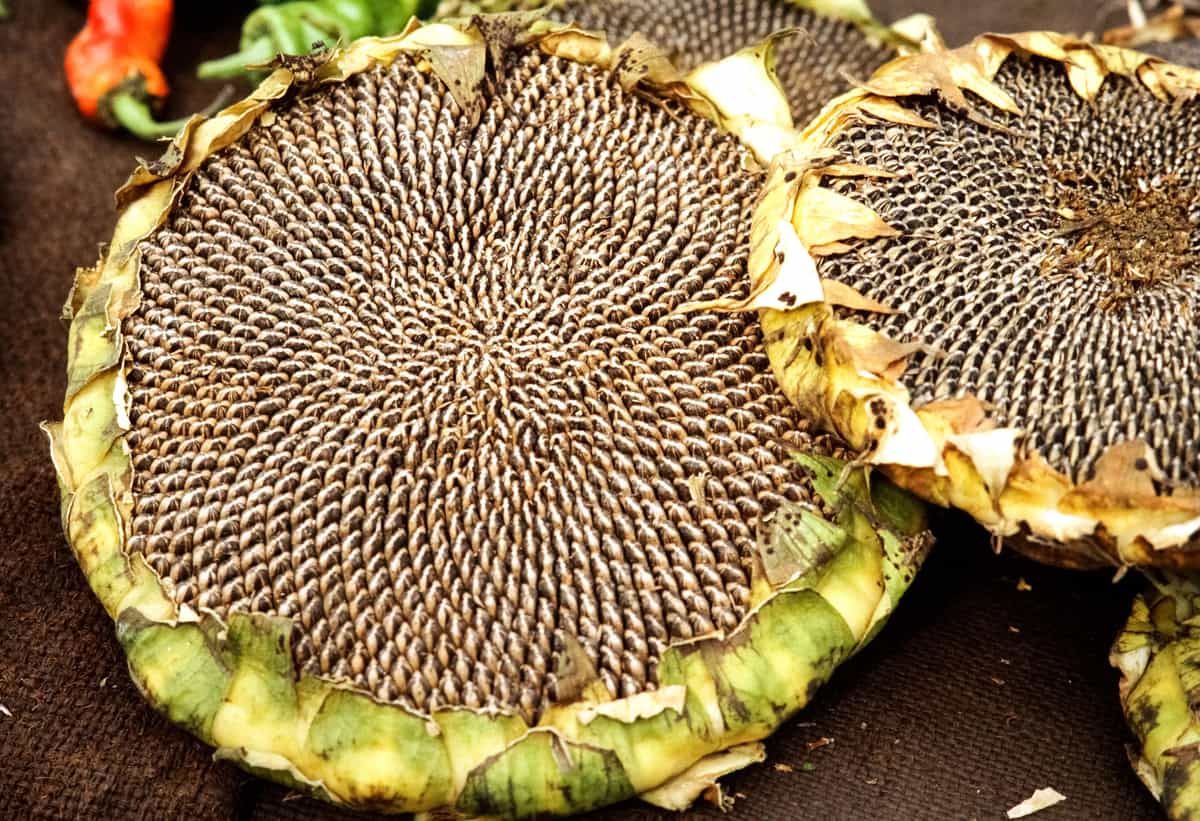
A seed cylinder is loose seed pressed into a solid block. Almost nothing is wasted because nothing can be flicked out, and it lasts far longer than the same weight loose. It also costs several times as much per pound, which is the whole trade.
Seed & Sprig earns a commission when you buy through the links on this page, at no extra cost to you. It does not change which products we pick or the order we put them in — here is how we pick and here is how we are funded.
Quick picks
| # | Product | Best for | Price |
|---|---|---|---|
| 1 | 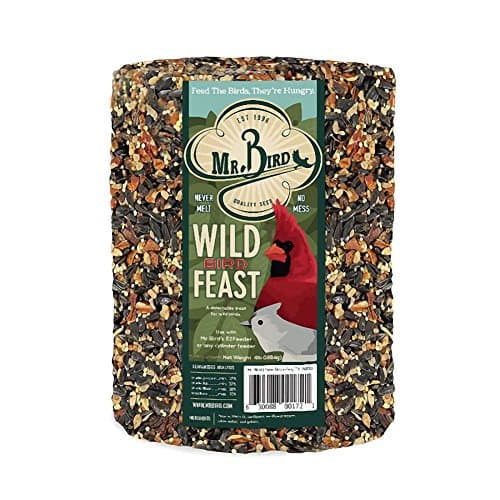 Mr. Bird WildBird Feast Cylinder, 4 lb Four pounds pressed solid. The format at the size that makes sense. | Best seed cylinder | $23.96 · View on Amazon #ad How we are funded · Price as of September 16, 2026 |
| 2 | 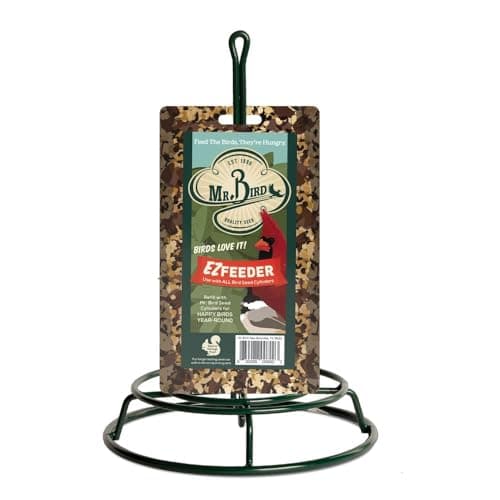 Mr. Bird EZFeeder for Seed Cylinders A rod and a roof. A cylinder without one is a block on the ground. | The holder you will need | $24.00 · View on Amazon #ad How we are funded · Price as of September 16, 2026 |
| 3 | 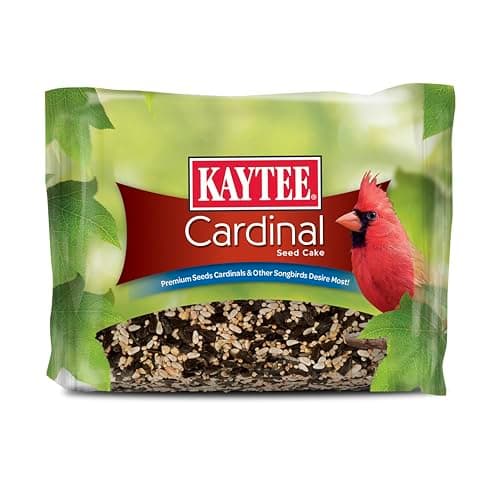 Kaytee Cardinal Seed Cake, 1.85 lb 1.85 lb, fits a suet cage, costs little enough that being wrong is free. | Cheapest way to try the format | $6.49 · View on Amazon #ad How we are funded · Price as of September 16, 2026 |
| 4 | 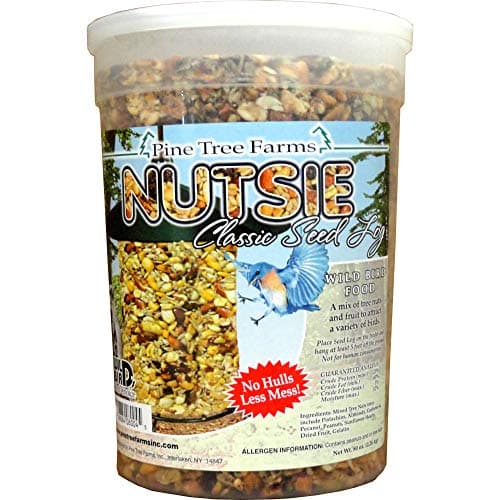 Pine Tree Farms Nutsie Classic Seed Log, 80 oz Five pounds of nut-heavy log — refills measured in weeks, not days. | Longest lasting | $30.39 · View on Amazon #ad How we are funded · Price as of September 16, 2026 |
| 5 | 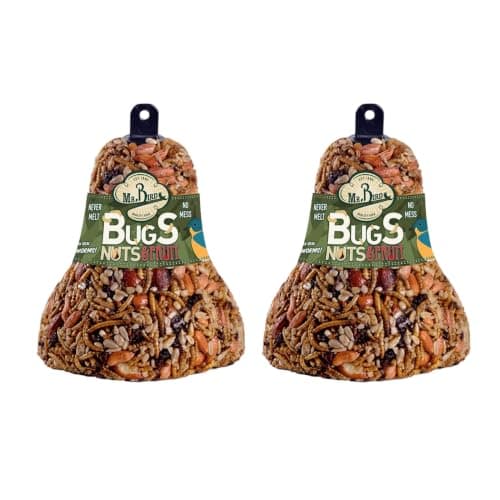 Mr. Bird Bugs, Nuts & Fruit Seed Bell, 12.5 oz Hangs on its own loop, no feeder at all. Also the priciest seed per pound here. | Lowest commitment | $16.25 · View on Amazon #ad How we are funded · Price as of September 16, 2026 |
| 6 | 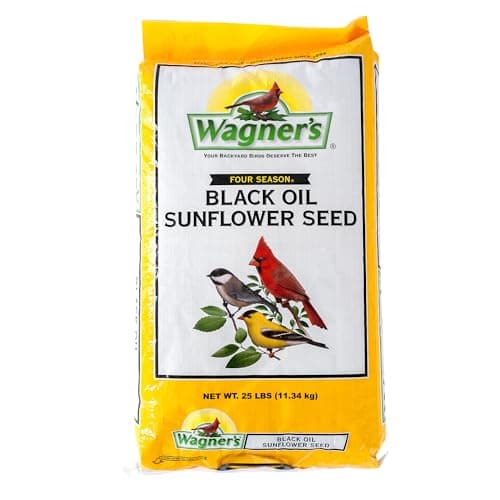 Wagner's Black Oil Sunflower Seed 25 lb of loose sunflower. Messier, and a fraction of the cost per pound. | What it actually competes with | $41.98 · View on Amazon #ad How we are funded · Price as of September 16, 2026 |
Rows link to the full write-up further down this page. The price button goes to Amazon.
A seed cylinder is exactly what it sounds like: ordinary bird seed, pressed with a binder into a solid block with a hole through the middle, sold to be slid onto a rod and hung up. Cakes and bells are the same idea in different shapes.
People either love them or think they are a con, and both camps have a point. This page is the arithmetic that separates the two, because the format solves a real problem and charges a real premium for it.
What the format genuinely solves
Two things, and the first one is the reason anybody pays the premium.
Nothing gets flicked out. The most wasteful thing birds do at a feeder is sort — they push aside what they do not want to reach what they do, and that rejected seed ends up on the ground. With a pressed block there is nothing loose to push. Birds pick at the face of it and take what comes away.
That matters more than it sounds, because seed on the ground is the start of most of the problems this site writes about: it sprouts, it molds, and it is what actually draws rodents. The rodent mechanism is spillage, not the feeder, and the patch under the feeder has the same cause. A cylinder addresses both at source.
It lasts. A tube of loose seed can be emptied in a morning by a flock. A four-pound block cannot — birds can only work at it so fast. If your complaint is that you are refilling every day, this genuinely fixes it.
What it costs
Now the other side, stated plainly because nobody selling these does.
Pressed blocks cost several times more per pound than the equivalent loose seed. A four-pound cylinder and a twenty-five-pound sack of straight black-oil sunflower are in the same rough price bracket — which means, per pound, the cylinder is a different class of purchase entirely.
That is the number to run before you buy, and it is why the sack of sunflower is in our picks above. It is not there as a joke; it is the honest comparison. We publish the cost formula rather than a made-up monthly figure — divide the block price by its weight and compare it with your usual bag.
| Format | Typical published weight | Needs a feeder? | Best for |
|---|---|---|---|
| Cylinder | 4 lb | Yes — a rod and roof | The main event; longest sensible run |
| Seed log | 28 oz to 80 oz | Usually a hanger | The longest interval between refills |
| Seed cake | About 1.85 lb | Fits a suet cage | Testing the format cheaply |
| Seed bell | About 12.5 oz | No — hangs itself | Lowest commitment, shortest life |
| Loose seed | 5 to 25 lb sacks | Any feeder | Cost per pound, by a wide margin |
How we ranked these
On published listing weights and formats, and on how the product behaves once it is hanging up — no testing claim, because we have not run one. Within that we weighed four things: whether the listing states a weight at all (many do not), how long the block realistically lasts, whether it needs an extra purchase to hang, and how badly it suffers in rain. Full criteria here.
We could not weigh one thing we normally treat as central: ingredients. A seed bag carries an ingredient panel you can check for milo and cracked corn. Most pressed blocks do not itemize, and none of our picks does. That is a genuine gap in the category rather than an oversight here, and it is why the skip box above is about opacity. The filler check you can run on a seed bag simply is not available on most of these.
Which birds actually use them
Broadly, the birds that like to cling and work at a surface do best: chickadees, titmice, nuthatches, woodpeckers and finches all take to a block readily, because picking at a vertical face is close to what they already do on bark.
Cardinals and jays manage but are less comfortable, for the reason that runs through this whole site — they are heavy birds that prefer somewhere to stand. A block on a rod gives them nothing to perch on unless the feeder has a tray. Cardinals want a flat surface, and a cylinder is the opposite of that.
Nut-heavy logs shift the mix further toward woodpeckers and nuthatches, which is worth knowing if those are the birds you are after — though a suet cage is still the cheaper route to them.
The rain problem
This is the failure mode nobody warns you about, and it is specific to the format.
A pressed block is held together by a binder. Get it repeatedly wet and it softens, crumbles and falls off the rod in chunks — at which point you have converted an expensive tidy product into a pile of loose seed on the ground, which is the exact thing you paid a premium to avoid.
So a roof is not optional here in the way it is with loose seed in a tube. Either buy a cylinder feeder with a cover, or hang the block somewhere genuinely sheltered. Our page on keeping seed dry covers domes and roofed feeders, and the advice applies with more force to a block than to a tube.
The bell format is the most exposed of the lot, because it hangs bare by design. That is the trade for needing no feeder.
Squirrels, predictably
A pressed block is a solid object with nuts in it, hanging in the open, attached to nothing. It is close to the ideal squirrel target, and nut-heavy logs are the worst of the lot.
There is no mechanism here to help you — no weight shroud, no cage, nothing. Everything therefore falls to placement, exactly as it does with a suet cage: a pole, a long baffle, and real distance from anything jumpable. Baffle sizing is here, and our general position on squirrel-proofing applies unchanged.
One point in the format's favor: a squirrel cannot empty a cylinder the way it can empty a tube. It has to work at the block, which slows it down considerably. Slower is not the same as stopped, and an unsecured block is simply carried off whole.
Cleaning, which is easier than usual
A rare win. There is no reservoir of seed sitting in a chamber, no ports clogging with seed dust, and nothing to strip down — the food is the object, and when it is gone there is a bare rod to wipe.
Project FeederWatch asks for seed feeders to be cleaned every week or two and more often in heavy use or wet weather. A cylinder holder meets that with a rinse rather than a twenty-minute disassembly, which is genuinely one of the better arguments for the format. The routine is here.
Do clear whatever crumbles off underneath, though. Fragments accumulate below a block the same way hulls do below a tube, and they behave the same way once wet.
So who should buy one?
Four situations where we think it is genuinely the right call:
- Mess is the actual complaint. A deck, a patio, a small garden, a neighbor who notices — this is the format's home ground, and it beats even a no-mess hulled mix because nothing is dropped at all.
- You are away regularly. A large log outlasts a tube by a wide margin.
- You want to feed birds without running a feeding station. A bell on a hook is the whole setup, with no hardware and no maintenance.
- As a gift, or a way in. It is the least intimidating version of this hobby — nothing to assemble, nothing to fill.
And who should not: anyone feeding on a budget, anyone running several feeders, and anyone whose main aim is maximum birds per dollar. For all three, straight black-oil sunflower in a plain tube on a baffled pole wins, and it is not close. Our seed roundup compares the bags.
What each pick costs you
- The cylinder is far dearer per pound than loose seed and does not itemize its ingredients, so the filler check is unavailable.
- The holder is a second purchase on top of an already expensive food, and it has no squirrel mechanism of its own.
- The seed cake is small, so it disappears fast at a busy station.
- The nut log is heavy enough to need a hanger that can take it, and nut-heavy blends are what squirrels want most.
- The bell hangs unprotected, so rain gets at it, and it is the most expensive seed per pound on this entire site.
- The sack of sunflower is here as the honest comparison and it leaves hulls that will kill the grass beneath the feeder.
The pattern this site keeps arriving at holds here too: you are not choosing between good and bad products, you are choosing which cost you would rather pay. With pressed seed the cost is money, and what you buy with it is tidiness and time.
The picks in full
#1 · Best seed cylinder
Mr. Bird WildBird Feast Cylinder, 4 lb
Mr. Bird · The cylinder to buy if you are buying one
Four pounds of seed pressed into a solid cylinder with a center hole, which is the format's whole argument: nothing gets flicked out, because nothing is loose.
Published specifications
- Weight
- 4 lb
- Format
- Pressed cylinder with a center hole for a feeder rod
- Ingredients
- Not itemized on the listing
What it does well
- Almost no waste under the feeder — the birds pick at the block rather than sorting through loose seed
- Lasts far longer than the equivalent weight of loose seed, because it cannot be emptied in a morning
- Suits clinging birds that would rather work a surface than use a port
What it does not
- Dramatically more expensive per pound than a sack of black-oil sunflower
- The listing does not itemize ingredients, so you cannot check the filler question the way you can on a seed bag
- Needs a cylinder feeder or a stout hook — it is not going in a tube
Specifications above come from the manufacturer's own published listing: Mr. Bird WildBird Feast Cylinder — published listing (weight, format).
#ad How we are funded · Price as of September 16, 2026
#2 · The holder you will need
Mr. Bird EZFeeder for Seed Cylinders
Mr. Bird · Holding a cylinder so it does not become a squirrel gift
The holder the format needs: a rod and a roof that keeps the cylinder off the ground, out of the rain and attached to something.
Published specifications
- Dimensions
- 8.5" x 12"
- Holds
- Seed cylinders
- Materials
- Not published on the listing
What it does well
- A roof matters more with a cylinder than with loose seed, because a wet block crumbles
- Keeps the cylinder attached — an unsecured block is simply carried away
What it does not
- Another purchase on top of an already expensive food
- The listing does not publish materials, so weather durability is unknown until it arrives
- No squirrel mechanism — it still wants a baffled pole
Specifications above come from the manufacturer's own published listing: Mr. Bird EZFeeder — published listing (dimensions, purpose).
#ad How we are funded · Price as of September 16, 2026
#3 · Cheapest way to try the format
Kaytee Cardinal Seed Cake, 1.85 lb
Kaytee · Finding out whether the format suits your yard
The cheapest honest way to try a pressed seed block, at a price where being wrong costs almost nothing.
Published specifications
- Weight
- 1.85 lb
- Format
- Pressed seed cake
- Targeted at
- Cardinals, per the product name
What it does well
- Low enough in price to test the format before committing to a 4 lb cylinder
- Fits a standard suet-style cage rather than needing a dedicated cylinder feeder
What it does not
- Small, so it disappears quickly at a busy station
- Still costs far more per pound than loose sunflower
Specifications above come from the manufacturer's own published listing: Kaytee Cardinal Seed Cake — published listing (weight, format).
#ad How we are funded · Price as of September 16, 2026
#4 · Longest lasting
Pine Tree Farms Nutsie Classic Seed Log, 80 oz
Pine Tree Farms · The longest-lasting block in the category
Five pounds of nut-heavy pressed seed in log form, which is the version that survives a cold week without a daily trip outside.
Published specifications
- Weight
- 80 oz (5 lb)
- Format
- Pressed seed log
- Ingredients
- Nut blend; not itemized on the listing
What it does well
- The largest block here, so refill intervals are measured in weeks rather than days
- Nut-heavy blends pull in woodpeckers, nuthatches and titmice as well as seed eaters
What it does not
- Heavy enough that the hanger and the branch both need to be up to it
- Nut-based blocks are exactly what squirrels want most
- Ingredients are not itemized, so the filler check is not available
Specifications above come from the manufacturer's own published listing: Pine Tree Farms Nutsie Classic Seed Log — published listing (weight, format).
#ad How we are funded · Price as of September 16, 2026
#5 · Lowest commitment
Mr. Bird Bugs, Nuts & Fruit Seed Bell, 12.5 oz
Mr. Bird · The cheapest entry to the format, and the shortest-lived
A pressed bell that hangs straight from its own loop with no feeder at all, which makes it the lowest-commitment version of this idea.
Published specifications
- Weight
- 12.5 oz per bell
- Pack
- 2-pack
- Format
- Pressed bell, hangs on its own
What it does well
- No feeder required — it hangs on its own loop, which is the whole appeal
- Small enough to put out as a trial or a gift
What it does not
- Twelve ounces goes fast at a busy feeder
- Hanging unprotected means rain gets at it, and a wet bell crumbles onto the ground
- The most expensive way to buy seed per pound anywhere on this site
Specifications above come from the manufacturer's own published listing: Mr. Bird seed bell — published listing (weight, pack, format).
#ad How we are funded · Price as of September 16, 2026
#6 · What it actually competes with
Wagner's Black Oil Sunflower Seed
Wagner's · The first bag of seed you should buy
One hundred percent black oil sunflower with nothing else in the bag, which is the seed the widest range of feeder birds actually eats, at the lowest cost per bird you will find.
Published specifications
- Ingredients
- 100% black oil sunflower
- Crude protein
- 14.0% min
- Crude fat
- 24.0% min
- Crude fiber
- 35.0% max
- Moisture
- 15.0% max
What it does well
- One ingredient, so there is nothing in the bag birds will throw on the ground
- Cardinals, chickadees, finches and sparrows all take it
- The cheapest way to fill a feeder that birds will actually empty
What it does not
- The hulls make a mess under the feeder and can kill the grass
- Squirrels like sunflower as much as birds do
Specifications above come from the manufacturer's own published listing: Wagner's Four Season black oil sunflower published analysis, Project FeederWatch — seed preferences.
#ad How we are funded · Price as of September 16, 2026
Common questions
Are bird seed cylinders worth it?
If mess or refill frequency is your actual complaint, yes — almost nothing is wasted and a block lasts far longer than loose seed. If cost per pound matters, no: straight black-oil sunflower is a fraction of the price.
Do you need a special feeder for a seed cylinder?
Cylinders need a rod-style holder, ideally with a roof. Seed cakes fit a standard suet cage, and bells hang on their own loop with no feeder at all.
What birds eat seed cylinders?
Mostly the clinging birds — chickadees, titmice, nuthatches, woodpeckers and finches. Cardinals and jays manage but prefer somewhere to stand, so they do better on a holder with a tray.
Do seed cylinders go bad in the rain?
They crumble. The binder softens when repeatedly wet and the block falls apart onto the ground, which defeats the point of buying one. Use a roofed holder or a sheltered spot.
Are seed cylinders squirrel proof?
No. They are solid, nut-bearing objects hanging in the open with no mechanism. A squirrel cannot empty one as fast as a tube, but an unsecured block gets carried off. Use a baffled pole.
Seed cylinder or suet cake?
Suet is cheaper and higher in fat, which matters most in cold weather. A seed cylinder serves a wider range of seed-eating birds and makes less mess. See suet and suet cakes.