Bird Seed
Peanuts for birds
The highest-energy thing you can put out, and the fastest way to fill your yard with squirrels.
By Scooter M. · Published · Last updated
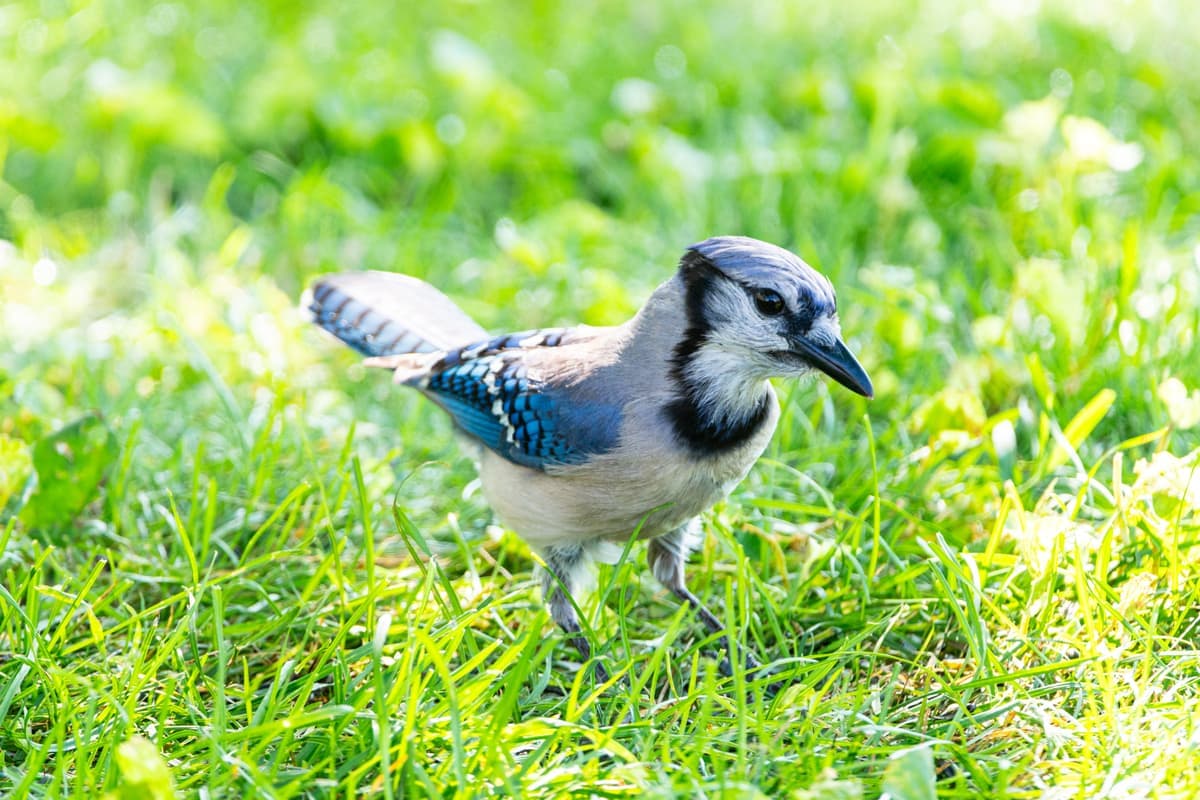
Buy shelled peanut pieces if you want chickadees, nuthatches and woodpeckers to feed, and whole in-shell peanuts if you want jays. Avoid anything salted, coated or flavored. Keep both dry, discard any peanut showing mold, and expect squirrels either way.
Seed & Sprig earns a commission when you buy through the links on this page, at no extra cost to you. It does not change which products we pick or the order we put them in — here is how we pick and here is how we are funded.
Quick picks
| # | Product | Best for | Price |
|---|---|---|---|
| 1 | 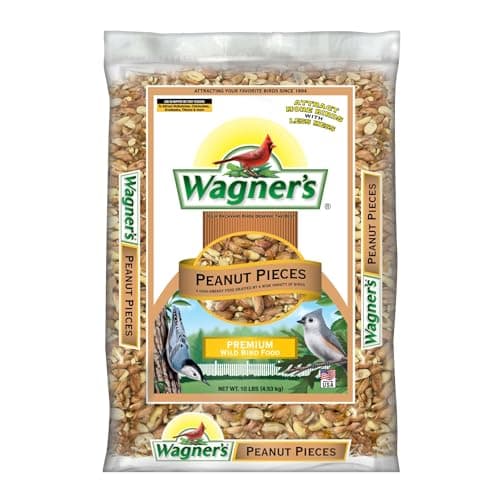 Wagner's Shelled Peanut Pieces, 10 lb Shelled pieces sized for a mesh feeder. No shells to rake, and small birds can actually eat them. | Best all-round buy | $18.99 · View on Amazon #ad How we are funded · Price as of September 21, 2026 |
| 2 | 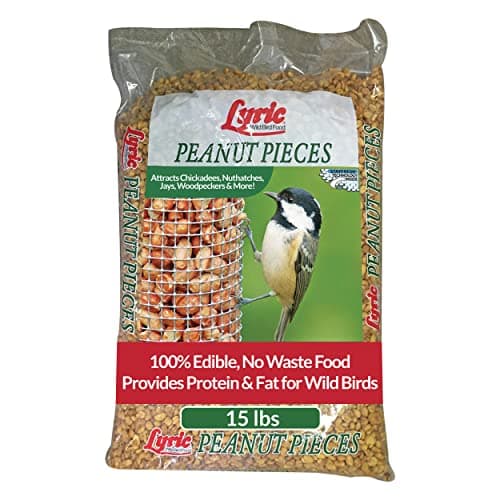 Lyric Peanut Pieces, 15 lb The lowest cost per pound here, if your storage is genuinely dry. | Best value in bulk | $31.74 · View on Amazon #ad How we are funded · Price as of September 21, 2026 |
| 3 | 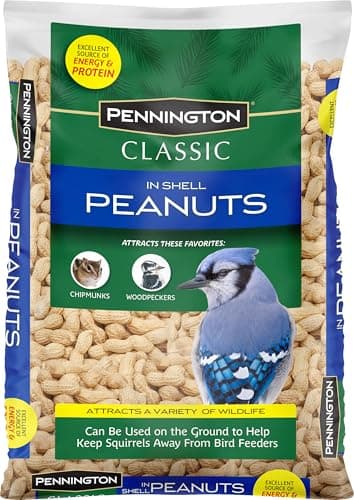 Pennington Classic In-Shell Peanuts, 5 lb Whole nuts in the shell, in a bag small enough to use before it stales. | Best for jays | $13.97 · View on Amazon #ad How we are funded · Price as of September 21, 2026 |
| 4 | 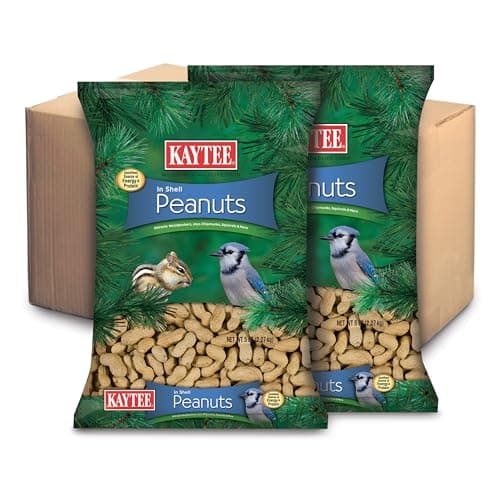 Kaytee Whole Peanuts in Shell, 2 x 5 lb Two sealed 5 lb bags, so the second stays fresh while you work through the first. | Best in-shell in quantity | $29.99 · View on Amazon #ad How we are funded · Price as of September 21, 2026 |
| 5 | 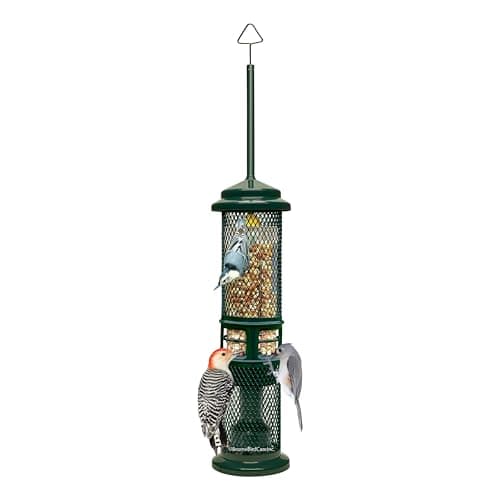 Brome Squirrel Buster Nut Feeder A weight-closing mesh feeder, which is the only kind that survives peanuts and squirrels. | The feeder to put them in | $88.76 · View on Amazon #ad How we are funded · Price as of September 21, 2026 |
| 6 | Eno photo Erva SB1D Cylindrical (Torpedo) Squirrel Baffle Peanuts on an unbaffled pole are a squirrel feeder. This is not optional. | Mandatory hardware |
Rows link to the full write-up further down this page. The price button goes to Amazon.
Peanuts are the highest-energy food most people put in a backyard feeder, and one of the few that brings woodpeckers, nuthatches, chickadees and jays to the same spot. They are also, by a distance, the most squirrel-attractive thing you can buy.
This page is about the food: which form to buy, which bag, what to avoid, and how to store it. The feeder that holds it is a separate decision, covered in our peanut feeder guide.
Two products, two different birds
The word “peanuts” covers two foods that behave nothing alike, and buying the wrong one is the usual mistake.
| Shelled pieces | Whole, in shell | |
|---|---|---|
| Who can eat it | Chickadees, nuthatches, titmice, woodpeckers | Jays and larger woodpeckers, which carry nuts off whole |
| Where it goes | Mesh tube or weight-closing nut feeder | Tray, ground, or a wire spiral |
| Mess | None to clear up | Shell fragments underneath |
| Keeps | Weeks — no shell protecting the kernel | Longer, but still spoils when wet |
| Cost per pound of food eaten | Lower — all of it is edible | Higher — you are buying shells |
FeederWatch describes the split the same way: larger birds like jays may grab several peanuts at a time and fly off to hide them for later, while smaller birds like chickadees, nuthatches and titmice have more success on shelled peanuts. If you want small birds at a peanut feeder, buy pieces. If you want the spectacle of jays queueing on a tray, buy shells.
How we chose these
On published listing specifications — weight, form, stated contents and the maker's own feeder guidance — checked against live listings in September 2026 so that every pick was purchasable. No testing claim: we have not run peanut trials, and nobody sensibly could across the species involved. We weighted, in order: whether the bag states plainly what is in it; the form, because that decides which birds benefit; the size against a realistic rate of use, since high-fat food spoils; and price per pound of actually edible food, which is where in-shell nuts look worse than they first appear. Our full criteria are here.
The rule that matters more than the brand
Peanuts are the food on this site with the clearest safety rule attached, and it is worth stating before any product recommendation.
Nothing salted, coated or flavored. FeederWatch's guidance is to offer raw or roasted peanuts but to avoid salted peanuts or peanuts that have been roasted with any coatings or flavorings. That rules out most of the supermarket snack aisle, however good the price looks.
And nothing moldy, ever. FeederWatch tells readers to keep an eye out for any signs of mold on peanut products and to dispose of moldy peanut hearts immediately. Peanuts are particularly prone to it when damp, and this is not a case for picking out the bad ones. If a batch has gone, the batch goes.
In practice that means peanuts are the food that most rewards good storage — a sealed container in a dry place, and a feeder you empty rather than top up. Keeping food dry in the feeder is half of it; keeping the bag dry is the other half.
The squirrel arithmetic
There is no polite way to put this: if you put peanuts out on an unbaffled feeder, you have bought squirrel food. Peanuts are more attractive to squirrels than sunflower, and shelled pieces most of all, because there is no shell to work through.
Two honest strategies exist, and they point in opposite directions.
- Defend the feeder. A weight-closing mesh nut feeder on a baffled pole, sited to the 5-7-9 rule. This is the setup that works, and our squirrel-resistant feeder picks explain why the mechanism matters more than the mesh.
- Feed the squirrels deliberately, away from the birds. Pennington's own listing suggests using in-shell peanuts on the ground to keep squirrels away from feeders. It is a real tactic and it does reduce raiding, but be clear about what you are doing: you are running a squirrel feeding program, and the population in your yard will respond accordingly. Our position on decoy feeding has not changed — it works better as a distraction than as a solution.
What does not work is buying a peanut feeder described as squirrel proof and hanging it from a branch.
Sizing the bag
Peanuts are high in fat, and high-fat foods go rancid. That is the whole sizing argument.
A 5 lb bag suits one feeder and a modest jay habit. Ten pounds suits a yard running a peanut feeder year-round. Fifteen pounds only makes sense if peanuts are a staple in your setup and you have sealed, cool storage — otherwise the last third of the bag is a liability rather than a saving. The arithmetic is the same one we run for seed in buying bird seed in bulk: cost per pound eaten, not cost per pound bought.
How to serve each form
The form you buy decides the feeder, and getting this pairing wrong is the most common reason a bag of peanuts sits unused in a garage.
| What you bought | Serve it in | Avoid |
|---|---|---|
| Shelled pieces | A mesh tube, or a weight-closing nut feeder | Tube feeders with seed ports — pieces jam or pour straight through |
| Whole nuts in shell | An open tray, a wire spiral, or the ground away from feeders | Any enclosed feeder; whole nuts bridge and block |
| Either, in a squirrel yard | A weight-closing feeder on a baffled pole | Cages, which squirrels simply sit on and work through |
Mesh matters more than it looks. A mesh sized for shelled pieces lets birds work a nut loose gradually, which is what keeps nuthatches and woodpeckers at the feeder for minutes at a time rather than seconds. Mesh sized too large hands over whole pieces, and a jay empties it in one visit.
The other serving decision is quantity. Put out days' worth of peanuts and you are running a squirrel program; put out what the birds clear in a day and you are feeding birds. Small and often beats large and occasional here more than with any other food, which is also the honest argument against the biggest bags.
Storing them properly
Peanuts are the feeder food most likely to go wrong in storage, for two connected reasons: they are high in fat, and they mold readily when damp.
The fat is why they go rancid. An opened bag in a warm garage over summer will smell faintly of old cooking oil within weeks, and birds refuse it — the food has not become dangerous, only worthless. Shelled pieces turn faster than whole nuts, because there is no shell protecting the kernel.
The mold is the serious half. FeederWatch's instruction is to watch for any sign of mold on peanut products and dispose of them immediately, and that is the standard we apply: no picking through, no drying out, no putting it on the ground because it seems wasteful. A container that keeps damp air out does most of the work here, and the rules are the same ones we set out for seed — sealed, rigid, cool and dark.
In the feeder, the equivalent discipline is emptying rather than topping up. Peanut feeders trap crumbs and dust at the bottom, that residue stays damp, and topping fresh nuts onto it is how a feeder grows mold while looking fine from the window. Empty it, wash it, dry it, refill it — on the same schedule as everything else.
Where peanuts fit in a setup
Peanuts are an addition, not a foundation. The foundation is black-oil sunflower in a tube or hopper, because it feeds the widest range of birds for the least money — our seed picks explain why. Peanuts earn their place when you want the specific species they bring: woodpeckers that will not use a small perch, nuthatches working head-first down a mesh tube, jays that turn up within a day of the first nut going out.
Cold weather is when they matter most. Fat and protein are what birds are short of in winter, which is the same reason suet belongs in a winter setup. In hot weather, cut back: high-fat foods spoil fastest exactly when you are least likely to notice.
Telling when a bag has turned
Peanuts give you clear warnings, and learning them takes one inspection rather than a season of trial and error. Tip a handful into your palm before each refill and check three things.
Smell. Fresh peanuts smell faintly sweet and nutty, or of almost nothing. Rancid ones smell of old oil or paint. Rancid nuts are a waste rather than a hazard — birds simply refuse them — but there is no reviving them.
Appearance. Look for any dusting of gray, green or black, particularly in the folds of a shell or the crevices of a broken piece. That is the finding that ends the discussion: mold means the batch goes, not the visible pieces.
Feel. Kernels should be firm and snap. Soft, bendy or slightly tacky pieces have taken on moisture, which is the step before mold. If a bag has reached that stage, stop putting it out and check where it was stored, because the storage is the cause rather than the bag.
The same inspection applies to the feeder, not just the bag. Peanut feeders hold damp crumbs at the bottom long after the visible nuts look fine, and that residue is where trouble starts. If you inherit a feeder that has been hanging for months, empty and wash it before you trust it.
Which birds you can expect, and when
Peanuts have the fastest response time of any food on this site. Where the birds are already present, a peanut feeder is usually found within days rather than the weeks a new seed feeder can take.
Jays first, almost always. They are bold, they are watching your yard already, and in-shell nuts are exactly what they are built to carry off — FeederWatch notes they may take several at a time and fly off to cache them. Woodpeckers follow: downies and hairies work a mesh feeder steadily, and a red-bellied will dominate one while it is there. Nuthatches and titmice come for pieces and take single fragments away to wedge in bark. Chickadees do the same, more nervously.
What you will not get is finches, doves or sparrows, which have no use for a peanut. That is worth saying because it affects the decision: peanuts widen the range of birds at the top end and do nothing for the small seed-eaters already at your tube feeder. If your yard is all finches, nyjer is the food that changes things, not peanuts.
Peanut butter, briefly
It comes up every time peanuts do. Plain peanut butter, smeared into bark crevices or a purpose-made holder, is taken readily by woodpeckers, nuthatches and chickadees. Use plain, unsweetened, unsalted butter, and keep it out of hot weather for the same reason you take plain suet down in summer — soft fat on feathers is a genuine problem rather than an aesthetic one. Our feeder page covers the holders.
What we would buy
- First peanut purchase, small birds wanted: a 10 lb bag of shelled pieces and a weight-closing mesh feeder on a baffled pole.
- You want jays: a 5 lb bag of in-shell nuts on a tray, and the acceptance that squirrels will share.
- Peanuts are a staple in your yard: the 15 lb pieces, in a sealed container, used inside a few months.
- Squirrels have already won: stop buying peanuts until the baffle is up. No other change helps.
Used well, peanuts are the most rewarding thing in the shed: they bring in the birds people most want to see, and they do it quickly. Used badly, they are an expensive way to run a squirrel buffet with a bird feeder attached.
The picks in full
#1 · Best all-round buy
Wagner's Shelled Peanut Pieces, 10 lb
Wagner's · Mesh peanut feeders and no-waste feeding
Shelled peanut pieces sized for a mesh feeder, with no shells to rake up. This is the form that actually feeds small birds rather than just entertaining the jays.
Published specifications
- Weight
- 10 lb
- Form
- Shelled peanut pieces, no shells
- Attracts
- Woodpeckers, chickadees, jays, nuthatches (listing)
- Use
- Sized for feeder use, per the listing
- Model
- 57055
What it does well
- No shells means no litter under the feeder and nothing wasted
- Pieces are small enough for chickadees and nuthatches, which cannot manage a whole peanut
- Works in the mesh peanut feeders that whole nuts jam in
What it does not
- Shelled nuts have no protective shell, so they spoil faster and must be kept dry
- Ten pounds is more than a single feeder gets through before freshness matters
- Squirrels empty a mesh peanut feeder faster than any other feeder you own
Specifications above come from the manufacturer's own published listing: Wagner's 57055 Shelled Peanut Pieces — published listing (weight, form, species, feeder use).
#ad How we are funded · Price as of September 21, 2026
#2 · Best value in bulk
Lyric Peanut Pieces, 15 lb
Lyric · Running peanuts as a staple rather than a treat
The bulk version of the same idea from a premium brand: 100% shelled peanut pieces, listed as usable in tube, mesh, hopper and platform feeders. Buy it only if your storage is genuinely good.
Published specifications
- Weight
- 15 lb
- Contents
- Shelled peanuts, listed as 100% edible with zero waste
- Attracts
- Bluebirds, chickadees, jays, nuthatches, titmice, woodpeckers and more (listing)
- Feeders
- Listed as compatible with tube, mesh, hopper and platform feeders
- Model
- 2647463
What it does well
- Lowest cost per pound of the peanut options here
- One food that works across most of the feeders a mixed setup already has
- No shell waste at all, which matters on a deck or patio
What it does not
- Fifteen pounds of high-fat, shell-free nuts is a storage problem before it is a bargain
- Shelled peanuts are the single most attractive thing you can offer a squirrel
- High-fat foods go rancid; buy this size only if you feed peanuts year-round
Specifications above come from the manufacturer's own published listing: Lyric Peanut Pieces 15 lb — published listing (weight, contents, species, feeder compatibility).
#ad How we are funded · Price as of September 21, 2026
#3 · Best for jays
Pennington Classic In-Shell Peanuts, 5 lb
Pennington · Jays, and for drawing squirrels away from the seed feeders
Whole peanuts in the shell, which is the form jays and woodpeckers want and the form squirrels carry off. Pennington's own listing suggests using them on the ground to keep squirrels away from feeders.
Published specifications
- Weight
- 5 lb
- Contents
- 100% whole peanuts, in shell
- Attracts
- Cardinals, blue jays, chipmunks and other wildlife (listing)
- Suggested use
- On the ground or a tray; the listing suggests ground feeding to draw squirrels off feeders
- Model
- 100541100
What it does well
- In-shell peanuts are the fastest way to bring jays in, and they are entertaining to watch
- The bag is small enough to use up before peanuts go stale
- Doubles as a decoy food placed away from the seed feeders
What it does not
- Squirrels, chipmunks and rodents want these more than the birds do; the listing says so itself
- Shells are litter — expect to rake underneath
- Peanuts mold readily when damp, and moldy peanuts must be discarded rather than salvaged
Specifications above come from the manufacturer's own published listing: Pennington Classic In-Shell Peanuts — published listing (weight, contents, species, suggested use).
#ad How we are funded · Price as of September 21, 2026
#4 · Best in-shell in quantity
Kaytee Whole Peanuts in Shell, 2 x 5 lb
Kaytee · A yard that already has jays and wants to keep them
Ten pounds of in-shell peanuts in two bags, from a brand that publishes what is in the bag. Kaytee recommends pairing them with a platform feeder, which is the right way to serve them.
Published specifications
- Weight
- Two 5 lb bags
- Contents
- Whole peanuts in shell
- Attracts
- Cardinals, woodpeckers, jays, chipmunks, squirrels (listing)
- Suggested feeder
- Platform feeder, per Kaytee
- Model
- 100551441
What it does well
- Two sealed bags rather than one open sack, so the second stays fresh while you use the first
- High fat and protein, which is what makes peanuts worth offering in cold weather
- Kaytee is explicit that this suits a platform feeder, and it does
What it does not
- Ten pounds of peanuts is also ten pounds of squirrel food, and the listing names squirrels as a target species
- In-shell peanuts need a tray or the ground; they will not go through a tube feeder
- Damp peanuts mold quickly, so this only makes sense with dry storage
Specifications above come from the manufacturer's own published listing: Kaytee Whole Peanuts in Shell — published listing (weight, contents, species, feeder pairing).
#ad How we are funded · Price as of September 21, 2026
#5 · The feeder to put them in
Brome Squirrel Buster Nut Feeder
Brome · Shelled peanuts without feeding the entire local squirrel population
A peanut feeder with the weight-closing shroud, which matters more here than anywhere else, because peanuts are the single most squirrel-attractive thing you can hang up.
Published specifications
- Capacity
- 1.3 lb
- Food
- Shelled peanuts, other nuts, or dried fruit
- Mechanism
- Weight-closing shroud
What it does well
- Peanuts draw woodpeckers, jays, titmice and nuthatches faster than seed does
- The mechanism is the only realistic way to run peanuts near squirrels
What it does not
- Expensive for a feeder that holds 1.3 lb
- Shelled peanuts spoil in damp weather and have to be kept dry
Specifications above come from the manufacturer's own published listing: Brome — Squirrel Buster Nut Feeder (manufacturer store).
#ad How we are funded · Price as of September 21, 2026
#6 · Mandatory hardware
Erva SB1D Cylindrical (Torpedo) Squirrel Baffle
Erva · Pole-mounted feeders
A long steel cylinder a squirrel cannot get around or hug past, and the single most effective thing you can buy after the feeder itself.
Published specifications
- Length
- 16.75"
- Diameter
- 6.25"
- Type
- Pole-mounted cylindrical baffle
What it does well
- Length is what defeats a squirrel here: it cannot reach past the top
- Steel, so it survives winters and chewing
What it does not
- Useless if the pole sits within jumping distance of a fence, wall or branch
- Must be mounted high enough that a squirrel cannot leap over it entirely
Specifications above come from the manufacturer's own published listing: Erva SB1D published dimensions.
Common questions
Can I feed birds peanuts from the supermarket?
Only if they are plain and unsalted. FeederWatch says to offer raw or roasted peanuts but to avoid salted peanuts and anything roasted with coatings or flavorings. Bird-food peanuts are the safer buy.
Are shelled or in-shell peanuts better?
Shelled pieces feed more birds: chickadees, nuthatches and titmice can manage them, while whole nuts in the shell mostly go to jays and larger woodpeckers.
Do peanuts attract squirrels?
More than any other common feeder food. A peanut feeder needs a weight mechanism and a baffled pole, or you are feeding squirrels by design.
How do I stop peanuts going moldy?
Keep the bag sealed and dry, put out small amounts, and empty the feeder rather than topping it up. FeederWatch says to dispose of moldy peanut products immediately rather than salvaging them.
Can peanuts be fed all year?
Yes, though they matter most in cold weather. In summer heat, put out less: high-fat foods spoil quickly and rancid peanuts are refused.