Feeder Types
The best bird feeders for blue jays
A jay is a large bird with a hammer for a bill that carries food away rather than eating it. Feed it accordingly.
By Scooter M. · Published · Last updated
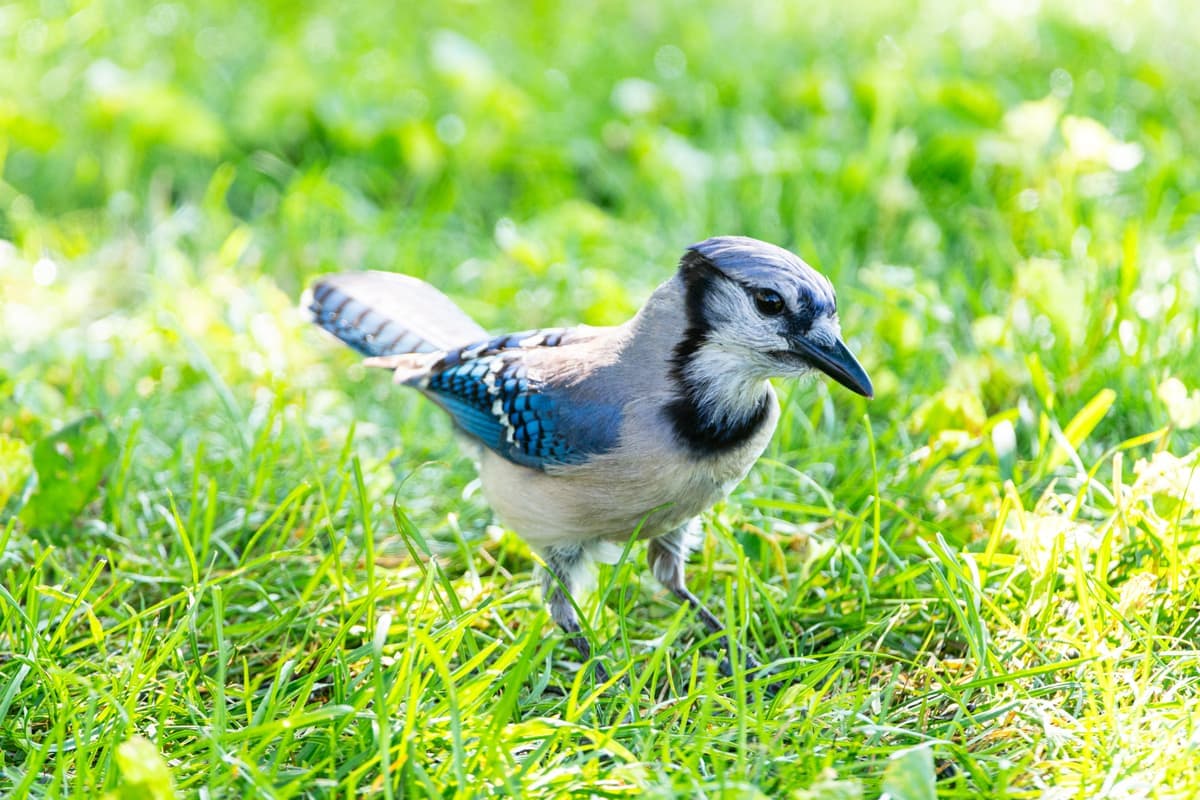
Blue jays want an open surface and something big to carry off. A cedar platform tray with whole or shelled peanuts is the most reliable combination; a large hopper with a perch rail works too. A weight-closing peanut feeder is the version that does not also feed squirrels.
Seed & Sprig earns a commission when you buy through the links on this page, at no extra cost to you. It does not change which products we pick or the order we put them in — here is how we pick and here is how we are funded.
Quick picks
| # | Product | Best for | Price |
|---|---|---|---|
| 1 | NWno photo Nature's Way Cedar Platform Tray Feeder (CWF3) An open surface big enough for a jay to land, choose, and leave with something. | Best feeder for blue jays | |
| 2 | 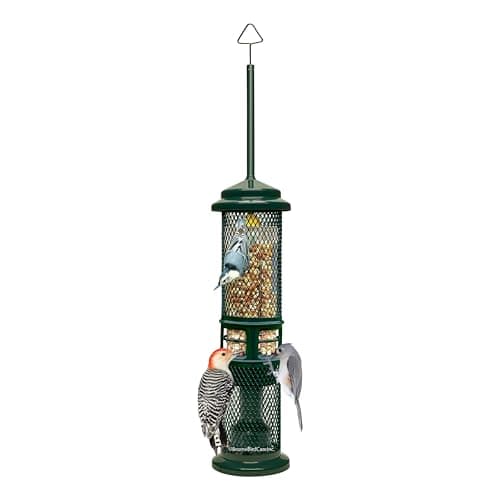 Brome Squirrel Buster Nut Feeder Peanuts are the jay magnet. This is the version squirrels do not empty. | Best peanut feeder | $92.01 · View on Amazon #ad How we are funded · Price as of October 22, 2026 |
| 3 | 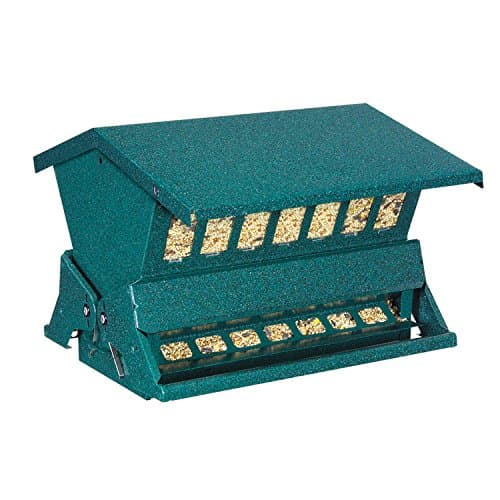 Woodlink Absolute II (model 7536) 12 lb and a long perch rail — set the counterweight light or jays are excluded too. | Best hopper for jays | $84.00 · View on Amazon #ad How we are funded · Price as of October 22, 2026 |
| 4 | 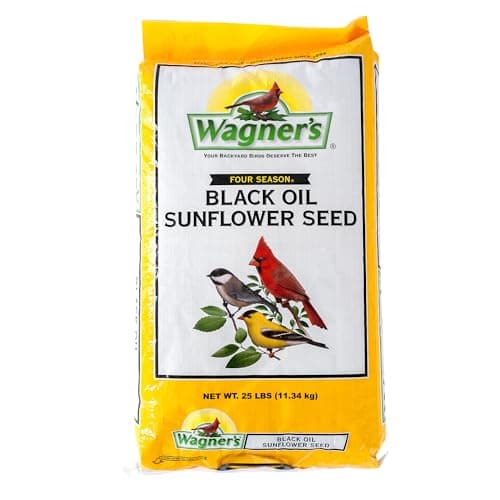 Wagner's Black Oil Sunflower Seed Jays hammer sunflower open with the bill. One ingredient, nothing thrown out. | Best seed for jays | $41.98 · View on Amazon #ad How we are funded · Price as of October 22, 2026 |
| 5 | Eno photo Erva SB1D Cylindrical (Torpedo) Squirrel Baffle An open tray of peanuts on an unbaffled pole is a squirrel installation. | Required hardware |
Rows link to the full write-up further down this page. The price button goes to Amazon.
Blue jays divide feeder-watchers more sharply than any other common bird. They are spectacular, they are loud, and they will land on a feeder, fill their throats, and leave with enough food for three other species. Whether you want that is a decision worth making on purpose, because it is difficult to reverse.
If you do want them, this page is short work. Audubon has the Blue Jay foraging in trees, shrubs and on the ground, coming to feeders for seeds or suet, pounding on hard nuts or seeds with its bill to break them open, and harvesting acorns to store them in holes in the ground. Every part of that sentence is a purchasing instruction: an open surface, hard food it can hammer, and enough volume that carrying some away does not empty the feeder.
What a blue jay needs from a feeder
| Requirement | Why it matters | What fails it |
|---|---|---|
| An open surface it can land on | A jay is a large bird. It needs to arrive, look around and take off again. | Short-perch tube feeders |
| Hard food it can hammer or carry | Audubon: jays pound hard nuts and seeds with the bill, and cache what they carry off. | Fine seed like nyjer or millet |
| Volume, or a refill habit | FeederWatch notes jays may grab several peanuts at a time and fly off to hide them. | A 1 lb feeder at a busy station |
| A baffle, if peanuts are involved | Peanuts are the most squirrel-attractive food you can put out. | A tray on a shepherd's hook |
How we ranked these
Published manufacturer specifications, plus what institutional sources say about jay behavior. We have not tested any of these and do not claim to have. Within that we weighed whether a jay can physically use the feeder, whether it holds a food jays want, how much it holds against how fast jays empty it, and how well it survives squirrels — because the food that brings jays is the food that brings squirrels. Our full criteria are here.
Peanuts, and how jays actually use them
Peanuts are the fastest way to get jays, and the reason is worth understanding because it changes how you fill the feeder. FeederWatch observes that larger birds like jays may grab several peanuts at a time and fly off to hide them for later consumption. A jay at a peanut feeder is usually not eating. It is shopping.
Practically, that means a jay will clear a small feeder in a couple of visits and then come back, and that a large tray of peanuts disappears faster than any other food you put out. Two responses work. Put out small amounts more often, which also keeps peanuts from sitting in damp weather. Or run peanuts from a weight-closing feeder so that at least the squirrels are not doing the same thing in parallel. Peanut feeders compared in full.
In-shell peanuts are the other option and they are the more entertaining one — a jay working out how to leave with a whole peanut in its bill is the show people put feeders up for. In-shell needs an open tray or a dedicated wreath-style holder; it will not go through any port.
The honest cost of inviting jays
Jays dominate a feeder while they are there. That is not aggression exactly, it is size — smaller birds wait in the shrubs until the jay leaves. If your yard is small and you run one feeder, adding jays means less time at that feeder for chickadees, titmice and finches.
The standard compromise is two stations rather than one: a tray with peanuts and sunflower well away from the main feeder, so the jays have somewhere to be that is not on top of everyone else. It costs one more feeder and it works. How many feeders a yard actually needs is covered here.
If you have decided you do not want them, the mechanism is the same one FeederWatch recommends for grackles: tube feeders with short perches and no catch basins, which accommodate small birds such as finches but exclude larger birds such as grackles and jays. Expect to lose cardinals from that feeder as well — which is a real cost if cardinals were the goal.
Will they stay all year?
Mostly. Audubon describes the Blue Jay as present all year in most of its range, with variable numbers migrating south in fall — big southward flights in some years, thousands on the move, though not south of the United States. So a quiet autumn does not mean you have done something wrong; jay numbers genuinely move around between years.
Habitat is the bigger predictor. Audubon puts them in oak and pine woods, suburban gardens, groves and towns, favoring habitat with many oak or beech trees. If you have oaks within a few hundred yards, you will get jays. If you do not, a peanut feeder improves your odds and does not guarantee anything.
In-shell or shelled peanuts?
Both work and they are not the same purchase, so it is worth deciding on purpose.
In-shell is the one people put feeders up for. A jay working a whole peanut out of a tray, weighing two of them and leaving with the heavier, is the most entertaining thing that happens at a feeder. It needs an open tray or a dedicated wreath-style holder — nothing in a shell goes through a port — and it is the more wasteful option, because the shells end up on the ground.
Shelled is the practical one. It fits a mesh peanut feeder, so it can run from a weight-closing mechanism, and every ounce of it is food. FeederWatch notes that smaller birds like chickadees, nuthatches and titmice have more success on shelled peanuts, so a shelled feeder serves the small clinging birds as well as the jays.
The one rule that applies to both: keep them dry. Peanuts spoil quickly in damp weather, and unlike sunflower there is no hull protecting them. Put out a few days' worth rather than filling a large feeder, and never leave peanuts that have been rained on.
The reputation, briefly
Jays get accused of two things at feeders. One is fair and one is mostly not.
The fair charge is dominance. They are large, they arrive in family groups, and small birds wait while they are there. That is a genuine cost of feeding them and the second station is the genuine fix.
The other charge is nest raiding. Audubon's diet account does list birds' eggs and baby birds among the many things a jay will eat, so it is not invented — but it sits at the end of a long list that is up to three-quarters vegetable matter, mostly acorns, nuts and seeds. It is a small part of what a jay does, and it is not something your feeder causes or prevents. If songbird safety in your yard is the concern, the things that actually move the needle are window collisions and cats, both of which are covered in keeping birds safe at your feeder. And if jays are what you want, in-shell peanuts are the fastest way to get them.
What each pick costs you
- The cedar tray is open to squirrels and to rain, so it belongs on a baffled pole and wants small amounts rather than a full load.
- The peanut feeder is expensive for 1.3 lb of capacity, and shelled peanuts spoil in damp weather.
- The hopper has to be set to its lightest counterweight to admit a jay at all, which means it stops excluding much of anything.
- Black-oil sunflower leaves hulls that will kill the grass under the feeder, and squirrels take it as readily as jays do.
- The torpedo baffle is useless if the pole sits within jumping distance of a fence, a wall or a branch.
The picks in full
#1 · Best feeder for blue jays
Nature's Way Cedar Platform Tray Feeder (CWF3)
Nature's Way · Cardinals, jays, doves and anything that will not use a tube
An open cedar tray with a removable screen bottom, which is the honest answer for the big ground-feeding birds a tube feeder quietly excludes.
Published specifications
- Dimensions
- 12" x 12" x 2.25"
- Capacity
- 3 quarts
- Materials
- Premium cedar, stainless steel screws, powder-coated galvanized steel seed tray
- Drainage
- Removable screen tray for drainage and airflow
What it does well
- Cardinals and jays use it immediately; they often will not use a small tube port
- The screen bottom drains, which is the difference between a tray and a puddle
- Nothing to break, and it cleans in a minute
What it does not
- Completely open to squirrels, so this one belongs on a baffled pole or nowhere
- Seed is exposed to rain even with drainage, so put out small amounts
Specifications above come from the manufacturer's own published listing: Nature's Way CWF3 published specifications.
#2 · Best peanut feeder
Brome Squirrel Buster Nut Feeder
Brome · Shelled peanuts without feeding the entire local squirrel population
A peanut feeder with the weight-closing shroud, which matters more here than anywhere else, because peanuts are the single most squirrel-attractive thing you can hang up.
Published specifications
- Capacity
- 1.3 lb
- Food
- Shelled peanuts, other nuts, or dried fruit
- Mechanism
- Weight-closing shroud
What it does well
- Peanuts draw woodpeckers, jays, titmice and nuthatches faster than seed does
- The mechanism is the only realistic way to run peanuts near squirrels
What it does not
- Expensive for a feeder that holds 1.3 lb
- Shelled peanuts spoil in damp weather and have to be kept dry
Specifications above come from the manufacturer's own published listing: Brome — Squirrel Buster Nut Feeder (manufacturer store).
#ad How we are funded · Price as of October 22, 2026
#3 · Best hopper for jays
Woodlink Absolute II (model 7536)
Woodlink · Big capacity and cardinals — the hopper answer to squirrels
A double-sided steel hopper whose counterweighted perches drop a shield over the seed tray when something heavy lands, and it holds twelve pounds so it barely needs attention.
Published specifications
- Seed capacity
- 12 lb
- Dimensions
- 16" W x 11.25" H x 13.5" D
- Feeding ports
- 6 (both sides)
- Mechanism
- Two counterbalanced perches, adjustable to three weight settings
- Materials
- Steel and acrylic
What it does well
- 12 lb capacity means refills measured in weeks, not days
- Perch tension adjusts for light, medium or heavy birds
- The long perch rail suits cardinals, which will not use a small tube port
What it does not
- Twelve pounds of seed is heavy, so the hook or pole has to be rated for it
- Seed sitting for weeks in wet weather is how mold starts; a big hopper needs the same cleaning discipline as a small one
Specifications above come from the manufacturer's own published listing: Woodlink Absolute II published specifications.
#ad How we are funded · Price as of October 22, 2026
#4 · Best seed for jays
Wagner's Black Oil Sunflower Seed
Wagner's · The first bag of seed you should buy
One hundred percent black oil sunflower with nothing else in the bag, which is the seed the widest range of feeder birds actually eats, at the lowest cost per bird you will find.
Published specifications
- Ingredients
- 100% black oil sunflower
- Crude protein
- 14.0% min
- Crude fat
- 24.0% min
- Crude fiber
- 35.0% max
- Moisture
- 15.0% max
What it does well
- One ingredient, so there is nothing in the bag birds will throw on the ground
- Cardinals, chickadees, finches and sparrows all take it
- The cheapest way to fill a feeder that birds will actually empty
What it does not
- The hulls make a mess under the feeder and can kill the grass
- Squirrels like sunflower as much as birds do
Specifications above come from the manufacturer's own published listing: Wagner's Four Season black oil sunflower published analysis, Project FeederWatch — seed preferences.
#ad How we are funded · Price as of October 22, 2026
#5 · Required hardware
Erva SB1D Cylindrical (Torpedo) Squirrel Baffle
Erva · Pole-mounted feeders
A long steel cylinder a squirrel cannot get around or hug past, and the single most effective thing you can buy after the feeder itself.
Published specifications
- Length
- 16.75"
- Diameter
- 6.25"
- Type
- Pole-mounted cylindrical baffle
What it does well
- Length is what defeats a squirrel here: it cannot reach past the top
- Steel, so it survives winters and chewing
What it does not
- Useless if the pole sits within jumping distance of a fence, wall or branch
- Must be mounted high enough that a squirrel cannot leap over it entirely
Specifications above come from the manufacturer's own published listing: Erva SB1D published dimensions.
Common questions
What is the best bird feeder for blue jays?
An open platform tray, on a baffled pole, with peanuts or black-oil sunflower on it. Jays are large birds that need somewhere to land, and they carry food away rather than perching to eat it.
What do blue jays eat at feeders?
Peanuts, sunflower and suet. Audubon notes jays come to feeders for seeds or suet and pound hard nuts and seeds open with the bill. Peanuts are the fastest draw.
Why do blue jays take so much food?
They are caching it. FeederWatch notes jays may grab several peanuts at a time and fly off to hide them for later, and Audubon describes them storing acorns in holes in the ground. Put out smaller amounts more often.
How do I attract blue jays but not squirrels?
Run peanuts from a weight-closing feeder and put the whole station on a baffled pole. There is no food jays like that squirrels do not — the hardware is the answer.
Do blue jays scare other birds away?
They dominate a feeder while present, and smaller birds tend to wait. A second station away from the main feeder is the usual fix.