Care & Season
Keeping bird seed dry
Rain is the problem people notice last and pay for first. Three fixes, and one of them is free.
By Scooter M. · Published · Last updated
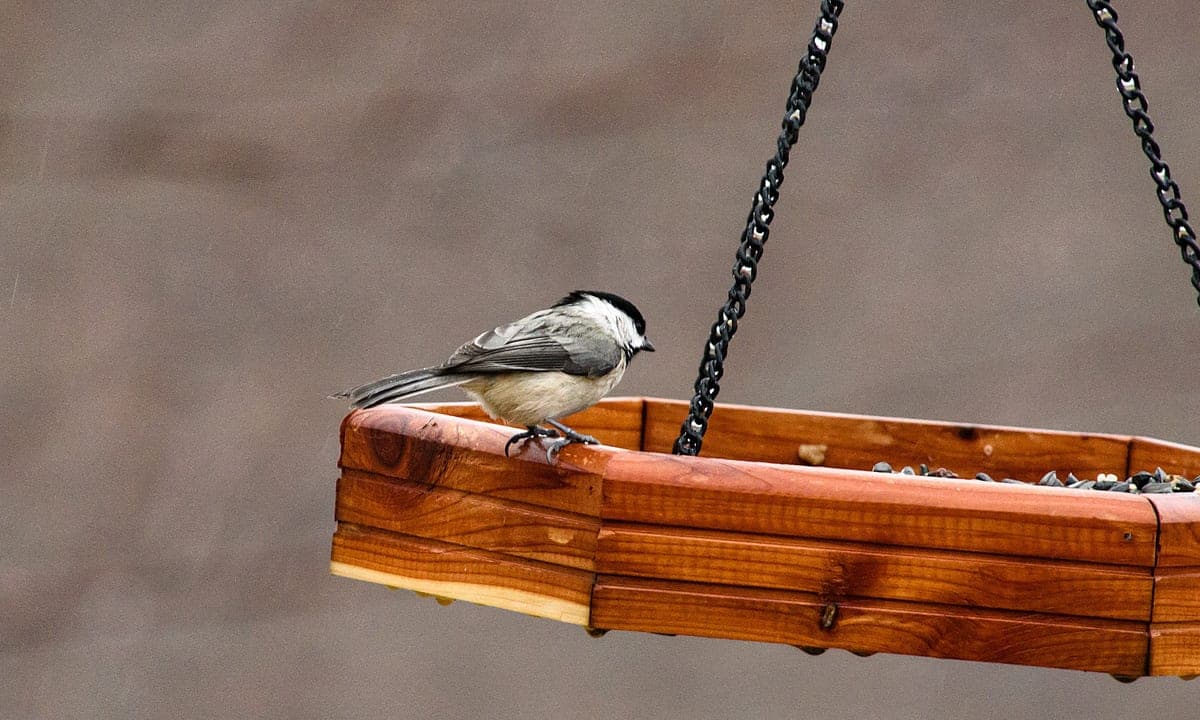
A roofed hopper or a tube keeps seed reasonably dry on its own. An open tray needs drainage holes, not a solid pan. A clear weather dome hung above an existing feeder is the cheapest fix. Whatever you use, put out less seed at a time in wet weather.
Seed & Sprig earns a commission when you buy through the links on this page, at no extra cost to you. It does not change which products we pick or the order we put them in — here is how we pick and here is how we are funded.
Quick picks
| # | Product | Best for | Price |
|---|---|---|---|
| 1 | 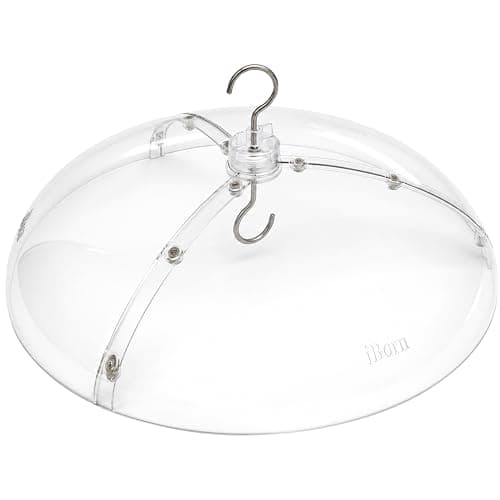 iBorn 16" Bird Feeder Rain Guard Dome Sixteen inches of clear polycarbonate on the same hook. The fix that does not replace the feeder. | Best rain guard | $24.99 · View on Amazon #ad How we are funded · Price as of October 22, 2026 |
| 2 | 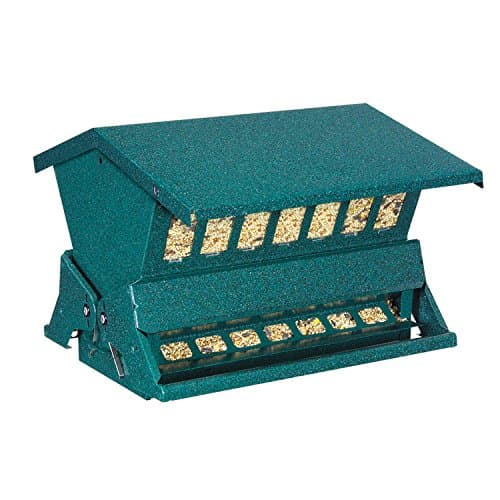 Woodlink Absolute II (model 7536) A hopper is walls and a roof over the seed — FeederWatch's own definition of weather protection. | Best roofed feeder | $84.00 · View on Amazon #ad How we are funded · Price as of October 22, 2026 |
| 3 | DYno photo Droll Yankees Onyx Clever Clean 18" Sunflower Tube Feeder FeederWatch notes tubes keep seed fairly dry, and this base twists off when they do not. | Best tube for wet climates | |
| 4 | NWno photo Nature's Way Cedar Platform Tray Feeder (CWF3) A screen bottom instead of a solid pan. This is the whole difference on an open tray. | Best tray, because it drains | |
| 5 | 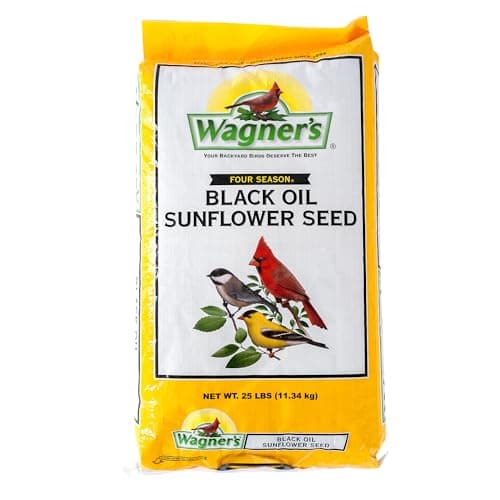 Wagner's Black Oil Sunflower Seed The hull is packaging. In-shell survives damp far better than a hulled mix does. | Best seed for a wet yard | $41.98 · View on Amazon #ad How we are funded · Price as of October 22, 2026 |
Rows link to the full write-up further down this page. The price button goes to Amazon.
Wet seed is the problem nobody plans for. People buy a feeder for squirrels, or for cardinals, or because it looked nice, and then discover three weeks into a wet autumn that the bottom two inches of the tube have set into a solid gray plug and the ports are blocked.
It is worth fixing properly, because unlike most feeder annoyances this one is not cosmetic. It wastes seed you paid for, it stops birds feeding, and at the far end it turns the feeder into something worse than no feeder at all.
Why wet seed actually matters
Three separate things go wrong, in order.
It clumps. Damp sunflower swells and binds together, and in a tube feeder it bridges across the ports so nothing feeds down. The feeder looks full and behaves empty, which is why people so often conclude the birds have left when the birds have simply found nothing there.
It spoils. Seed sitting wet goes rancid and then moldy, and this is the part that stops being an inconvenience. Moldy seed can genuinely harm birds, which is why our position across the site is to discard it rather than put it out — the warning signs and what to do with a spoiled batch are here.
It raises the cleaning burden. Project FeederWatch asks for seed and suet feeders to be cleaned every week or two, and more often in heavy use or wet weather. That last clause is the one people skip. A wet fortnight is precisely when the interval should be getting shorter, not when the feeder should be left alone because it is unpleasant to go out to. The cleaning routine is here.
What we ranked on
Published manufacturer specifications and what institutional sources say about feeder design — no testing claim, because we have not run a test program. For this page specifically we weighed four things: how much of the seed the design actually shelters, whether water that does get in can drain out again, how quickly the thing can be stripped and dried when it inevitably gets wet anyway, and whether it solves the problem on the feeder you already own rather than requiring a new one. Full criteria here.
That last criterion is why a weather dome leads the picks despite being the least impressive object on the list. Most people arrive at this problem holding a feeder they like.
The four things that keep seed dry
| Approach | How well it works | Cost |
|---|---|---|
| A roof built into the feeder | Good — the seed sits behind walls under cover | A new feeder |
| A dome hung above it | Good for the top, partial at the ports | Low, keeps your feeder |
| Drainage in the base | Does not stop water, lets it leave | Free if you buy the right tray |
| Putting out less seed | The most effective of the four | Free |
The bottom row is not a joke and it is not filler advice. Seed cannot spoil in a feeder if it is eaten within two days, and no amount of hardware helps a feeder holding twelve pounds through a wet fortnight. Every other fix on this page is a way of buying time; this one removes the need for it.
Which of these is you
| Your setup | Do this | Then read |
|---|---|---|
| A tube or hopper you already like | Hang a weather dome above it | Tube feeders |
| An open tray with a solid bottom | Replace it with a screened one | Platform feeders |
| Buying your first feeder in a wet climate | Buy the hopper, not the tray | Hopper feeders |
| A catch tray that keeps filling with water | Check it has drainage; most cheap ones do not | Seed catcher trays |
| Seed clumping in winter, not autumn | Smaller amounts, and clear the ports by hand | Winter feeding |
The dome, and what it does not do
A weather dome is a clear plastic umbrella that hangs on the same hook, above the feeder. The one in our picks is twelve inches across and four inches tall, in UV-stabilized polycarbonate with stainless hardware, and it is sold as fitting most small and medium hanging feeders.
What it genuinely does: keeps vertical rain off the top of the feeder, keeps the seed reservoir dry, and stops the cap area filling up. On a hanging tube in ordinary rain that is most of the problem solved for a fraction of the price of a new feeder.
What it does not do, and this is where people are disappointed: even sixteen inches of cover is not very much. On a wide feeder, or in wind-driven rain coming in sideways, the ports and perches still get wet — and the ports are where clumping starts. A dome is a real improvement, not a roof.
Two buying traps worth knowing about. Some domes are tube-top versions that clamp to one brand's own tube diameter rather than hanging universally above any feeder, and the listings look almost identical — check that what you are ordering hangs from the hook. And several domes are sold only in two-packs at double the price, which is worth noticing before you assume a listing is expensive for one.
A side benefit nobody advertises: a dome on a hanging feeder gets partway to being a squirrel baffle, since it is an awkward smooth shape above the food. Do not buy it for that — a purpose-made dome baffle is bigger, and published guidance asks for at least eighteen inches of diameter for that job — but it is a genuine bonus.
Feeder types, ranked by wet weather
If you are buying rather than retrofitting, the type decides most of this before any accessory does.
| Type | Wet-weather behavior | Verdict |
|---|---|---|
| Hopper | FeederWatch: walls and a roof built on a platform, protecting seed against the weather. | Best by design |
| Tube | FeederWatch: tube feeders keep seed fairly dry. Ports still take driving rain. | Good, with a dome |
| Caged / mesh | Open mesh, so seed is exposed. Dries fast, wets fast. | Small amounts only |
| Open tray | Completely exposed. Survivable only with drainage. | Needs a screen bottom |
| Suet cage | Rain ruins a cake and rancid suet gets discarded. | Wants a roof or shade |
| Window feeder | Usually roofed and sheltered by the house. | Rarely a problem |
The suet row is worth a note because it is the one people forget. A bare wire cage in the open is the cheapest feeder on the shelf and the fastest to waste money in a wet autumn. The woodpecker roundup covers roofed and sheltered suet options.
The counterintuitive part: hulls are packaging
If your yard is genuinely wet, the seed choice runs opposite to the usual advice.
Hulled and no-mess mixes are excellent products and we recommend them often, because nothing is wasted and nothing sprouts underneath. But the shell a sunflower seed comes in is not just waste — it is weatherproofing, and seed with it removed absorbs damp and spoils noticeably faster. That is a straightforward trade rather than a reason to avoid hulled seed, and the no-mess page states the same drawback.
So in a wet climate, or over a wet stretch, plain in-shell black-oil sunflower is the more robust choice, and the hull carpet underneath is the price. If you want hulled seed anyway, buy smaller bags and put out smaller amounts — the storage half of the problem is covered in how to store bird seed.
Volume discipline, which is free
The single most effective change on this page costs nothing: in wet weather, fill the feeder a third full rather than to the top.
The logic is simple. Spoilage is a function of how long seed sits, not how wet it gets in any one shower. A feeder emptied every two days never has seed old enough to go moldy, no matter what the weather does. A twelve-pound hopper filled in October and left is a mold incubator with a roof on it — which is exactly why the large-capacity feeder we recommend for convenience carries that same warning in its own drawbacks.
This is also the reason we push back when people buy a bigger feeder to reduce refilling. Capacity is a convenience feature that quietly trades against hygiene, and in a wet climate the trade gets worse. The same logic applies to how many feeders you run.
Winter is a different problem
Cold weather does not stop the wet problem, it changes its shape. Snow blows into ports and then melts against the seed; a thaw-freeze cycle turns a tube into a solid column; and ice on perches stops birds using ports that are otherwise perfectly clear.
The fixes are the same hardware plus one habit: physically check and clear the ports when you top up, rather than assuming a full-looking feeder is a working one. Which feeders handle a freezing yard best is covered separately. Consistency matters more in winter than at any other time, because birds come to rely on a source, so a blocked feeder in January costs more than a blocked feeder in September. What else changes when it freezes is here.
Seed that has already got wet
The honest answer depends on how wet and how long.
- Damp from this morning, no smell, no clumping. Tip it out, spread it to dry, put it back. Fine.
- Clumped but odorless. Discard it. It will not feed down through the ports and it is already on its way.
- Sour or musty smell, webbing, or any visible mold. Discard the lot, including whatever is left in the bag it came from, and wash the feeder before refilling.
Do not scatter spoiled seed on the ground to avoid wasting it. That converts a feeder problem into a ground problem — moldy seed where birds forage, plus the clearest invitation to rodents you can issue. And clear the ground under the feeder while you are out there, because what fell during the wet spell is doing the same thing.
What each pick costs you
- The weather dome covers twelve inches, which is not much on a wide feeder or in sideways rain, and it is one more thing to lift off at every refill.
- The roofed hopper holds twelve pounds, and twelve pounds of seed sitting through a wet fortnight is the exact scenario this page warns about. The roof buys you nothing if you fill it to the top and walk away.
- The tube keeps seed fairly dry and has no squirrel mechanism at all, so it needs a baffle or a pole regardless of the weather.
- The screened tray drains but is still completely open — to rain and to squirrels. It wants small amounts and a baffled pole.
- In-shell sunflower leaves a hull carpet that will kill the grass under the feeder, which is the price of the weatherproofing.
None of these is a bad buy. They are the trades, and in a wet yard the right combination is usually the cheapest one on the list: the feeder you already own, a dome above it, and half as much seed in it.
The picks in full
#1 · Best rain guard
iBorn 16" Bird Feeder Rain Guard Dome
iBorn · Keeping rain off a feeder you already own
A clear polycarbonate dome that hangs above the feeder on the same hook, sixteen inches across and deep enough to shed rain rather than pool it. The fix that does not involve replacing the feeder.
Published specifications
- Diameter
- 16"
- Depth
- 3.1", per the listing
- Material
- 3mm polycarbonate, clear
- Mounting
- Central hook with a threaded buckle; screws included
- Pack
- Single dome
- Model
- IBSP016HG-CLEAR
What it does well
- Sixteen inches is wider than the twelve-inch domes this category is built around, which is the whole point of a rain guard
- Clear polycarbonate, so it does not black out the view of the feeder
- Sold as a single unit, where several competing domes are only available in two-packs
What it does not
- Sixteen inches is bulky: on a small feeder or a tight hook it looks like an umbrella and swings in wind
- A dome is not a baffle — it is an awkward shape above the food, not a barrier to climbing
- iBorn publishes no load rating and little hardware detail beyond the included screws
- Wind-driven rain still reaches the ports; no dome is a roof
Specifications above come from the manufacturer's own published listing: iBorn 16 inch Bird Feeder Rain Guard — published listing (diameter, depth, material, mounting).
#ad How we are funded · Price as of October 22, 2026
#2 · Best roofed feeder
Woodlink Absolute II (model 7536)
Woodlink · Big capacity and cardinals — the hopper answer to squirrels
A double-sided steel hopper whose counterweighted perches drop a shield over the seed tray when something heavy lands, and it holds twelve pounds so it barely needs attention.
Published specifications
- Seed capacity
- 12 lb
- Dimensions
- 16" W x 11.25" H x 13.5" D
- Feeding ports
- 6 (both sides)
- Mechanism
- Two counterbalanced perches, adjustable to three weight settings
- Materials
- Steel and acrylic
What it does well
- 12 lb capacity means refills measured in weeks, not days
- Perch tension adjusts for light, medium or heavy birds
- The long perch rail suits cardinals, which will not use a small tube port
What it does not
- Twelve pounds of seed is heavy, so the hook or pole has to be rated for it
- Seed sitting for weeks in wet weather is how mold starts; a big hopper needs the same cleaning discipline as a small one
Specifications above come from the manufacturer's own published listing: Woodlink Absolute II published specifications.
#ad How we are funded · Price as of October 22, 2026
#3 · Best tube for wet climates
Droll Yankees Onyx Clever Clean 18" Sunflower Tube Feeder
Droll Yankees · A plain, well-made first tube feeder
A straightforward polycarbonate tube whose base twists off in seconds, which is the single feature that decides whether a feeder gets cleaned or quietly turns into a health problem.
Published specifications
- Seed capacity
- 2 lb
- Height
- 18"
- Feeding ports
- 4
- Materials
- UV-stabilized polycarbonate tube; powder-coated metal cap, base and ports
- Cleaning
- Twist-and-release removable base; one-touch top opening
What it does well
- The removable base turns cleaning from a chore into a two-minute job
- Metal ports resist squirrel chewing better than all-plastic tubes
- Short perches keep grackles and jays off without excluding finches
What it does not
- No squirrel mechanism at all, so this feeder needs a baffle or a pole
- Four ports fill up quickly at a busy station
Specifications above come from the manufacturer's own published listing: Droll Yankees Onyx Clever Clean published specifications.
#4 · Best tray, because it drains
Nature's Way Cedar Platform Tray Feeder (CWF3)
Nature's Way · Cardinals, jays, doves and anything that will not use a tube
An open cedar tray with a removable screen bottom, which is the honest answer for the big ground-feeding birds a tube feeder quietly excludes.
Published specifications
- Dimensions
- 12" x 12" x 2.25"
- Capacity
- 3 quarts
- Materials
- Premium cedar, stainless steel screws, powder-coated galvanized steel seed tray
- Drainage
- Removable screen tray for drainage and airflow
What it does well
- Cardinals and jays use it immediately; they often will not use a small tube port
- The screen bottom drains, which is the difference between a tray and a puddle
- Nothing to break, and it cleans in a minute
What it does not
- Completely open to squirrels, so this one belongs on a baffled pole or nowhere
- Seed is exposed to rain even with drainage, so put out small amounts
Specifications above come from the manufacturer's own published listing: Nature's Way CWF3 published specifications.
#5 · Best seed for a wet yard
Wagner's Black Oil Sunflower Seed
Wagner's · The first bag of seed you should buy
One hundred percent black oil sunflower with nothing else in the bag, which is the seed the widest range of feeder birds actually eats, at the lowest cost per bird you will find.
Published specifications
- Ingredients
- 100% black oil sunflower
- Crude protein
- 14.0% min
- Crude fat
- 24.0% min
- Crude fiber
- 35.0% max
- Moisture
- 15.0% max
What it does well
- One ingredient, so there is nothing in the bag birds will throw on the ground
- Cardinals, chickadees, finches and sparrows all take it
- The cheapest way to fill a feeder that birds will actually empty
What it does not
- The hulls make a mess under the feeder and can kill the grass
- Squirrels like sunflower as much as birds do
Specifications above come from the manufacturer's own published listing: Wagner's Four Season black oil sunflower published analysis, Project FeederWatch — seed preferences.
#ad How we are funded · Price as of October 22, 2026
Common questions
What happened to the Aspects Weather Dome?
It is no longer purchasable: the 12-inch universal dome now returns as currently unavailable, and the remaining Aspects dome listings are scarce two-packs. Our current pick is a 16-inch clear polycarbonate dome from iBorn, which is wider, sold singly and in stock.
How do I keep bird seed dry in the feeder?
Use a feeder with a roof, or hang a clear weather dome above the one you have, and put out less seed at a time. Drainage matters as much as cover — an open tray needs a screen bottom, not a solid pan.
Do weather domes for bird feeders work?
For vertical rain, yes, and they are the cheapest fix because they keep the feeder you own. A twelve-inch dome does not shelter a wide feeder or stop wind-driven rain reaching the ports.
Is wet bird seed bad for birds?
Damp seed that dries out is fine. Seed that has stayed wet long enough to clump, smell sour or grow mold should be discarded — moldy seed can genuinely harm birds.
Which bird feeder keeps seed driest?
A hopper. Project FeederWatch describes it as a platform with walls and a roof built on it, forming a hopper that protects seed against the weather. Tubes keep seed fairly dry; open trays do not without drainage.
Why is the seed in my tube feeder clumping?
Moisture reaching the seed through the ports, then swelling and bridging so nothing feeds down. The feeder looks full and is functionally empty. Empty it, dry it, and refill with less.
Should I take the feeder down when it rains?
No — that is when birds most need a reliable source. Reduce the amount in it instead, and clear the ports when you top up.