Care & Season
Rodents, raccoons and the visitors you did not invite
The feeder is rarely the problem. What lands underneath it is.
By Scooter M. · Published · Last updated
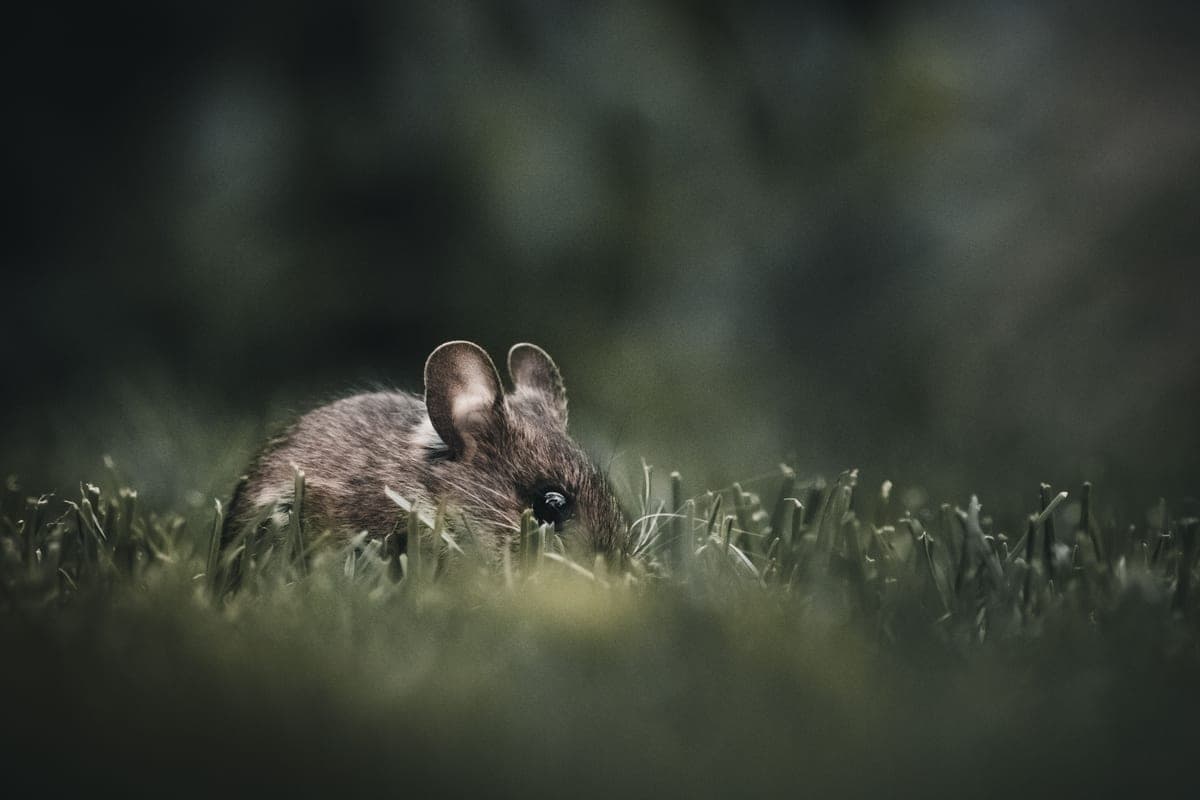
Bird feeders attract rodents through spilled seed on the ground, not through the feeder itself. Fit a catch tray, put out smaller amounts, and clear the ground underneath regularly. In bear country, Project FeederWatch recommends against feeding at all except when bears are hibernating.
Seed & Sprig earns a commission when you buy through the links on this page, at no extra cost to you. It does not change which products we pick or the order we put them in — here is how we pick and here is how we are funded.
“Do bird feeders attract mice?” and “do bird feeders attract rats?” are both common searches, and the honest answer is: not directly. A rodent cannot get into a hanging tube. What it can do is eat the small pile of seed and hulls that accumulates underneath, every day, reliably.
Which means this is a spillage problem, and spillage is fixable.
The four fixes, in order of effect
- Fit a catch tray. Most of what falls lands in it instead of on the ground. Buy one with a screen bottom that drains — detail here.
- Put out less. Half-fill the feeder. Less seed in the feeder means less spilled and less standing about going stale.
- Switch to shell-free seed. No hulls to drop, and hulled seed cannot sprout either. The comparison is here.
- Clear the ground. Rake underneath monthly, more often if you have seen rodent activity. An old hull layer hides spoiled seed and is itself shelter.
What makes it worse
- Ground feeding. Scattering seed on the ground is the single most direct way to feed rodents. If you feed juncos and doves on a low tray, clear it each evening.
- Filler-heavy mixes. Birds flick out the milo and corn, so more of what you bought ends up underneath. See here.
- An unbaffled feeder being raided nightly. Squirrels and raccoons spill enormously more than birds do — one of the less obvious arguments for a baffle.
- Storing seed badly. A paper sack in a shed is a rodent buffet. Use a sealed metal bin — storage rules and the containers we recommend.
Raccoons
Nocturnal, dexterous, strong, and entirely capable of removing a feeder and carrying it away. Suet is their favorite target.
What works: bringing feeders in at night during a raccoon problem, a baffled pole (the same geometry that stops squirrels slows raccoons), and not leaving suet or peanuts out overnight. What does not: hoping. Chipmunks are the other ground mammal a feeder supports, and they need a different answer again — chipmunks and bird feeders. Raccoons get their own page too, because they need a much longer baffle than squirrels do — raccoon-proof bird feeders.
Bears — the one hard rule
Project FeederWatch recommends against any feeding in bear country except when bears are hibernating. That is worth taking seriously as written: a bear that learns feeders are food becomes a bear that has to be dealt with, and that outcome is almost always fatal for the bear.
If bears are in your area, feed only in deep winter, or not at all. There is no clever feeder that solves this.
Do not use poison
Rodenticide near a feeder is a bad idea for reasons beyond the rodents. Poisoned rodents are eaten by hawks, owls and pets, and secondary poisoning is a documented and serious problem for raptors. If you have created a rodent problem, remove the food source — which is what every fix on this page does.
Starlings, grackles and pigeons
Not a health problem, but the same category of unwanted visitor. The levers are physical: short perches exclude big birds, a caged feeder excludes them entirely, an upside-down suet cage keeps starlings off the suet, and safflower is taken by cardinals but generally not by grackles — see here.
The routine that prevents all of this
- Catch tray fitted, seed shell-free or close to it.
- Feeder half-filled rather than brimming.
- Ground raked monthly.
- Seed stored sealed, in metal, off the floor.
- Nothing left out overnight where raccoons are active.
What we would buy for this
#1 · The fix
Nature's Way Cedar Platform Tray Feeder (CWF3)
Nature's Way · Cardinals, jays, doves and anything that will not use a tube
An open cedar tray with a removable screen bottom, which is the honest answer for the big ground-feeding birds a tube feeder quietly excludes.
Published specifications
- Dimensions
- 12" x 12" x 2.25"
- Capacity
- 3 quarts
- Materials
- Premium cedar, stainless steel screws, powder-coated galvanized steel seed tray
- Drainage
- Removable screen tray for drainage and airflow
What it does well
- Cardinals and jays use it immediately; they often will not use a small tube port
- The screen bottom drains, which is the difference between a tray and a puddle
- Nothing to break, and it cleans in a minute
What it does not
- Completely open to squirrels, so this one belongs on a baffled pole or nowhere
- Seed is exposed to rain even with drainage, so put out small amounts
Specifications above come from the manufacturer's own published listing: Nature's Way CWF3 published specifications.
#2 · The other fix
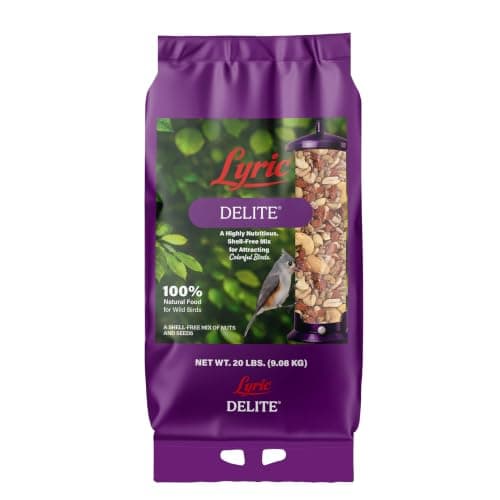
Lyric Delite No Waste Mix
Lyric · The genuinely filler-free no-mess bag
Shelled peanuts, sunflower kernels, pecans, pistachios and pumpkin seed: an expensive bag with no corn, no millet and nothing that ends up on the ground.
Published specifications
- Ingredients
- Shelled peanuts, sunflower kernels, pecans, pistachios, shelled pumpkin seed
- Crude protein
- 20% min
- Crude fat
- 35% min
- Crude fiber
- 10% max
- Moisture
- 12% max
What it does well
- No corn, no millet, no milo — nothing in the bag is filler
- Shell-free seed will not sprout under the feeder
- The highest fat content of any mix here, which matters in cold weather
What it does not
- Expensive per pound, though far less of it is wasted
- Nut-heavy mixes are exactly what squirrels want most
Specifications above come from the manufacturer's own published listing: Lyric Delite published ingredients and analysis.
#ad How we are funded · Price as of October 22, 2026
#3 · Less spillage at source
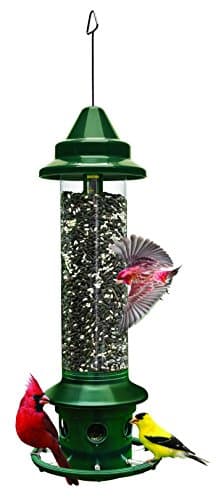
Brome Squirrel Buster Plus
Brome · The one feeder to buy if you only buy one
A weight-closing tube feeder with a large capacity and a cardinal ring, and the closest thing to a genuinely squirrel-resistant feeder that a beginner can hang up and stop thinking about.
Published specifications
- Seed capacity
- 5.1 lb
- Height
- 28" base to hanger
- Feeding ports
- 6, plus a cardinal ring
- Mechanism
- Weight-adjustable spring shroud
- Materials
- Chew-proof, UV-resistant components
- Warranty
- Brome Lifetime Care
What it does well
- The spring tension is adjustable, so you can shut out heavy birds as well as squirrels
- Comes apart by hand for cleaning, which means it actually gets cleaned
- 5.1 lb is enough that a busy fall week does not mean daily refills
What it does not
- The most expensive feeder in this roundup by a wide margin
- The shroud collects seed dust and needs a full strip-down every couple of weeks
- A squirrel that can reach the top hanger still wins, so this is not a substitute for a baffle
Specifications above come from the manufacturer's own published listing: Brome — Squirrel Buster Plus (manufacturer store).
#ad How we are funded · Price as of October 22, 2026
Common questions
Do bird feeders attract mice and rats?
Spilled seed does. The feeder itself is out of reach. Fit a catch tray, put out less, and keep the ground clear.
Do bird feeders attract bears?
Yes, and this one is serious. Project FeederWatch recommends against feeding at all in bear country except when bears are hibernating.
What is the best bird feeder to keep rats away?
One that spills the least: an enclosed feeder with a catch tray, filled with shell-free seed, on a baffled pole so nothing raids it at night.
Do suet feeders attract rodents?
Fat crumbs underneath can. The cake is out of reach. Keep the ground clear and avoid leaving suet out overnight where raccoons are active.