Feeder Types
Caged feeders: exclusion by size
The bluntest instrument in the category, and sometimes exactly the right one.
By Scooter M. · Published · Last updated
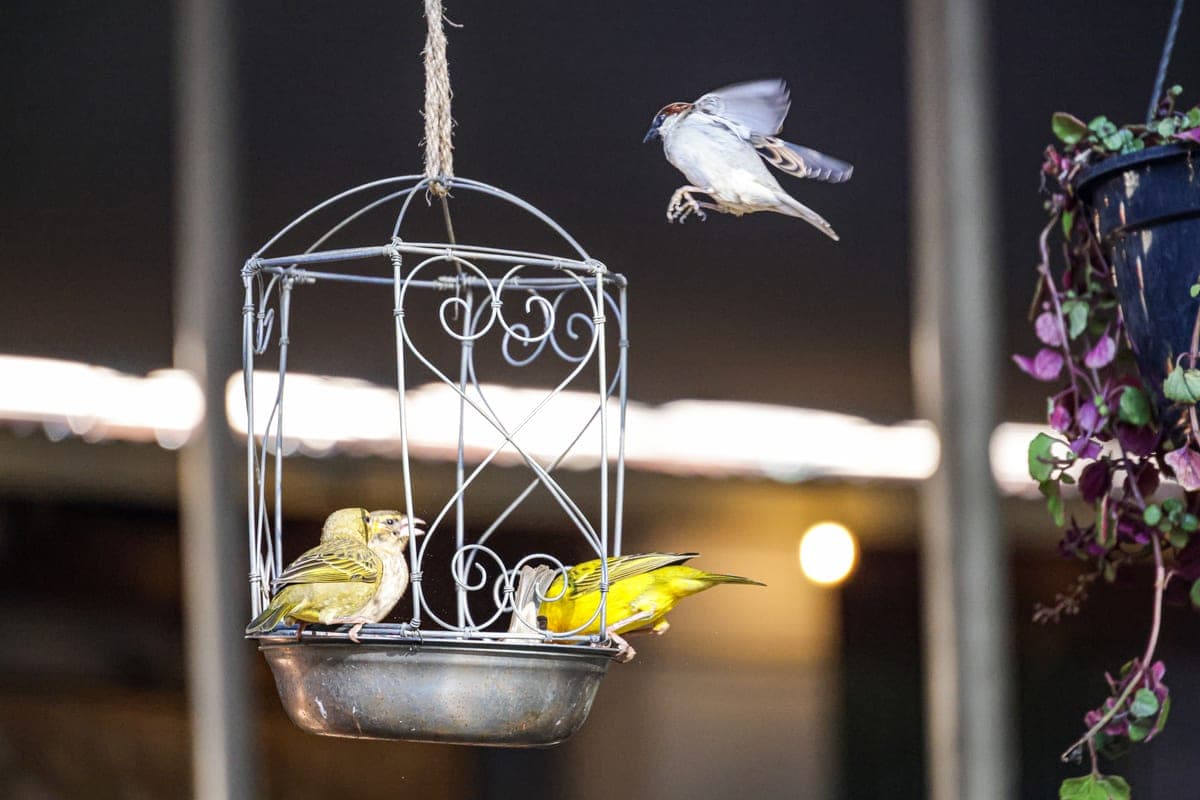
A caged feeder surrounds a tube or a suet cake with mesh that small birds pass through and squirrels do not. It also excludes cardinals, jays, grackles and starlings, which is either the point or the problem. Cages work only when the gap is genuinely smaller than a squirrel.
Seed & Sprig earns a commission when you buy through the links on this page, at no extra cost to you. It does not change which products we pick or the order we put them in — here is how we pick and here is how we are funded.
Quick picks
| # | Product | Best for | Price |
|---|---|---|---|
| 1 | 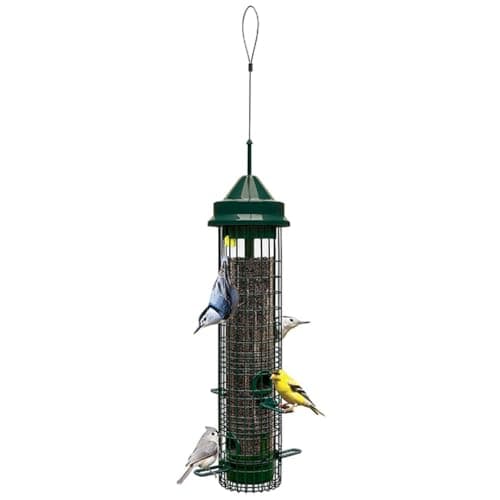 Brome Squirrel Buster Classic Mesh shroud for clinging birds, with a weight mechanism behind it. | Best cage-style feeder | $78.00 · View on Amazon #ad How we are funded · Price as of October 22, 2026 |
| 2 | 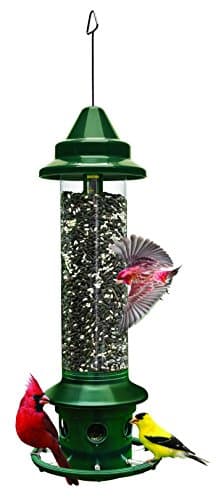 Brome Squirrel Buster Plus If you want cardinals too, a tunable weight mechanism beats a fixed cage. | Best alternative | $125.90 · View on Amazon #ad How we are funded · Price as of October 22, 2026 |
| 3 | NWno photo Nature's Way Upside-Down Suet Feeder (CWF2) Underneath-only access keeps starlings off without a cage at all. | Best selective suet |
Rows link to the full write-up further down this page. The price button goes to Amazon.
A caged feeder is a tube or a suet cake inside a wire cage. Small birds go through the mesh; anything bigger stays outside. It is the most absolute mechanism in bird feeding — there is nothing to adjust and nothing to get wrong — and that absoluteness is both the selling point and the catch.
What a cage keeps out
- Squirrels, if the gap is genuinely small.
- Grackles and starlings, which is often the more immediate frustration in spring.
- Cardinals, jays and doves. Same rule, and you do not get to choose.
That third line is the whole decision. If cardinals are the birds you want, a small-bird cage is working against you and a tunable weight mechanism is the better answer.
Who a cage suits
Cages suit yards where the visitors are chickadees, titmice, nuthatches, finches and downy woodpeckers — all clinging or small-perching birds — and where grackles or starlings are already dominating a feeder. In that situation a cage is a clean fix.
Clinging birds also genuinely prefer mesh: they can feed anywhere on the surface rather than queueing for a port. Brome's Classic combines a wire mesh shroud with a weight mechanism, which is the useful hybrid — mesh access, plus a shroud that closes under weight.
The mesh-gap problem
Cages are sold on a promise that depends entirely on one dimension nobody prints in the listing. Gray squirrels are not all one size — a juvenile in late summer is much smaller than an adult — and a mesh generous enough for a cardinal is generous enough for a young squirrel.
If a cage is not working, this is almost always why, and there is no adjustment available. The alternatives are a smaller-mesh cage or a weight-closing feeder.
Cleaning
Mesh is fiddlier than a smooth shroud: seed dust collects on the wires and needs a brush rather than a wipe. Every week or two, same as everything else — and the outer cage usually has to come off to reach the feeder properly, so check that it does before you buy. Method here.
Caged suet
The same logic applies to suet, where the real target is starlings rather than squirrels. An upside-down suet feeder achieves the same exclusion without a cage at all: access only from underneath, which woodpeckers manage and starlings mostly do not. See suet feeders.
The honest summary
A cage is a good answer to a specific problem: small birds are being crowded out by big ones, or squirrels are reaching a feeder you cannot baffle. It is a poor answer to “I want more birds,” because it is a device for having fewer of them.
The picks in full
#1 · Best cage-style feeder
Brome Squirrel Buster Classic
Brome · Clinging birds and mixed flocks in a smaller yard
The same weight-closing mechanism as the Plus wrapped in a wire mesh shroud, which lets clinging birds feed anywhere on the cage instead of queueing for a port.
Published specifications
- Seed capacity
- 2.4 lb
- Feeding ports
- 4, plus a wire mesh shroud
- Mechanism
- Weight-closing shroud
- Dimensions
- Not published by Brome
What it does well
- The mesh shroud suits chickadees, nuthatches and woodpeckers that prefer to cling
- Half the capacity of the Plus but noticeably cheaper
What it does not
- 2.4 lb empties fast once a flock finds it
- Mesh is fiddlier to clean than a smooth shroud
Specifications above come from the manufacturer's own published listing: Brome — Squirrel Buster Classic (manufacturer store).
#ad How we are funded · Price as of October 22, 2026
#2 · Best alternative
Brome Squirrel Buster Plus
Brome · The one feeder to buy if you only buy one
A weight-closing tube feeder with a large capacity and a cardinal ring, and the closest thing to a genuinely squirrel-resistant feeder that a beginner can hang up and stop thinking about.
Published specifications
- Seed capacity
- 5.1 lb
- Height
- 28" base to hanger
- Feeding ports
- 6, plus a cardinal ring
- Mechanism
- Weight-adjustable spring shroud
- Materials
- Chew-proof, UV-resistant components
- Warranty
- Brome Lifetime Care
What it does well
- The spring tension is adjustable, so you can shut out heavy birds as well as squirrels
- Comes apart by hand for cleaning, which means it actually gets cleaned
- 5.1 lb is enough that a busy fall week does not mean daily refills
What it does not
- The most expensive feeder in this roundup by a wide margin
- The shroud collects seed dust and needs a full strip-down every couple of weeks
- A squirrel that can reach the top hanger still wins, so this is not a substitute for a baffle
Specifications above come from the manufacturer's own published listing: Brome — Squirrel Buster Plus (manufacturer store).
#ad How we are funded · Price as of October 22, 2026
#3 · Best selective suet
Nature's Way Upside-Down Suet Feeder (CWF2)
Nature's Way · Keeping starlings off the suet
Suet reachable only from underneath, which woodpeckers, nuthatches and chickadees manage easily and starlings mostly do not.
Published specifications
- Dimensions
- 8.5" L x 8.5" W x 4.13" H
- Capacity
- 1 suet cake (8 oz)
- Materials
- Premium cedar with rust-free hardware
What it does well
- Genuinely reduces starling monopolies without excluding the birds you want
- The roof shades the cake, which slows melting
What it does not
- Some woodpeckers take a week to work it out
- Not squirrel-resistant in any way
Specifications above come from the manufacturer's own published listing: Nature's Way CWF2 published specifications.
Common questions
Do caged bird feeders keep squirrels out?
If the mesh gap is genuinely smaller than a squirrel, yes. Wide mesh sized for cardinals will let a young squirrel through.
What is the best caged bird feeder for cardinals?
There is not really one. A cage sized to exclude squirrels also excludes cardinals. For cardinals, use a weight-activated feeder or a platform tray instead.
Do caged feeders keep grackles and starlings away?
Yes, and that is often the better reason to buy one. Both are too large for a small-bird cage.
Are caged feeders harder to clean?
Slightly. Seed dust collects on the mesh and needs a brush. Check the cage comes off easily before you buy.