Care & Season
Hanging and deck rail bird baths
A pedestal bath needs ground. These do not — which is the only reason to accept everything else they give up.
By Scooter M. · Published · Last updated

Buy a bath with a bowl that lifts out, because water needs scrubbing weekly. For a railing, measure the rail against the clamp first. Keep the water about two inches deep at most, add flat stones if it is deeper, and expect to top it up daily in summer.
Seed & Sprig earns a commission when you buy through the links on this page, at no extra cost to you. It does not change which products we pick or the order we put them in — here is how we pick and here is how we are funded.
Quick picks
| # | Product | Best for | Price |
|---|---|---|---|
| 1 | 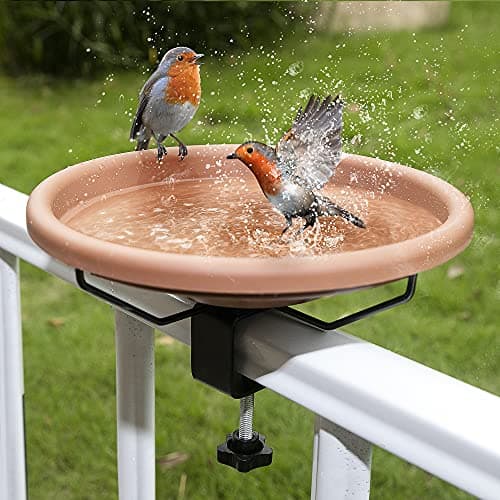 Hanizi 12-Inch Deck-Mounted Bird Bath Twelve inches, rail clamp, and a bowl that detaches from the ring for cleaning. | Best overall | $22.99 · View on Amazon #ad How we are funded · Price as of October 3, 2026 |
| 2 | 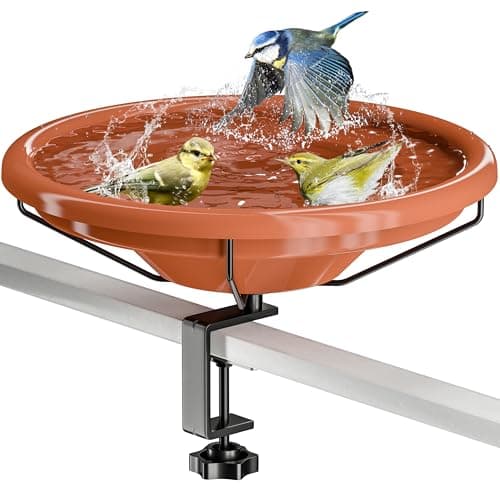 iBorn 12-Inch Deck-Mounted Bird Bath (IB7034C) A 3.2-inch clamp where most stop at two. Deeper bowl than ideal, so add stones. | Best for thick railings | $16.99 · View on Amazon #ad How we are funded · Price as of October 3, 2026 |
| 3 | 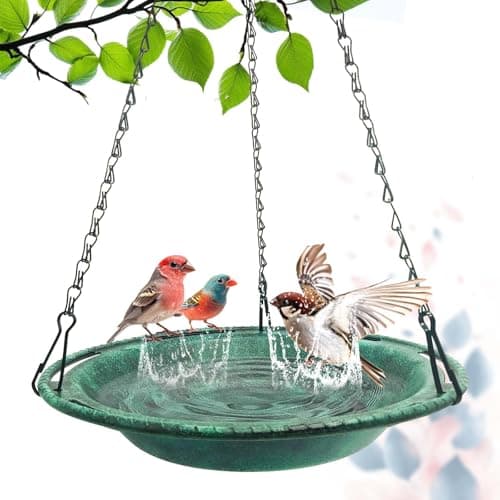 VIHSIPR 12-Inch Hanging Bird Bath Light polypropylene on chains, and the listing itself tells you to add flat stones. | Best hanging bowl | $15.99 · View on Amazon #ad How we are funded · Price as of October 3, 2026 |
| 4 | 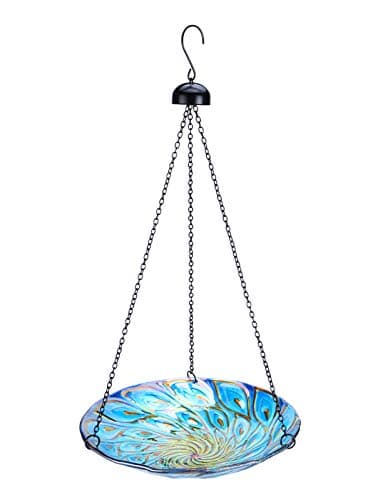 MUMTOP Hanging Glass Bird Bath Painted glass, genuinely decorative, and glass wipes properly clean. It also breaks. | Best looking | $27.99 · View on Amazon #ad How we are funded · Price as of October 3, 2026 |
| 5 | 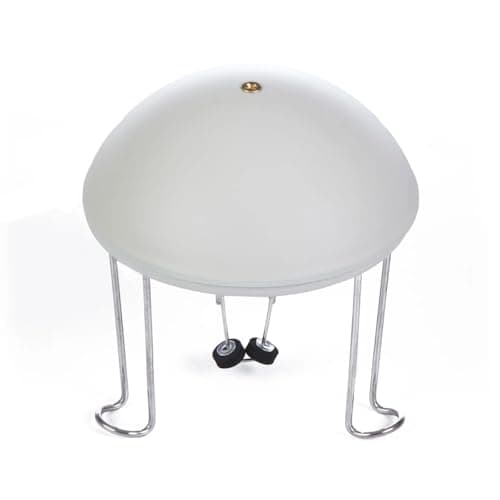 API 4WW Water Wiggler A battery agitator. Still water in a small bowl gets ignored; moving water gets found. | What makes any of them work | $44.99 · View on Amazon #ad How we are funded · Price as of October 3, 2026 |
Rows link to the full write-up further down this page. The price button goes to Amazon.
Water brings more species into a yard than any feeder, and the standard answer — a concrete pedestal bath on a lawn — assumes a lawn. Plenty of people feeding birds have a balcony, a deck, a paved courtyard or a rental agreement instead.
Hanging bowls and rail-clamp baths solve that, and they come with a specific set of compromises: less water, more evaporation, more movement, and a squirrel route straight to the rim. This page is about choosing between them. The wider questions of depth, placement and winter are in our bird bath and winter water guide, and the accessories that make any bath more attractive are in fountains, wigglers and drippers.
Depth decides whether it gets used
Before any mounting question: the water has to be shallow. Two inches at the deepest point is plenty, and a basin that shallows toward the edge is better still, because it suits a chickadee and a jay at the same time.
This is where the category trips people up. Two of the baths we picked publish a depth, and one of them — the deeper rail bath — lists three and a half inches, which is more than songbirds want. That is not a reason to avoid it; it is a reason to put two flat stones in the bottom, or to fill it part-way. The maker of our hanging pick says the same thing in its own listing, which is the first time we have seen a bath manufacturer admit it.
Keep that in mind when you read any dimension in this category: the diameter is the number they advertise, and the depth is the number that matters.
Rail clamp or hanging chain?
| Rail clamp | Hanging bowl | |
|---|---|---|
| Stability | Fixed and steady — birds prefer it | Swings in wind; birds approach a moving perch less readily |
| Where it goes | Deck, balcony or fence rail of the right thickness | Anywhere a feeder hangs: hook, branch, bracket |
| Spill | Onto your boards | Onto the ground, if it hangs clear |
| Squirrels | Walk straight to it along the rail | Can reach it, but have to work at it |
| Capacity | Usually 12 inches of shallow water | Often smaller and lighter |
| Cleaning | Best models detach from the ring | Lower it, rinse, re-hang |
If you have a railing that fits, clamp it. A steady bath gets used more than a swinging one, and the difference is not subtle in wind. Hanging bowls earn their place where there is no rail at all, or where you want the bath away from the deck and out over planting.
Measure the rail before you buy
Exactly the trap that catches deck feeder buyers, and the fix takes thirty seconds. Clamp capacities in this category are narrow and specific:
- Up to 2 inches covers a standard 2x4 laid flat, which is most wooden decks. Our top pick sits here.
- Up to about 3.2 inches is unusual and worth paying for if you have a composite rail with a wide cap, a doubled timber top or a thick fence rail. Our second pick is the one that fits those.
- Anything thicker — a masonry wall top, a 6x6 post cap — needs a hanging bowl on a bracket instead.
Put a tape across the actual top rail, not the post, and buy to that number. The same clamp logic, and the same mounting hardware options, are covered for feeders in our deck rail feeder guide.
How we chose these
On published listing specifications, checked against live listings in October 2026 so every pick is currently purchasable. We have not weather-tested these baths or measured how long a finish lasts, and we do not claim to have. Ranking went: whether the bowl detaches for cleaning, because water needs more cleaning than seed; then published depth and diameter; then clamp range for the rail models; then materials and how a bath behaves in wind. Looks came last, with one exception noted in the picks, because a decorative bath that birds will not stand in is an ornament. Our full criteria are here.
The cleaning rule that comes with water
A bird bath needs more maintenance than a feeder, and anyone selling you one is quiet about it. Water collects droppings, feathers, dust and algae, and it does so faster in a small shallow bowl in sun than in a large basin in shade.
The CDC's yard guidance is the floor, and it names bird baths directly: once a week, empty and scrub, turn over, cover, or throw out any items that hold water like tires, buckets, planters, toys, pools, birdbaths, flowerpot saucers, or trash containers. Weekly, with a scrub — not a top-up.
In practice, in summer, you will be tipping and refilling far more often than weekly anyway: a twelve-inch bowl of two-inch water in July evaporates fast, and warm water in full sun goes green within days. This is precisely why the detachable bowl is the feature we ranked first. A bath that lifts off its ring gets emptied in the time it takes to walk to the tap; a bath you have to scrub in place gets neglected until it is a problem. The same hygiene logic as feeder cleaning applies, and water is the less forgiving of the two.
Siting it on a deck or balcony
Three considerations specific to the no-ground case.
Windows. Deck baths sit close to glass, and a bathing bird is a distracted bird. The American Bird Conservancy's guidance on preventing collisions is worth reading before you site anything within a few yards of a patio door; the practical rule we use site-wide is within about three feet of the glass or more than thirty away, never the middle distance. The window and cat question is covered here.
Cover. Birds want an escape route from a bath more than from a feeder, because a wet bird flies badly. A bath within a short hop of a shrub, a trellis or even a large planter gets used sooner than one in the open middle of a deck.
Shade. Part shade keeps the water cooler, slows the algae and reduces evaporation. A south-facing rail in full afternoon sun is the worst spot available and also the most common.
Stopping a hanging bath from swinging
The complaint people have about hanging baths is movement, and it is fixable rather than inherent. A bowl of water on three chains is a pendulum, and birds read a moving perch the way you would read a wobbling ladder.
- Weight it. Two or three flat stones in the bottom lower the center of gravity, damp the swing and fix the depth problem at the same time. This is the single most useful thing you can do, and it is free.
- Hang it short. A long chain swings further and faster than a short one. If the bracket allows, shorten the drop so the bowl sits close under the hook.
- Pick a sheltered line. Under the lee of a wall, a fence or a dense shrub, rather than out in the open where the wind funnels between buildings.
- Do not overfill. Water sloshing in a swinging bowl spills, and a bath that empties itself in a gust is a bath nobody visits.
If none of that is available — an exposed balcony, a windy corner — the rail clamp is the better buy, and the rest of this page assumes you have measured for one.
The evaporation arithmetic
A twelve-inch bowl holding two inches of water is a small amount of water, and that is the real constraint on both styles here. A pedestal basin holds enough that a hot day barely registers; a shallow rail bowl in sun can be dry by late afternoon.
Three consequences worth planning for rather than discovering. You will be topping up daily in summer, which argues strongly for a bath you pass every day rather than one at the far end of a yard. Warm, shallow water in full sun goes green quickly, so the weekly scrub becomes a twice-weekly rinse in July. And a fountain pump in a bowl this size is usually a mistake — spray and splash-out accelerate the loss, which is why we recommend an agitator rather than a fountain for small basins.
The flip side is the advantage nobody mentions: a bath this size is trivially easy to keep clean. Tip, rinse, refill — thirty seconds, which is why these baths are often better maintained than the concrete one in the middle of the lawn.
Winter, honestly
None of the baths here is heated, and none can be made heated safely with a drop-in de-icer sized for a full basin — a twelve-inch bowl of shallow water is too small for most of them, and the cords are short.
So treat a rail or hanging bath as a three-season object in a cold climate. In winter, either switch to a purpose-built heated bath — the options are in our winter water guide — or run the battery wiggler in a bowl you refill with warm water daily, accepting that it freezes between visits. Open water in a freeze is genuinely valuable to birds, which is why our winter page treats water as the priority, but a plastic bowl on a rail is not the tool for it.
Getting it found
A new bath can sit untouched for weeks, and the reason is almost always that nothing about it signals water. Still water in a small bowl is close to invisible from the air.
The fix is movement, and it is why a wiggler is one of our picks on a page about baths. A rippled surface glints, and that is what gets a bath noticed; a dripper adds sound on top. Both are covered in our moving-water comparison. Failing that, site the bath where birds already come — near the feeder, not across the yard from it — and give it three weeks before you conclude anything, the same patience a new feeder needs.
Project FeederWatch treats water as part of a feeding station rather than an extra, and that is the right mental model: food and water together is what makes a yard worth returning to.
Materials, briefly
Three materials dominate this category and they fail in different ways. Polypropylene and polycarbonate bowls are light, cheap and survive being knocked off a rail; they also scratch, and a scratched surface holds algae in a way a smooth one does not. Glass cleans best of anything and breaks when a gust swings it into a post. Powder-coated steel rings last well but the bowl is usually plastic anyway, so the finish on the ring is what you are judging.
For a bath that gets scrubbed weekly, cleanability beats longevity. That is why the glass pick is in our list despite being the most fragile thing on it.
What we would buy
- Standard wooden deck rail: the Hanizi, for the detachable bowl and the sensible twelve-inch size.
- Thick composite or capped rail: the iBorn, with two flat stones in the bottom to fix the depth.
- No rail at all: the hanging polypropylene bowl, hung where it is sheltered from the worst wind.
- You want it to look like something: the glass bath, hung somewhere it will not swing into a post.
- Whichever you buy: add the wiggler. It is the difference between a bath birds notice and a bowl of water you change every week for nobody.
None of these is as good as a proper shallow basin on the ground in part shade, with a dripper over it. But that is not the choice in front of most people buying a hanging bath, and a twelve-inch bowl on a railing, kept shallow and clean and moving, brings birds within a few feet of where you sit. That is a trade worth making.
The picks in full
#1 · Best overall
Hanizi 12-Inch Deck-Mounted Bird Bath
Hanizi · Water on a deck or balcony rail, with no ground needed
A twelve-inch bowl on a steel ring with an adjustable rail clamp, and a bowl that lifts out for cleaning. The clamp-and-detach combination is what makes a rail bath practical rather than a chore.
Published specifications
- Diameter
- 12"
- Mounting
- Adjustable clamp for decks up to 2 inches thick; no tools
- Bowl
- Plastic bowl detaches from the steel ring for cleaning and filling
- Finish
- Weather-resistant, described as rust-preventing
- Heating
- Unheated
What it does well
- The detachable bowl is the single most important feature on any bird bath: you will clean this one
- No drilling and no ground, so it suits a rental or a paved yard
- Twelve inches is a sensible size — big enough to bathe in, small enough to empty daily
What it does not
- The clamp tops out at 2" of rail, which rules out thick composite caps
- Unheated, so it freezes solid in winter and a wiggler or de-icer becomes a separate purchase
- A bath on a rail is within a squirrel's walking route, and they will drink and sit in it
Specifications above come from the manufacturer's own published listing: Hanizi Deck Mounted Bird Bath — published listing (diameter, clamp capacity, detachable bowl).
#ad How we are funded · Price as of October 3, 2026
#2 · Best for thick railings
iBorn 12-Inch Deck-Mounted Bird Bath (IB7034C)
iBorn · A deeper rail bath, if you add stones
A twelve-inch BPA-free bowl on a rust-resistant bracket with a 3.2-inch clamp, fully detachable for cleaning. The listed basin depth is deeper than songbirds want, which is a fixable problem rather than a dealbreaker.
Published specifications
- Diameter
- 12"
- Basin depth
- 3.5", per iBorn
- Clamp
- 3.2", which takes a thicker rail than most
- Materials
- Thickened BPA-free polycarbonate bowl, rust-resistant metal bracket
- Assembly
- Fully detachable; no fountain pump included
- Model
- IB7034C
What it does well
- The widest clamp here, so it fits rails the 2-inch clamps will not
- Detaches completely, which makes the weekly scrub quick
- Polycarbonate rather than thin plastic, and the listing calls it chew-resistant
What it does not
- Three and a half inches is too deep for small songbirds; put flat stones in it or fill it part-way
- No pump included, despite the fountain-adjacent listing images
- Unheated, like every rail bath, so winter needs a separate answer
Specifications above come from the manufacturer's own published listing: iBorn Deck Mounted Bird Bath (IB7034C) — published listing (diameter, depth, clamp, materials).
#ad How we are funded · Price as of October 3, 2026
#3 · Best hanging bowl
VIHSIPR 12-Inch Hanging Bird Bath
VIHSIPR · Hanging water from the hook or branch you already use
A light polypropylene bowl on chains, usable as a bath or a tray feeder. The listing itself tells you to add flat stones, which is the right advice and rare to see printed.
Published specifications
- Diameter
- 12.4"
- Hanging
- Metal hook and 17-inch chains included
- Materials
- Weather-resistant polypropylene
- Depth management
- Listing recommends adding 1-2 flat stones
- Dual use
- Works as a bath or a seed tray
- Model
- NYPQ-Green
What it does well
- Hangs anywhere a feeder hangs, so no new hardware and no ground required
- Light enough that a shepherd's hook or branch takes it easily, full of water
- The maker's own advice to add stones shows the depth problem has been thought about
What it does not
- A hanging bath swings and spills in wind, and birds dislike an unstable perch
- Lightweight plastic will not last like glazed ceramic or steel
- Doubling as a feeder sounds useful and mostly means seed in the water
Specifications above come from the manufacturer's own published listing: VIHSIPR Hanging Bird Bath — published listing (diameter, chains, material, stone advice).
#ad How we are funded · Price as of October 3, 2026
#4 · Best looking
MUMTOP Hanging Glass Bird Bath
MUMTOP · A hanging bath you actually want to look at
An 11-inch painted glass dish on a rust-treated chain. It is bought for looks, and glass has one genuine functional advantage over plastic: it wipes properly clean.
Published specifications
- Diameter
- 11", per the listing
- Material
- Glass bowl with a rust-treated iron hanging chain
- Shape
- Shallow dish with wavy edges
- Dual use
- Can be filled with seed instead of water
- Model
- 3884846
What it does well
- Glass cleans more thoroughly than textured plastic, which matters for a water dish
- Genuinely decorative, which is the honest reason most hanging baths get bought
- Shallow by design, so it suits songbirds without needing stones
What it does not
- Glass breaks, and a hanging bath in a gale is exactly how it happens
- Painted decoration will fade with UV however well it is fired
- Eleven inches of shallow water evaporates fast in summer: expect daily topping up
Specifications above come from the manufacturer's own published listing: MUMTOP Hanging Glass Bird Bath — published listing (diameter, materials, shape).
#ad How we are funded · Price as of October 3, 2026
#5 · What makes any of them work
API 4WW Water Wiggler
API · Moving water in any bath, including a heated one in winter
A battery agitator that sits in the bath and keeps the surface rippling. No pump, no hose, no sun required — the only moving-water option that works in a shaded yard and through a freeze.
Published specifications
- Power
- Two D-cell batteries, not included
- Battery life
- Up to two months of continual use, per API
- Action
- Agitator creates continuous ripples rather than a spray
- Winter use
- May be used in a heated bird bath, per the listing
- Size
- About 5" across
- Model
- 4WW
What it does well
- Works in shade, under cloud and in winter, which no solar product here does
- Ripples rather than spray, so it does not empty a small bath or soak a deck
- API also makes the heated baths we recommend, and says this can go in one
What it does not
- D-cells are a recurring cost and the listing does not include them
- It moves water without filtering it, so you still change and scrub the bath
- No spray means no sound of falling water, which is part of what draws birds from a distance
Specifications above come from the manufacturer's own published listing: API 4WW Water Wiggler — published listing (power, battery life, action, winter use).
#ad How we are funded · Price as of October 3, 2026
Common questions
How deep should a bird bath be?
About two inches at the deepest point, shallower at the edges. Songbirds bathe standing up, so anything deeper gets used for drinking at best. Flat stones fix a deep bowl.
Do hanging bird baths work?
Yes, with two caveats: they swing in wind, which birds like less than a steady perch, and they hold little water so they need topping up often. A sheltered spot solves most of it.
What rail thickness do deck bird bath clamps fit?
Most fit up to about two inches, which covers a standard 2x4 laid flat. One pick here takes 3.2 inches for thicker composite or capped rails. Measure the top rail before ordering.
How often should I clean a bird bath?
Empty and scrub weekly as a minimum — the CDC names bird baths in its weekly standing water advice — and more often in summer heat, when shallow water fouls within days.
Can I use a hanging bird bath in winter?
Not usefully in freezing weather. These bowls are unheated and too small for most de-icers. Use a purpose-built heated bath instead, and keep the hanging bowl for the warmer months.
Will squirrels use a deck rail bird bath?
Yes. A rail is a walking route, so expect squirrels to drink from it and occasionally sit in it. It is a nuisance rather than a problem, and nothing about the hardware prevents it.