Feeder Types
Oriole feeders, and which food actually works
Orioles will take three different foods. Most feeders only serve one of them well, which is the decision this page is about.
By Scooter M. · Published · Last updated
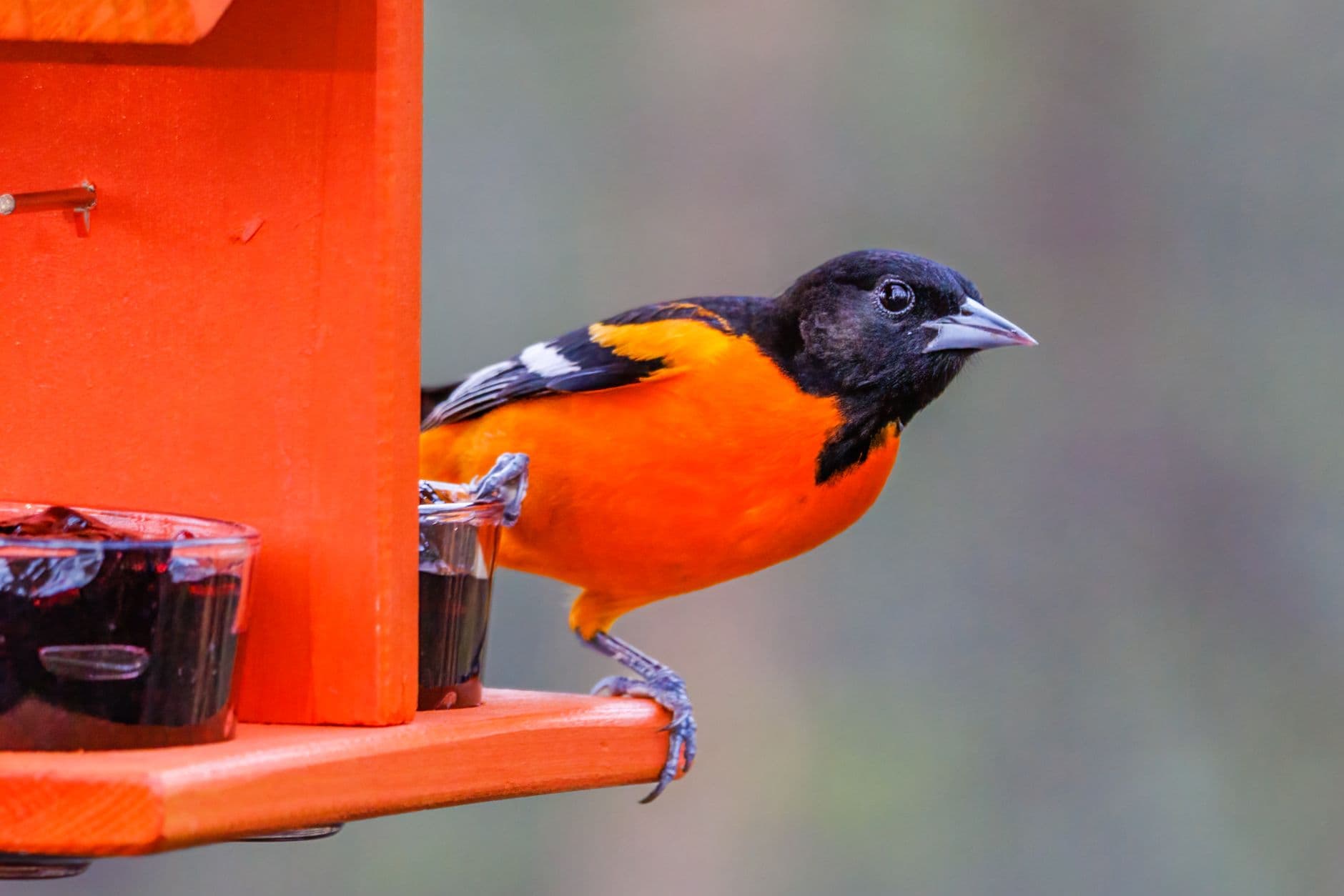
Buy a feeder that serves all three oriole foods and let the birds choose: the Birds Choice Oriolefest holds nectar in its basin, jelly in four trays and an orange half on the hook, and it has a built-in ant moat. If you already know your orioles want jelly, the Perky-Pet 253 keeps a jar of it covered.
Seed & Sprig earns a commission when you buy through the links on this page, at no extra cost to you. It does not change which products we pick or the order we put them in — here is how we pick and here is how we are funded.
Quick picks
| # | Product | Best for | Price |
|---|---|---|---|
| 1 | 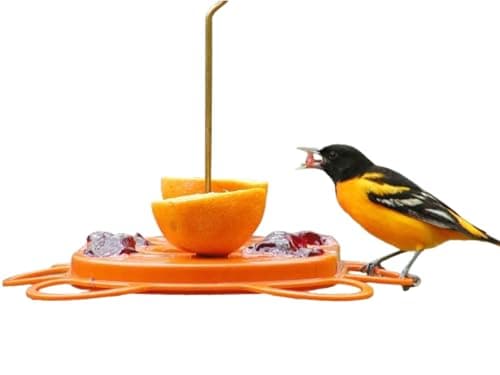 Birds Choice Oriolefest Oriole Feeder All three foods on one hook, with the ant moat built in rather than sold separately. | Best overall | $19.61 · View on Amazon #ad How we are funded · Price as of October 22, 2026 |
| 2 |  Perky-Pet Oriole Jelly Feeder (model 253) An inverted 32 oz jar keeps the jelly covered, and a knob doses it into the tray. | Best for jelly | $20.99 · View on Amazon #ad How we are funded · Price as of October 22, 2026 |
| 3 | 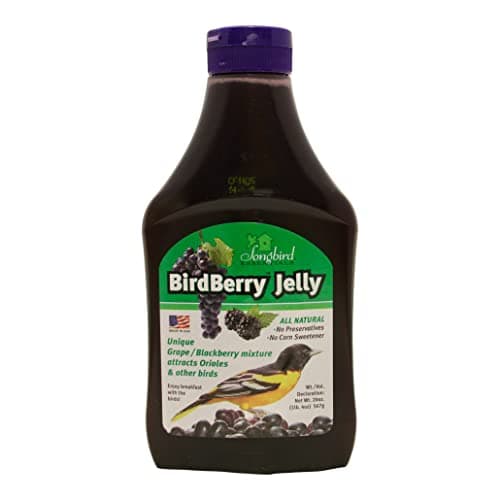 Songbird Essentials Bird Berry Jelly, 20 oz Jelly sold as bird food, in a jar size that matches how fast a tray goes through it. | What to put in it | $12.95 · View on Amazon #ad How we are funded · Price as of October 22, 2026 |
| 4 | 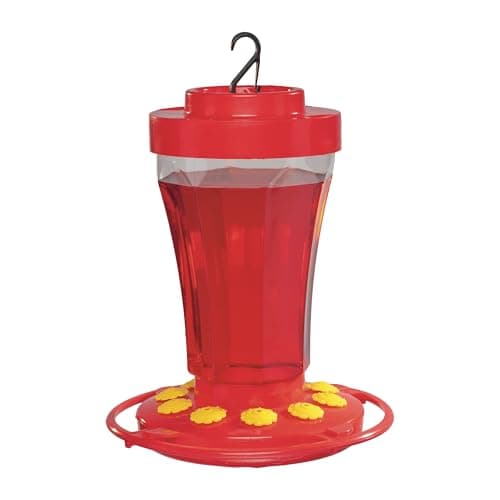 First Nature 32-Ounce Hummingbird Flower Feeder A wide-mouth 32 oz bottle. Orioles take the same sugar water hummingbirds do, weaker. | If they only want sugar water | $16.49 · View on Amazon #ad How we are funded · Price as of October 22, 2026 |
Rows link to the full write-up further down this page. The price button goes to Amazon.
An oriole is not a seed bird. Everything that makes a feeder good for chickadees — a tube, small ports, sunflower — is irrelevant here, which is why a yard full of feeders can go a whole summer without one. Orioles want sugar and fruit, and the feeder is just the dish you serve it in.
Audubon's account of the Baltimore Oriole describes a bird that forages for insects in foliage, visits flowers for nectar, will come to sugar-water feeders and will come to pieces of fruit put out at feeders. That is three distinct offerings, and the reason this page exists: no single one of them is the right answer for every yard.
The three foods, and what each one needs
| Food | What it needs | Upkeep | Who it also attracts |
|---|---|---|---|
| Grape jelly | An open tray, ideally fed from a covered jar | Replace every few days; it skins over and molds | Wasps, ants, catbirds, woodpeckers |
| Sugar water | A nectar feeder with oriole-sized ports and perches | Change every 2-3 days in warm weather | Hummingbirds, ants, bees |
| Orange halves | A spike, a hook or a nail | Swap when the flesh dries or molds | Wasps, ants, mockingbirds, tanagers |
Note what every row has in common. Each of these foods spoils, and each of them attracts insects. An oriole feeder is a higher-maintenance object than a seed feeder by a wide margin, and the pages that sell you one rarely say so.
How we chose these
On published manufacturer specifications, checked against live listings in October 2026 so every pick is currently purchasable. No testing claim: we have not run oriole feeders side by side, and nobody should trust a site that says it has without showing the method.
Ranking went: does it serve more than one of the three foods; does it have an ant moat, because sweet food without one is an ant farm; is the feeding surface big enough for a bird the size of a robin; and can you get it apart to clean, because this is food that spoils in days rather than weeks. Then price. Our full criteria are here.
Start with all three, then specialize
Which food your orioles prefer varies by yard and by week, and the only way to find out is to offer more than one. That is the case for the Oriolefest as a first feeder: nectar in the basin, jelly in the four trays, an orange half on the hook. Twelve ounces of nectar is modest, which is appropriate — you will be throwing unused sugar water away every few days regardless.
The built-in ant moat is the reason it leads. A moat is a small water-filled cup above the food that ants will not cross, and a sweet feeder without one becomes unusable within a week in most of the country. Feeders that omit it leave you buying a separate moat to hang above them, which costs as much again and adds another thing to swing in the wind.
Once you know what they take, buy for that. A yard where the jelly empties and the nectar sits untouched wants a jelly feeder with a bigger reservoir. A yard where the nectar goes and the jelly molds wants a nectar feeder and a cleaning routine.
The jelly question, answered honestly
Grape jelly is the oriole food everyone has heard about, and it works. It is also a pure sugar hit, which is worth being plain about: jelly supplements an oriole's diet of insects and fruit, it does not substitute for it. The birds are not going to be harmed by a tray of jelly, and they are not being nourished by it either.
Two practical rules. Serve it in a small quantity and replace it often — a spoonful in a tray that gets eaten in a day is better than a full dish that sits for a week. And get the bulk of it under cover: the Perky-Pet 253 exists because jelly left open in a dish skins over, and its inverted jar plus stirrer knob means what is in the tray is always fresh.
Grocery-store grape jelly is cheaper than jelly sold as bird food and orioles do not appear to mind the difference. We list a bird-food jelly because the jar size matches the use case and it removes any question about additives, not because the birds can tell.
Sugar water for orioles is not hummingbird nectar
The ratio is different, and this is the detail most pages get wrong. Project FeederWatch gives one part sugar to six parts water for orioles, against one part sugar to four parts water for hummingbirds — a weaker mix, matching what an oriole gets from the flowers it visits. Let it cool before filling the feeder.
Everything else about nectar hygiene carries straight across from hummingbird feeders: no red dye, change it every two or three days in warm weather, and wash the feeder rather than topping it up. The fungus and bacteria that build up in a nectar feeder are the actual hazard here, not the sugar.
A dedicated oriole nectar feeder has bigger ports and a real perch, because an oriole is a robin-sized bird that stands rather than hovers. A hummingbird feeder will be used by orioles if the ports are large enough, and ignored if they are not.
Orange halves: the cheapest test in the hobby
Before buying anything, nail an orange half to a fence post or push it onto a branch stub. Maryland's Department of Natural Resources puts it plainly in its supplemental feeding guidance: orange slices are an excellent attractant for Baltimore Orioles in the spring, with the caution to be careful of ants and wasps, which also enjoy fruit offerings.
The same document is worth quoting on fruit generally, because it corrects a common mistake: only fresh fruit should be offered to birds, as many dried fruits have added sugars that are harmful to birds. Fresh orange, apple and grape. Not dried, not canned in syrup.
And clean the fruit station every few days, removing any moldy fruit that is left. That is not fussiness. FeederWatch is explicit that moldy fruit should be disposed of because some molds create toxins that are harmful to birds.
Where to hang it, and when
Orioles nest high, in the outer branches of tall deciduous trees — Audubon puts the nest at typically twenty to thirty feet up, at the end of a drooping branch. They are a canopy bird coming down to your feeder, not a shrub bird working along a hedge.
In practice that means hanging an oriole feeder higher and more in the open than you would hang a seed feeder, somewhere with a clear flight line in, and ideally where the orange is visible from above. Orange is the color they come to, which is why every feeder in this category is the same shade.
Timing is the part that decides whether any of this works. Fall migration begins early for this bird; many have gone by August. Hang the feeder a week before the first returning birds are due in your area in spring, keep it up through the first weeks while they are hungry and natural food is thin, and expect interest to fall off sharply once insects and fruit are abundant. Our seasonal calendar covers what to have out and when.
The insects are not optional
Every sweet feeder recruits wasps and ants. There is no product that prevents this, and the pages claiming otherwise are selling something. What actually helps:
- An ant moat above the food. A water-filled cup between the hook and the feeder. Built into the Oriolefest; bought separately for anything else. Keep it topped up, because a dry moat is a bridge.
- Less food, more often. A feeder running near-empty is less worth a yellowjacket colony's time, and it is better hygiene anyway.
- Clean the outside, not just the inside. Spilled jelly and dried nectar on the body of the feeder are what the wasps are following.
- Take it down when the season ends. In late summer a sweet feeder is mostly a wasp feeder.
Bee guards — the plastic grilles over nectar ports — help with bees and do nothing about ants. They are worth having and they are not a solution.
What we would buy
- First oriole feeder: the Oriolefest, for the ant moat and because it lets you find out which of the three foods your birds want without buying three feeders.
- Jelly is clearly the winner in your yard: the Perky-Pet 253, and a jar of jelly. Expect to clean the tray every few days.
- Sugar water is clearly the winner: a wide-mouth bottle feeder at the one-to-six oriole ratio, and an ant moat above it.
- Finding out whether you have orioles at all: an orange half on a fence post, which costs nothing and answers the question in a week.
The thing to take away is that this is a seasonal, higher-effort corner of bird feeding with a short window and a real payoff. If you want a feeder you can fill and forget, the seed feeders are over here. If you want the brightest bird that will ever visit your yard, hang an orange out in spring and see what happens.
The picks in full
#1 · Best overall
Birds Choice Oriolefest Oriole Feeder
Birds Choice · Offering nectar, jelly and orange at once while you find out which one they want
One feeder that serves all three oriole foods: nectar in the basin, jelly in four separate trays, and an orange half skewered on the hanging hook. The built-in ant moat is the detail that separates it from most jelly feeders.
Published specifications
- Nectar capacity
- 12 oz
- Feeding stations
- 4, each with a perch in front of the port
- Jelly
- Four separate feeding trays
- Fruit
- Orange half skewers onto the hanging hook
- Ant moat
- Built in
- Dimensions
- 10-1/4" x 9"
- Materials
- High-impact orange and clear plastic, with metal
What it does well
- The built-in ant moat solves the problem every other sweet feeder on this page has
- Clear basin, so you can see the nectar level without taking it down
- Three foods on one hook is the cheapest way to learn what your orioles actually take, which varies by yard
What it does not
- Twelve ounces of nectar is modest, and that is deliberate — but in a yard with several orioles it empties fast
- Four small jelly trays are fiddlier to scrub than one open tray
- Plastic rather than glass, so it will chalk and fade in strong sun over a few seasons
- The orange goes on the hook above the feeder, which is also where the hanger is: it gets in the way of the hanging hardware
Specifications above come from the manufacturer's own published listing: Duncraft — BirdsChoice Oriole Fest Feeder (capacity, feeding stations, ant moat, dimensions, materials), Birds Choice Oriolefest — published listing.
#ad How we are funded · Price as of October 22, 2026
#2 · Best for jelly
Perky-Pet Oriole Jelly Feeder (model 253)
Perky-Pet · Serving grape jelly without it crusting over by noon
An inverted jar over an open orange tray, with a stirrer knob underneath that doses jelly into the tray as it is eaten. The jar keeps the rest of the jelly covered, which is the whole problem with jelly feeding.
Published specifications
- Capacity
- Up to 32 oz of jelly in the inverted jar
- Dispensing
- Built-in stirrer; turn the knob under the tray to release more jelly
- Feeding area
- Large circular tray with a wraparound porch
- Cleaning
- Open tray design, per the maker
- Hanging
- Chain included; the maker says it balances the tray so it will not tip
- Model
- 253
What it does well
- The inverted jar is the only design feature that matters here: jelly left open in a dish skins over and molds, and this keeps the bulk of it covered
- The stirrer means you are not scraping clumped jelly into a tray with a spoon
- Orange tray, which is the color orioles are drawn to, and wide enough for a bird that is bigger than a hummingbird
What it does not
- Thirty-two ounces of jelly is far more than any yard needs at once, and jelly in a tray still has to be cleaned out every few days in warm weather
- No ant moat, so ants find it fast — the tray needs an ant moat hung above it
- Jelly attracts wasps as readily as orioles, which is a seasonal nuisance nobody warns you about
- Nectar is not an option: this is a jelly feeder only
Specifications above come from the manufacturer's own published listing: Perky-Pet — Oriole Jelly Feeder 253 (capacity, stirrer, tray, hanging chain), Perky-Pet Oriole Jelly Feeder, 32 oz — published listing.
#ad How we are funded · Price as of October 22, 2026
#3 · What to put in it
Songbird Essentials Bird Berry Jelly, 20 oz
Songbird Essentials · Buying jelly made for birds instead of raiding the breakfast cupboard
A jar of jelly sold specifically for oriole feeders, in a size that matches what a feeder actually gets through. It is the straightforward answer to the question of what goes in a jelly feeder.
Published specifications
- Size
- 20 oz jar
- Intended use
- Oriole jelly feeders, per the listing
- Form
- Jelly, ready to spoon into a tray
What it does well
- A 20 oz jar is a sensible quantity: jelly in a tray has to be replaced every few days in warm weather, and the jar itself keeps
- Sold as bird food, so you are not guessing about a grocery jelly's additives
- Cheaper per ounce than most novelty bird treats, and orioles take it readily
What it does not
- Grocery-store grape jelly is cheaper still, and orioles do not appear to mind the difference
- Jelly of any kind is a sugar hit, not a diet: it supplements insects and fruit, it does not replace them
- Any jelly left in an open tray molds, and moldy food at a feeder is a genuine hazard rather than an aesthetic one
Specifications above come from the manufacturer's own published listing: Songbird Essentials Bird Berry Jelly, 20 oz — published listing.
#ad How we are funded · Price as of October 22, 2026
#4 · If they only want sugar water
First Nature 32-Ounce Hummingbird Flower Feeder
First Nature · Most nectar per dollar, and the easiest bottle to fill
The high-capacity bottle feeder that bird stores sell by the pallet: thirty-two ounces, a wide-mouth reservoir you can get a hand into, and flower-shaped ports. It is a quarter of the price of a premium saucer and it works.
Published specifications
- Capacity
- 32 oz
- Reservoir
- Wide-mouth, per the listing
- Ports
- Flower-shaped
- Type
- Inverted bottle
What it does well
- Thirty-two ounces is the most nectar on this page, which matters in late summer when a yard can hold a dozen birds
- The wide mouth is the real feature: narrow-necked bottle feeders are miserable to clean and this one takes a brush or a hand
- Cheap enough to buy two and hang them where neither bird can see the other
What it does not
- An inverted bottle drips when the sun warms the air inside it, and nectar on the ground brings ants and wasps
- No built-in ant moat, so you need to hang one above it
- Thirty-two ounces is too much nectar for most yards: fill it part way, because unused nectar has to be thrown out every few days anyway
- Plastic, and it will cloud with age
Specifications above come from the manufacturer's own published listing: First Nature Hummingbird Flower Feeder, 32-Ounce, wide-mouth — published listing.
#ad How we are funded · Price as of October 22, 2026
Common questions
What do you put in an oriole feeder?
One of three things: grape jelly in an open tray, sugar water at one part sugar to six parts water, or a fresh orange half on a spike. Offer more than one at first, because preference varies by yard.
Is oriole nectar the same as hummingbird nectar?
No. Project FeederWatch gives one part sugar to six parts water for orioles, against one part sugar to four for hummingbirds. No red dye in either, and change it every two or three days in warm weather.
When should I put an oriole feeder out?
A week before the first orioles are due back in spring. Audubon notes that fall migration begins early for Baltimore Orioles, with many departing in July and August, so a feeder hung out in autumn mostly feeds wasps.
Will a hummingbird feeder work for orioles?
Sometimes. Orioles need ports large enough for a much bigger bill and something to stand on, so a hummingbird feeder with small ports and no real perch gets ignored. Oriole feeders are the same idea built to a larger scale.
How do I keep ants out of an oriole feeder?
An ant moat — a small water-filled cup hung between the hook and the feeder. Some feeders build one in. Keep it filled; a dry moat is just a bridge. Nothing else reliably works.
Is grape jelly bad for orioles?
In small, fresh quantities it is a sugar supplement rather than a problem. What does harm birds is jelly left to mold in a tray, so serve a little and replace it every few days.
Sources
- Audubon — Baltimore Oriole field guide (diet, sugar-water feeders, fruit, nesting, early fall migration)
- Cornell Lab of Ornithology, Project FeederWatch — oriole nectar ratio, orange halves, moldy fruit
- Maryland Department of Natural Resources — Supplemental Feeding Wild Birds (orange slices for orioles, fresh fruit only, cleaning fruit feeders)