Setup & Placement
Bird feeder pole mounts and adapters
Almost every feeder is sold to hang. Almost every feeder works better on a pole. The hardware in between is what nobody explains.
By Scooter M. · Published · Last updated
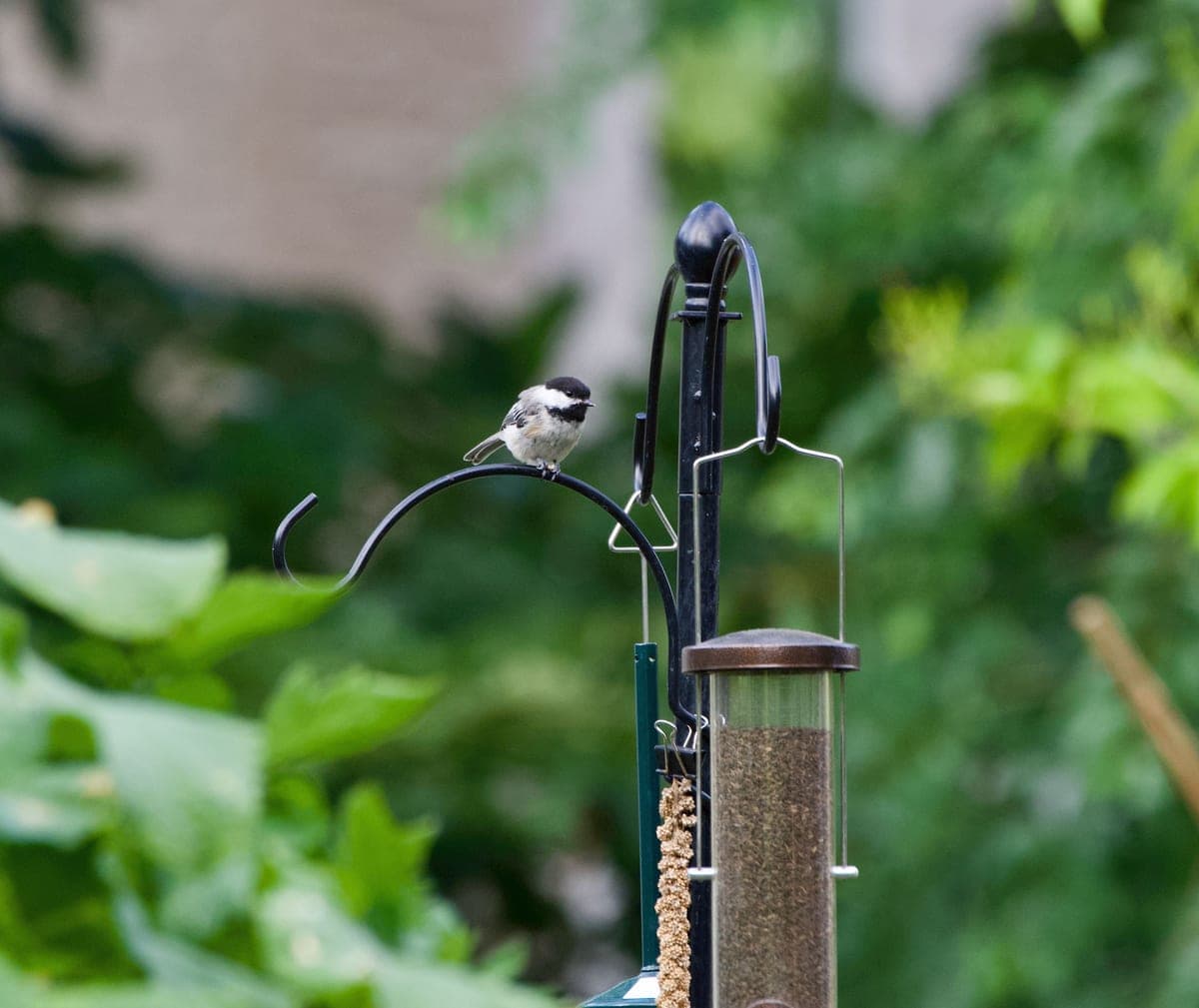
Most feeder mounting hardware is made for a one-inch outer diameter pole, so measure before you buy anything. A flange clamps a feeder to the top of the pole, brand adapters fit specific feeders, and a pole kit bundles both with a baffle — which is the part that actually stops squirrels.
Seed & Sprig earns a commission when you buy through the links on this page, at no extra cost to you. It does not change which products we pick or the order we put them in — here is how we pick and here is how we are funded.
Quick picks
| # | Product | Best for | Price |
|---|---|---|---|
| 1 | 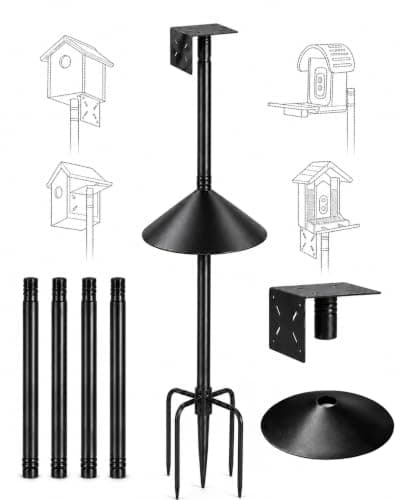 Phikrou 76-Inch Pole Kit with Squirrel Baffle (DSSZ001) Pole, mounting plate, baffle and ground stake in one box. The simplest route to a mounted camera feeder. | Best all-in-one | $39.99 · View on Amazon #ad How we are funded · Price as of September 26, 2026 |
| 2 | 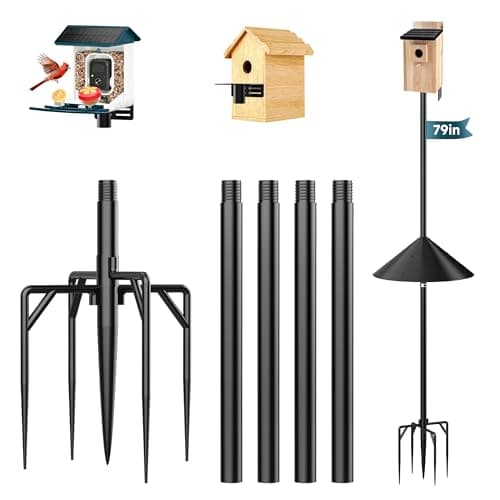 Uoveya 79-Inch Smart Feeder Pole with 19-Inch Baffle Adjustable to 94 inches with a published 19-inch baffle that locks anywhere on the shaft. | Best for height and baffle position | $48.98 · View on Amazon #ad How we are funded · Price as of September 26, 2026 |
| 3 | 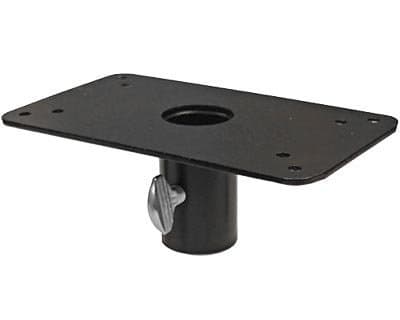 Erva Mounting Plate Flange for 1-Inch Pole (FPTNH) A steel plate with a thumb screw that turns any one-inch pole into a mounting platform. | Best universal flange | $19.18 · View on Amazon #ad How we are funded · Price as of September 26, 2026 |
| 4 | 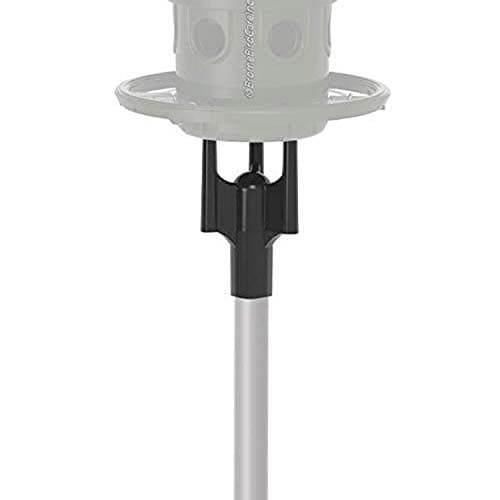 Brome Pole Adaptor for Squirrel Buster Plus (1025-V01) The official adapter. The Plus listing says one is needed and not included, and this is it. | For Squirrel Buster Plus owners | $29.95 · View on Amazon #ad How we are funded · Price as of September 26, 2026 |
| 5 | 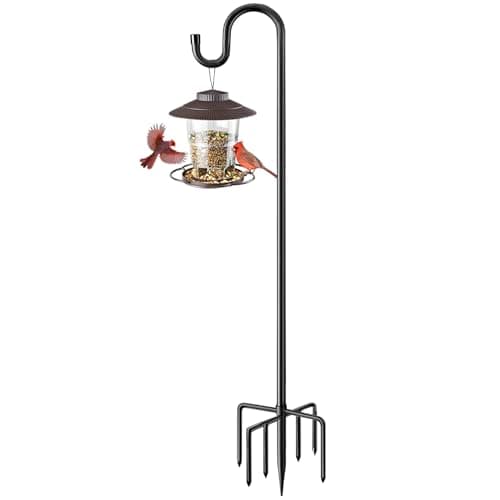 ANIDEER 84" Shepherds Hook, 7-Prong Base Eighty-four inches and a baffle-capable shaft. Cheaper than a pole kit if your feeder has no base to bolt. | If you only need to hang | $19.79 · View on Amazon #ad How we are funded · Price as of September 26, 2026 |
Rows link to the full write-up further down this page. The price button goes to Amazon.
Nearly every feeder on the market is sold with a hanger, and nearly every feeder works better on a pole. A pole puts the feeder where you chose rather than where a branch happens to be, it holds it still in wind, and — the reason this site keeps coming back to it — a pole is the only mounting method you can baffle.
The part that trips people up is the hardware in between. A feeder that hangs from a hook has nothing to bolt to a pole top, adapters are model-specific, and the listings assume you already know which diameter you are buying for. This page is about that hardware. If you are choosing the pole itself, our pole and pole-system guide covers the structural side, and hanging without a tree covers the alternatives to a pole entirely.
Measure first: the one-inch standard
Feeder mounting hardware has settled on a de facto standard, and it is one inch of outer diameter. Every product on this page states it: the Erva flange is for a one-inch outer diameter pole, Brome's adapter says one-inch pole only, and both pole kits publish a one-inch shaft.
That is convenient right up to the moment you own something else. Heavier station poles run to an inch and a half, garden stakes are often thinner, and electrical conduit — a popular cheap substitute — comes in its own sizes. An adapter that does not match is simply a part that will not clamp.
So before ordering: put a tape across the pole you own, or across the pole you are about to buy, and check the number against the adapter. If you have not bought either yet, buy a one-inch pole and you will have the widest choice of hardware for as long as you own it.
The three ways a feeder attaches
| Method | What it is | Suits |
|---|---|---|
| Mounting flange or plate | A steel plate that clamps to the pole top; you bolt the feeder or house to it | Feeders and houses with a flat base, and camera feeders with a threaded or bolt-down mount |
| Brand adapter | A part made for one specific feeder, like Brome's for the Squirrel Buster Plus | Owners of that feeder; usually the neatest fit and the most expensive per part |
| Pole kit with an integrated plate | Pole, plate, baffle and ground anchor sold together | First-time pole installations, and anyone mounting a smart feeder |
| Hook on a shepherd's pole | No adapter at all: the feeder hangs as designed | Feeders with no flat base, and anyone who wants to swap feeders often |
The fourth row is worth taking seriously rather than treating as the fallback. If your feeder was built to hang and you have no wish to bolt it to anything, a tall shepherd's hook with a baffle gets you most of the benefit for less money and less fuss. Our shepherd's hook picks are here.
How we chose these
On published manufacturer and listing specifications, checked against live listings in September 2026 so that everything here is currently purchasable. We have not load-tested any of this hardware and do not claim to have: where a maker publishes no weight rating — which is most of them — we say so rather than inventing a figure. Ranking went: whether the fitting size is published and standard; whether a baffle is included and its diameter stated; height, because height is what placement needs; then materials and how easily the feeder comes off for cleaning. Our full criteria are here.
One note on brands. Several poles are marketed as compatible with a named smart feeder, often at very low prices, and publish almost nothing else. What matters for compatibility is the one-inch shaft and a plate at the top, not the brand in the title — so we have picked the ones that publish a baffle size and a height over the ones that publish a compatibility claim.
Camera feeders belong on a pole
This is the strongest single recommendation on the page, and it applies to every smart feeder we have looked at.
A camera feeder has requirements an ordinary feeder does not. It wants light, because a shaded perch produces dim, noisy images and the low-light performance of these cameras is their weakest published specification. It wants a stable mount, because a feeder swinging on a branch produces unusable video and repeated motion triggers. It wants a decent Wi-Fi signal, which usually means closer to the house and away from the tree line. And it wants squirrels not to reach it, because a camera feeder is the most expensive thing most people hang in a yard.
A baffled pole in the open satisfies all four at once, which is why we say it plainly here and in our Bird Buddy and Birdfy comparison: the mount matters more to the result than the choice between the two cameras does. Check how your feeder attaches before buying hardware — most publish a pole-mount option alongside the strap — and match the plate to it.
The baffle is the point
A pole without a baffle is a ladder. It is worth being blunt about that, because a mounting flange does not deter anything on its own.
The geometry is published and it has not changed. The 5-7-9 rule asks for five feet of height, seven feet of horizontal clearance from anything a squirrel can launch off, and nine feet below an overhanging branch. What that means in hardware terms is specific:
- The baffle has to sit high. Its top edge needs to be at roughly four and a half to five feet, so a squirrel standing at the base cannot reach past it. A baffle that clamps anywhere on the shaft — like the adjustable pick here — is worth more than a baffle fixed at the factory position.
- The feeder has to sit above that. Which is why a 76-inch pole is tighter than it sounds and a pole adjustable to 94 inches gives you room to work.
- Diameter matters. Wider is better, and most listings do not say. When one publishes a figure — 19 inches, in the case of our second pick — that is a point in its favor rather than a detail.
Which baffle to buy, if your pole came without one, and be aware that a baffle sized for squirrels is too short for raccoons — that needs a longer one.
The conduit question
Sooner or later someone tells you to skip feeder poles entirely and buy a length of electrical conduit from the hardware store, and the advice is half right.
The appeal is real: conduit is rigid, straight, cheap, galvanized, and available in lengths no feeder pole comes in. Adapters exist for it — we found bottom-mount adapters sold specifically to fit conduit to a smart feeder — so it is a genuine route if you are comfortable improvising.
The catch is sizing, and it catches almost everyone. Conduit is sold by nominal trade size, and the actual outer diameter of a piece does not match the number on the label. That means a one-inch adapter and a piece of conduit called one inch are not automatically the same thing. Check the adapter's stated outer diameter against a tape measure on the actual pipe before you commit, rather than trusting the two labels to agree.
The other cost is the baffle. Conduit gives you a shaft and nothing else: no ground anchor, no plate, no baffle, and baffles are sized to specific diameters too. Priced honestly, with the parts added, a purpose-made kit is usually no more expensive and arrives matching itself.
Running two feeders on one pole
A pole with a flange on top and a hook arm below is how most people end up with a small feeding station, and it works well if you respect two limits.
The first is weight. A loaded hopper on a plate plus a second feeder on an arm is a lot of mass on a thin shaft with a long lever, and almost none of this hardware publishes a rating. Keep the heavy feeder on top, centered over the pole, and hang the lighter one from the arm — not the reverse.
The second is crowding. Two feeders a foot apart is one feeder as far as the birds are concerned: dominant species work both, and disease risk rises where traffic concentrates. Space them as far apart as the arms allow, run different foods rather than the same seed twice, and remember that two well-separated feeders beat three crowded ones.
Getting it into the ground
The unglamorous half of pole mounting, and where most wobbling comes from.
Ground stakes and multi-prong anchors — both pole kits here include one — work well in soil that has some body to it and poorly in sand or in ground that has been recently dug. Push the anchor in with your weight rather than hammering the pole top, which deforms the fitting the plate has to clamp onto. Then hang the feeder, stand back, and check it is vertical: a pole that leans two degrees looks fine on installation day and looks derelict by spring.
Two practical points people discover late. A full feeder on a plate is a long lever on a thin shaft, so re-check the anchor after the first windy week and after the ground first freezes and thaws. And if you are installing this autumn, do it now rather than in December — driving an anchor into frozen ground is unpleasant at best, and the season you most want a working feeder is the season you cannot install one. Winter feeding has its own routine, and a pole already in the ground is part of it.
If a pole in the ground is not available to you at all — a rented balcony, a paved yard — the rail clamps in our deck rail guide are the next best thing, with the honest caveat that no clamp can be baffled.
Living with a pole-mounted feeder
Two things change once the feeder is bolted down rather than hanging.
Cleaning takes one extra step. A hanging feeder lifts off a hook. A bolted feeder needs the fixing undone, which is why the thumb screw on the Erva flange and the tool-free design of Brome's adapter matter more than they look. FeederWatch asks for cleaning every week or two, more often in wet weather or heavy use, and hardware that makes that a two-minute job is hardware that gets used. The routine is here.
Spilled seed concentrates in one spot. A fixed feeder drops everything in the same small circle, which builds up faster than under a swinging one. Rake it or fit a catch tray — the center hole in a good flange exists so a tray can go on the shaft below the feeder — because fallen seed is what brings rodents to a yard.
What we would buy
- New camera feeder, no pole yet: the Phikrou kit if you want it simple, or the Uoveya if you want the extra height and the bigger baffle. Either beats the strap in the box.
- You own a Squirrel Buster Plus and a one-inch pole: the Brome adapter. It is the part the feeder's own listing tells you that you need.
- You own a pole and a feeder with a flat base: the Erva flange, and nothing else.
- Your feeder only hangs: the 84-inch shepherd's hook plus a baffle. Skip the adapters entirely.
- You have a deck and no ground: a rail clamp, and accept that squirrels walk the rail.
The summary is short. Measure the pole, buy the fitting that matches, get the baffle high and the feeder higher, and put the whole thing in the open where you can see it. That sequence costs less than most feeders and does more for what lands in your yard than any upgrade to the feeder itself — placement is the whole game.
The picks in full
#1 · Best all-in-one
Phikrou 76-Inch Pole Kit with Squirrel Baffle (DSSZ001)
Phikrou · Getting a camera feeder onto a baffled pole in one purchase
A 1-inch galvanized pole with a mounting plate, a baffle and a ground stake in the box. For anyone putting a smart feeder on a pole for the first time, buying the parts together is the sane route.
Published specifications
- Height
- 76"
- Pole diameter
- 1" — the common standard for feeder mounting hardware
- Baffle
- Included, described as built-in to stop climbing
- Top fitting
- Mounting plate, listed as suiting smart feeders, classic feeders and bluebird houses
- Materials
- Galvanized steel with a black powder-coated finish
- Installation
- Ground stake and hardware included; no digging required, per the listing
- Model
- DSSZ001
What it does well
- Pole, mounting plate, baffle and stake in one box, so nothing is missing on installation day
- The 1" diameter is the size most adapters and flanges are made for, which keeps future options open
- A mounting plate rather than a hook is what a camera feeder actually needs
What it does not
- Phikrou publishes no baffle diameter, so you cannot check it against the usual guidance before buying
- At 76" the top of the pole is barely above head height, which leaves less room to get the baffle high and the feeder higher
- A ground stake in soft soil is not the same as a driven post: expect to re-level it after a windy week
Specifications above come from the manufacturer's own published listing: Phikrou Bird Feeder Pole Kit (DSSZ001) — published listing (height, diameter, baffle, plate, materials).
#ad How we are funded · Price as of September 26, 2026
#2 · Best for height and baffle position
Uoveya 79-Inch Smart Feeder Pole with 19-Inch Baffle
Uoveya · Height, and a baffle whose size is actually published
A taller 1-inch pole, adjustable up to 94 inches, with a 19-inch baffle that slides and locks anywhere on the shaft. The adjustability is the point: you can put the baffle where the geometry wants it rather than where the pole allows.
Published specifications
- Height
- 79", adjustable up to 94" per the listing
- Pole diameter
- 1"
- Baffle
- 19" diameter, polycarbonate with metal buckles; slides and locks anywhere on the pole
- Base
- 5-claw ground anchor
- Compatibility
- Listed for camera feeders, most popular feeders and birdhouses
- Model
- Standard Kit-Pole
What it does well
- A published 19-inch baffle diameter, which is wide enough to matter and rare to see stated
- A baffle that locks anywhere on the shaft lets you set the height the 5-7-9 rule asks for
- Adjustable to 94", which is the difference between a pole squirrels can jump to and one they cannot
What it does not
- The baffle is polycarbonate, not steel: it will not be chewed through in an afternoon, but it is the softer choice
- Screw-together sections are the usual weak point in tall poles; check the joints after the first storm
- Uoveya publishes no weight rating, so treat a heavy hopper plus a seed tray with caution
Specifications above come from the manufacturer's own published listing: Uoveya 79 inch Smart Bird Feeder Pole — published listing (height range, diameter, baffle, base).
#ad How we are funded · Price as of September 26, 2026
#3 · Best universal flange
Erva Mounting Plate Flange for 1-Inch Pole (FPTNH)
Erva · Mounting a feeder or house that has no pole adapter of its own
A steel plate that clamps to the top of a 1-inch pole with a thumb screw and gives you a flat surface to bolt almost anything to. The generic answer when the feeder you own was designed to hang.
Published specifications
- Fits
- 1" outer diameter poles
- Fixing
- Large thumb screw; loosens by hand for quick removal
- Center hole
- Allows a seed tray or platform to be mounted on the shaft below the feeder
- Materials
- Galvanized steel, automotive-quality powder coat
- Made in
- USA, per the listing
- Model
- FPTNH
What it does well
- Turns any 1-inch pole into a mounting platform for a feeder, house or tray
- The thumb screw means the whole feeder lifts off for cleaning without tools
- Steel and properly finished, from a maker that has been making feeder hardware for decades
What it does not
- You still have to bolt your feeder to the plate, and not every feeder has a flat base to bolt
- No published weight rating, though the listing claims it holds the heaviest feeders
- A flange on top of a pole raises the feeder only as high as the pole: it is hardware, not height
Specifications above come from the manufacturer's own published listing: Erva Mounting Plate Flange (FPTNH) — published listing (fit, thumb screw, center hole, materials).
#ad How we are funded · Price as of September 26, 2026
#4 · For Squirrel Buster Plus owners
Brome Pole Adaptor for Squirrel Buster Plus (1025-V01)
Brome · Squirrel Buster Plus owners who bought a pole and found the adapter was extra
The official die-cast adapter that pole-mounts a Squirrel Buster Plus, with a stainless mid ring Brome says is there to thwart squirrels. The Plus listing states the adapter is sold separately, and this is it.
Published specifications
- Fits
- Squirrel Buster Plus, on a 1" pole only
- Construction
- Powder-coated die cast, with a stainless steel mid ring
- Assembly
- Dismantles by hand, no tools, like the rest of the Brome range
- Dimensions
- 11" x 9" x 3"
- Warranty
- Brome Lifetime Care; parts covered under warranty supplied free, per the listing
- Model
- 1025-V01
What it does well
- The correct part for the feeder we recommend most often, from the maker rather than a copy
- The stainless mid ring addresses the obvious weakness of pole-mounting: a squirrel climbing the last few inches
- Tool-free, so it comes off in seconds when the feeder needs washing
What it does not
- Strictly for 1" poles — measure before ordering, because a 1.5" station pole will not take it
- It costs a noticeable fraction of a cheap pole, which stings when the feeder was already expensive
- Fits the Plus; other Squirrel Buster models are not covered by this part
Specifications above come from the manufacturer's own published listing: Brome Pole Adaptor (1025-V01) — published listing (fit, construction, mid ring, warranty).
#ad How we are funded · Price as of September 26, 2026
#5 · If you only need to hang
ANIDEER 84" Shepherds Hook, 7-Prong Base
ANIDEER · The tallest honest option, and the one that can take a baffle
Eighty-four inches with a seven-prong base, which is the combination that actually lets you mount a baffle high enough to matter.
Published specifications
- Height
- 84"
- Base
- 7-prong
- Load rating
- Not published on the listing
What it does well
- The extra height is what makes a baffle viable rather than decorative
- Seven prongs spread the load better than five in soft ground
What it does not
- Still a hook, so it flexes under a heavy hopper in a way a 1-inch pole does not
- No published load rating
- Taller means harder to refill without a step
Specifications above come from the manufacturer's own published listing: ANIDEER 84 inch shepherds hook — published listing (height, 7-prong base).
#ad How we are funded · Price as of September 26, 2026
Common questions
What diameter are bird feeder poles?
One inch outer diameter is the standard that mounting hardware is built for, and every pick on this page states it. Heavier station poles are often an inch and a half, which most feeder adapters will not fit.
Can you put a Bird Buddy or Birdfy on a pole?
Yes, and you should. Both publish a pole-mount option alongside the strap mount. A baffled pole in the open gives better light, a steadier image and far better squirrel protection than a tree trunk.
Do I need a flange to mount a feeder on a pole?
Only if the feeder has a flat base to bolt down and no adapter of its own. Feeders designed to hang can simply hang from a hook on a tall pole instead.
How high should the baffle be on the pole?
With its top edge around four and a half to five feet from the ground, and the feeder above that. A baffle that clamps anywhere on the shaft makes this much easier to get right.
Why is my pole-mounted feeder leaning?
Usually the anchor rather than the pole. Ground stakes loosen in soft or recently dug soil and after a freeze and thaw. Re-seat it with your weight rather than hammering the pole top.
Can I pole-mount a feeder on a deck or patio?
Not in the usual sense. Use a clamp-on rail mount instead, and note that no clamp can be baffled, so squirrels reaching the rail on foot remain a problem.