Bird Seed
Safflower and squirrels: the honest version
The cheapest thing you can try before buying hardware — and the reason it sometimes does not work.
By Scooter M. · Published · Last updated
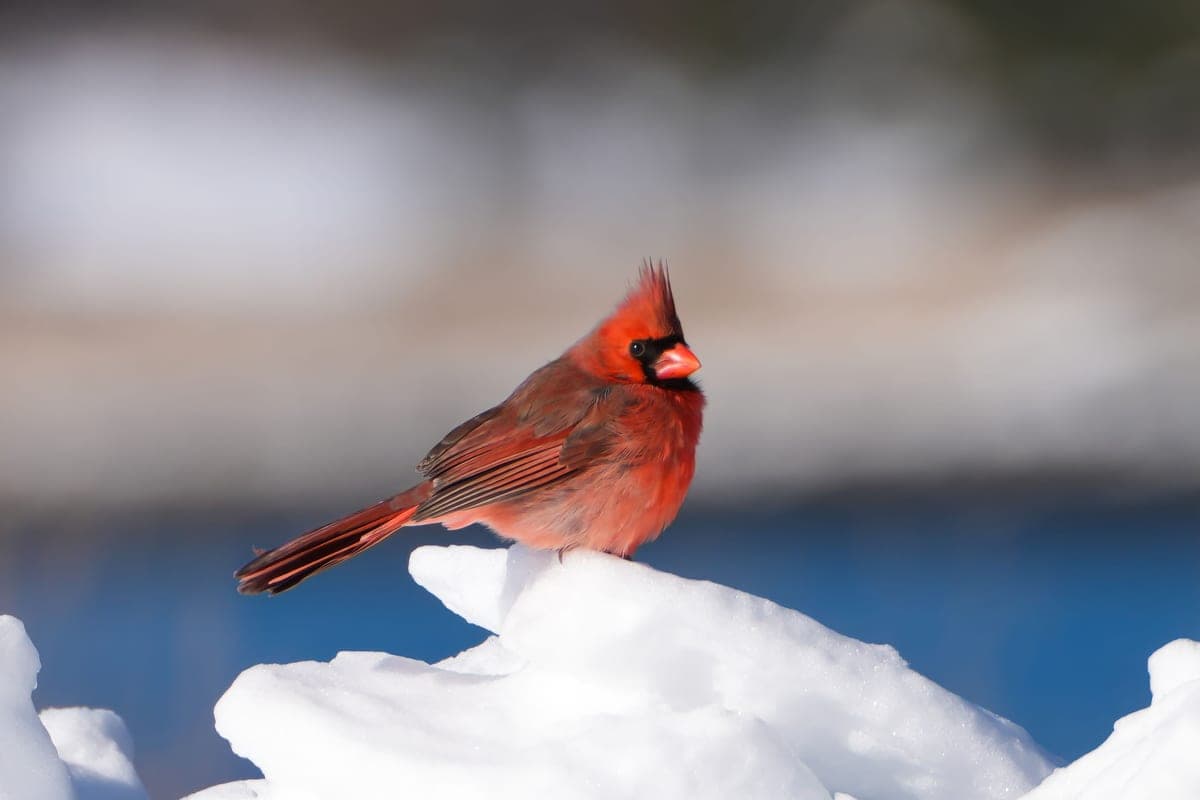
Most squirrels prefer sunflower and will leave safflower alone if it is the only thing on offer, which makes a bag of safflower the cheapest squirrel experiment available. It is a preference, not a rule: a hungry squirrel with no alternative will eat safflower.
Seed & Sprig earns a commission when you buy through the links on this page, at no extra cost to you. It does not change which products we pick or the order we put them in — here is how we pick and here is how we are funded.
“Best bird seed to keep squirrels away” is a real and popular search, and the answer everyone gives is safflower. That answer is broadly right and it is usually stated with more confidence than it deserves. Here is the version with the conditions attached.
What safflower is
A small white seed with a hard shell and a bitter taste, from the same plant that produces safflower oil. Wagner's publishes 17% protein and 25% fat for its single-ingredient bag — nutritionally comparable to black oil sunflower, so birds eating it are not getting a worse deal.
Which birds eat it
Cardinals, house finches, chickadees, titmice, nuthatches and doves take safflower readily. That is a decent list, and it includes the bird most people are trying to attract in the first place.
Which birds mostly do not: blue jays, grackles and starlings, which is often a bonus. If you specifically want jays, safflower is the wrong choice — see the blue jay picks. If grackles and starlings are the actual problem, start here instead.
Why squirrels usually leave it
Safflower is bitter and hard-shelled, and squirrels are choosy when they have options. In a yard where sunflower, acorns, or a neighbor's feeder are available, a squirrel that samples safflower generally moves on to something better.
When it does not work
- Deep winter, or a poor mast year. A squirrel with no alternatives eats what is there. Preference is a luxury.
- Squirrels that have already learned your feeder is food. An established habit takes longer to break than switching a bag.
- Chipmunks. The safflower evidence is about squirrels; we have found nothing published either way for chipmunks. What does work on them is here.
- Regional variation. Reports differ by area and by population, and the effect is anecdotal rather than something anyone has measured across the country.
- Mixed bags. If safflower is one ingredient among several, the squirrel eats the sunflower and drops the safflower. It has to be the only thing on offer.
How to run the experiment properly
- Empty the feeder completely. Any residual sunflower ruins the test.
- Fill it with straight safflower. One ingredient, no mixes.
- Expect a lull. Birds take a week or two to accept a new seed, and some will not switch at all.
- Watch for two weeks before concluding anything.
- If squirrels still empty it, the seed is not your lever. Go to the baffle.
What to do when it half-works
The usual outcome is not binary. Squirrel visits drop, they do not stop. Safflower is best treated as one layer: seed choice plus a baffled pole plus a mechanism is what actually holds. Use it as the cheap first move, not the whole plan.
The full ranking of interventions is in how to stop squirrels, and the honest framing of the whole category is in are any bird feeders really squirrel-proof.
What about hot-pepper seed?
Birds do not detect capsaicin and mammals do, which is the whole basis of pepper-treated seed. It is widely sold and legal in most places. The caveats are that the dust is genuinely unpleasant to handle — wear gloves, stand upwind — and that a hungry squirrel will still eat it. Same status as safflower: a layer, not a solution. The hardware side of the same problem — keeping squirrels off without losing cardinals — is here.
What we would buy for this
#1 · The seed to try
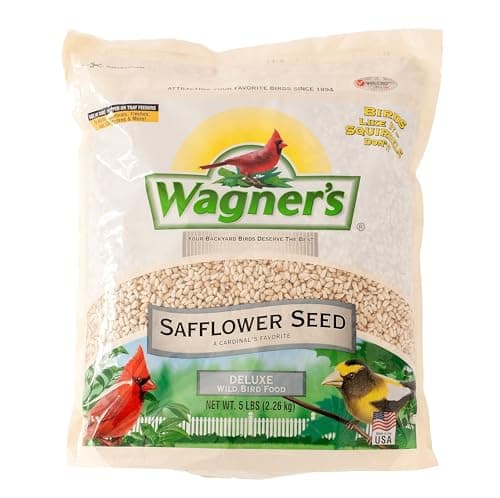
Wagner's Safflower Seed
Wagner's · Cardinals, when squirrels have taken over
A single-ingredient seed cardinals and finches take readily and squirrels usually leave alone, which is the closest thing to a no-hardware squirrel answer, with an honest caveat.
Published specifications
- Ingredients
- 100% safflower seed
- Crude protein
- 17.0%
- Crude fat
- 25.0%
- Crude fiber
- 32.0%
- Moisture
- 13.0%
What it does well
- Cardinals, house finches, chickadees and titmice all eat it
- Most squirrels prefer sunflower and will move on if safflower is all there is
What it does not
- 'Squirrels do not like safflower' is a tendency, not a law — hungry squirrels eat it
- Costs more per pound than black oil sunflower and attracts fewer species
Specifications above come from the manufacturer's own published listing: Wagner's safflower published analysis.
#ad How we are funded · Price as of October 22, 2026
#2 · If seed alone is not enough
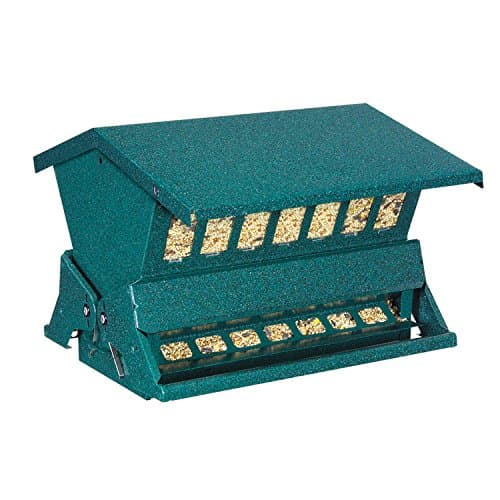
Woodlink Absolute II (model 7536)
Woodlink · Big capacity and cardinals — the hopper answer to squirrels
A double-sided steel hopper whose counterweighted perches drop a shield over the seed tray when something heavy lands, and it holds twelve pounds so it barely needs attention.
Published specifications
- Seed capacity
- 12 lb
- Dimensions
- 16" W x 11.25" H x 13.5" D
- Feeding ports
- 6 (both sides)
- Mechanism
- Two counterbalanced perches, adjustable to three weight settings
- Materials
- Steel and acrylic
What it does well
- 12 lb capacity means refills measured in weeks, not days
- Perch tension adjusts for light, medium or heavy birds
- The long perch rail suits cardinals, which will not use a small tube port
What it does not
- Twelve pounds of seed is heavy, so the hook or pole has to be rated for it
- Seed sitting for weeks in wet weather is how mold starts; a big hopper needs the same cleaning discipline as a small one
Specifications above come from the manufacturer's own published listing: Woodlink Absolute II published specifications.
#ad How we are funded · Price as of October 22, 2026
#3 · The permanent answer
Erva SB1D Cylindrical (Torpedo) Squirrel Baffle
Erva · Pole-mounted feeders
A long steel cylinder a squirrel cannot get around or hug past, and the single most effective thing you can buy after the feeder itself.
Published specifications
- Length
- 16.75"
- Diameter
- 6.25"
- Type
- Pole-mounted cylindrical baffle
What it does well
- Length is what defeats a squirrel here: it cannot reach past the top
- Steel, so it survives winters and chewing
What it does not
- Useless if the pole sits within jumping distance of a fence, wall or branch
- Must be mounted high enough that a squirrel cannot leap over it entirely
Specifications above come from the manufacturer's own published listing: Erva SB1D published dimensions.
Common questions
Does safflower seed really keep squirrels away?
Usually, not always. Most squirrels prefer sunflower and move on if safflower is the only option. A hungry squirrel with no alternative will eat it.
Will birds eat safflower seed?
Cardinals, house finches, chickadees, titmice, nuthatches and doves do. Blue jays, grackles and starlings mostly do not, which many people count as a bonus.
What is the best bird feeder for safflower seed?
The same feeders that take sunflower — a hopper or a tube. Safflower is a similar size, so no special feeder is needed.
How long before squirrels stop coming?
Give it two weeks. Established squirrels take longer to give up than new ones, and the usual result is fewer visits rather than none.