Feeder Types
Ground feeders, and the case against them
Some birds will barely use anything else. That does not make scattering seed on the soil a good idea.
By Scooter M. · Published · Last updated
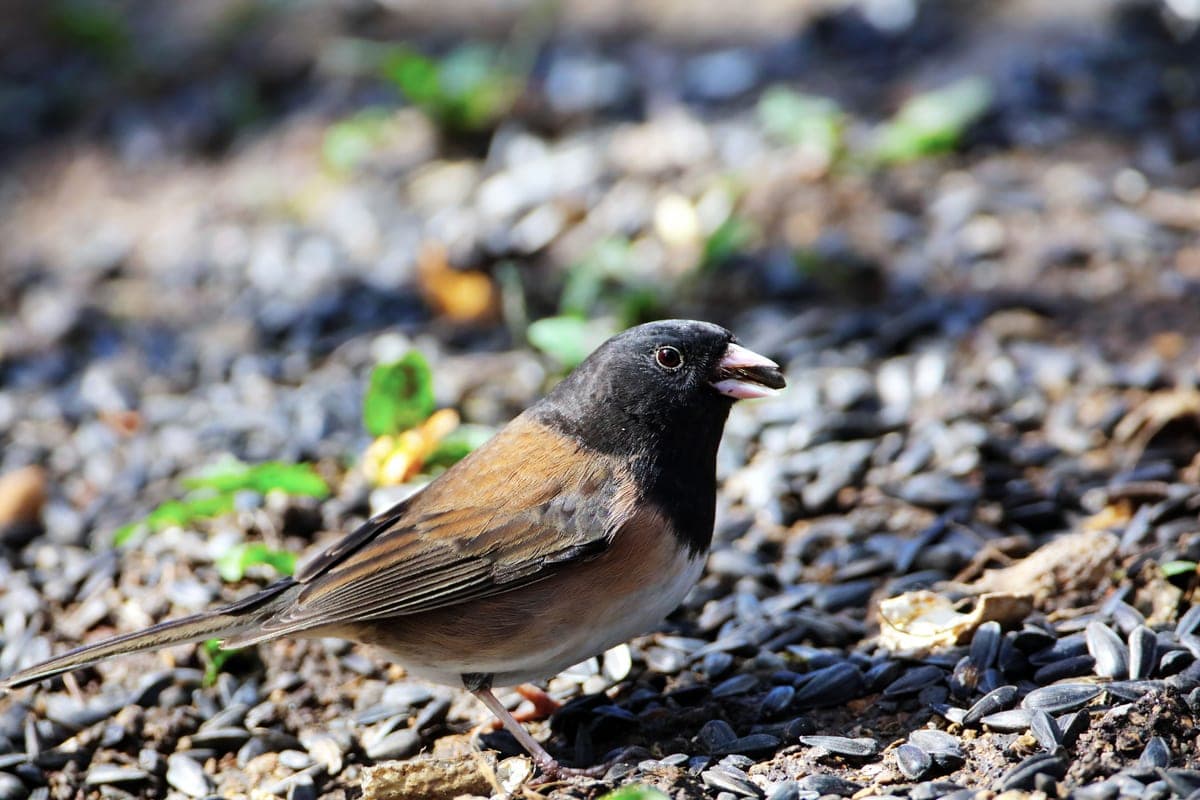
Juncos, doves, towhees and many sparrows feed on flat surfaces and mostly ignore hanging feeders. A low screened tray reaches them without the problems of scattering seed: wet ground seed molds, sprouts, and is the clearest invitation to rodents you can issue.
Seed & Sprig earns a commission when you buy through the links on this page, at no extra cost to you. It does not change which products we pick or the order we put them in — here is how we pick and here is how we are funded.
Quick picks
| # | Product | Best for | Price |
|---|---|---|---|
| 1 | NWno photo Nature's Way Cedar Platform Tray Feeder (CWF3) Twelve inches square with a screen bottom, set low on a baffled pole rather than on the soil. | Best low tray | |
| 2 | 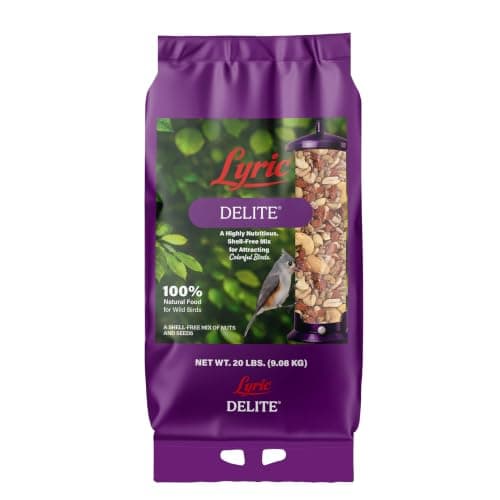 Lyric Delite No Waste Mix Shell-free, so nothing is dropped as a husk and nothing can germinate underneath. | Best seed for it | $49.07 · View on Amazon #ad How we are funded · Price as of October 22, 2026 |
| 3 | Eno photo Erva SB1D Cylindrical (Torpedo) Squirrel Baffle Sixteen and three-quarter inches of steel between the ground and the tray. | What keeps it a bird feeder |
Rows link to the full write-up further down this page. The price button goes to Amazon.
There is a whole category of bird that most feeder setups quietly miss. Project FeederWatch puts it plainly: many species of birds, including sparrows and doves, prefer to feed on large, flat surfaces and may not visit any type of elevated feeder. Juncos, towhees, fox sparrows and mourning doves are in that group. If your yard has them and your feeder is a tube, you have never seen them on it.
So the demand is real and the fix is genuinely cheap. The complication is that the obvious version of the fix — throwing a handful of seed on the lawn — creates more problems than it solves, and this page is mostly about the difference between the two.
Which birds this is actually for
FeederWatch describes a platform feeder as any flat, raised surface onto which bird food is spread, and notes that trays attract most species of feeder birds — but that when they are positioned at ground level they are most likely to attract juncos, doves and sparrows. Song Sparrows, Fox Sparrows and towhees will readily eat fallen seed from the ground. If mourning doves are the specific birds you are trying to serve, the tray and the seed for them are set out here.
That is the payoff. A low tray is the only piece of equipment that adds an entire guild of birds you otherwise would not see, rather than adding another version of the birds you already have.
| Low tray | Hanging tube | |
|---|---|---|
| Juncos, doves, towhees, sparrows | Yes — the main reason to have one | Rarely |
| Cardinals and jays | Yes | Only with a ring or long rail |
| Chickadees, titmice, finches | Yes | Yes |
| Squirrels | Trivially, unless baffled | Depends on the feeder |
| Rodents at night | The main risk | Only via spillage |
| Weather protection | None without a roof | Reasonable |
Why not just scatter it
Three reasons, and none of them is fussiness.
Damp. Seed on soil has nowhere to drain. It absorbs ground moisture from below and rain from above, and moldy seed is a genuine hazard rather than an aesthetic problem. A screened tray drains from underneath and dries between showers.
Sprouting. Any seed with its hull intact can germinate, and seed on soil is seed planted. What grows is a patch of sunflower and millet seedlings, and under it, a dead lawn. What to do about the patch under the feeder covers the fix in detail.
Rodents. This is the serious one. Ground seed after dark is a food source for rats and mice, and it is the reason feeders get complained about. The mechanism and the fixes are here, and the short version is that clearing the ground matters more than anything you do to the feeder.
What to buy instead
A screened tray, set low but not on the soil. Waist height or lower is enough — the birds this is for are looking for a flat surface, not a specific altitude, and a tray at knee to waist height reaches almost every ground-forager while staying off the wet.
Put it on a pole with a baffle, not a hook. An open tray of seed at a convenient height is otherwise a squirrel installation, and unlike a tube feeder there is no mechanism between the animal and the food. Baffle sizing and jump distances are here.
And use a hulled seed if you can afford it. Shell-free seed cannot germinate and leaves no husks, which removes two of the three problems above in one purchase. The no-mess arithmetic is here — it costs more per pound and less per edible pound, and near the ground the difference matters more than usual.
When a low tray is the wrong answer
If grackles, starlings or pigeons have found your yard, do not add one. FeederWatch's guidance for exactly that situation is to avoid platform trays and not to spread food on the ground, because an open surface is what lets a flock feed all at once. Work through the bully-bird page first and come back to the tray when the flock has moved on.
The same applies if you have already had rats, or if a neighbor has. In that situation the honest advice is to run a single closed feeder with a catch tray and keep the ground under it clear, and to accept that you will not be seeing juncos this year.
Cleaning, which is not optional here
An open tray near the ground is the dirtiest thing in a feeding station: it collects droppings, rain and hulls at once. FeederWatch asks for cleaning every week or two, and more often in heavy use or wet weather. A screen-bottom tray rinses out in about a minute, which is the entire reason to buy that design rather than a solid one. The cleaning routine is here.
There is a second discipline that goes with a low tray and it is easy to forget: put out only what will be eaten during the day. A tray with seed still in it at dusk is a night feeder for whatever lives nearby, and that is the whole rodent mechanism in one sentence. A small handful in the morning, emptied or eaten by evening, is the routine that makes this work.
What about a covered ground feeder?
Ground feeders with a roof and ones surrounded by a mesh cage are both sold, and they solve real problems, though neither is the first thing to buy.
A roof addresses the weather half of the objection above. It keeps rain off the seed, which matters more at ground level than anywhere else because there is nowhere for water to go. The cost is that it makes the feeder harder to clean and a good deal more conspicuous in a small yard.
A cage around a low tray is the more interesting one, because it inverts the usual problem. Ground-feeding birds are mostly small — juncos, sparrows, towhees — so a mesh sized for small birds admits exactly the guild you built the tray for while excluding squirrels, larger birds and the flocks that make an open tray a liability. The general case for and against cages is here, and the trade is the same one: it excludes cardinals and jays permanently, and a cage cannot be tuned the way a weight mechanism can.
We have not put a specific covered or caged ground feeder in the picks above, because we have not read a manufacturer's published specifications for one we would stand behind. When we do, it will appear here rather than as a guess.
The season this matters most
Winter, and specifically the part of winter with snow on the ground. Ground-foraging birds lose their entire feeding surface when it snows, which is exactly when a raised tray goes from a nice extra to the most useful thing in the yard. Juncos in particular are a winter arrival across much of the country, and a low tray is the difference between seeing them and not.
It is also the season when the rodent argument is weakest, because a tray that is emptied daily in cold weather leaves nothing overnight, and it is the season when the mold argument is weakest too. If you were going to run a low tray for part of the year rather than all of it, this is the part. What else changes in winter is here.
The picks in full
#1 · Best low tray
Nature's Way Cedar Platform Tray Feeder (CWF3)
Nature's Way · Cardinals, jays, doves and anything that will not use a tube
An open cedar tray with a removable screen bottom, which is the honest answer for the big ground-feeding birds a tube feeder quietly excludes.
Published specifications
- Dimensions
- 12" x 12" x 2.25"
- Capacity
- 3 quarts
- Materials
- Premium cedar, stainless steel screws, powder-coated galvanized steel seed tray
- Drainage
- Removable screen tray for drainage and airflow
What it does well
- Cardinals and jays use it immediately; they often will not use a small tube port
- The screen bottom drains, which is the difference between a tray and a puddle
- Nothing to break, and it cleans in a minute
What it does not
- Completely open to squirrels, so this one belongs on a baffled pole or nowhere
- Seed is exposed to rain even with drainage, so put out small amounts
Specifications above come from the manufacturer's own published listing: Nature's Way CWF3 published specifications.
#2 · Best seed for it
Lyric Delite No Waste Mix
Lyric · The genuinely filler-free no-mess bag
Shelled peanuts, sunflower kernels, pecans, pistachios and pumpkin seed: an expensive bag with no corn, no millet and nothing that ends up on the ground.
Published specifications
- Ingredients
- Shelled peanuts, sunflower kernels, pecans, pistachios, shelled pumpkin seed
- Crude protein
- 20% min
- Crude fat
- 35% min
- Crude fiber
- 10% max
- Moisture
- 12% max
What it does well
- No corn, no millet, no milo — nothing in the bag is filler
- Shell-free seed will not sprout under the feeder
- The highest fat content of any mix here, which matters in cold weather
What it does not
- Expensive per pound, though far less of it is wasted
- Nut-heavy mixes are exactly what squirrels want most
Specifications above come from the manufacturer's own published listing: Lyric Delite published ingredients and analysis.
#ad How we are funded · Price as of October 22, 2026
#3 · What keeps it a bird feeder
Erva SB1D Cylindrical (Torpedo) Squirrel Baffle
Erva · Pole-mounted feeders
A long steel cylinder a squirrel cannot get around or hug past, and the single most effective thing you can buy after the feeder itself.
Published specifications
- Length
- 16.75"
- Diameter
- 6.25"
- Type
- Pole-mounted cylindrical baffle
What it does well
- Length is what defeats a squirrel here: it cannot reach past the top
- Steel, so it survives winters and chewing
What it does not
- Useless if the pole sits within jumping distance of a fence, wall or branch
- Must be mounted high enough that a squirrel cannot leap over it entirely
Specifications above come from the manufacturer's own published listing: Erva SB1D published dimensions.
Common questions
What birds use a ground feeder?
Juncos, mourning doves, towhees and many sparrows. FeederWatch notes that these species prefer large flat surfaces and may not visit any type of elevated feeder.
Is it bad to feed birds on the ground?
Scattering seed on soil is. It cannot drain so it molds, hulled-on seed germinates, and ground seed is what draws rats and mice. A screened tray raised off the soil gets you the same birds without those three problems.
How high should a ground feeder be?
Low enough to read as a flat surface and high enough to stay off wet soil — knee to waist height is plenty. Put it on a baffled pole rather than a hook.
Do ground feeders attract rats?
Seed on the ground does. A raised screened tray that is emptied of leftovers and rinsed regularly is far lower risk. See rodents and unwanted visitors.