Bird Seed
Mealworms for birds
The one food that reliably brings bluebirds in, and the one food people most reliably overbuy.
By Scooter M. · Published · Last updated
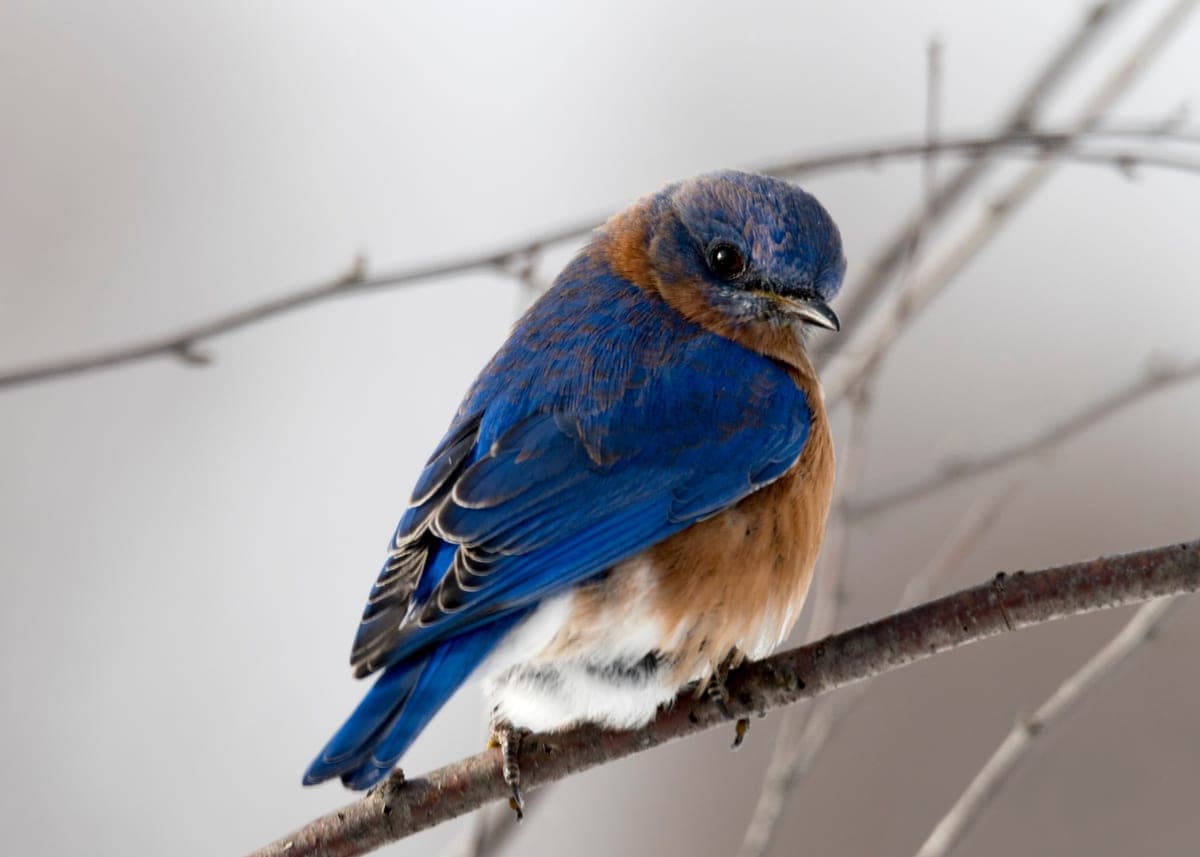
Buy dried mealworms in the smallest size first, serve a measured handful in a shallow dish rather than a feeder, and put it out at the same time each morning. If the cost stops making sense, suet nuggets feed the same insect-eating birds for a fraction of the price.
Seed & Sprig earns a commission when you buy through the links on this page, at no extra cost to you. It does not change which products we pick or the order we put them in — here is how we pick and here is how we are funded.
Quick picks
| # | Product | Best for | Price |
|---|---|---|---|
| 1 | 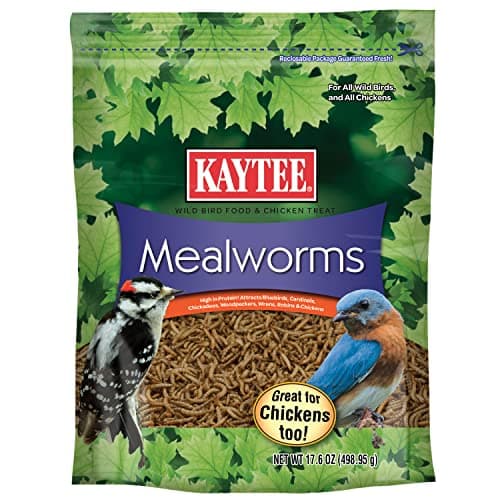 Kaytee Dried Mealworms The small tub. Find out whether anything takes them before you buy a sack. | Start here | $20.30 · View on Amazon #ad How we are funded · Price as of September 21, 2026 |
| 2 | 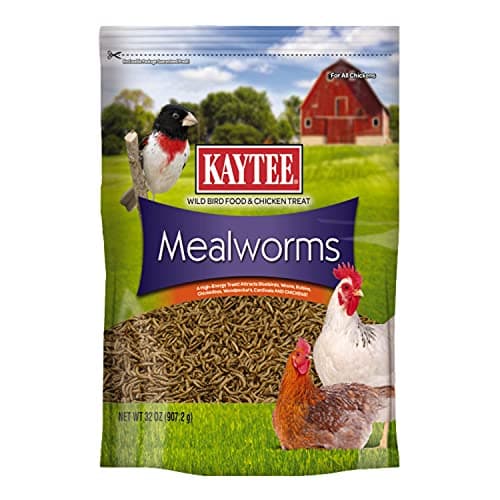 Kaytee Mealworms, 2 lb Same worms, much better price per ounce, once you know the birds are coming. | Best value size | $32.99 · View on Amazon #ad How we are funded · Price as of September 21, 2026 |
| 3 | 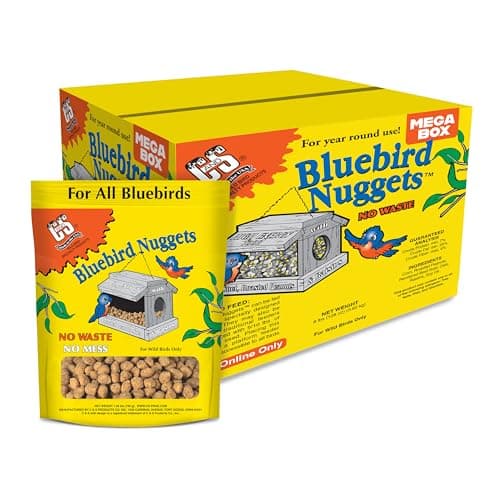 C&S Bluebird Suet Nuggets, 8 lb Not insects, but high-energy food for the same bluebirds and nuthatches at a fraction of the cost. | Cheaper way to feed the same birds | $23.85 · View on Amazon #ad How we are funded · Price as of September 21, 2026 |
| 4 | 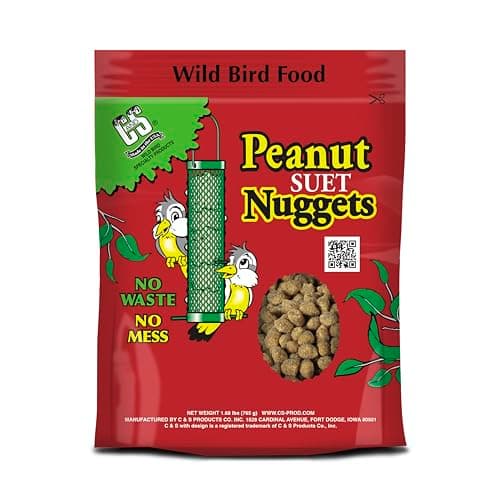 C&S Peanut Suet Nuggets, 27 oz The small bag. Buy this before the eight-pound one. | Cheapest way to test nuggets | $4.80 · View on Amazon #ad How we are funded · Price as of September 21, 2026 |
| 5 | 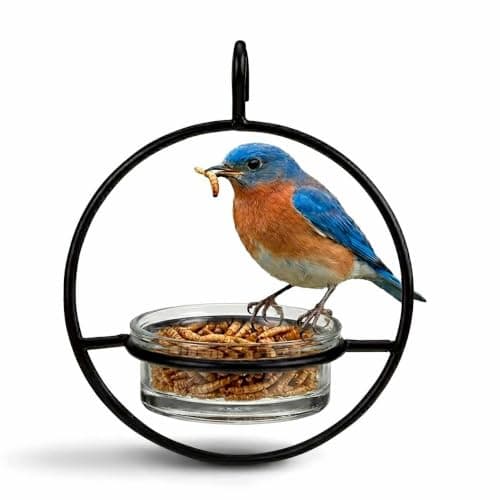 Mosaic Birds Hummble Hanging Glass Mealworm Feeder A small glass bowl with no drainage. Portion control is the whole discipline here. | Best dish | $20.99 · View on Amazon #ad How we are funded · Price as of September 21, 2026 |
| 6 | 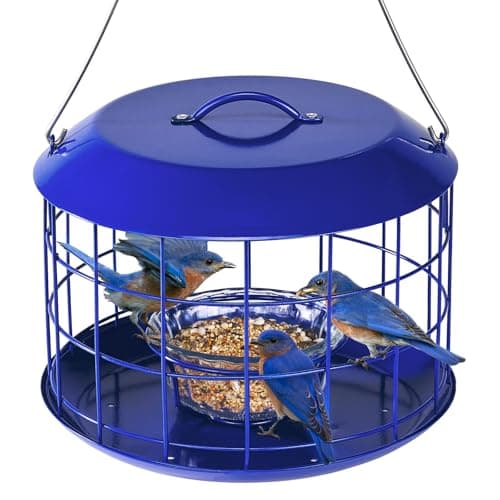 Kingsyard Hanging Bluebird Feeder An enclosed feeder with a small entry, which is the only thing that reliably works. | Best if starlings find the dish | $24.99 · View on Amazon #ad How we are funded · Price as of September 21, 2026 |
Rows link to the full write-up further down this page. The price button goes to Amazon.
Mealworms are the only food on this site that brings in a bird no seed will. Project FeederWatch puts it plainly: they are one of the only food items that reliably attract bluebirds, and chickadees, titmice, wrens and nuthatches take them readily too.
They are also the most expensive thing most people put in their yard, per pound, and the food most often bought in the wrong quantity. This page is about the food itself — which form, what size bag, what to serve it in and how much. If you want the hardware, our mealworm feeder page covers the feeders.
What you are actually buying
Mealworms are the larvae of the mealworm beetle, Tenebrio molitor, and the product on the shelf is almost always oven-dried. Dried worms store like seed, do not escape, and can sit in a tub in the garage for months. Live worms are more attractive to birds and need refrigeration. For the vast majority of feeders, dried is the correct and only sensible answer; the dried-versus-live trade is set out in full here.
The decision that actually costs people money is not dried versus live. It is size.
How much to buy
Mealworms are sold in tubs from a few ounces up to sacks of several pounds, and the price per ounce falls steeply as the bag grows. That looks like an easy decision and it is not, because the failure mode is not running out — it is a two-pound bag going stale in a shed while the birds ignore it.
| Situation | Buy | Why |
|---|---|---|
| Never fed mealworms here before | The smallest tub | You are testing whether anything takes them, not stocking up |
| Birds take them, you feed a handful most days | The 2 lb size | Far better per ounce, and it turns over fast enough to stay fresh |
| You want the effect but not the cost | Suet nuggets instead | Feeds the same insect and fruit eaters for a fraction of the money |
| Nesting bluebirds you want to support | Live, from a specialist | The one case where live genuinely beats dried |
Mealworms are a treat food, not a staple. A handful a day is a normal amount; a filled feeder is not. That is the single most useful thing on this page, and it is what makes the small tub the right first purchase even though it looks poor value.
How we chose these
On published listing specifications and on availability, checked against live listings in September 2026. We have not run a feeding trial and do not claim one. For a food page the criteria are narrow and mostly honest arithmetic: is the product what it says it is, does the maker publish a weight and a form, does the size on sale match a realistic feeding rate, and does it store. We have deliberately included the cheaper alternative to mealworms rather than pretending everyone should buy the expensive thing. Our full criteria are here.
The nugget alternative, and when to take it
The honest thing to say about mealworms is that most people who want them want a bluebird, and there is a cheaper food that brings in most of the same visitors.
Suet nuggets are bite-sized pieces of rendered fat with flavoring, fed loose in a dish or stirred through seed. They are not insects, and if your goal is specifically to support nestlings with live protein they are not a substitute. But for the everyday business of feeding bluebirds, nuthatches and woodpeckers through cold weather, they do the same job for a small fraction of the price per pound, and C&S publishes feeding instructions for mixing them into seed at 5 to 10 pounds of mix.
Our advice: buy the small nugget bag alongside your first tub of mealworms and put both out. You will learn in a fortnight which one your birds care about, and the answer decides how you spend money for the rest of the year.
What to serve them in
Not a tube feeder. Dried mealworms are light, they blow out of open trays in wind, and they disappear instantly if a starling finds an open dish. Three options, in order of how most people end up:
- A small dish. A glass bowl on a hanger, filled with a measured handful. Cheap, visible, easy to clean, and the portion limit is built in. The drawback is rain: a bowl with no drainage holds water, so tip it out or hang it under cover.
- An open tray. Fine if you are around to watch, and it doubles for peanuts and fruit. Everything in the yard can reach it, which is the point and the problem.
- An enclosed bluebird feeder. A box with a small entry hole that bluebirds will use and starlings largely will not. This is the answer once a flock has found your dish.
Whatever you use, it needs washing more often than a seed feeder. Mealworms go in a bowl that gets wet, and wet organic matter in a warm bowl is exactly the hygiene problem our cleaning routine exists to prevent.
Getting birds to find them
Mealworms are the food people most often declare a failure after three days. Two things fix that, and neither is buying a different brand.
Put them out at the same time every day. Bluebirds learn a schedule quickly, and a dish that appears at eight in the morning becomes part of a route. A dish that appears whenever you remember does not.
Put them where the birds already are. Bluebirds are open-country birds: they want a dish in the open with a perch nearby, not tucked under a tree with the chickadee feeders. If you have a nest box, near it. If you do not, on a post in the open part of the yard.
And give it three weeks before you conclude anything. New food takes time to be found, and mealworms are no different from a new seed feeder in that respect.
What they actually cost you
Mealworms are priced like a specialty food because they are one, and the arithmetic is worth doing before you commit to a routine rather than after.
Per pound, dried mealworms sit in a different bracket from everything else in the shed: several times the price of black-oil sunflower, and a clear step above even premium hulled mixes. Suet nuggets land between the two. That sounds discouraging until you remember the quantities involved — nobody fills a hopper with mealworms. A daily handful is a few ounces a week, which makes the running cost modest even though the headline price per pound is high.
The way people lose money here is not the price per pound. It is buying a large bag, feeding enthusiastically for a fortnight, tailing off, and throwing away most of a sack that has gone stale in a damp shed. The same mistake, in the same shape, as bulk seed buying. Work out what you actually put out in a week, multiply by the number of weeks you will keep doing it, and buy that much.
One more piece of arithmetic that changes decisions: a dish of mealworms taken by starlings costs the same as a dish taken by bluebirds. If a flock has found your feeder, the cheapest fix is not a smaller portion — it is an enclosed feeder, bought once.
When mealworms matter most
Two windows in the year do most of the work, and outside them a mealworm dish is largely decorative.
Late winter into early spring is the hardest stretch for insect-eating birds: natural invertebrates are scarce, and resident bluebirds that stayed through the cold are under real pressure. A reliable dish through those weeks is the most useful thing mealworms do all year.
Nesting season is the second. Adults feeding young need protein rather than seed, and this is the period when people who keep bluebird boxes switch to live worms. If you do not have boxes, dried worms still help the adults; the effect is simply smaller.
By high summer the calculation reverses. Insects are everywhere, birds are catching them far more efficiently than you can buy them, and the dish gets ignored or raided by starlings. That is the point in the year to cut back, which conveniently coincides with the point where high-fat and high-protein foods spoil fastest — our summer feeding guide covers the seasonal switch.
Who else turns up
It is worth setting expectations, because most people buy mealworms for one bird and get a different cast entirely.
FeederWatch names chickadees, titmice, wrens and nuthatches as birds that relish mealworms, and in most yards those are the first and most frequent takers — they are already at your feeders and they investigate anything new. Robins will take them from the ground, particularly in cold snaps. Woodpeckers pick at them. Cardinals largely ignore them in favor of seed.
Bluebirds are the headline and the least certain. They are open-country birds, so whether they show up is a question of habitat rather than food: if there are bluebirds within range of your yard, mealworms are how you bring them to a dish, and if there are not, no amount of protein will produce one. Check whether you have ever seen one locally before buying the large bag.
What you will certainly get, eventually, is starlings — which is the next section, and the reason most mealworm routines end.
The starling problem
A dish of mealworms is the single most attractive thing you can put in a yard, and starlings agree. Once a flock finds it, a morning's worth of expensive larvae goes in about ninety seconds.
The fixes, in order of cost: put out less, so there is nothing to strip; feed at a fixed early time and take the dish in once the bluebirds have fed; and, if that fails, move to an enclosed feeder with an entry small enough to exclude a starling. FeederWatch's general advice for unwanted larger birds is exclusion by design rather than deterrence, and that is exactly what a bluebird box feeder is. The wider bully-bird playbook is here.
Storage, because dried does not mean immortal
Dried mealworms are a high-protein, moderately fatty food, and they behave like one. Keep them sealed, cool and dark, exactly as you would seed — a bag left open in a humid garage will clump and eventually mold, and moldy food goes in the bin rather than the dish. The containers we recommend for seed work just as well for a mealworm sack, and the small tubs reseal well enough on their own.
Buy a quantity you will use within a few months. This is the same discipline as buying seed in bulk, and it bites harder here, because the food costs several times as much per pound.
What we would buy
- Curious, no bluebirds yet: the small Kaytee tub and the small bag of nuggets. Two weeks of evidence for very little money.
- Bluebirds visiting, feeding most days: the 2 lb Kaytee bag and a glass dish, fed at a fixed morning time.
- Starlings have found it: the enclosed bluebird feeder, and keep the dish for days when you are watching.
- You want the birds but not the bill: nuggets, fed in a tray or mixed into seed. No shame in it, and the woodpeckers will not mind.
One last note on expectations. Mealworms attract bluebirds where bluebirds already live. If you have never seen one within a mile of your house, no food will conjure one, and the honest answer is that your money goes further on seed the birds you already have will eat.
The picks in full
#1 · Start here
Kaytee Dried Mealworms
Kaytee · Bluebirds, wrens and anything that eats insects rather than seed
Dried mealworms are the one food that brings in the insect-eaters a seed feeder never will, and at 47% protein they earn their price in a cold snap.
Published specifications
- Crude protein
- 47.0% min
- Crude fat
- 25.0% min
- Crude fiber
- 6.0% max
- Moisture
- 5.0% max
What it does well
- The highest protein of anything in this registry by a wide margin
- Dried keeps in a sealed tub; live mealworms do not
What it does not
- Expensive per pound, and easy to over-serve
- Put out a small dish at a time: mealworms left out get damp and moldy fast
Specifications above come from the manufacturer's own published listing: Kaytee mealworms published analysis.
#ad How we are funded · Price as of September 21, 2026
#2 · Best value size
Kaytee Mealworms, 2 lb
Kaytee · Feeding mealworms daily through nesting season without running out
The same oven-dried Kaytee mealworms as the small tub, in the size that makes daily feeding affordable. Two pounds of dried mealworms is a lot of mealworms.
Published specifications
- Weight
- 2 lb
- Form
- Oven-dried, per the listing
- Feeding
- Can be fed alone or mixed into seed, per Kaytee
- Attracts
- Bluebirds, wrens, robins, chickadees, woodpeckers, cardinals (listing)
- Model
- 100527190
What it does well
- Costs far less per ounce than the small tubs once you are feeding regularly
- Dried, so it stores without refrigeration and without the squeamishness of live worms
- Kaytee publishes the same product in three sizes, so you can test small before buying this
What it does not
- Two pounds is a lot to get through if you only top up a dish occasionally, and dried mealworms do not improve with age
- Dried worms are less attractive to birds than live ones, especially when you are first trying to get bluebirds interested
- Needs an airtight container once opened, in the same way seed does
Specifications above come from the manufacturer's own published listing: Kaytee Mealworms 2 lb — published listing (weight, drying, feeding, species).
#ad How we are funded · Price as of September 21, 2026
#3 · Cheaper way to feed the same birds
C&S Bluebird Suet Nuggets, 8 lb
C&S · Insect and fruit eaters, at a fraction of the price of mealworms
Bite-sized suet nuggets that can be fed alone or stirred through seed. They are not mealworms, but they solve the same problem — high-energy food for birds that ignore sunflower — for much less money.
Published specifications
- Weight
- 8 lb
- Form
- Bite-sized nuggets rather than a pressed cake
- Feeding
- Fed alone, or mixed with 5-10 lb of seed, per C&S
- Attracts
- Bluebirds, nuthatches, woodpeckers and other suet eaters (listing)
- Model
- 100214176
What it does well
- Dramatically cheaper per pound than dried mealworms for the same job of feeding insect eaters
- Nuggets do not need a cage feeder: they work in a dish, a tray or mixed into seed
- No greasy cake to handle, which is the usual objection to suet
What it does not
- It is rendered fat with flavoring, not insects — if you are feeding nestling bluebirds specifically, mealworms are the closer match
- Eight pounds is a commitment; nuggets soften and can clump in summer heat
- Squirrels and starlings like them as much as the birds you are aiming at
Specifications above come from the manufacturer's own published listing: C&S Bluebird Suet Nuggets — published listing (weight, form, feeding instructions, species).
#ad How we are funded · Price as of September 21, 2026
#4 · Cheapest way to test nuggets
C&S Peanut Suet Nuggets, 27 oz
C&S · Trying nuggets before committing to a sack of them
The small bag of the same idea: soft peanut-flavored nuggets that break apart easily and can go in a dish or through a seed mix. The cheapest way to find out whether your birds take nuggets at all.
Published specifications
- Weight
- 27 oz (1.69 lb)
- Form
- Soft, round, bite-sized nuggets that break apart
- Feeding
- Fed alone, or mixed with 5-10 lb of seed, per C&S
- Model
- 100214178
What it does well
- Small enough to be a genuine experiment rather than a purchase you regret
- Soft texture breaks apart for small birds, which a hard cake does not
- Works in feeders you already own, including trays and mesh
What it does not
- Costs much more per pound than the 8 lb bag if you end up feeding them regularly
- Soft nuggets melt and smear in hot weather
- Peanut flavor is as attractive to squirrels as it is to woodpeckers
Specifications above come from the manufacturer's own published listing: C&S Peanut Suet Nuggets 27 oz — published listing (weight, texture, feeding instructions).
#ad How we are funded · Price as of September 21, 2026
#5 · Best dish
Mosaic Birds Hummble Hanging Glass Mealworm Feeder
Mosaic Birds · Serving a measured portion of mealworms where you can see it
A small recycled-glass bowl on a powder-coated hanger, with no drainage, which is deliberate: it holds mealworms, jelly or water rather than seed. The portion-control answer to mealworm feeding.
Published specifications
- Capacity
- 3.4 oz bowl
- Opening
- 3" wide bowl opening
- Dimensions
- 6.25" x 4" x 7.5"
- Materials
- Recycled glass bowl, powder-coated metal frame
- Drainage
- None, by design — suits mealworms, jelly and water
- Model
- M045-200
What it does well
- A small bowl enforces portion control, which is the whole discipline of mealworm feeding
- Glass wipes clean, and mealworm dishes need cleaning more often than seed feeders
- The bowl lifts out, so you are not scrubbing a fixed tray
What it does not
- No drainage means rain sits in it: you have to tip it out, or site it under cover
- 3.4 ounces is tiny — it is a dish, not a feeder you fill and forget
- Nothing stops a starling, a jay or a squirrel emptying it in one visit
Specifications above come from the manufacturer's own published listing: Mosaic Birds Hummble mealworm feeder (M045-200) — published listing (capacity, materials, drainage, dimensions).
#ad How we are funded · Price as of September 21, 2026
#6 · Best if starlings find the dish
Kingsyard Hanging Bluebird Feeder
Kingsyard · A cheaper way to test whether you have bluebirds at all
The budget bluebird feeder, and the sensible first purchase when you are not yet sure bluebirds will come.
Published specifications
- Mounting
- Hanging
- Food
- Mealworms
- Materials
- Not published on the listing
- Dimensions
- Not published on the listing
What it does well
- Low enough in price that a failed bluebird experiment costs very little
- Same enclosed principle as the dearer cedar feeders
What it does not
- The listing publishes essentially no specifications
- Build quality at this price is not comparable to cedar
Specifications above come from the manufacturer's own published listing: Kingsyard bluebird feeder — published listing.
#ad How we are funded · Price as of September 21, 2026
Common questions
How many mealworms should I put out?
A small handful a day is a normal amount. Mealworms are a treat food rather than a staple, and a full dish mostly feeds starlings and squirrels rather than the bluebirds you bought them for.
Are dried mealworms as good as live ones?
For most feeders, yes. Live worms are preferred by birds and matter most in nesting season, but they need refrigeration and care. Dried worms store like seed and are taken readily.
What is cheaper than mealworms for bluebirds?
Suet nuggets. They are rendered fat rather than insects, so they are not a nestling food, but they attract the same bluebirds, nuthatches and woodpeckers for far less per pound.
Do I need a special mealworm feeder?
A shallow dish is enough to start. You only need an enclosed bluebird feeder once starlings find the dish, at which point exclusion is the only thing that works.
Which birds eat mealworms?
Project FeederWatch names chickadees, titmice, wrens and nuthatches as birds that relish them, and notes mealworms are one of the few foods that reliably attract bluebirds.