Feeder Types
The best bird feeders for winter
Cold does not break a feeder. Wet, then frozen, breaks a feeder — and the fix is a roof and a refill habit, not a heater.
By Scooter M. · Published · Last updated
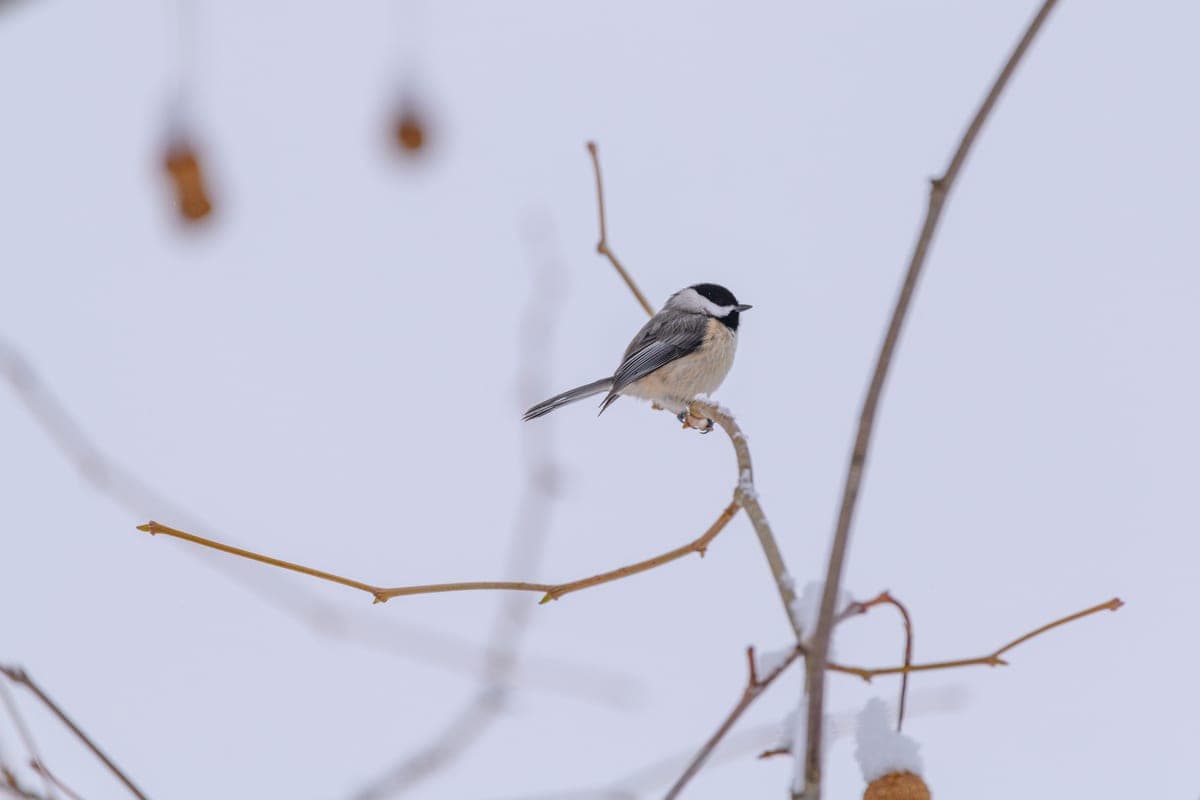
Buy a roofed hopper with real capacity, or add a weather dome to the feeder you own. Winter failures are almost always ice in the ports rather than cold itself. And in a hard freeze, open water matters more to birds than any feeder you can buy.
Seed & Sprig earns a commission when you buy through the links on this page, at no extra cost to you. It does not change which products we pick or the order we put them in — here is how we pick and here is how we are funded.
Quick picks
| # | Product | Best for | Price |
|---|---|---|---|
| 1 | 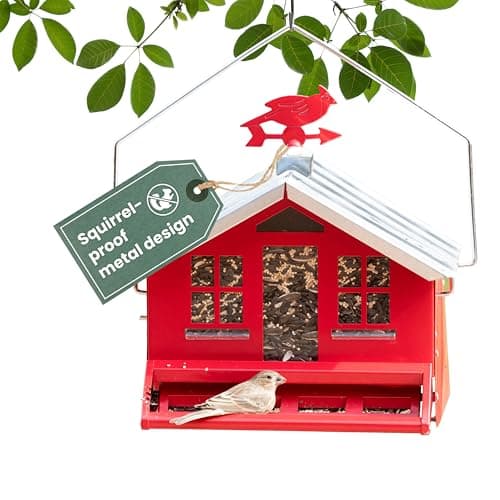 Perky-Pet Squirrel-Be-Gone II Country Style Feeder Eight pounds under a roof, with a weight mechanism. Capacity plus cover is the winter combination. | Best winter feeder | $41.98 · View on Amazon #ad How we are funded · Price as of September 16, 2026 |
| 2 | 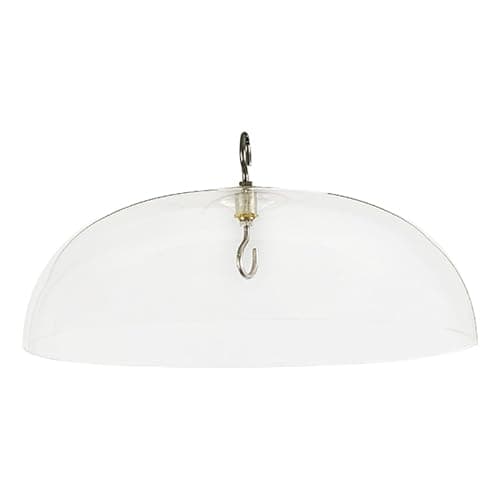 Aspects Weather Dome Twelve inches of clear cover on the same hook. Cheaper than replacing anything. | Best upgrade to the feeder you own | $42.53 · View on Amazon #ad How we are funded · Price as of September 16, 2026 |
| 3 | 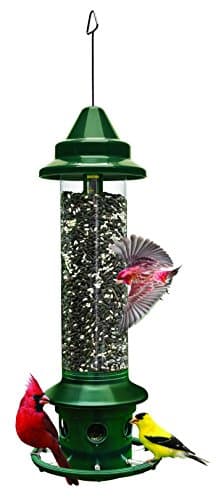 Brome Squirrel Buster Plus Comes apart by hand. In January that is the specification that decides whether it gets cleaned. | Best for cleaning in the cold | $124.80 · View on Amazon #ad How we are funded · Price as of September 16, 2026 |
| 4 | 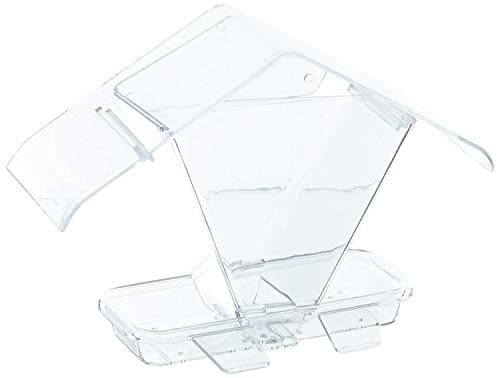 Aspects Window Cafe Window Feeder (ASP155) Under the eaves, refilled from inside. Genuinely the easiest feeder to run in bad weather. | Best sheltered option | $29.96 · View on Amazon #ad How we are funded · Price as of September 16, 2026 |
| 5 | 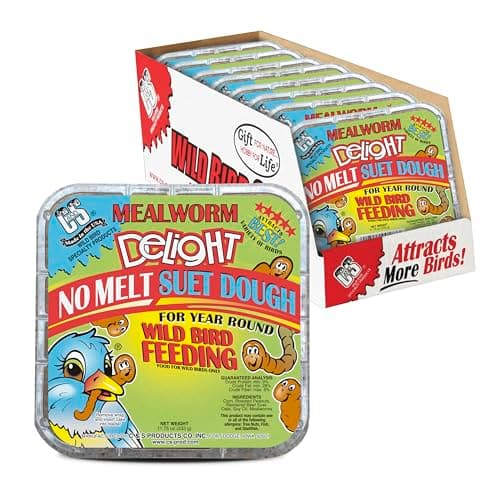 C&S Mealworm Delight No Melt Suet Dough No-melt dough at 24% minimum fat. Cold weather is what suet is for. | Best winter fuel | $20.05 · View on Amazon #ad How we are funded · Price as of September 16, 2026 |
| 6 | 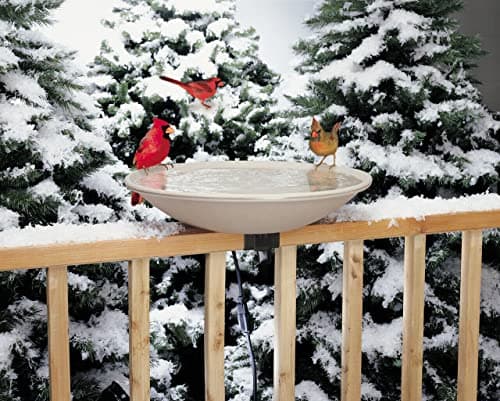 Allied Precision API 650 Heated Bird Bath Birds find food in winter. Open water is the harder problem, and this solves it. | What beats any feeder in a freeze | $129.99 · View on Amazon #ad How we are funded · Price as of September 16, 2026 |
Rows link to the full write-up further down this page. The price button goes to Amazon.
Winter is the season the whole setup exists for, and it is also the season that exposes every shortcut in your feeder. What actually fails is rarely what people expect: plastic does not shatter, birds do not stop coming, and cold on its own does very little.
What fails is water. Snow blows into a port and melts against the seed. A thaw wets the column and a hard night sets it solid. By morning the feeder looks full and feeds nothing, and the birds that were relying on it go elsewhere.
So this page is a feeder-selection guide built around that one failure mode. If you want the behavioral side — what to feed, how often, the water question — our winter feeding guide covers the season itself. This is about which object to hang up.
What winter actually asks of a feeder
| Requirement | Why | What fails it |
|---|---|---|
| A roof over the seed | Snow that lands on the seed melts into it. Cover prevents the wetting that causes the freezing. | Open trays and bare tubes |
| Capacity you will actually use | Fewer trips out in weather you would rather avoid. | A 1 lb feeder in January |
| Ports that clear easily | Ice bridges across a port and the feeder stops feeding while still looking full. | Narrow, recessed ports you cannot reach |
| Cleaning without tools | Nobody strips a feeder with a screwdriver at 20 degrees. Tool-free means it happens. | Anything needing disassembly |
Note what is not on that list: heating, insulation, or any special cold-rated material. Those are not the constraints. The constraints are cover, volume and access.
How we ranked these
On published manufacturer and listing specifications, and on how each design behaves against that one failure mode — snow in, melt, freeze. No testing claim; we have not run a winter test program and will not pretend otherwise. Within that we weighed cover first, then capacity against the spoilage risk that capacity creates, then how realistically the thing gets cleaned when it is genuinely cold. Full criteria here.
One pick is not a feeder at all. That is deliberate, and the reason is in the section on water below.
The capacity trade, which cuts both ways
Big capacity is the obvious winter answer and it is half right.
The case for it is real: fewer trips out, and birds come to rely on a consistent source when the weather is hardest. A feeder that runs empty on the coldest morning of the year is the one that matters most.
The case against is the one nobody prints. Eight pounds of seed sitting through a mid-winter thaw is eight pounds of seed absorbing moisture, and Project FeederWatch asks for cleaning every week or two and more often in heavy use or wet weather. Winter is not exempt from that; a thaw week is exactly the "wet weather" the guidance means.
The resolution is not to buy a smaller feeder. It is to fill a big one part-way in mild spells and fully when it is genuinely, continuously cold. The wet-seed problem and the fixes for it are covered here, and every one of them applies harder in winter.
The port-icing problem
This is the specific mechanism behind most "my feeder stopped working" complaints between December and February, and it is worth understanding because the fix is free.
Seed does not freeze. Seed with water in it freezes. Snow driven into a port melts against the seed column from the warmth of the sun or a mild afternoon, then refreezes overnight into a plug that bridges the port. The reservoir above it is untouched and completely inaccessible.
Two habits solve it and neither costs anything. Physically check the ports when you top up, rather than assuming a full-looking feeder is working — put a finger in. And put out less at a time during thaw-freeze cycles, so the column turns over faster than ice can build in it.
The hardware half is a roof, which is why our top pick and our upgrade pick are both about cover rather than capacity.
Which feeder types survive winter
| Type | Winter behavior | Verdict |
|---|---|---|
| Roofed hopper | Walls and a roof keep the column dry. FeederWatch's own definition is weather protection. | The winter default |
| Tube | Keeps seed fairly dry; ports still take driving snow. | Good with a dome |
| Window feeder | Sheltered by the house, refilled from inside. | Underrated in bad weather |
| Suet cage | Fat is the right winter food and the cage does not care about cold. | Buy one regardless |
| Open tray | Collects snow directly onto the seed. | Clear it or skip it |
| Camera feeder | Small capacity plus cold batteries. | Not a winter workhorse |
The window feeder row surprises people. It sits under the eaves, out of most weather, and it is the only feeder you can refill without putting boots on — which in a hard winter is the difference between a feeder that stays stocked and one that does not. Window feeders in full, including the safety question.
The camera row is worth stating plainly given how heavily that category is marketed: small seed capacity and cold weather are a poor combination, and most of those listings do not publish a capacity figure at all.
Water beats seed in a hard freeze
This is the part of winter feeding that gets skipped, and it is the reason a bird bath appears in a list of feeders.
Birds are good at finding food in winter — the whole caching, foraging, fat-storing apparatus exists for exactly that. What they cannot manufacture is liquid water, and in a sustained freeze every puddle and stream edge is solid. Eating snow costs body heat they are already short of.
So if you have an established feeding station and you are deciding what to add for the cold, open water is a stronger purchase than another feeder. Heated baths, drop-in de-icers and the depth that matters are covered in full — including the honest constraints, which are an outdoor outlet and a cleaning commitment heavier than any feeder's.
One firm rule, repeated here because it matters: never add anything to the water to stop it freezing. Antifreeze is lethal and salt or glycerin destroys the insulating properties of feathers. Heat it or refill it.
Fat is the winter food
The feeder is only half the purchase. Energy density is what counts when it is cold, and that points at two things.
Suet is the classic cold-weather offering, and FeederWatch credits a suet cage with attracting woodpeckers, nuthatches and chickadees — all three winter regulars. A no-melt dough is the sensible year-round format and it holds shape through a mild spell.
Black-oil sunflower is the staple underneath everything: FeederWatch calls it the most common seed offered at feeders in North America and names it among the favorite foods of cardinals, chickadees, finches and sparrows, and it publishes 24% minimum fat. Our seed roundup compares the bags, and the suet page covers formats.
What to avoid in winter specifically is a filler-heavy bargain mix. Seed the birds reject does not just waste money, it sits in a wet feeder and accelerates the freezing problem above. How to read the panel is here.
Squirrels do not hibernate
Gray squirrels stay active all winter and food is scarcer for them too, which means pressure on your feeder goes up rather than down just as you start putting out more.
Nothing about the season changes the answer: a baffled pole sited away from anything jumpable. Snow adds one wrinkle worth knowing — a drift raises the effective ground level, which can quietly put a correctly-mounted baffle back within reach. If you get real snow, check the baffle height after it settles. Baffle geometry is here.
Cleaning when you would rather not
The hygiene guidance does not soften in winter, and a feeder in constant heavy use through a cold snap is precisely the "heavy use" that shortens the interval.
The practical problem is that nobody wants to strip a feeder in freezing weather, which is why tool-free disassembly is a genuine winter specification rather than a nicety. Bring it inside, wash it in the sink, and — the part people skip — dry it completely before refilling. A feeder refilled while damp in December is a block of ice by morning. The full routine is here.
What each pick costs you
- The roofed hopper holds eight pounds, and eight pounds sitting through a thaw is how mold starts. Its listing also does not publish dimensions, so measure before you order.
- The weather dome covers twelve inches, which is not much on a wide feeder or in driving snow, and it is one more thing to lift off at every refill.
- The weight-closing tube is the most expensive feeder here and its shroud still needs a full strip-down every couple of weeks.
- The window feeder holds very little, and its suction cups are least reliable in exactly the hard freeze you bought it for.
- The no-melt suet has corn as its first ingredient, so a share of it feeds starlings and grackles.
- The heated bath needs an outdoor outlet, draws real electricity, and is the dirtiest thing in the station — plan on rinsing it every few days.
The pattern here is the same one this site keeps arriving at: the winning purchase is rarely the most technical one. A roof, a habit of checking the ports, and water in a freeze will do more than any heated gadget in the category.
The picks in full
#1 · Best winter feeder
Perky-Pet Squirrel-Be-Gone II Country Style Feeder
Perky-Pet · Capacity and a roof, which is what winter actually asks for
A roofed country-style hopper holding eight pounds with a weight-activated mechanism — the combination that gets you through a cold week without a daily trip out to a frozen feeder.
Published specifications
- Seed capacity
- 8 lb
- Style
- Country-style hopper with a roof
- Mechanism
- Weight-activated, per the listing
- Dimensions
- Not published on the listing
What it does well
- Eight pounds is a genuine cold-snap buffer — fewer trips out in weather you do not want to be in
- The roof is the specification that matters most in snow: it keeps the seed column dry
- A weight mechanism as well as a roof, which most large hoppers do not have
What it does not
- Eight pounds of seed sitting through a thaw is exactly how a hopper grows mold — capacity cuts both ways
- The listing does not publish dimensions, so check it against your pole before ordering
- Big hoppers are heavy when full; the hook or pole has to be rated for it
Specifications above come from the manufacturer's own published listing: Perky-Pet Squirrel-Be-Gone II — published listing (capacity, style, mechanism).
#ad How we are funded · Price as of September 16, 2026
#2 · Best upgrade to the feeder you own
Aspects Weather Dome
Aspects · Keeping rain off a feeder you already own
A clear polycarbonate umbrella that hangs above the feeder on the same hook, and the only fix on this page that does not involve replacing the feeder.
Published specifications
- Diameter
- 12"
- Height
- 4"
- Materials
- UV-stabilized polycarbonate with stainless steel hardware
- Fitting
- Hangs above the feeder on the existing hook; sold as fitting most small and medium hanging feeders
- Origin
- Made in the USA
What it does well
- Works with a feeder you already own, so it costs a fraction of replacing it
- Clear polycarbonate, so it does not black out the view of the feeder
- Doubles as a partial squirrel baffle on a hanging feeder, though that is not what it is for
What it does not
- Twelve inches of cover is not much: on a wide feeder, or in wind-driven rain, the ports still get wet
- Aspects also sells a tube-top version that fits only its own 2.75 inch tubes — check which one you are buying
- One more thing between you and the feeder every time you refill it
Specifications above come from the manufacturer's own published listing: Aspects Weather Dome — published dimensions, mounting and origin (Duncraft), Aspects Weather Dome — published materials and fit (Garden Elements).
#ad How we are funded · Price as of September 16, 2026
#3 · Best for cleaning in the cold
Brome Squirrel Buster Plus
Brome · The one feeder to buy if you only buy one
A weight-closing tube feeder with a large capacity and a cardinal ring, and the closest thing to a genuinely squirrel-resistant feeder that a beginner can hang up and stop thinking about.
Published specifications
- Seed capacity
- 5.1 lb
- Height
- 28" base to hanger
- Feeding ports
- 6, plus a cardinal ring
- Mechanism
- Weight-adjustable spring shroud
- Materials
- Chew-proof, UV-resistant components
- Warranty
- Brome Lifetime Care
What it does well
- The spring tension is adjustable, so you can shut out heavy birds as well as squirrels
- Comes apart by hand for cleaning, which means it actually gets cleaned
- 5.1 lb is enough that a busy fall week does not mean daily refills
What it does not
- The most expensive feeder in this roundup by a wide margin
- The shroud collects seed dust and needs a full strip-down every couple of weeks
- A squirrel that can reach the top hanger still wins, so this is not a substitute for a baffle
Specifications above come from the manufacturer's own published listing: Brome — Squirrel Buster Plus (manufacturer store).
#ad How we are funded · Price as of September 16, 2026
#4 · Best sheltered option
Aspects Window Cafe Window Feeder (ASP155)
Aspects · Apartments, offices, and watching birds from two feet away
A hopper-style window feeder on three suction cups whose body slides out for filling, so you are not wrestling a full feeder through an open window.
Published specifications
- Capacity
- 1.5 lb (about 3/4 quart)
- Dimensions
- 9.5" L x 4" W x 6.5" H
- Mounting
- Three suction cups on a roof bracket
- Warranty
- Lifetime guarantee (manufacturer)
What it does well
- The slide-out body means refilling does not mean removing the feeder
- Mounted flush to the glass, it sits in the safest zone for window collisions
- The only feeder type that works for a renter with no yard
What it does not
- Suction cups fail in a hard freeze and need cleaning and re-seating
- Squirrels reach window feeders more often than people expect
Specifications above come from the manufacturer's own published listing: Aspects Window Cafe published specifications.
#ad How we are funded · Price as of September 16, 2026
#5 · Best winter fuel
C&S Mealworm Delight No Melt Suet Dough
C&S · Suet that survives a warm afternoon
A no-melt suet dough with mealworms in it, which is the version to buy whenever the temperature climbs, because plain rendered suet turns to grease and coats birds' feathers.
Published specifications
- Ingredients
- Corn, roasted peanuts, rendered beef suet, oats, soy oil, mealworms
- Crude protein
- 11.0% min
- Crude fat
- 24.0% min
- Crude fiber
- 12.0% max
- Format
- Standard cake, fits a single-cake cage
What it does well
- The no-melt formulation holds its shape in warm weather, unlike plain suet
- Mealworms in the dough pull in birds that ignore a plain seed cake
What it does not
- Corn is the first ingredient, so a share of it goes to starlings and grackles
- No suet is truly heatproof; in a hot spell, take it down
Specifications above come from the manufacturer's own published listing: C&S Mealworm Delight published ingredients and analysis.
#ad How we are funded · Price as of September 16, 2026
#6 · What beats any feeder in a freeze
Allied Precision API 650 Heated Bird Bath
Allied Precision (API) · Open water on a deck rail through a freezing winter
A thermostatically heated plastic basin that clamps to a deck rail, which solves the one thing a feeder cannot: in a hard freeze, water is scarcer than food.
Published specifications
- Diameter
- 20"
- Water depth
- 2"
- Heater
- 150 W, thermostatically controlled
- Mounting
- Included EZ-Tilt deck mount for a 2x4" or 2x6" rail
- Materials
- Weather-resistant plastic
- Cold rating
- Stated as fully tested in sub-zero conditions
What it does well
- Two inches is the right depth for songbirds, which is shallower than most decorative baths
- The deck mount puts it where you can see it and reach it to clean without crossing a frozen lawn
- The thermostat only draws power near freezing rather than heating all winter
What it does not
- It needs a nearby outdoor outlet, which rules out most yards without one
- 150 W is real electricity, and an open bath is the dirtiest thing in a feeding station — plan on rinsing it every few days
- Plastic, not stone, so it looks like equipment rather than garden furniture
Specifications above come from the manufacturer's own published listing: Allied Precision 650 — published dimensions, wattage, mounting and materials.
#ad How we are funded · Price as of September 16, 2026
Common questions
What is the best bird feeder for winter?
A roofed hopper with real capacity, so the seed column stays dry and you are not out there daily. If you already own a feeder you like, a clear weather dome above it is the cheaper route to the same result.
Do bird feeders freeze?
Dry seed does not freeze. Snow driven into the ports melts against the seed and refreezes into a plug that blocks them, so the feeder looks full and feeds nothing. A roof prevents it; checking the ports when you top up catches it.
Are heated bird feeders worth it?
For seed, no — most results are heated hummingbird feeders, and dry seed does not freeze anyway. A heated bird bath is the heating purchase that genuinely helps, because water is what birds cannot find in a freeze.
Should I use a bigger feeder in winter?
Bigger is better for refill intervals and worse for spoilage. Fill a large hopper part-way during mild or thawing spells and fully when it is continuously cold.
What should I feed birds in winter?
High-fat food: suet and black-oil sunflower, which publishes 24% minimum fat. Avoid filler-heavy mixes — rejected seed sits in a wet feeder and makes the freezing problem worse.
Do I still need to clean the feeder in winter?
Yes, and heavy cold-weather use shortens the interval rather than lengthening it. Wash it indoors and dry it completely before refilling — a damp feeder refilled in December freezes solid.