Bird Seed
Nyjer seed, and why your finch feeder is being ignored
The most expensive common seed, the most specific in its audience, and the fastest to go stale.
By Scooter M. · Published · Last updated
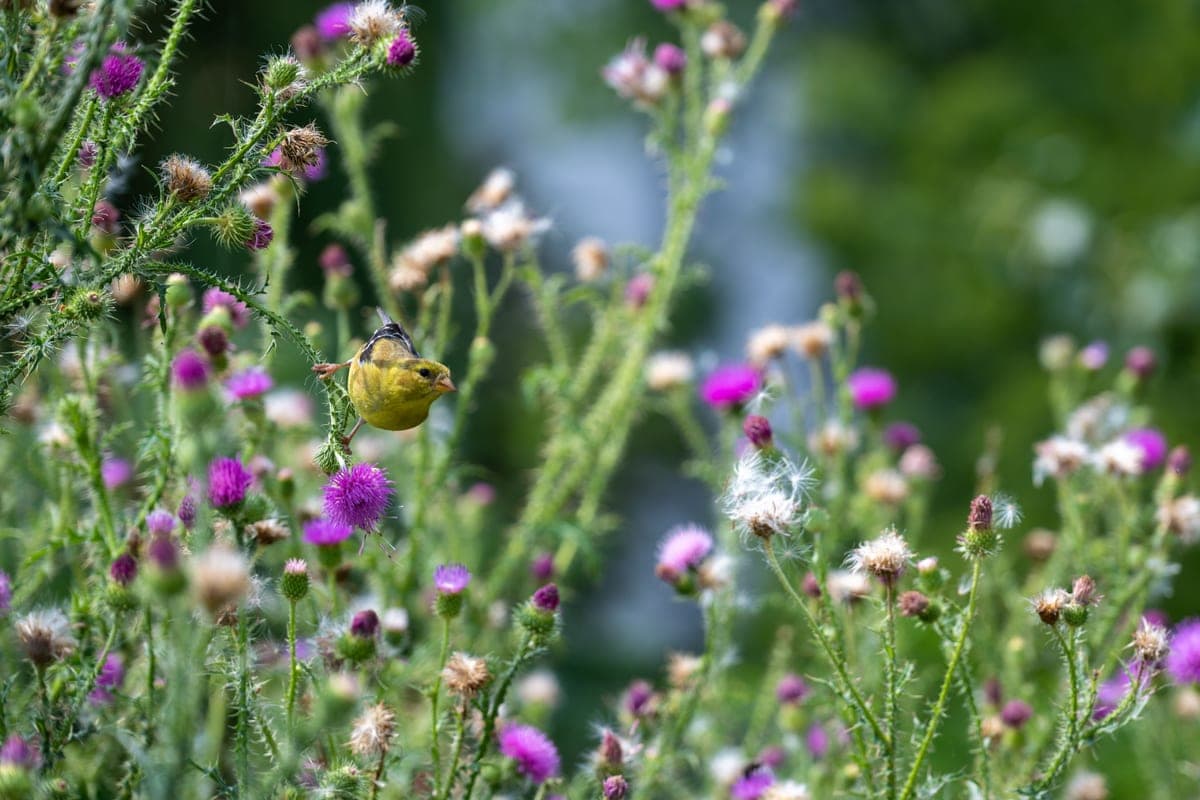
Nyjer is a small, oil-rich imported seed that attracts American Goldfinch, Pine Siskin and Common Redpoll. It needs a narrow-port finch feeder or it pours out. Nyjer dries out quickly, and stale seed is the most common reason a finch feeder sits untouched.
Seed & Sprig earns a commission when you buy through the links on this page, at no extra cost to you. It does not change which products we pick or the order we put them in — here is how we pick and here is how we are funded.
Nyjer — often sold as thistle, which it is not — is a small black seed from the African yellow daisy. It is imported, heat-sterilized so it cannot germinate, and the most expensive commonly sold bird seed per pound. Project FeederWatch credits it with attracting American Goldfinch, Pine Siskin and Common Redpoll.
The one number that surprises people
Wagner's publishes 13.5% protein and 8.0% fat for its nyjer. That fat figure is the lowest of any seed we list — black oil sunflower is 24%, safflower 25%. You are not buying nyjer for energy. You are buying it because goldfinches specifically want it, and because almost nothing else will eat it, which keeps the feeder theirs.
It needs its own feeder
Nyjer is tiny. In a sunflower-sized port it does not sit there and wait; it runs out, and within a day you have an empty feeder and a pile of expensive seed on the grass. It needs either a narrow-port tube or a mesh sock. See finch feeders.
A tube keeps it drier than a sock does, which matters, because nyjer's real enemy is moisture.
Why your finch feeder is being ignored
This is the most common nyjer complaint and it almost always has the same cause: the seed is old. Nyjer dries out, and dried-out nyjer loses the oil that makes it worth eating. Goldfinches simply stop coming.
The fix, in order:
- Empty the feeder and pinch a few seeds. Fresh nyjer is slightly oily and firm.
- Throw out anything more than a couple of months old, or that has been rained on.
- Wash and dry the feeder — clumped nyjer blocks ports invisibly.
- Refill from a fresh, small bag.
- Give it a fortnight.
If the birds are still absent, it is a wider problem — work through this instead.
Buying it sensibly
- Buy small. The bulk bag is a false economy unless you have a busy finch feeder. A month at a time is the right unit.
- Store it sealed and cool. Nyjer goes stale faster than anything else on the shelf. Storage rules here.
- Fill the feeder part-way. A full tube of nyjer that takes six weeks to empty is a tube of stale seed by week four.
The seasonal pattern
Goldfinch numbers at feeders swing with the season and with the wild seed supply, and in much of North America a winter irruption of siskins or redpolls can fill a nyjer feeder that was quiet all autumn. A quiet finch feeder in October is not necessarily a broken one.
Is it worth it?
As a second or third feeder, yes — a flock of goldfinches working a nyjer tube is one of the better sights in a backyard. As a first feeder, no. Start with black oil sunflower in a tube, get that working, and add nyjer once it is busy. Our seed picks are here.
What we would buy for this
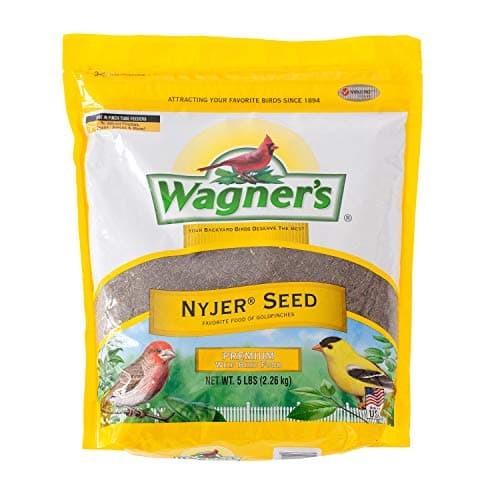
#1 · The seed
Wagner's Nyjer Seed
Wagner's · Goldfinches and nothing else
Straight nyjer, which is the only thing a finch feeder should ever be filled with. Buy the smallest bag that suits your traffic, because it goes stale.
Published specifications
- Ingredients
- 100% nyjer seed
- Crude protein
- 13.5% min
- Crude fat
- 8.0% min
- Crude fiber
- 7.0% max
- Moisture
- 15.0% max
- Ash
- 4.25% max
What it does well
- The seed that reliably brings in American Goldfinch, Pine Siskin and Common Redpoll
- Too small for most other birds, so a nyjer feeder stays a finch feeder
What it does not
- Expensive per pound and it dries out; old nyjer is the most common reason a finch feeder sits ignored
- Needs its own narrow-port feeder or most of it lands on the ground
Specifications above come from the manufacturer's own published listing: Wagner's nyjer published analysis, Project FeederWatch — nyjer and finches.
#ad How we are funded · Price as of October 22, 2026
#2 · The feeder
Droll Yankees Onyx Clever Clean 18" Finch Feeder
Droll Yankees · Goldfinches, siskins and redpolls on nyjer seed
The same tube and the same removable base as the sunflower model, with the narrow ports nyjer seed needs so it does not pour onto the grass.
Published specifications
- Seed capacity
- 2 lb
- Height
- 18"
- Seed
- Nyjer (thistle)
- Cleaning
- Twist-and-release removable base
What it does well
- Narrow nyjer ports waste far less seed than a mesh sock in wind
- Cleans as easily as the sunflower version, which matters because nyjer goes rancid
What it does not
- Nyjer is the most expensive common seed by weight
- Only finches really use it, so this is a second feeder rather than a first one
Specifications above come from the manufacturer's own published listing: Droll Yankees Onyx Clever Clean Finch published specifications.
Common questions
What is nyjer seed?
A small, oil-rich imported seed from the African yellow daisy, heat-treated so it cannot germinate. It is often sold as thistle, though it is not thistle.
Why are finches not eating my nyjer?
Almost always because the seed is old and has dried out. Empty the feeder, wash it, and refill from a fresh small bag.
What is the best bird feeder for nyjer seed?
A narrow-port tube feeder. A mesh sock also works but keeps the seed less dry, which matters with a seed this prone to spoiling.
Do squirrels eat nyjer seed?
Rarely. Nyjer is one of the few seeds squirrels generally ignore, which makes a finch feeder one of the easier feeders to site.