Care & Season
Feeding birds through winter
The season the whole setup exists for. Three things change, and one of them is not food.
By Scooter M. · Published · Last updated
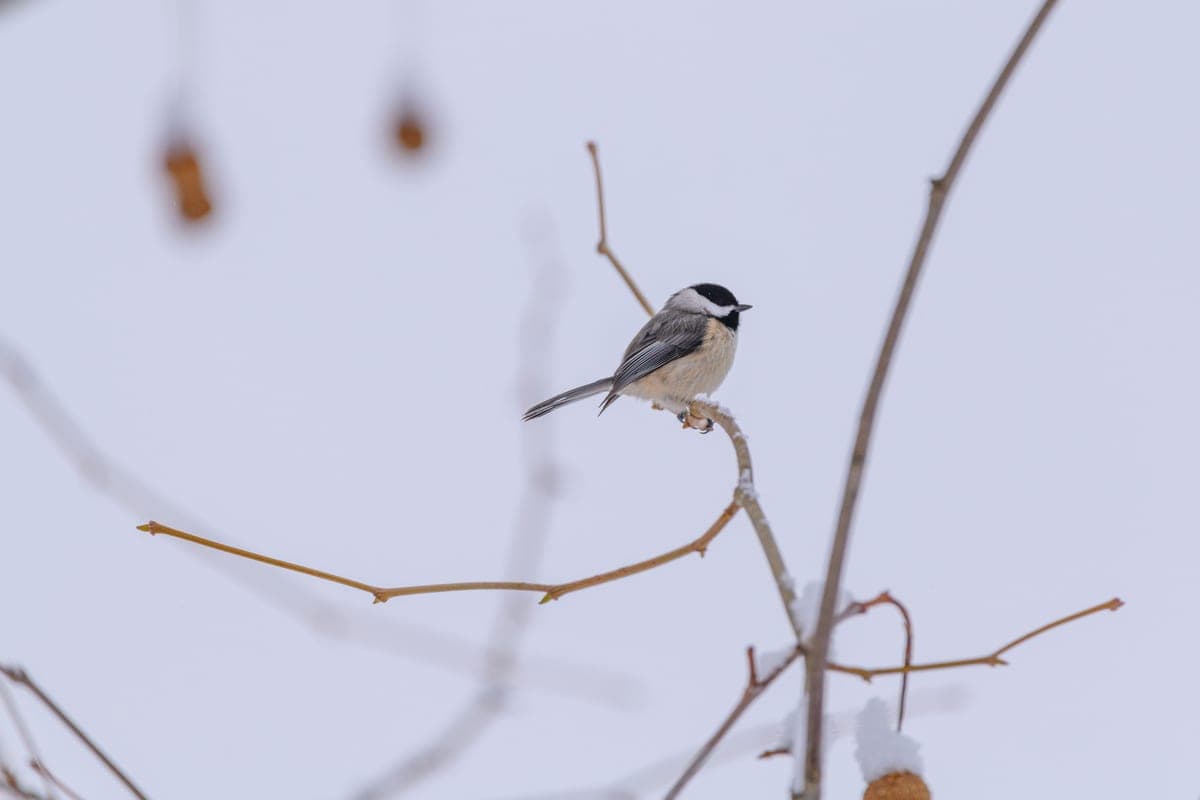
In winter, favor high-fat foods: black oil sunflower at 24% fat and suet, which is higher still. Keep snow and ice off perches and ports, keep the feeder consistently stocked because birds rely on reliable sources, and offer open water if you safely can.
Seed & Sprig earns a commission when you buy through the links on this page, at no extra cost to you. It does not change which products we pick or the order we put them in — here is how we pick and here is how we are funded.
Winter is the season the whole setup is for. Days are short, insects are gone, and a small bird can burn through most of its fat reserves overnight. This page is about what changes in the season; if you are choosing the hardware, the best bird feeders for winter covers roofs, port icing and capacity. What you put out genuinely matters more now than at any other point in the year.
1. Fat
Energy density is what counts in the cold. Black oil sunflower publishes 24% minimum fat. Suet is higher and is the single best cold-weather offering — Project FeederWatch names woodpeckers, nuthatches and chickadees as the birds a suet cage attracts, and all three are winter regulars.
Peanuts and shell-free nut mixes are also strong here: Lyric Delite publishes 35% minimum fat, the highest of any mix we list. What to avoid is a filler-heavy bargain mix, which is poor value at any time of year and actively unhelpful now. Seed picks here.
2. Access
A full feeder with iced-over ports is an empty feeder as far as a chickadee is concerned. After snow or freezing rain:
- Clear snow off perches, ports and the roof.
- Check the ports are not glazed over — a gloved finger is enough.
- Knock accumulated snow off the tray so it does not turn to ice.
- Check the seed has not frozen into a block, which happens when damp seed then freezes.
Feeders with a roof — hoppers especially — earn their keep in this season for exactly this reason. See hopper feeders.
3. Consistency
Birds learn which sources are reliable and route their day around them. In deep winter, a feeder that is full every morning is worth more than a bigger feeder that is empty half the week. This is the strongest argument for capacity: not that birds eat more, but that you are less likely to leave it empty.
If you are going away, either fill a large feeder before you go or ask someone to top it up. Birds will not starve because your feeder is empty — they will simply go elsewhere — but there is no reason to make them.
Water, which people forget
In a hard freeze, open water can be harder to find than food. A shallow dish, refreshed when it freezes, is genuinely valuable. Heated bird baths exist and work — heated baths and drop-in de-icers are compared here.
Two cautions: never add antifreeze or salt to a bird bath — both are harmful — and keep it shallow, an inch or two, so birds can drink and bathe without difficulty. Clean it as often as you clean the feeder.
Cleaning does not stop in winter
It is tempting to skip it when the hose is frozen, but wet snow in a feeder produces damp seed just as rain does. Keep to the every-week-or-two schedule; use hot water indoors and dry the feeder completely before rehanging it. Method here.
What winter brings that autumn did not
- Bigger flocks. Winter finch movements can fill a nyjer feeder that was quiet all autumn.
- Hungrier squirrels. Preference-based tactics like safflower work less well when alternatives are gone. The hardware still works.
- Hawks. A concentrated flock at a feeder attracts them. Give small birds cover to reach.
Do birds become dependent?
The concern is common and is not borne out by how birds actually forage: feeder birds use multiple food sources and continue foraging naturally. The honest framing is that feeding is a supplement, and the responsibility that comes with it is hygiene, not an obligation to never stop.
What we would buy for this
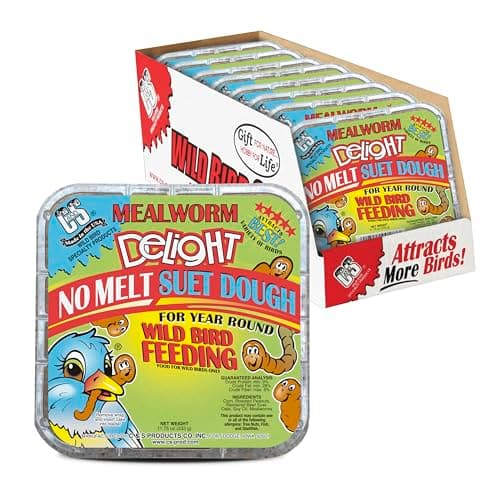
#1 · Best winter fuel
C&S Mealworm Delight No Melt Suet Dough
C&S · Suet that survives a warm afternoon
A no-melt suet dough with mealworms in it, which is the version to buy whenever the temperature climbs, because plain rendered suet turns to grease and coats birds' feathers.
Published specifications
- Ingredients
- Corn, roasted peanuts, rendered beef suet, oats, soy oil, mealworms
- Crude protein
- 11.0% min
- Crude fat
- 24.0% min
- Crude fiber
- 12.0% max
- Format
- Standard cake, fits a single-cake cage
What it does well
- The no-melt formulation holds its shape in warm weather, unlike plain suet
- Mealworms in the dough pull in birds that ignore a plain seed cake
What it does not
- Corn is the first ingredient, so a share of it goes to starlings and grackles
- No suet is truly heatproof; in a hot spell, take it down
Specifications above come from the manufacturer's own published listing: C&S Mealworm Delight published ingredients and analysis.
#ad How we are funded · Price as of October 22, 2026
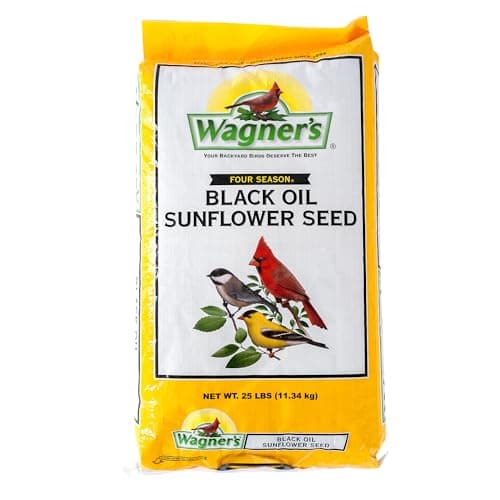
#2 · Best winter staple
Wagner's Black Oil Sunflower Seed
Wagner's · The first bag of seed you should buy
One hundred percent black oil sunflower with nothing else in the bag, which is the seed the widest range of feeder birds actually eats, at the lowest cost per bird you will find.
Published specifications
- Ingredients
- 100% black oil sunflower
- Crude protein
- 14.0% min
- Crude fat
- 24.0% min
- Crude fiber
- 35.0% max
- Moisture
- 15.0% max
What it does well
- One ingredient, so there is nothing in the bag birds will throw on the ground
- Cardinals, chickadees, finches and sparrows all take it
- The cheapest way to fill a feeder that birds will actually empty
What it does not
- The hulls make a mess under the feeder and can kill the grass
- Squirrels like sunflower as much as birds do
Specifications above come from the manufacturer's own published listing: Wagner's Four Season black oil sunflower published analysis, Project FeederWatch — seed preferences.
#ad How we are funded · Price as of October 22, 2026
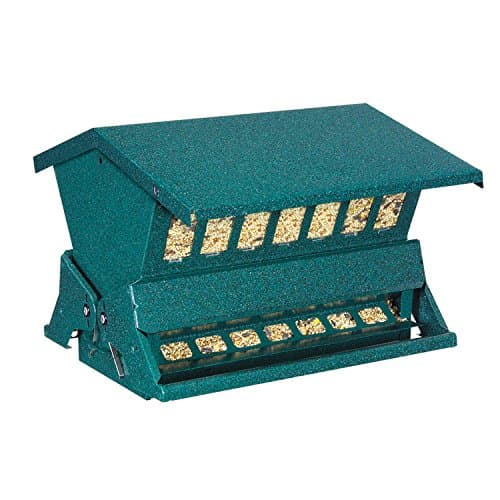
#3 · Best cold-weather feeder
Woodlink Absolute II (model 7536)
Woodlink · Big capacity and cardinals — the hopper answer to squirrels
A double-sided steel hopper whose counterweighted perches drop a shield over the seed tray when something heavy lands, and it holds twelve pounds so it barely needs attention.
Published specifications
- Seed capacity
- 12 lb
- Dimensions
- 16" W x 11.25" H x 13.5" D
- Feeding ports
- 6 (both sides)
- Mechanism
- Two counterbalanced perches, adjustable to three weight settings
- Materials
- Steel and acrylic
What it does well
- 12 lb capacity means refills measured in weeks, not days
- Perch tension adjusts for light, medium or heavy birds
- The long perch rail suits cardinals, which will not use a small tube port
What it does not
- Twelve pounds of seed is heavy, so the hook or pole has to be rated for it
- Seed sitting for weeks in wet weather is how mold starts; a big hopper needs the same cleaning discipline as a small one
Specifications above come from the manufacturer's own published listing: Woodlink Absolute II published specifications.
#ad How we are funded · Price as of October 22, 2026
Common questions
What is the best bird feeder for winter?
One with a roof and enough capacity to skip a snowy day — a hopper is ideal — plus a suet cage alongside it.
How do I attract birds to a feeder in winter?
High-fat food, clear ports and perches, consistent stocking, and open water if you can offer it.
Should bird feeders be left out in the winter?
Yes. Winter is when they matter most. The only real obligation is to keep them clean and stocked.
Do birds need water in winter?
Open water can be scarcer than food in a freeze. A shallow dish refreshed regularly, or a heated bath, is genuinely useful. Never add salt or antifreeze.