Setup & Placement
How to attract birds to a new feeder
The first three weeks, and the four things that genuinely speed them up.
By Scooter M. · Published · Last updated
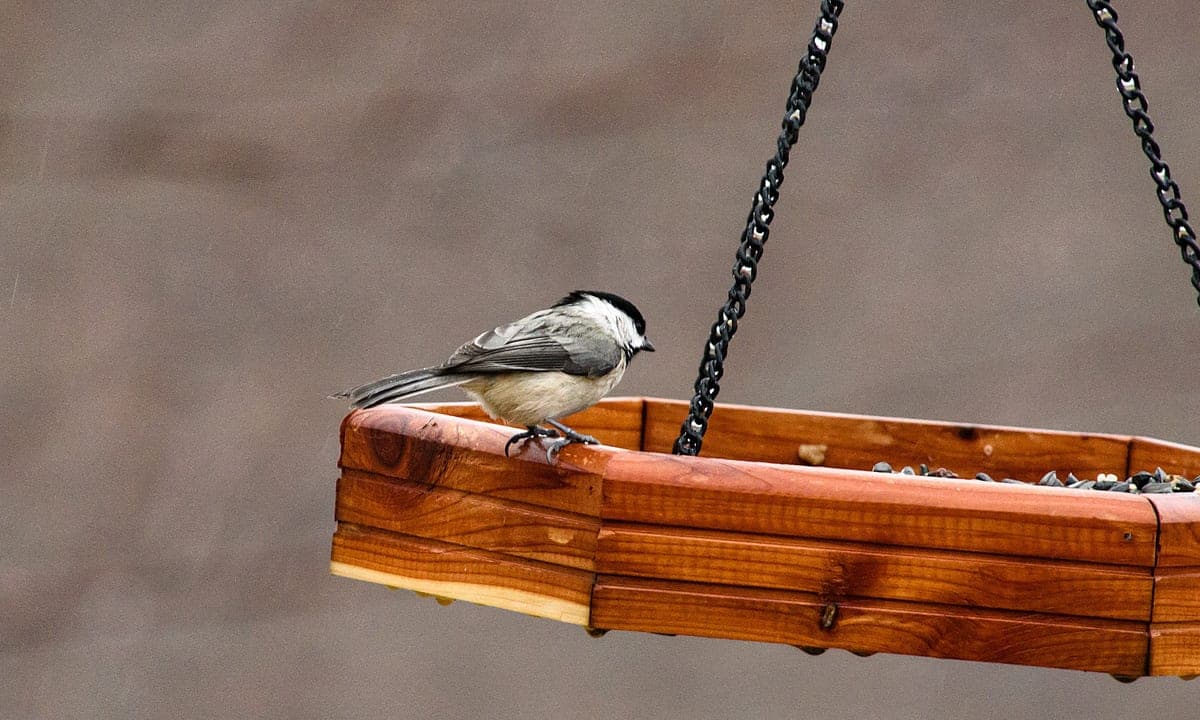
Fill the feeder with black oil sunflower, make it visible from the air, add cover about ten feet away, and leave it in one place. Birds find food by watching each other, so nothing happens until the first one arrives — commonly days to a few weeks in a yard with no feeding history.
Seed & Sprig earns a commission when you buy through the links on this page, at no extra cost to you. It does not change which products we pick or the order we put them in — here is how we pick and here is how we are funded.
A new feeder in a yard with no feeding history is an unmarked restaurant on an empty road. Birds locate food socially — they watch each other — so until one individual finds you, there is nothing for anyone else to notice. That is why the first two weeks are quiet and the fourth week is busy.
The four things that speed it up
1. Use the seed with the widest appeal
Black oil sunflower. Project FeederWatch calls it the preferred food item for a wide variety of birds, and a single-ingredient bag means whichever species arrives first will find something it wants. A cheap mix is the slowest possible start — here is why.
2. Make it visible from the air
A feeder tucked under a dense shrub or against a dark fence is hard to see from above. Put it in the open where the light catches it. Some people scatter a small handful of seed on the feeder tray or a nearby surface for the first week to make it more obvious — a reasonable trick, provided you use a small amount and clear up anything left after a day or two, because seed on the ground is how you get rodents.
3. Give them somewhere to retreat to
Birds will not feed in the open with nowhere to bolt for. Project FeederWatch recommends natural cover close by, with about ten feet as the compromise between escape cover and squirrel jumping distance. A shrub, a small tree, even a pile of prunings left in a corner all count.
4. Add water
A shallow dish of clean water can bring birds into a yard faster than seed does, especially in dry weather. Keep it shallow — an inch or two — put it near the same cover, and clean it as often as you clean the feeder.
What does not speed it up
- Moving the feeder. Every move restarts the discovery clock. This is the single most common self-inflicted delay.
- Buying a different feeder. If nothing has found the food, the container is not the problem.
- More feeders. An empty yard with three feeders in it is still an empty yard.
- Bird calls played on a phone. At best it does nothing; it can also stress birds during breeding season. Skip it.
A realistic timeline
| When | What is normal | What to do |
|---|---|---|
| Days 1-7 | Nothing at all | Nothing. Do not move it. |
| Days 7-14 | A first visitor, often a chickadee or house finch | Keep the seed topped up and fresh |
| Weeks 3-4 | A small regular cast, arriving at similar times | Start the every-week-or-two cleaning routine |
| Month 2 | More species, including bigger birds if you gave them a surface | Consider a second feeder type |
| Still nothing after a month | Not normal — something is off | Work through the diagnostic |
If you already fed last year
Returning birds remember locations, so a feeder put back in the same spot in autumn is often found within a day or two. That is also the argument for not relocating a feeder that works. Once this one is established, how many feeders to run is the next decision.
The seasonal factor
A feeder put out during a natural food glut — a good acorn or berry year — competes with free food that is everywhere. It will still be found; it will simply be less busy until the glut ends. This is one of the most common reasons a feeder goes quiet, and it is covered in why no birds are coming. Autumn timing is in the fall feeding calendar.
What we would buy for this
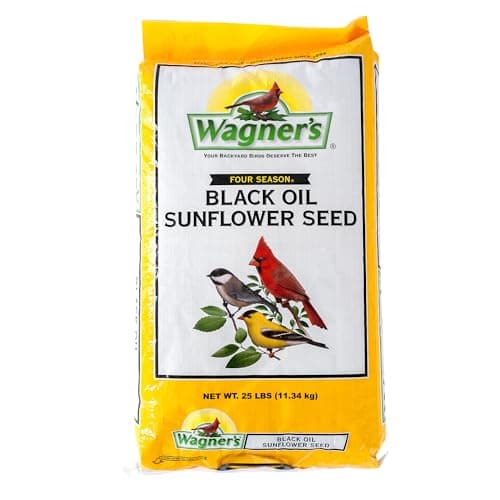
#1 · The seed that gets found fastest
Wagner's Black Oil Sunflower Seed
Wagner's · The first bag of seed you should buy
One hundred percent black oil sunflower with nothing else in the bag, which is the seed the widest range of feeder birds actually eats, at the lowest cost per bird you will find.
Published specifications
- Ingredients
- 100% black oil sunflower
- Crude protein
- 14.0% min
- Crude fat
- 24.0% min
- Crude fiber
- 35.0% max
- Moisture
- 15.0% max
What it does well
- One ingredient, so there is nothing in the bag birds will throw on the ground
- Cardinals, chickadees, finches and sparrows all take it
- The cheapest way to fill a feeder that birds will actually empty
What it does not
- The hulls make a mess under the feeder and can kill the grass
- Squirrels like sunflower as much as birds do
Specifications above come from the manufacturer's own published listing: Wagner's Four Season black oil sunflower published analysis, Project FeederWatch — seed preferences.
#ad How we are funded · Price as of October 22, 2026
#2 · A feeder that stays clean while you wait
Droll Yankees Onyx Clever Clean 18" Sunflower Tube Feeder
Droll Yankees · A plain, well-made first tube feeder
A straightforward polycarbonate tube whose base twists off in seconds, which is the single feature that decides whether a feeder gets cleaned or quietly turns into a health problem.
Published specifications
- Seed capacity
- 2 lb
- Height
- 18"
- Feeding ports
- 4
- Materials
- UV-stabilized polycarbonate tube; powder-coated metal cap, base and ports
- Cleaning
- Twist-and-release removable base; one-touch top opening
What it does well
- The removable base turns cleaning from a chore into a two-minute job
- Metal ports resist squirrel chewing better than all-plastic tubes
- Short perches keep grackles and jays off without excluding finches
What it does not
- No squirrel mechanism at all, so this feeder needs a baffle or a pole
- Four ports fill up quickly at a busy station
Specifications above come from the manufacturer's own published listing: Droll Yankees Onyx Clever Clean published specifications.
Common questions
How long does it take birds to find a new feeder?
Days to a few weeks. It depends mostly on whether anyone nearby already feeds. Leave the feeder in one place for at least two weeks.
How do I attract birds to a new feeder in winter?
High-fat food helps: black oil sunflower and suet. Keep snow off the perches and ports, and keep it stocked — in cold weather birds rely on reliable sources.
Should I put seed on the ground to attract birds?
A small handful for a few days is a reasonable prompt. Do not make it a habit: seed on the ground is the main thing that brings in rodents.
Does a bird bath help attract birds?
Often more than seed does, particularly in dry weather. Keep it shallow, near cover, and clean it as often as the feeder.