Feeder Types
The best bird feeders for bluebirds
The one common backyard bird you cannot buy with sunflower seed. Everything here follows from that.
By Scooter M. · Published · Last updated
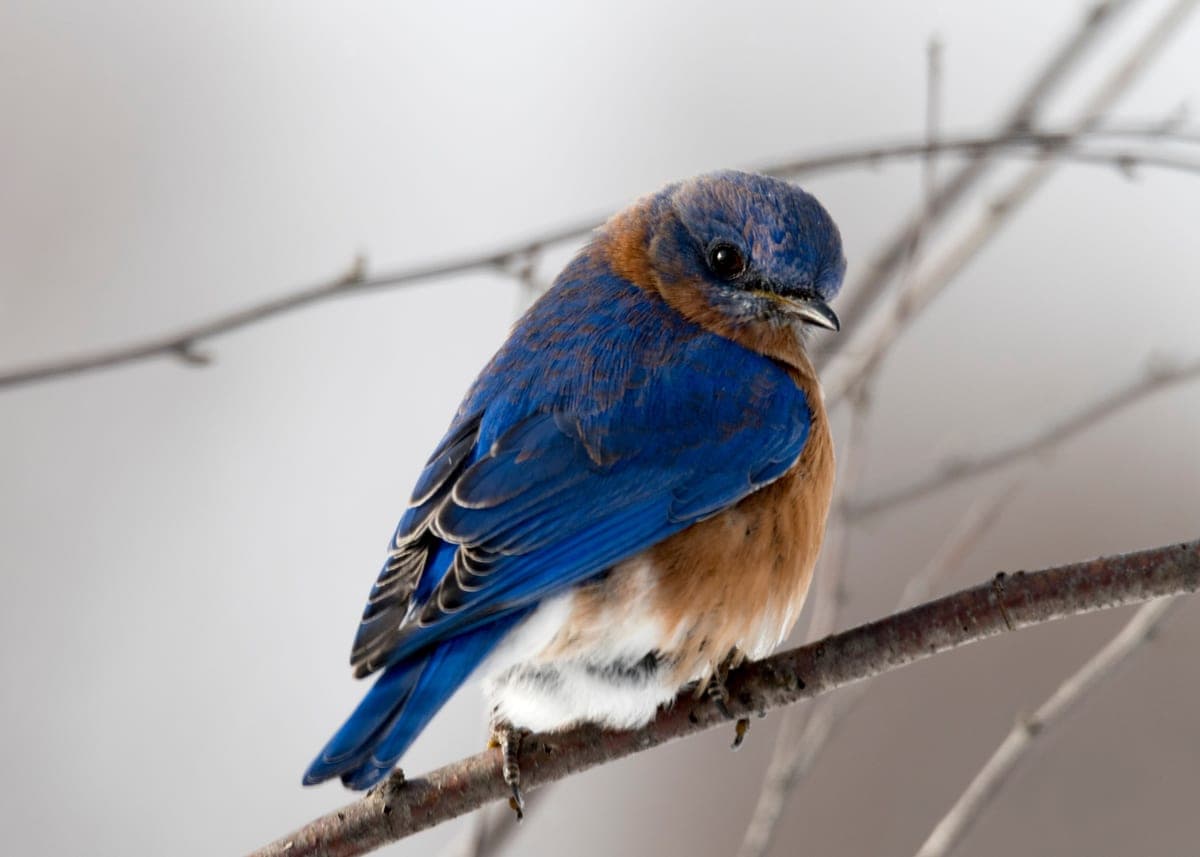
Bluebirds eat insects and fruit, not seed, so a seed feeder will never attract them. The answer is mealworms in an enclosed feeder sized to admit bluebirds and exclude starlings and jays. Open dishes work and get emptied by everything else first.
Seed & Sprig earns a commission when you buy through the links on this page, at no extra cost to you. It does not change which products we pick or the order we put them in — here is how we pick and here is how we are funded.
Quick picks
| # | Product | Best for | Price |
|---|---|---|---|
| 1 | 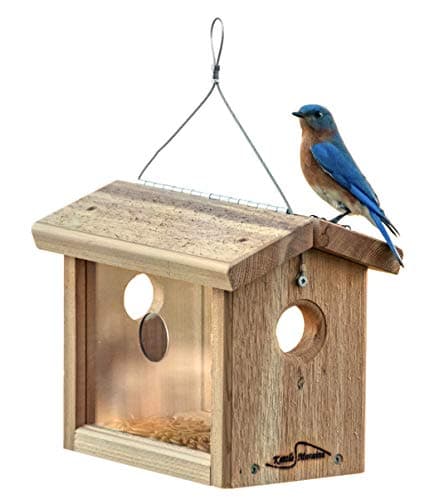 Kettle Moraine Cedar Hanging Bluebird Mealworm Feeder Cedar, enclosed, built to the bluebird pattern so starlings and jays stay out. | Best bluebird feeder | $41.50 · View on Amazon #ad How we are funded · Price as of September 16, 2026 |
| 2 | 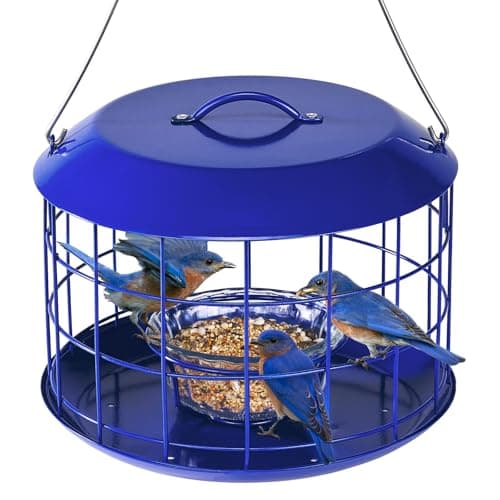 Kingsyard Hanging Bluebird Feeder The cheap way to find out whether you have bluebirds before spending more. | Best budget option | $25.64 · View on Amazon #ad How we are funded · Price as of September 16, 2026 |
| 3 | 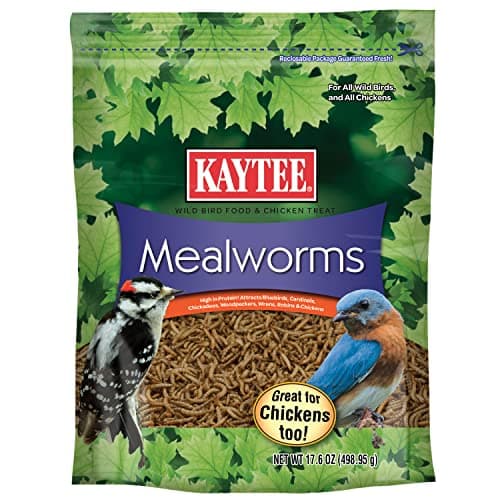 Kaytee Dried Mealworms Dried mealworms. Nothing in a seed bag will ever bring a bluebird. | The food, and the whole point | $20.30 · View on Amazon #ad How we are funded · Price as of September 16, 2026 |
| 4 | NWno photo Nature's Way Upside-Down Suet Feeder (CWF2) Underneath-only access, for when starlings find the mealworms anyway. | Best starling workaround |
Rows link to the full write-up further down this page. The price button goes to Amazon.
Bluebirds are the bird people most want and least often get, and the reason is simple enough to state in one line: they do not eat what is in your feeder.
Audubon's account of the Eastern Bluebird's diet is mainly insects and berries — it forages by dropping onto prey from a perch and takes fruit heavily in winter. Nothing in that description involves cracking a sunflower seed. A yard running three seed feeders and a suet cage can be completely invisible to a bluebird sitting on the fence.
So this page is shorter on hardware than most of ours and longer on the two decisions that actually matter: the food, and whether anything else gets to it first.
What a bluebird needs from a feeder
| Requirement | Why it matters | What fails it |
|---|---|---|
| Mealworms, not seed | Audubon puts the diet at mainly insects and berries. | Every seed mix ever sold |
| An enclosure with a sized entry | Bluebirds go in; starlings, grackles and jays mostly cannot. | Open dishes and trays |
| An open approach, not deep cover | They hunt from perches over open ground, unlike the shrub birds. | A feeder buried in a hedge |
| Bluebirds already in the area | No feeder summons a bird that is not nearby. | Hope |
That second row is the whole product category. An open dish of mealworms works perfectly and is emptied within minutes by whichever starling, jay or mockingbird finds it first. An enclosed feeder with a bluebird-sized entry is the only way the expensive food reaches the intended bird.
How we ranked these
On what the listings publish and on whether the design solves the exclusion problem — no testing claim, because we have not run one. The uncomfortable part is that this is a category where sellers publish very little: two of our picks state materials and mounting and essentially nothing else. Where a listing does not give a figure, the product entry says so rather than guessing, and the entry-hole size is the one thing we would measure on arrival. Full criteria here.
We weighed cost heavily here for a specific reason: the odds of success depend on whether bluebirds already live near you, which you cannot know before trying. That makes the cheap feeder a genuinely sensible first purchase rather than a compromise.
The food is the expensive part
Dried mealworms cost more per pound than any seed on this site, and unlike seed almost none of it is wasted, because you are putting out small amounts for one species.
Two practical notes. Dried is the sensible default — live mealworms work better and involve keeping a tub of live insects, which is a commitment most people discover they do not want. And soaking dried worms briefly before putting them out makes them noticeably more attractive, which costs nothing.
Do not put out more than will be eaten in a day. Our mealworm feeder comparison goes into the formats, and the seed-by-bird guide covers where bluebirds sit relative to the birds you already have.
The starling problem, again
Mealworms are the most attractive thing you can put in a yard, and starlings are the most efficient birds at exploiting exactly that. If your enclosed feeder gets raided, the fix is the same one Project FeederWatch recommends for suet: access from underneath only, so the birds that can hang get the food and the ones that cannot, do not.
That is why an upside-down feeder is in our picks on a page about bluebirds. It is not the obvious purchase and it is the one that saves the mealworm budget in a yard with a starling flock. The full bully-bird playbook is here.
Where to put it, which is the opposite of usual
Most of this site tells you to site feeders close to cover — FeederWatch asks for roughly ten feet from trees or shrubs, so a nervous bird has an escape route. Bluebirds want something different.
They hunt over open ground from a perch, so a bluebird feeder works best with open lawn or field around it and a perch nearby to watch from — a fence line, a wire, a bare branch. A feeder tucked into a shrub is well placed for chickadees and wrong for this bird.
The squirrel rules do not change, though. It still wants a baffled pole, and an open site actually makes that easier, because there is nothing to jump from. General placement is here.
Honest odds
This is the part most pages on this subject skip. Whether you get bluebirds is mostly decided before you buy anything.
Audubon puts the Eastern Bluebird in open country with scattered trees: farms and roadsides, forest clearings and open pine woods, and locally in suburbs where there are extensive lawns. If that describes the land around you, a mealworm feeder has a real chance. If you are in dense suburb or woodland, you can run the best bluebird setup available and see nothing, and that is not a failure of the equipment.
Check before you spend: if you have never seen a bluebird within sight of the house, a feeder is unlikely to be the thing that changes it. The cheap feeder plus a small bag of mealworms is the right-sized experiment, and the cedar one is the upgrade you buy once the answer is yes.
What each pick costs you
- The cedar feeder publishes almost no specifications, so the entry hole — the thing the entire design depends on — has to be checked when it arrives.
- The budget feeder publishes even less, and build quality at that price is not comparable to cedar.
- The mealworms are the most expensive food on this site per pound, and they go stale — buy small bags and keep them dry, per the storage rules.
- The upside-down feeder is a suet design being used as a starling workaround; it is not a purpose-built bluebird feeder and some birds take a week to work it out.
The season matters more than with seed birds
A seed feeder is roughly as useful in October as in February. A bluebird feeder is not, and knowing why saves a wasted autumn.
Audubon notes that the Eastern Bluebird eats many berries, especially in winter — the diet shifts from insects toward fruit as the cold arrives. That shift is exactly when a reliable protein source becomes valuable, which is why mealworms tend to get a much better reception in late winter and early spring than in high summer, when insects are everywhere and your dish is competing with an entire meadow.
Two practical consequences. If you are starting in summer and seeing nothing, that is the expected result rather than a failed setup — keep the feeder up and reassess when the weather turns. And late winter, when natural food is thinnest, is the point in the year where a bluebird feeder is most likely to be found for the first time. What else changes in winter is here.
Water does more than you would expect
This is the one addition that changes the odds for this particular bird, and almost nobody mentions it on a page about feeders.
Bluebirds are not seed eaters, which means the single strongest attractant in an ordinary yard — a full seed feeder — does nothing for them. What does work on every bird, regardless of diet, is open water. A shallow bath brings in birds that will never touch a feeder of any kind, and in a freeze it is scarcer than food.
If you have run a mealworm feeder for a season with no result, adding water is a better next move than buying a second feeder. Depth, heating and the cleaning commitment are covered here — and the depth guidance matters, because a deep ornamental basin is as useless to a bluebird as it is to everything else.
What we are deliberately not covering
Nest boxes. They are the other half of attracting this species and they are a genuinely effective one, but this is a bird feeding site and a nest box is a different product with different specifications — entry hole diameters, predator guards, mounting heights and spacing rules that deserve their own treatment rather than a paragraph borrowed from a feeder page.
We mention it because it would be misleading not to: if you have open ground and no bluebirds despite a well-run mealworm feeder, housing is more likely to be the limiting factor than food is. That is worth knowing even though we are not the page that solves it.
The picks in full
#1 · Best bluebird feeder
Kettle Moraine Cedar Hanging Bluebird Mealworm Feeder
Kettle Moraine · The dedicated bluebird feeder, built to keep others out
A cedar mealworm feeder built to the bluebird pattern: enclosed, with entry sized so bluebirds get the worms and starlings and jays do not.
Published specifications
- Materials
- Cedar
- Mounting
- Hanging
- Food
- Mealworms
- Dimensions
- Not published on the listing
What it does well
- Enclosed design is the whole point — an open dish of mealworms feeds whoever arrives first
- Cedar handles weather without treatment, which matters for a feeder holding damp food
What it does not
- The listing publishes almost no specifications, so entry hole size has to be checked on arrival
- Dearer than an open dish, and useless if bluebirds are not already in your area
- Mealworms are the most expensive thing you can put in a feeder
Specifications above come from the manufacturer's own published listing: Kettle Moraine cedar bluebird mealworm feeder — published listing.
#ad How we are funded · Price as of September 16, 2026
#2 · Best budget option
Kingsyard Hanging Bluebird Feeder
Kingsyard · A cheaper way to test whether you have bluebirds at all
The budget bluebird feeder, and the sensible first purchase when you are not yet sure bluebirds will come.
Published specifications
- Mounting
- Hanging
- Food
- Mealworms
- Materials
- Not published on the listing
- Dimensions
- Not published on the listing
What it does well
- Low enough in price that a failed bluebird experiment costs very little
- Same enclosed principle as the dearer cedar feeders
What it does not
- The listing publishes essentially no specifications
- Build quality at this price is not comparable to cedar
Specifications above come from the manufacturer's own published listing: Kingsyard bluebird feeder — published listing.
#ad How we are funded · Price as of September 16, 2026
#3 · The food, and the whole point
Kaytee Dried Mealworms
Kaytee · Bluebirds, wrens and anything that eats insects rather than seed
Dried mealworms are the one food that brings in the insect-eaters a seed feeder never will, and at 47% protein they earn their price in a cold snap.
Published specifications
- Crude protein
- 47.0% min
- Crude fat
- 25.0% min
- Crude fiber
- 6.0% max
- Moisture
- 5.0% max
What it does well
- The highest protein of anything in this registry by a wide margin
- Dried keeps in a sealed tub; live mealworms do not
What it does not
- Expensive per pound, and easy to over-serve
- Put out a small dish at a time: mealworms left out get damp and moldy fast
Specifications above come from the manufacturer's own published listing: Kaytee mealworms published analysis.
#ad How we are funded · Price as of September 16, 2026
#4 · Best starling workaround
Nature's Way Upside-Down Suet Feeder (CWF2)
Nature's Way · Keeping starlings off the suet
Suet reachable only from underneath, which woodpeckers, nuthatches and chickadees manage easily and starlings mostly do not.
Published specifications
- Dimensions
- 8.5" L x 8.5" W x 4.13" H
- Capacity
- 1 suet cake (8 oz)
- Materials
- Premium cedar with rust-free hardware
What it does well
- Genuinely reduces starling monopolies without excluding the birds you want
- The roof shades the cake, which slows melting
What it does not
- Some woodpeckers take a week to work it out
- Not squirrel-resistant in any way
Specifications above come from the manufacturer's own published listing: Nature's Way CWF2 published specifications.
Common questions
What is the best bird feeder for bluebirds?
An enclosed mealworm feeder with an entry sized for bluebirds. Open dishes work but are emptied by starlings, jays and mockingbirds long before the bluebirds arrive.
What do bluebirds eat at feeders?
Mealworms, and fruit. Audubon describes the diet as mainly insects and berries — they are not seed eaters, so no seed mix will bring them regardless of the picture on the bag.
Will bluebirds eat from a seed feeder?
Essentially no. This is the single most common disappointment with this bird. If you want bluebirds you are buying mealworms.
How do I keep starlings out of the mealworms?
Use an enclosure with a sized entry, and if that fails, a feeder with access only from underneath — the same principle FeederWatch recommends for starling-proof suet.
Why am I not getting bluebirds?
Most likely they are not local to you. Audubon puts them in open country with scattered trees rather than dense suburb or woodland. If you have never seen one near the house, a feeder is unlikely to change that.