Care & Season
Why no birds are coming to your feeder
Six causes, in the order they are actually likely. Work down, do not skip.
By Scooter M. · Published · Last updated
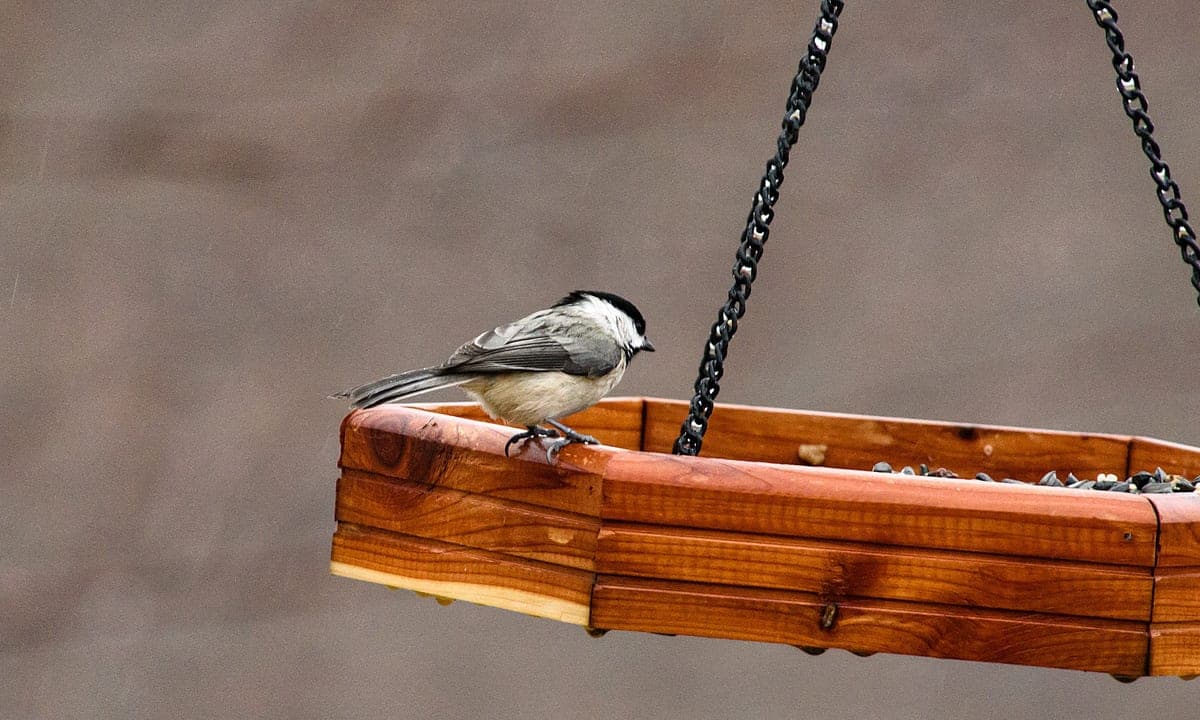
The most common causes, in order: the feeder is new and has not been found yet, the seed is stale, natural food is abundant, a hawk is hunting the yard, the feeder is dirty, or it is placed where birds do not feel safe. Buying a different feeder almost never fixes it.
Seed & Sprig earns a commission when you buy through the links on this page, at no extra cost to you. It does not change which products we pick or the order we put them in — here is how we pick and here is how we are funded.
An empty feeder is the most common complaint in backyard bird feeding, and the most common response to it — buying a different feeder — is almost always the wrong one. Work through these in order. Most cases are solved by the first three.
1. It has not been long enough
Birds find food socially, by watching each other. In a yard with no feeding history nothing happens until the first individual finds you, and that can take days or several weeks.
The test: has the feeder been in the same place, untouched, for two full weeks? If not, that is your answer, and the worst thing you can do is move it, because that restarts the clock. More in how to attract birds to a new feeder.
2. The seed is stale
Seed is a food product. It goes rancid, absorbs damp and loses the oils that make it worth eating. This is the single most common cause of a feeder that used to be busy going quiet, and it is especially true of nyjer, which has the lowest fat content of the common seeds and dries out fastest.
The test: empty a handful into your hand. Fresh seed smells of almost nothing and looks slightly glossy. Stale seed smells sour or musty and looks dull. If in doubt, throw it out and refill from a fresh bag — storage rules here.
3. There is better food available
A good mast year — acorns, beech nuts, berries — makes your feeder genuinely uninteresting. This is seasonal, it is not your fault, and it resolves on its own when the natural supply runs down. Autumn is when it bites hardest.
The test: is the yard full of birds that are ignoring the feeder? Then the birds are there and the food is not needed. Keep the seed fresh and wait.
4. A hawk is working your yard
A sharp-shinned or Cooper's hawk that has learned your feeder is a reliable hunting spot will empty it of small birds in a way nothing else does. The silence is abrupt and total.
The test: did the birds vanish all at once rather than tail off? Look for a hawk sitting quietly nearby. The fix is to take the feeders down for a few days to break the pattern, and to make sure there is cover about ten feet away when you put them back.
5. The feeder is dirty
Birds avoid moldy seed and grimy feeders, and a feeder that has not been cleaned in a season is both. Project FeederWatch recommends cleaning every week or two, more often in heavy use or wet weather, disinfecting by soaking cleaned parts for ten minutes in one part bleach to nine parts water.
The test: when did you last strip it down? If the answer is a shrug, that is the problem. Method here.
6. The placement is wrong
Birds will not feed in the open with nowhere to escape to, and they will not feed somewhere a cat can wait. Project FeederWatch suggests about ten feet from cover as the compromise between escape routes and squirrel jumping distance.
The test: is the feeder marooned in the middle of a lawn with no shrub within twenty feet? Or tucked so deep into a hedge that it cannot be seen from the air? Both fail. See the placement guide.
The situation-specific versions
- No birds at a new suet feeder: woodpeckers can take a week or two to find suet, and upside-down cages take longer still. Give it a fortnight.
- No birds at a window feeder: normal, and slower on upper floors. See window feeders.
- No finches at a nyjer feeder: stale seed, nearly every time. Detail here.
- Quiet in winter: check the ports are not iced or snow-blocked, and that the perches are clear.
What not to do
- Do not move the feeder repeatedly. Every move restarts the discovery clock.
- Do not buy a different feeder before checking the seed.
- Do not add more feeders. An empty yard with three feeders is still empty.
- Do not scatter large amounts of seed on the ground to speed it up. That brings rodents, not birds — see here.
What we would buy for this
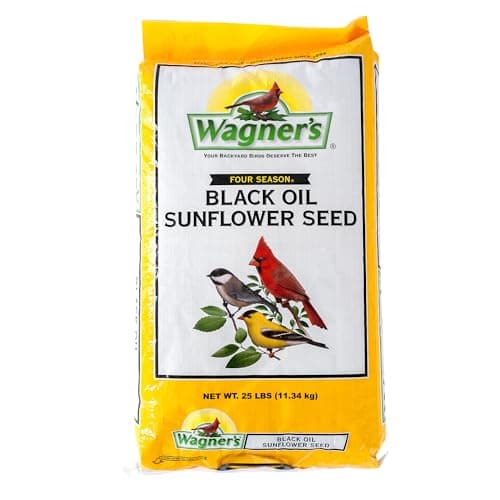
#1 · If the seed is stale
Wagner's Black Oil Sunflower Seed
Wagner's · The first bag of seed you should buy
One hundred percent black oil sunflower with nothing else in the bag, which is the seed the widest range of feeder birds actually eats, at the lowest cost per bird you will find.
Published specifications
- Ingredients
- 100% black oil sunflower
- Crude protein
- 14.0% min
- Crude fat
- 24.0% min
- Crude fiber
- 35.0% max
- Moisture
- 15.0% max
What it does well
- One ingredient, so there is nothing in the bag birds will throw on the ground
- Cardinals, chickadees, finches and sparrows all take it
- The cheapest way to fill a feeder that birds will actually empty
What it does not
- The hulls make a mess under the feeder and can kill the grass
- Squirrels like sunflower as much as birds do
Specifications above come from the manufacturer's own published listing: Wagner's Four Season black oil sunflower published analysis, Project FeederWatch — seed preferences.
#ad How we are funded · Price as of October 22, 2026
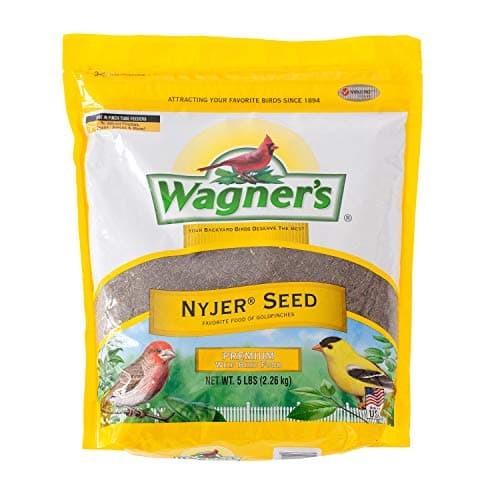
#2 · If it is a finch feeder
Wagner's Nyjer Seed
Wagner's · Goldfinches and nothing else
Straight nyjer, which is the only thing a finch feeder should ever be filled with. Buy the smallest bag that suits your traffic, because it goes stale.
Published specifications
- Ingredients
- 100% nyjer seed
- Crude protein
- 13.5% min
- Crude fat
- 8.0% min
- Crude fiber
- 7.0% max
- Moisture
- 15.0% max
- Ash
- 4.25% max
What it does well
- The seed that reliably brings in American Goldfinch, Pine Siskin and Common Redpoll
- Too small for most other birds, so a nyjer feeder stays a finch feeder
What it does not
- Expensive per pound and it dries out; old nyjer is the most common reason a finch feeder sits ignored
- Needs its own narrow-port feeder or most of it lands on the ground
Specifications above come from the manufacturer's own published listing: Wagner's nyjer published analysis, Project FeederWatch — nyjer and finches.
#ad How we are funded · Price as of October 22, 2026
Common questions
Why are birds not coming to my feeder in the fall?
Usually a natural food glut. Autumn seeds, nuts and berries compete with your feeder, and traffic picks up when that supply runs down.
Why did birds suddenly stop coming to my feeder?
An abrupt, total silence usually means a hawk is hunting the yard. A gradual tail-off is more often stale seed or a dirty feeder.
How do I attract more birds to my feeder?
Fresh black oil sunflower, cover about ten feet away, a clean feeder, water if you can offer it, and patience.
Why are birds not coming to my suet feeder?
Suet often takes a fortnight to be found, and upside-down cages take longer while woodpeckers work out the access. Check the cake is not rancid.