Feeder Types
The best bird feeders for chickadees
The bird that finds your feeder first, forgives most of your mistakes, and will eventually take food from your hand.
By Scooter M. · Published · Last updated
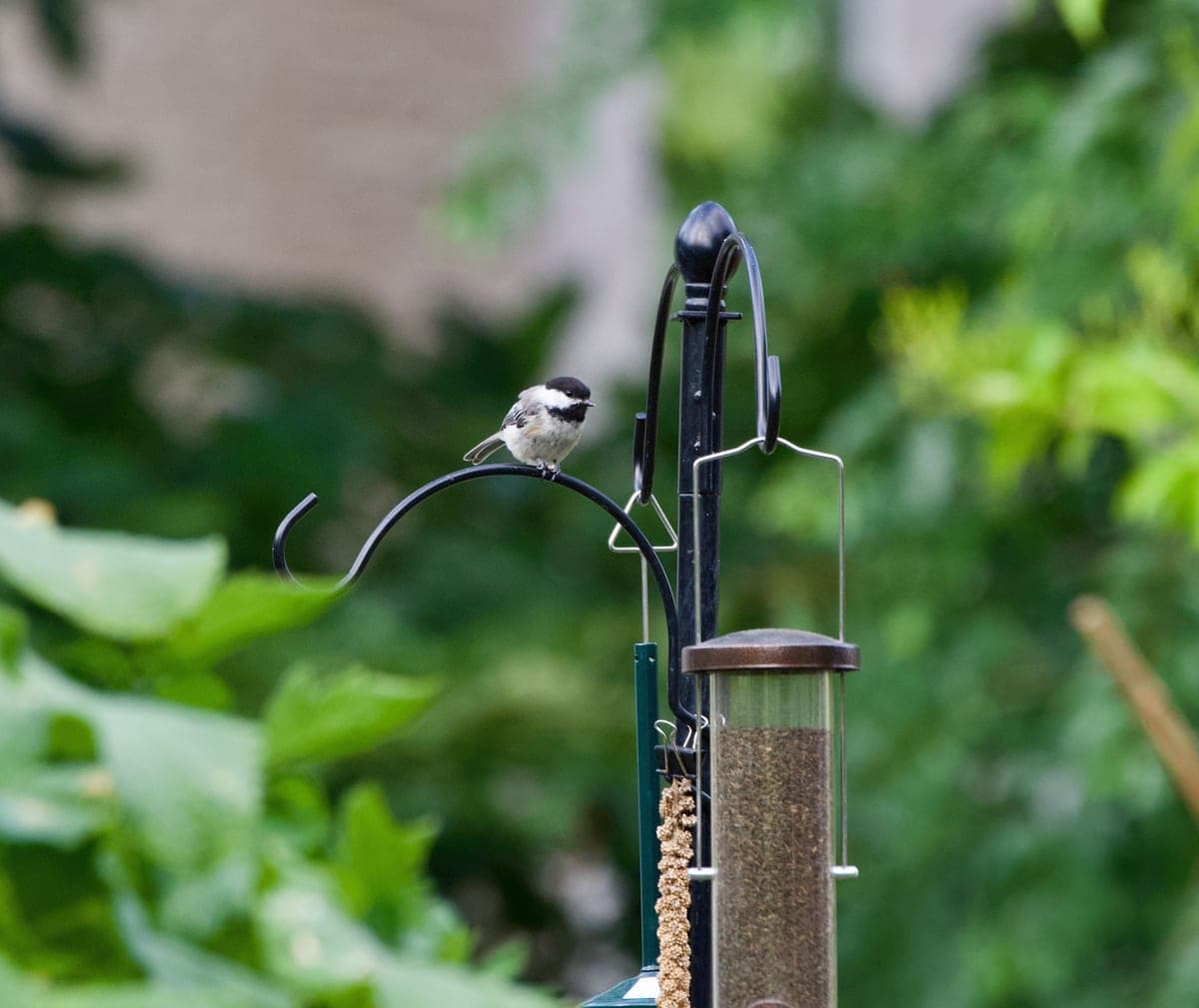
Chickadees need very little: a tube of black-oil sunflower with short perches suits them, and a mesh or cage feeder suits them better because they prefer to cling. Add a suet cage and you have covered chickadees, titmice and nuthatches with two cheap feeders.
Seed & Sprig earns a commission when you buy through the links on this page, at no extra cost to you. It does not change which products we pick or the order we put them in — here is how we pick and here is how we are funded.
Quick picks
| # | Product | Best for | Price |
|---|---|---|---|
| 1 | DYno photo Droll Yankees Onyx Clever Clean 18" Sunflower Tube Feeder Short perches suit small birds and exclude the big ones. The base twists off for cleaning. | Best feeder for chickadees | |
| 2 | 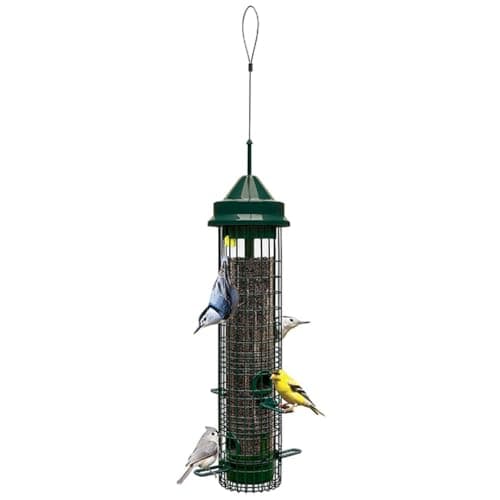 Brome Squirrel Buster Classic A mesh shroud they can feed anywhere on, rather than queueing for a port. | Best for clinging | $78.00 · View on Amazon #ad How we are funded · Price as of October 22, 2026 |
| 3 | NWno photo Nature's Way Tail-Prop Suet Feeder (CWF1) Audubon has chickadees coming to feeders for seeds or suet. This adds nuthatches too. | Best suet cage | |
| 4 | 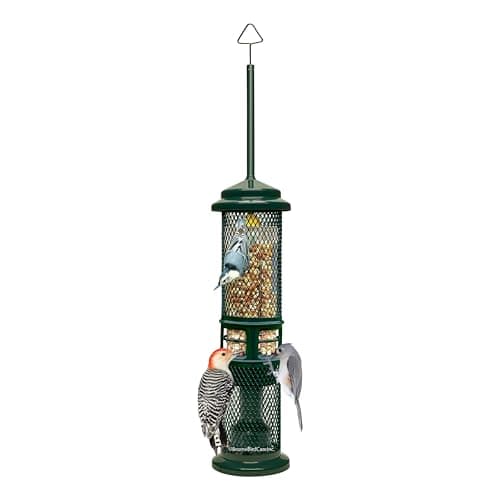 Brome Squirrel Buster Nut Feeder FeederWatch: chickadees, nuthatches and titmice do better on shelled peanuts. | Best peanut feeder | $92.01 · View on Amazon #ad How we are funded · Price as of October 22, 2026 |
| 5 | 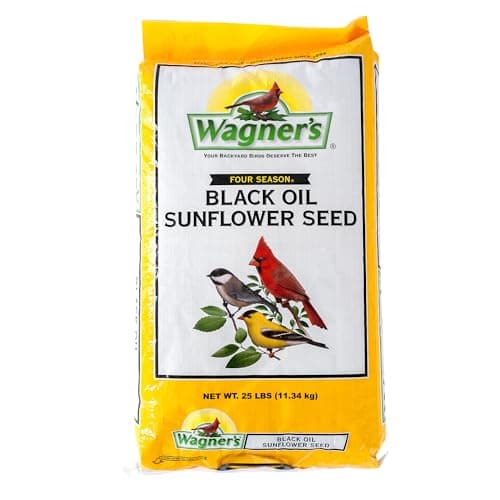 Wagner's Black Oil Sunflower Seed Named by FeederWatch among the favorite feeder foods of chickadees. | Best seed | $41.98 · View on Amazon #ad How we are funded · Price as of October 22, 2026 |
Rows link to the full write-up further down this page. The price button goes to Amazon.
If you have just put up your first feeder, a chickadee is almost certainly the first bird to use it. They are curious, they investigate new objects rather than avoiding them, and they are the species that effectively teaches the rest of your local birds that your yard has food in it.
That makes them both the easiest birds on this site to attract and the most useful. This page is short on hardware for exactly that reason: almost anything works, so the picks below are about doing slightly better than almost anything.
What a chickadee needs from a feeder
Very little, and the requirements are the opposite of the cardinal ones. Audubon describes the Black-capped Chickadee as foraging mostly by hopping among twigs and branches and gleaning food from the surface, often hanging upside down to reach the underside of branches. It is a small acrobatic bird that is entirely comfortable feeding at an awkward angle.
| Requirement | Why it matters | What fails it |
|---|---|---|
| Somewhere to grip | They cling and hang. Mesh and short perches both work; a big flat rail is wasted on them. | Almost nothing — this is an easy bird |
| Protection from bigger birds | Chickadees wait rather than compete. Short perches keep grackles and jays off. | Open trays dominated by a flock |
| Sunflower or peanuts | FeederWatch names black-oil sunflower among their favorite feeder foods. | Milo and cracked corn mixes |
| Cover very close by | They carry each seed away to eat or store it, so they need somewhere to take it. | A pole in an open lawn |
How we ranked these
On published manufacturer specifications and what institutional sources say about chickadee behavior. No testing claim — we have not run one. Because the birds are easy, the ranking weight shifts to the things that matter over a season: whether the feeder can be cleaned in about two minutes, whether the capacity suits a bird that caches rather than gorges, and whether it keeps larger birds off without excluding anything you want. Full criteria here.
Why your seed disappears so fast
This is the one genuinely surprising thing about feeding chickadees, and it explains a complaint people raise constantly. Audubon notes that the chickadee often stores food to be recovered later, and that at feeders it may take sunflower seeds one at a time and fly away to stuff them into bark crevices.
So a busy chickadee feeder is not a feeder being eaten from. It is a feeder being emptied into the surrounding trees, one seed per trip, and it can look alarming in autumn when caching peaks. The right response is a smaller feeder refilled more often, not a bigger one — seed that sits for weeks in a large hopper is the actual risk here. Storage matters more than capacity.
The three birds this page really covers
Chickadees, titmice and nuthatches turn up together, want the same things, and are usually treated as one problem — which is fair, because solving for one solves for all three. Nuthatches are the ones going down the tree trunk head-first; titmice are the gray crested ones that arrive with the chickadee flock.
Peanuts are the food that separates them slightly. FeederWatch notes that smaller birds like chickadees, nuthatches and titmice have more success feeding on shelled peanuts, and a peanut feeder is a genuinely good second purchase if this guild is what you enjoy watching. Peanut feeders are compared here.
Will they stay all winter?
Yes, and this is the argument for feeding them properly. Audubon describes the Black-capped Chickadee as mostly a permanent resident, occasionally staging invasions in fall with large numbers seen flying southward. They do not leave, and their vegetable matter intake rises from no more than about ten percent of the diet in summer to as much as half in winter — which is precisely when a feeder starts to matter.
Fat is the winter priority for them as much as for woodpeckers. What changes when it freezes is covered here, and a suet cage alongside the sunflower is the cheapest upgrade available.
Hand-feeding, since everyone asks
Chickadees are the species people succeed with, and it is a real thing rather than a myth. We are not going to publish a step-by-step method, because we have not done it under any controlled conditions and this site does not write instructions it has not verified.
What is defensible to say is why it is this bird: they are naturally bold around novel objects, they already feed one seed at a time from a fixed point, and they are permanent residents, so the same individuals see you repeatedly across a season. If it is going to work with any bird in your yard, it will be this one.
The flock, and why numbers change
Chickadees do not usually arrive alone. Outside the breeding season they move in small mixed flocks, and the titmice and nuthatches that show up at your feeder are generally traveling with them rather than finding you independently. That is why the guild tends to arrive as a set, and why a feeder can be busy for twenty minutes and then completely silent for two hours — the flock has moved on through and will come back round.
It also explains a complaint people raise every autumn: the sudden change in numbers. Audubon notes that the Black-capped Chickadee occasionally stages invasions in fall, with large numbers seen flying southward, so genuine year-to-year variation exists on top of the daily rhythm. A quiet fortnight is not usually a sign you have done something wrong.
The practical consequence is that judging a feeder by a single glance out of the window is unreliable. Watch at the same time on a few consecutive mornings before concluding anything — and if it really is empty, work through the causes in order.
Mealworms, the other thing they will take
Chickadees are insect eaters for most of the year — Audubon puts vegetable matter at no more than about ten percent of the summer diet — and dried mealworms are the closest thing to that on the shelf.
It is not a necessary purchase and we would not make it your second one. But it is the answer to a specific situation: late spring and early summer, when adults are feeding nestlings and seed is the least useful thing you can offer. A small dish of mealworms in May does more good than another tube of sunflower. Mealworm feeders are compared here.
Where to hang it
Close to cover, and closer than you would put a feeder for larger birds. Because a chickadee carries every seed away to open or store it, the distance between the feeder and the nearest branch is a distance it flies dozens of times an hour. A feeder ten feet from a shrub gets used; a feeder alone in the middle of a lawn gets sampled.
FeederWatch's general guidance — close to natural cover such as trees or shrubs, at roughly ten feet from dense branches — is the right target here, and the ten feet is as much about squirrels as birds. Heights and distances in full.
What each pick costs you
- The tube feeder has no squirrel mechanism at all, so it needs a baffle or a pole, and four ports fill up at a busy station.
- The mesh feeder holds 2.4 lb, which empties fast once a flock finds it, and mesh is fiddlier to clean than a smooth shroud.
- The suet cage is open, so it is easy for squirrels and starlings, and it holds one cake.
- The peanut feeder is expensive for 1.3 lb, and shelled peanuts spoil in damp weather.
- Black-oil sunflower leaves a hull carpet that will kill grass, and squirrels want it as much as the birds do.
None of that is a reason to hesitate. Chickadees are the one part of this hobby where the cheap answer and the right answer are close to identical, and a plain tube of sunflower near a shrub will be found within days. If it has not been, start here.
The picks in full
#1 · Best feeder for chickadees
Droll Yankees Onyx Clever Clean 18" Sunflower Tube Feeder
Droll Yankees · A plain, well-made first tube feeder
A straightforward polycarbonate tube whose base twists off in seconds, which is the single feature that decides whether a feeder gets cleaned or quietly turns into a health problem.
Published specifications
- Seed capacity
- 2 lb
- Height
- 18"
- Feeding ports
- 4
- Materials
- UV-stabilized polycarbonate tube; powder-coated metal cap, base and ports
- Cleaning
- Twist-and-release removable base; one-touch top opening
What it does well
- The removable base turns cleaning from a chore into a two-minute job
- Metal ports resist squirrel chewing better than all-plastic tubes
- Short perches keep grackles and jays off without excluding finches
What it does not
- No squirrel mechanism at all, so this feeder needs a baffle or a pole
- Four ports fill up quickly at a busy station
Specifications above come from the manufacturer's own published listing: Droll Yankees Onyx Clever Clean published specifications.
#2 · Best for clinging
Brome Squirrel Buster Classic
Brome · Clinging birds and mixed flocks in a smaller yard
The same weight-closing mechanism as the Plus wrapped in a wire mesh shroud, which lets clinging birds feed anywhere on the cage instead of queueing for a port.
Published specifications
- Seed capacity
- 2.4 lb
- Feeding ports
- 4, plus a wire mesh shroud
- Mechanism
- Weight-closing shroud
- Dimensions
- Not published by Brome
What it does well
- The mesh shroud suits chickadees, nuthatches and woodpeckers that prefer to cling
- Half the capacity of the Plus but noticeably cheaper
What it does not
- 2.4 lb empties fast once a flock finds it
- Mesh is fiddlier to clean than a smooth shroud
Specifications above come from the manufacturer's own published listing: Brome — Squirrel Buster Classic (manufacturer store).
#ad How we are funded · Price as of October 22, 2026
#3 · Best suet cage
Nature's Way Tail-Prop Suet Feeder (CWF1)
Nature's Way · Woodpeckers, including the big ones
A single-cake suet cage with an extended cedar back panel that gives a woodpecker somewhere to brace its tail, which is the difference between a visit and a feeding session.
Published specifications
- Dimensions
- 12" H x 7.875" L x 3" W
- Capacity
- 1 standard suet cake
- Materials
- Premium cedar with rust-free hardware
What it does well
- The tail prop is not marketing: woodpeckers brace their tails when they feed
- One cake at a time means suet does not sit out going rancid
What it does not
- The open cage is easy for squirrels and starlings
- Holds one cake, so it needs refilling in cold weather
Specifications above come from the manufacturer's own published listing: Nature's Way CWF1 published specifications.
#4 · Best peanut feeder
Brome Squirrel Buster Nut Feeder
Brome · Shelled peanuts without feeding the entire local squirrel population
A peanut feeder with the weight-closing shroud, which matters more here than anywhere else, because peanuts are the single most squirrel-attractive thing you can hang up.
Published specifications
- Capacity
- 1.3 lb
- Food
- Shelled peanuts, other nuts, or dried fruit
- Mechanism
- Weight-closing shroud
What it does well
- Peanuts draw woodpeckers, jays, titmice and nuthatches faster than seed does
- The mechanism is the only realistic way to run peanuts near squirrels
What it does not
- Expensive for a feeder that holds 1.3 lb
- Shelled peanuts spoil in damp weather and have to be kept dry
Specifications above come from the manufacturer's own published listing: Brome — Squirrel Buster Nut Feeder (manufacturer store).
#ad How we are funded · Price as of October 22, 2026
#5 · Best seed
Wagner's Black Oil Sunflower Seed
Wagner's · The first bag of seed you should buy
One hundred percent black oil sunflower with nothing else in the bag, which is the seed the widest range of feeder birds actually eats, at the lowest cost per bird you will find.
Published specifications
- Ingredients
- 100% black oil sunflower
- Crude protein
- 14.0% min
- Crude fat
- 24.0% min
- Crude fiber
- 35.0% max
- Moisture
- 15.0% max
What it does well
- One ingredient, so there is nothing in the bag birds will throw on the ground
- Cardinals, chickadees, finches and sparrows all take it
- The cheapest way to fill a feeder that birds will actually empty
What it does not
- The hulls make a mess under the feeder and can kill the grass
- Squirrels like sunflower as much as birds do
Specifications above come from the manufacturer's own published listing: Wagner's Four Season black oil sunflower published analysis, Project FeederWatch — seed preferences.
#ad How we are funded · Price as of October 22, 2026
Common questions
What is the best bird feeder for chickadees?
A tube feeder with short perches, or a mesh feeder they can cling to anywhere. Both suit small birds and keep larger ones off. Add a suet cage and you have covered chickadees, titmice and nuthatches.
What do chickadees eat at feeders?
Black-oil sunflower, shelled peanuts and suet. Audubon notes chickadees come to feeders for seeds or suet, and FeederWatch names black-oil sunflower among their favorite feeder foods.
Why do chickadees take one seed at a time?
They are caching it. Audubon describes them taking sunflower seeds one at a time and flying away to stuff them into bark crevices, which is why a small feeder can empty surprisingly fast in autumn.
How do I attract more chickadees?
Cover close to the feeder, sunflower in it, and patience. They carry every seed away to eat it, so a feeder with nowhere nearby to take it gets used less.
Do chickadees stay all winter?
Mostly yes — Audubon describes them as mostly permanent residents. Their reliance on seeds and fruit rises substantially in winter, which is when a feeder does the most good.