Squirrels
Squirrel-proofing a feeder hanging from a tree
A branch is the hardest place to defend, and it is where most people hang their first feeder.
By Scooter M. · Published · Last updated
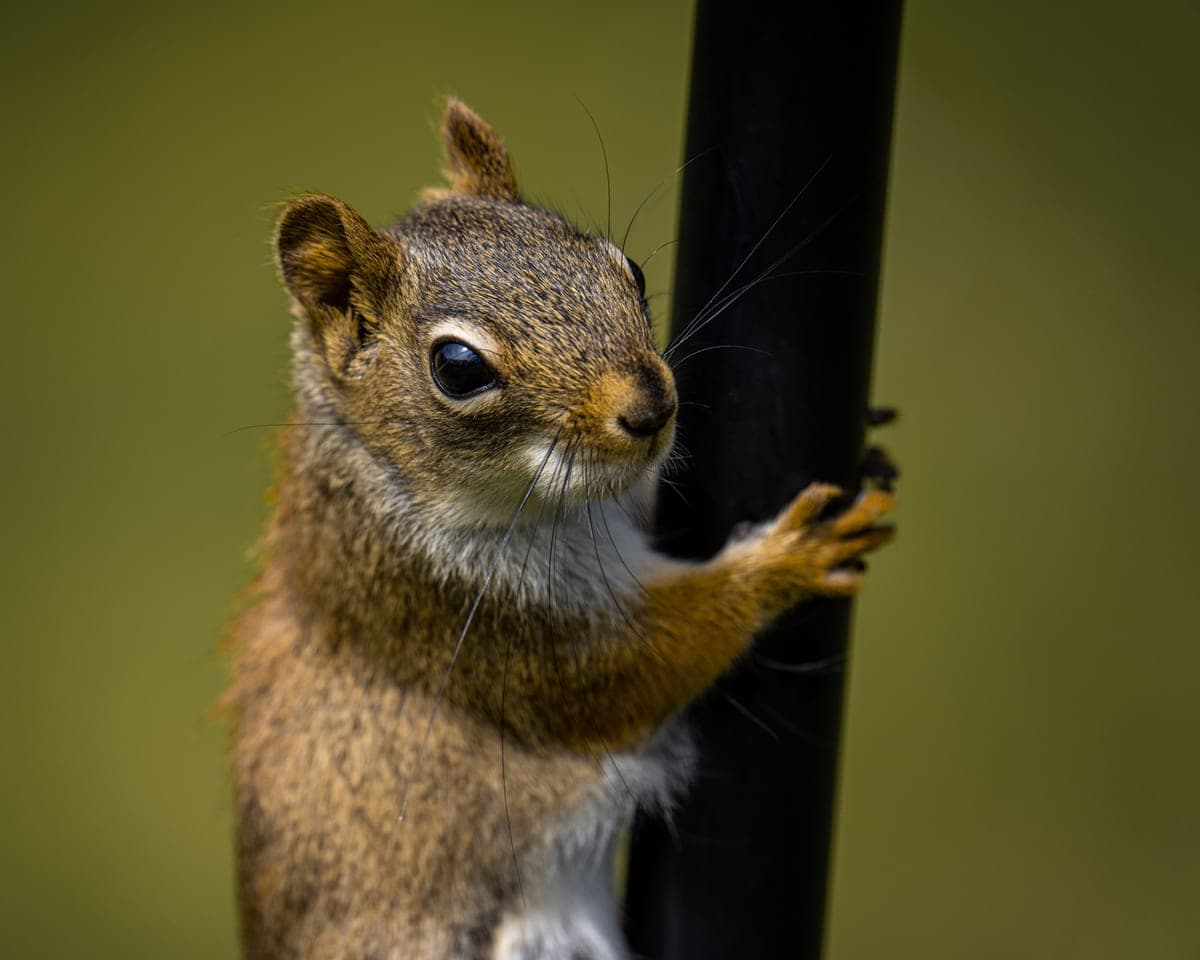
Hang the feeder from a long branch, well out from the trunk, and fit a dome baffle above it — published guidance asks for at least eighteen inches of diameter and a two to three foot gap between the branch and the top of the baffle. A pole is easier to defend, if you have anywhere to put one.
Seed & Sprig earns a commission when you buy through the links on this page, at no extra cost to you. It does not change which products we pick or the order we put them in — here is how we pick and here is how we are funded.
“How to squirrel proof a hanging bird feeder” and “how to keep squirrels off a bird feeder on a tree” are both real, common searches, and they describe the hardest version of this problem. A branch gives a squirrel a route in from above, which is the one direction neither a pole baffle nor a weight mechanism handles well.
Here is what actually helps, in order.
1. Choose the branch, not just the feeder
Most branch-hung feeders fail because of where the branch is. What you want:
- A long, thin branch — far enough out that a squirrel cannot simply walk along it and reach down.
- Well below other branches. Duncraft's 5-7-9 rule asks for nine feet of clearance below any branch a squirrel could drop from. In a tree, that usually means hanging from the lowest branch, not a convenient middle one.
- Seven to ten feet from the trunk, fences and roofs — the horizontal jump range.
- At least five feet off the ground.
If no branch on your tree satisfies those, the tree is not the right place, and no product will change that. Full placement guide.
2. Fit a dome baffle above the feeder
On a pole the baffle goes below; on a branch it goes above, and the sizing is different. Published guidance is a baffle “at least 18 inches in diameter” with “a 2-3 foot gap between the tree limb and the top of the baffle.”
Both numbers do work. The diameter stops a reach-around from the edge; the gap stops a squirrel simply climbing down the hanging wire past the baffle. An undersized dome hung tight to the branch is the most common failed installation in this whole category.
3. Use a long hanging wire, not a short chain
The longer the drop between the branch and the baffle, the less useful the branch is as a launch point. Thin, smooth wire is better than chain — there is less for a squirrel to grip on the way down.
4. Then, and only then, buy the mechanism
If the branch cannot be defended — and plenty cannot — a weight-closing feeder is the remaining lever. It is genuinely effective against a squirrel that has to stand on the shroud, and genuinely useless against one that sits on the cap working at the hanger. That asymmetry is the whole reason placement comes first here. Why that is, in full.
What not to do to a tree
- Do not nail or screw into a living tree to mount a bracket. Use a strap or hang from a branch.
- Do not wrap the trunk in metal sheeting. It damages the bark, and the squirrel simply jumps to the branch from elsewhere.
- Do not grease the branch or the wire. It transfers to feathers, and a bird whose feathers cannot insulate is in real trouble. More on the remedies that fail.
The honest conclusion
A branch-hung feeder with a big dome baffle, hung low and well out from the trunk, works in many yards. It will never be as defensible as a pole in open ground, and if you have any ground at all, the pole is the better purchase — it costs about the same as one good feeder and it protects every feeder you own after that. Poles here.
What we would buy for this
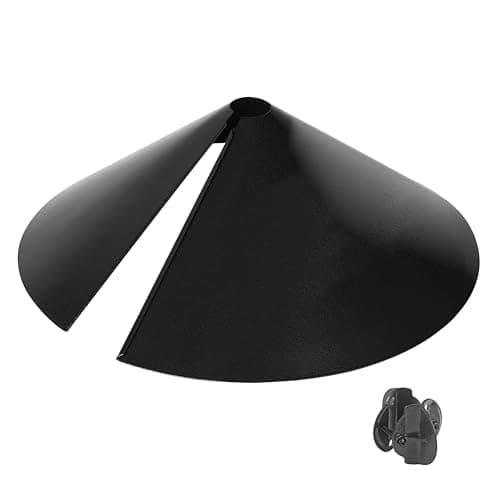
#1 · If you can move it to a hook or pole
More Birds Squirrel-X 18" Wrap-Around Baffle
More Birds · Retrofitting a pole or shepherd's hook you already own
An 18-inch steel baffle that wraps around a pole or shepherd's hook and fastens with the included coupler, so you can add squirrel defense without dismantling a feeder station that already works.
Published specifications
- Diameter
- 18"
- Fitting
- Wraps around poles and shepherd's hooks 1/2" to 1-1/2" in diameter
- Included
- Coupler for secure positioning
- Materials
- Steel with a weather-resistant finish
- Dimensions
- 18" x 18" x 7.3"
- Maker's placement advice
- At least 8 feet from any structure and more than four feet off the ground
What it does well
- Installs without moving the pole or taking the feeders down
- The 1/2 to 1-1/2 inch fit range covers slim shepherd's hooks and thicker feeder poles alike
- Steel, so it will not go brittle in a freeze or be chewed the way plastic baffles are
- Eighteen inches is the diameter published guidance asks for, and the listing states it
What it does not
- Eighteen inches across looks bulky on a slim decorative hook
- It is only as secure as the coupler you fit, so check it after the first windy week
- It stops climbing and nothing else — useless if the pole is within jumping distance of a fence, wall or branch
- More Birds' listing opens with a bullet about collapsing spring-loaded perches, which belongs to a different Squirrel-X product; this is a baffle with no moving parts
Specifications above come from the manufacturer's own published listing: More Birds Squirrel-X Wrap Around Metal Squirrel Baffle — published listing (diameter, pole fit, coupler, materials).
#ad How we are funded · Price as of October 22, 2026
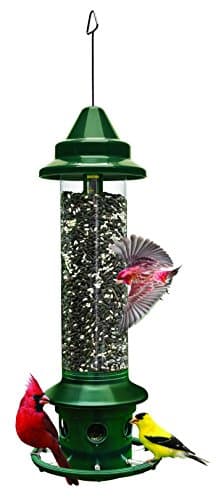
#2 · Best feeder for a branch
Brome Squirrel Buster Plus
Brome · The one feeder to buy if you only buy one
A weight-closing tube feeder with a large capacity and a cardinal ring, and the closest thing to a genuinely squirrel-resistant feeder that a beginner can hang up and stop thinking about.
Published specifications
- Seed capacity
- 5.1 lb
- Height
- 28" base to hanger
- Feeding ports
- 6, plus a cardinal ring
- Mechanism
- Weight-adjustable spring shroud
- Materials
- Chew-proof, UV-resistant components
- Warranty
- Brome Lifetime Care
What it does well
- The spring tension is adjustable, so you can shut out heavy birds as well as squirrels
- Comes apart by hand for cleaning, which means it actually gets cleaned
- 5.1 lb is enough that a busy fall week does not mean daily refills
What it does not
- The most expensive feeder in this roundup by a wide margin
- The shroud collects seed dust and needs a full strip-down every couple of weeks
- A squirrel that can reach the top hanger still wins, so this is not a substitute for a baffle
Specifications above come from the manufacturer's own published listing: Brome — Squirrel Buster Plus (manufacturer store).
#ad How we are funded · Price as of October 22, 2026
#3 · The better answer, if you have ground
Squirrel Stopper Sequoia Pole System
Squirrel Stopper · Building the whole feeding station in one purchase
A steel pole with an integrated moving baffle and four hanging arms, and the closest thing to a complete answer, because it fixes the placement problem and the climbing problem at once.
Published specifications
- Pole
- 1.25" diameter, 16-gauge tubular steel
- Hanging stations
- 4 arms, 19" of clearance from the pole
- Height above ground
- Listed as 8 ft 2 in by some sellers and 7 ft 6 in by others — see note
- Baffle
- Integrated baffle that moves up, down and side to side
What it does well
- Four arms means seed, suet, nyjer and peanuts all run from one baffled pole
- The moving baffle defeats squirrels that would grip a fixed one
- Solves the real problem, which is placement, rather than only the feeder
What it does not
- Published height figures disagree between sellers (8 ft 2 in vs 7 ft 6 in), so measure before assuming it clears the 9-foot drop rule
- Needs 10 feet of clear space around it to work as advertised, which many small yards do not have
- The most expensive single item in a beginner setup
Specifications above come from the manufacturer's own published listing: Squirrel Stopper Sequoia published specifications (seller listing), Squirrel Stopper Sequoia specifications (second seller, conflicting height).
Common questions
How do I squirrel-proof a hanging bird feeder?
Hang it from a long, low branch well out from the trunk, fit a dome baffle of at least eighteen inches above it with a two to three foot gap from the branch, and use a long thin wire rather than a chain.
How do I keep squirrels off a bird feeder on a tree?
Placement first — nine feet below any branch above, seven to ten feet from the trunk and anything else jumpable — then a large dome baffle. A tree is harder to defend than a pole.
What size baffle do I need for a hanging feeder?
At least eighteen inches in diameter, mounted with a two to three foot gap between the branch and the top of the baffle.
Is a pole better than hanging from a tree?
Yes, if you have ground for one. A pole lets you choose the location instead of accepting what a branch offers, and a pole baffle is more reliable than a dome.