Squirrels
How to keep squirrels off your bird feeders
In order of how much difference each one makes, with the failed folk remedies named.
By Scooter M. · Published · Last updated
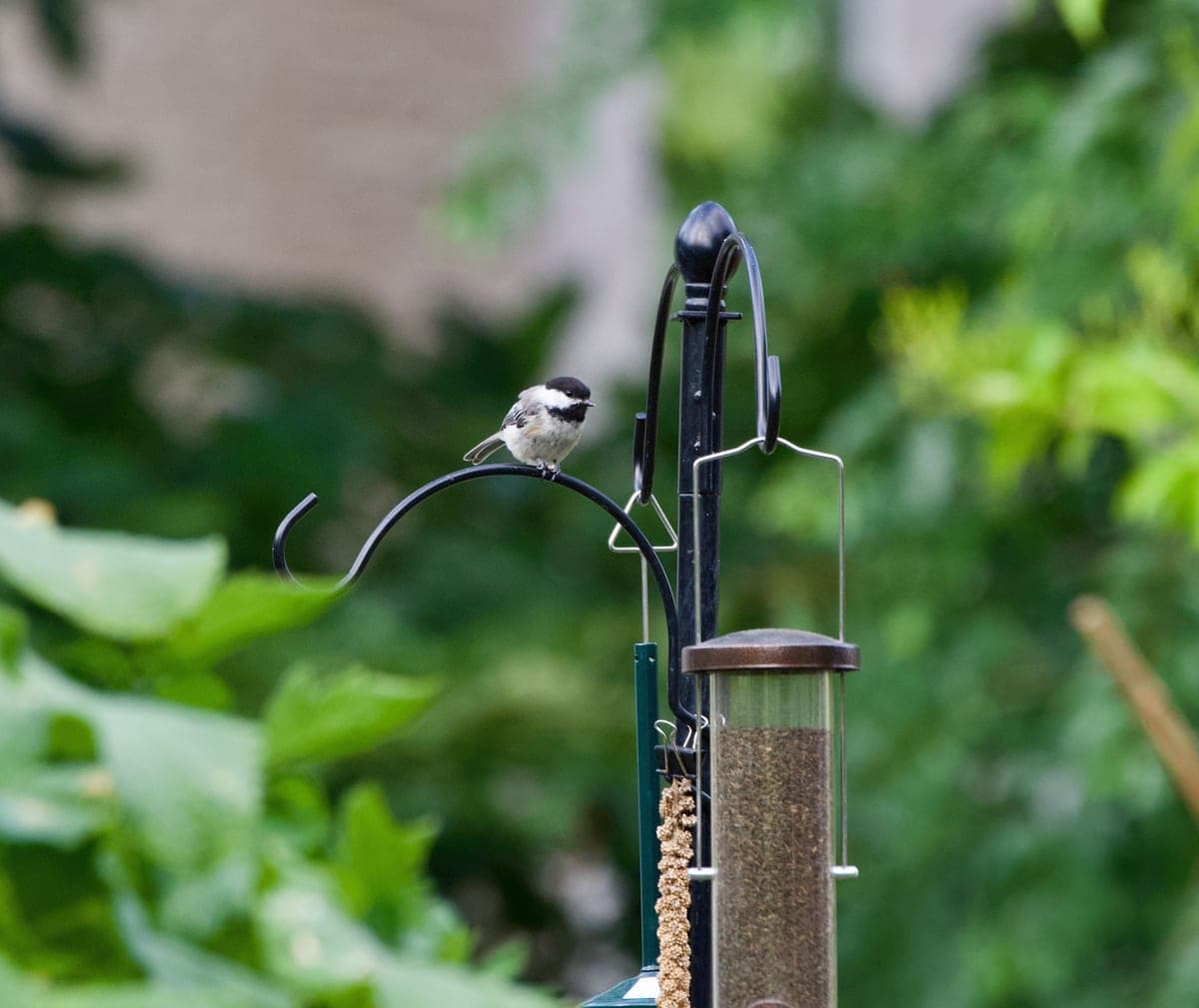
Move the feeder before you buy anything. Put it on a pole at least seven to ten feet from any fence, wall, roof or branch, and fit a baffle whose top sits about four and a half feet up the pole. That single change defeats more squirrels than any feeder mechanism on the market.
Seed & Sprig earns a commission when you buy through the links on this page, at no extra cost to you. It does not change which products we pick or the order we put them in — here is how we pick and here is how we are funded.
1. Fix the placement — free, and the biggest single change
A squirrel reaches a feeder by climbing, jumping across, or dropping from above. Almost every raided feeder is within jumping range of something. Walk the yard and look for the launch pads: fence tops, a shed roof, a garage, a low branch, a wall, a washing line, a garden chair somebody left out.
The 5-7-9 rule gives you the target: five feet up, seven feet of clear space around, nine feet below any overhanging branch. Other retailers ask for ten to twelve feet of horizontal clearance. Take the largest figure your yard can actually give. Full detail in where to hang a bird feeder.
2. Add a baffle — cheap, and it works on every feeder you own
On a pole, a baffle is the intervention with the best cost-to-effect ratio in this whole category. The published guidance is specific: mount the top of the baffle at least four and a half feet from the ground, and for a hanging feeder use a dome of at least eighteen inches diameter with a two to three foot gap between the branch and the top of the baffle.
Our comparisons are in the best squirrel baffles.
3. Change the seed — cheapest experiment available
Most squirrels prefer sunflower to safflower and will move on if safflower is all there is. Cardinals, house finches, chickadees and titmice eat safflower happily. This is a five-dollar test before a fifty-dollar purchase, and it is genuinely worth running. It is also not a law of nature: a hungry squirrel with no alternative eats safflower. See safflower and squirrels. Hot pepper seed is the other food-based approach, and the evidence for it is weaker than the marketing.
4. Buy the mechanism — effective, and the most expensive option
If there is nowhere to put a pole, a weight-closing or caged feeder is the remaining lever, and the good ones work. Picks and mechanisms in the best squirrel-resistant feeders.
What does not work
Greasing the pole
Do not do this. Petroleum jelly, cooking oil and similar coatings wash off in the first rain, need constant reapplication, and can transfer onto a bird's feathers. Feathers have to stay clean to insulate, and a greased bird in cold weather is in real trouble. A baffle costs less than a season of grease and does not carry that risk.
Hanging a slinky on the pole
A real and popular remedy — “how to keep squirrels off bird feeders with a slinky” is a genuinely common search — and it does sometimes work: the squirrel climbs, the coil extends, and it rides back down. The problems are that it degrades and rusts, it can tangle, and a metal spring near a feeder is a snag hazard for wildlife. If you are going to spend money, spend it on a steel baffle instead.
Moving the feeder a little further away
The distances are measured in feet. Shifting a feeder eighteen inches down the branch changes nothing except your sense of having done something.
A dedicated squirrel feeder as a decoy
Reliable food raises the number of squirrels your yard supports. You have not diverted them; you have recruited more of them, and they will still investigate the bird feeder.
What about hot pepper seed?
Birds do not detect capsaicin and mammals do, which is the basis for pepper-treated seed and additives. They are widely sold and legal in most places. Two honest caveats: the dust is genuinely unpleasant to handle and gets into eyes, so wear gloves and stand upwind, and a squirrel that is hungry enough will still eat it. We treat it as a supplement to a baffle, not a replacement for one.
The realistic outcome
A properly sited pole with a baffle, filled with black oil sunflower, will lose a small amount of seed to squirrels working the ground underneath and essentially none from the feeder itself. That is the win condition. If you are expecting a yard with no squirrels in it, that is not on offer from any product, and anybody who tells you otherwise is selling something.
What we would buy for this
#1 · Step 2: the baffle
Erva SB1D Cylindrical (Torpedo) Squirrel Baffle
Erva · Pole-mounted feeders
A long steel cylinder a squirrel cannot get around or hug past, and the single most effective thing you can buy after the feeder itself.
Published specifications
- Length
- 16.75"
- Diameter
- 6.25"
- Type
- Pole-mounted cylindrical baffle
What it does well
- Length is what defeats a squirrel here: it cannot reach past the top
- Steel, so it survives winters and chewing
What it does not
- Useless if the pole sits within jumping distance of a fence, wall or branch
- Must be mounted high enough that a squirrel cannot leap over it entirely
Specifications above come from the manufacturer's own published listing: Erva SB1D published dimensions.
#2 · Step 3: the seed swap
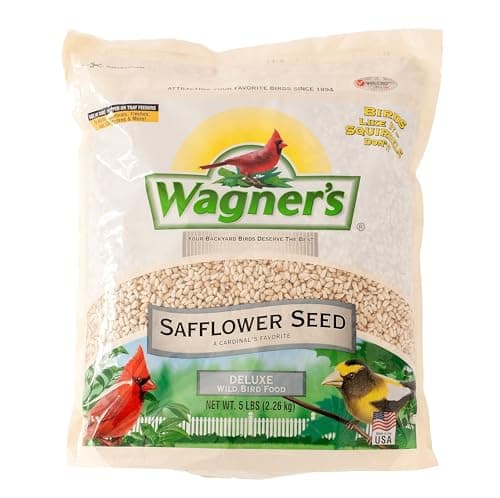
Wagner's Safflower Seed
Wagner's · Cardinals, when squirrels have taken over
A single-ingredient seed cardinals and finches take readily and squirrels usually leave alone, which is the closest thing to a no-hardware squirrel answer, with an honest caveat.
Published specifications
- Ingredients
- 100% safflower seed
- Crude protein
- 17.0%
- Crude fat
- 25.0%
- Crude fiber
- 32.0%
- Moisture
- 13.0%
What it does well
- Cardinals, house finches, chickadees and titmice all eat it
- Most squirrels prefer sunflower and will move on if safflower is all there is
What it does not
- 'Squirrels do not like safflower' is a tendency, not a law — hungry squirrels eat it
- Costs more per pound than black oil sunflower and attracts fewer species
Specifications above come from the manufacturer's own published listing: Wagner's safflower published analysis.
#ad How we are funded · Price as of October 22, 2026
#3 · Step 4: the mechanism
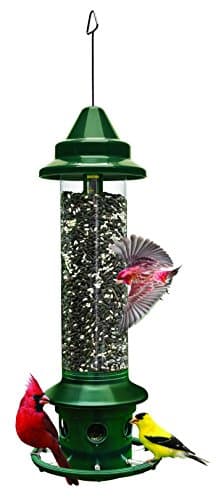
Brome Squirrel Buster Plus
Brome · The one feeder to buy if you only buy one
A weight-closing tube feeder with a large capacity and a cardinal ring, and the closest thing to a genuinely squirrel-resistant feeder that a beginner can hang up and stop thinking about.
Published specifications
- Seed capacity
- 5.1 lb
- Height
- 28" base to hanger
- Feeding ports
- 6, plus a cardinal ring
- Mechanism
- Weight-adjustable spring shroud
- Materials
- Chew-proof, UV-resistant components
- Warranty
- Brome Lifetime Care
What it does well
- The spring tension is adjustable, so you can shut out heavy birds as well as squirrels
- Comes apart by hand for cleaning, which means it actually gets cleaned
- 5.1 lb is enough that a busy fall week does not mean daily refills
What it does not
- The most expensive feeder in this roundup by a wide margin
- The shroud collects seed dust and needs a full strip-down every couple of weeks
- A squirrel that can reach the top hanger still wins, so this is not a substitute for a baffle
Specifications above come from the manufacturer's own published listing: Brome — Squirrel Buster Plus (manufacturer store).
#ad How we are funded · Price as of October 22, 2026
Common questions
How do I keep squirrels off a bird feeder pole?
Fit a baffle with its top at least four and a half feet from the ground, and make sure the pole is at least seven to ten feet from anything a squirrel can jump off.
How do I keep squirrels off a bird feeder hanging in a tree?
Use a dome baffle above the feeder — the published guidance asks for at least eighteen inches of diameter and a two to three foot gap between the branch and the top of the baffle. A branch feeder is always harder to defend than a pole.
Does a slinky keep squirrels off a bird feeder?
Sometimes, and it is a genuinely popular remedy. It also rusts, tangles and can snag wildlife. A steel baffle does the same job permanently.
Is it safe to grease a bird feeder pole?
No. Grease transfers to feathers, and feathers that cannot insulate are dangerous to a bird in cold weather. Use a baffle.