Feeder Types
Tube feeders: the default first feeder
Keeps seed dry, suits small birds, and excludes the ones that bully. The removable base is what separates a good one from a bad one.
By Scooter M. · Published · Last updated
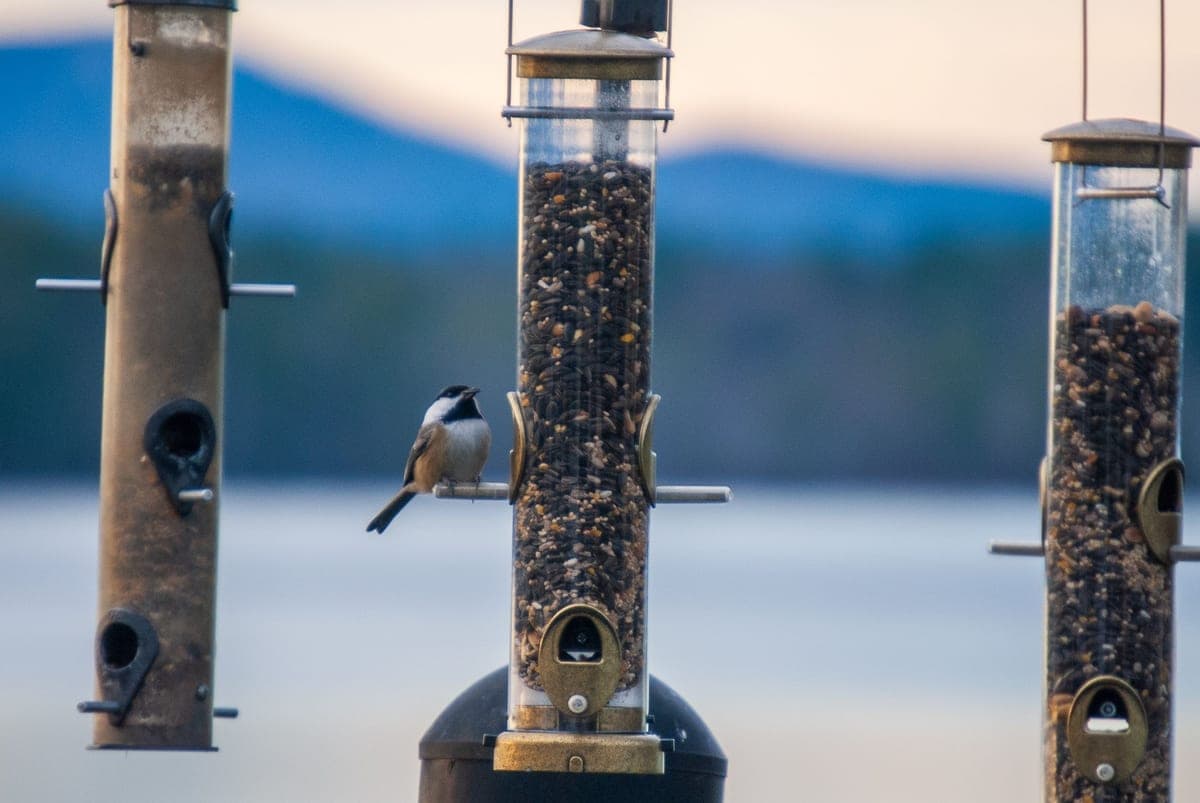
A tube feeder is a plastic or polycarbonate cylinder with several ports and short perches. Project FeederWatch notes that tube feeders keep seed fairly dry and that short perches exclude larger birds such as grackles and jays. Buy one with a base that comes off, because that decides whether it ever gets cleaned.
Seed & Sprig earns a commission when you buy through the links on this page, at no extra cost to you. It does not change which products we pick or the order we put them in — here is how we pick and here is how we are funded.
Quick picks
| # | Product | Best for | Price |
|---|---|---|---|
| 1 | DYno photo Droll Yankees Onyx Clever Clean 18" Sunflower Tube Feeder 2 lb, four ports, metal cap and base, and it twists apart for cleaning. | Best overall tube | |
| 2 | 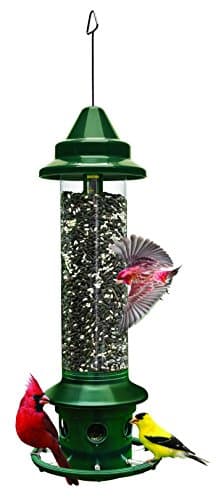 Brome Squirrel Buster Plus 5.1 lb and a weight shroud you can tune. The tube that fights back. | Best squirrel-resistant tube | $125.90 · View on Amazon #ad How we are funded · Price as of October 22, 2026 |
| 3 | DYno photo Droll Yankees Onyx Clever Clean 12" Tube Feeder 1 lb and two ports, for a balcony rail or a second station. | Best small tube |
Rows link to the full write-up further down this page. The price button goes to Amazon.
If you buy one feeder, buy a tube. It is the type that suits the widest range of the small birds most people are actually hoping for, and it is the easiest to site, fill and keep clean.
What a tube does well
Project FeederWatch describes a tube feeder as “a hollow cylinder, often made of plastic, with multiple feeding ports and perches” and notes two things that matter: tube feeders keep seed fairly dry, and short perches exclude larger birds such as grackles and jays.
That exclusion is the tube's defining feature. It is a filter. Whether that is good news depends entirely on which birds you want.
Who feeds at a tube, and who does not
| Will use it | Will not |
|---|---|
| Chickadees, titmice, nuthatches | Cardinals, unless there is a ring or a rail |
| House finches, goldfinches | Blue jays, mostly |
| Downy woodpeckers, on a clinging tube | Doves and ground feeders |
| Sparrows | Grackles and starlings, mostly |
If cardinals are what you want, a tube alone will disappoint you. Add a platform tray or choose a hopper with a perch rail.
What to look for
- A base that comes off. The single most valuable feature. Droll Yankees' Clever Clean line uses a twist-and-release base; the difference between that and a molded one is the difference between a two-minute clean and a twenty-minute one, and therefore between a clean feeder and a dirty one.
- Metal ports and cap. Squirrels chew plastic. Powder-coated metal survives.
- Capacity matched to your traffic. Two pounds is a couple of days at a busy station. One pound is a balcony feeder. Five pounds is a week.
- Ventilation or drainage. Seed at the bottom of a sealed tube gets damp and stays damp.
How many ports do you need?
More ports means more birds at once and a faster empty. Four is the sensible default for a first feeder. Six is worth it at a busy station, and two is fine for a small space. What matters more is the perch length: short perches are what keep the bigger birds off.
The tube's weakness
Squirrels. A plain tube has no defense at all — it is a cylinder of seed at a convenient height. Every tube feeder needs one of two things: a baffle on a pole, or a built-in weight mechanism.
Given the choice, buy the plain tube and the baffle. The baffle protects every feeder you ever own, and it does not depend on a mechanism being adjusted correctly. Full reasoning in are any bird feeders really squirrel-proof.
What to put in it
Black oil sunflower. One ingredient, widest appeal, and it flows properly through a standard port. Do not put a mixed seed in a tube — birds flick out what they do not want and you end up with a feeder full of milo and a lawn full of everything else. Seed picks here.
Cleaning one
Twist the base off, empty it, brush the tube through with a bottle brush, wash, then soak the parts for ten minutes in one part bleach to nine parts water, rinse and dry completely before refilling. Every week or two. Full method here.
The picks in full
#1 · Best overall tube
Droll Yankees Onyx Clever Clean 18" Sunflower Tube Feeder
Droll Yankees · A plain, well-made first tube feeder
A straightforward polycarbonate tube whose base twists off in seconds, which is the single feature that decides whether a feeder gets cleaned or quietly turns into a health problem.
Published specifications
- Seed capacity
- 2 lb
- Height
- 18"
- Feeding ports
- 4
- Materials
- UV-stabilized polycarbonate tube; powder-coated metal cap, base and ports
- Cleaning
- Twist-and-release removable base; one-touch top opening
What it does well
- The removable base turns cleaning from a chore into a two-minute job
- Metal ports resist squirrel chewing better than all-plastic tubes
- Short perches keep grackles and jays off without excluding finches
What it does not
- No squirrel mechanism at all, so this feeder needs a baffle or a pole
- Four ports fill up quickly at a busy station
Specifications above come from the manufacturer's own published listing: Droll Yankees Onyx Clever Clean published specifications.
#2 · Best squirrel-resistant tube
Brome Squirrel Buster Plus
Brome · The one feeder to buy if you only buy one
A weight-closing tube feeder with a large capacity and a cardinal ring, and the closest thing to a genuinely squirrel-resistant feeder that a beginner can hang up and stop thinking about.
Published specifications
- Seed capacity
- 5.1 lb
- Height
- 28" base to hanger
- Feeding ports
- 6, plus a cardinal ring
- Mechanism
- Weight-adjustable spring shroud
- Materials
- Chew-proof, UV-resistant components
- Warranty
- Brome Lifetime Care
What it does well
- The spring tension is adjustable, so you can shut out heavy birds as well as squirrels
- Comes apart by hand for cleaning, which means it actually gets cleaned
- 5.1 lb is enough that a busy fall week does not mean daily refills
What it does not
- The most expensive feeder in this roundup by a wide margin
- The shroud collects seed dust and needs a full strip-down every couple of weeks
- A squirrel that can reach the top hanger still wins, so this is not a substitute for a baffle
Specifications above come from the manufacturer's own published listing: Brome — Squirrel Buster Plus (manufacturer store).
#ad How we are funded · Price as of October 22, 2026
#3 · Best small tube
Droll Yankees Onyx Clever Clean 12" Tube Feeder
Droll Yankees · Balconies, small windows and tight spaces
A one-pound, two-port version of the same tube, small enough for a balcony rail and cheap enough to be a second feeder.
Published specifications
- Seed capacity
- 1 lb
- Height
- 12"
- Feeding ports
- 2
What it does well
- Refills often, so seed never sits long enough to spoil
- Light enough for a rail bracket or a small hook
What it does not
- Two ports means birds queue
- No squirrel mechanism
Specifications above come from the manufacturer's own published listing: Droll Yankees Onyx Clever Clean 12in published specifications.
Common questions
What is the best bird feeder for small birds?
A tube feeder with short perches. It suits chickadees, titmice, nuthatches and finches and keeps most larger birds off — see the chickadee picks.
Do tube feeders keep seed dry?
Fairly, per Project FeederWatch — better than an open tray, not as well as a roofed hopper. Look for ventilation and drainage in the base.
Can cardinals use a tube feeder?
Only if it has a cardinal ring or a long perch rail. On a standard short-perch tube they usually cannot get comfortable and will feed on what falls instead.
How often should I clean a tube feeder?
Every week or two, more often in wet weather or heavy use. A removable base is what makes that realistic.