Setup & Placement
The best bird feeders for beginners
Chosen for the person who has never owned one: easy to fill, easy to clean, hard for squirrels.
By Scooter M. · Published · Last updated
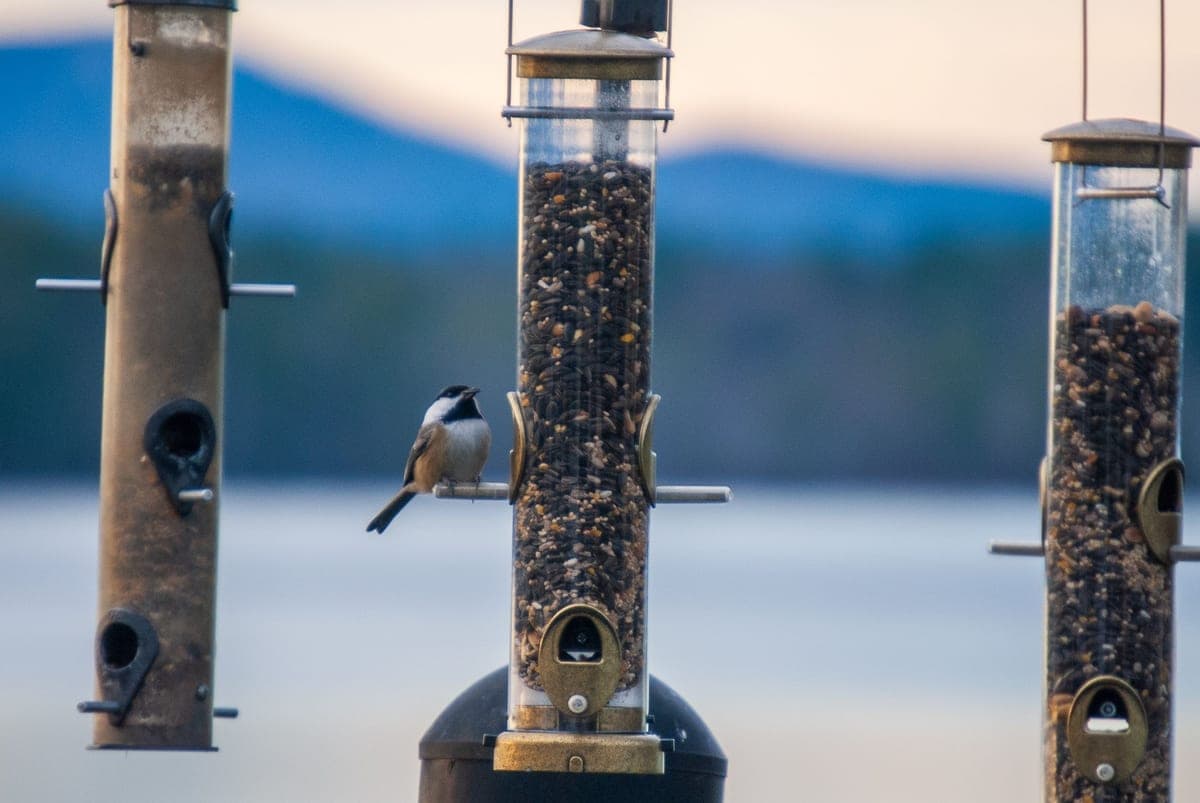
Start with the Droll Yankees Onyx Clever Clean tube feeder: 2 lb, four ports, and a base that twists off so it actually gets cleaned. If squirrels are already a problem, start with the Brome Squirrel Buster Plus instead. If you want cardinals, add a platform tray.
Seed & Sprig earns a commission when you buy through the links on this page, at no extra cost to you. It does not change which products we pick or the order we put them in — here is how we pick and here is how we are funded.
Quick picks
| # | Product | Best for | Price |
|---|---|---|---|
| 1 | DYno photo Droll Yankees Onyx Clever Clean 18" Sunflower Tube Feeder The removable base is the feature that decides whether a feeder stays healthy. | Best first feeder | |
| 2 | 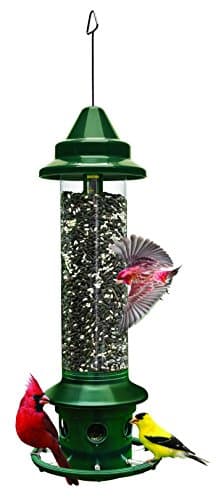 Brome Squirrel Buster Plus 5.1 lb, adjustable weight shroud, cardinal ring, and it strips down by hand. | Best if squirrels are already winning | $125.90 · View on Amazon #ad How we are funded · Price as of October 22, 2026 |
| 3 | 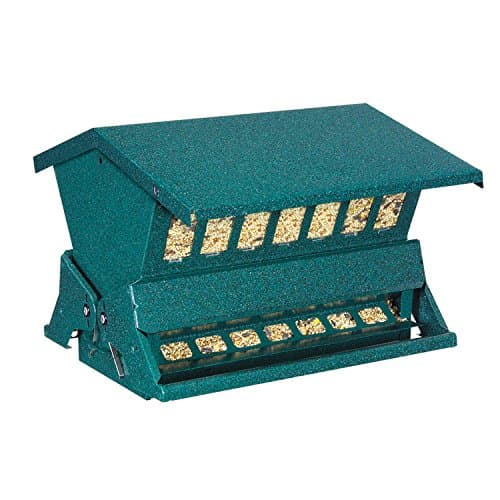 Woodlink Absolute II (model 7536) 12 lb hopper with counterweighted perches — weeks between refills. | Best for a big yard | $84.00 · View on Amazon #ad How we are funded · Price as of October 22, 2026 |
| 4 | NWno photo Nature's Way Cedar Platform Tray Feeder (CWF3) A screened cedar tray. The birds a tube quietly excludes will use this. | Best for cardinals and jays | |
| 5 | NWno photo Nature's Way Tail-Prop Suet Feeder (CWF1) One suet cake and a tail-prop panel: the fastest route to woodpeckers. | Best fall add-on | |
| 6 | DYno photo Droll Yankees Onyx Clever Clean 12" Tube Feeder 1 lb, two ports, light enough for a balcony rail bracket. | Best for a small space |
Rows link to the full write-up further down this page. The price button goes to Amazon.
A first feeder has different requirements from a fifth one. It needs to be easy to fill without spilling half a bag, easy to clean without a set of brushes, and forgiving about where you hang it. Capacity and looks come after all three.
What we ranked on
- Can it be cleaned in two minutes? A removable base is the single highest-value feature on a beginner feeder, because the cleaning schedule is real: every week or two per Project FeederWatch.
- Does the capacity match the refill you will actually do? Two pounds is a couple of days at a busy station. Twelve pounds is weeks — and weeks of seed sitting damp if you do not keep on top of it.
- What does it cost you in squirrels? A plain tube costs you a lot unless it is on a baffled pole.
- Which birds does it admit? Short perches exclude grackles and jays. That is a feature until you realize it also excludes cardinals.
The full criteria and what we do instead of testing are on the methodology page.
Start with one, not three
It is tempting to buy a tube, a suet cage and a nyjer feeder at once. Do not. Get one working — birds visiting, seed staying dry, squirrels handled — and then add. Two feeders with the same problem is not twice the birds; it is twice the problem.
Which of these is right for your yard?
| Your situation | Start with | Then add |
|---|---|---|
| A lawn, no squirrel history yet | Plain tube on a baffled pole | Suet cage in October |
| Squirrels already established | Weight-closing feeder plus a baffle | Safflower seed as a second lever |
| Cardinals in the neighborhood | Hopper with a perch rail, or a tray | Tube for the small birds |
| Balcony or paved yard | Small tube on a rail bracket, or a window feeder | A seed tray to catch hulls |
| Big yard, infrequent refills | 12 lb hopper | A second station rather than a bigger feeder |
The add-on that changes the most
Not a feeder. A baffle on a pole. If your budget covers a mid-priced feeder or a cheap feeder plus a baffle, buy the second combination — it is more effective and the baffle outlives every feeder you hang on it.
What about the seed?
Black oil sunflower, one ingredient, no mix. It has the widest appeal of any single seed and costs the least per bird actually fed. Everything else is a later decision, and it is all laid out in the best bird seed.
The picks in full
#1 · Best first feeder
Droll Yankees Onyx Clever Clean 18" Sunflower Tube Feeder
Droll Yankees · A plain, well-made first tube feeder
A straightforward polycarbonate tube whose base twists off in seconds, which is the single feature that decides whether a feeder gets cleaned or quietly turns into a health problem.
Published specifications
- Seed capacity
- 2 lb
- Height
- 18"
- Feeding ports
- 4
- Materials
- UV-stabilized polycarbonate tube; powder-coated metal cap, base and ports
- Cleaning
- Twist-and-release removable base; one-touch top opening
What it does well
- The removable base turns cleaning from a chore into a two-minute job
- Metal ports resist squirrel chewing better than all-plastic tubes
- Short perches keep grackles and jays off without excluding finches
What it does not
- No squirrel mechanism at all, so this feeder needs a baffle or a pole
- Four ports fill up quickly at a busy station
Specifications above come from the manufacturer's own published listing: Droll Yankees Onyx Clever Clean published specifications.
#2 · Best if squirrels are already winning
Brome Squirrel Buster Plus
Brome · The one feeder to buy if you only buy one
A weight-closing tube feeder with a large capacity and a cardinal ring, and the closest thing to a genuinely squirrel-resistant feeder that a beginner can hang up and stop thinking about.
Published specifications
- Seed capacity
- 5.1 lb
- Height
- 28" base to hanger
- Feeding ports
- 6, plus a cardinal ring
- Mechanism
- Weight-adjustable spring shroud
- Materials
- Chew-proof, UV-resistant components
- Warranty
- Brome Lifetime Care
What it does well
- The spring tension is adjustable, so you can shut out heavy birds as well as squirrels
- Comes apart by hand for cleaning, which means it actually gets cleaned
- 5.1 lb is enough that a busy fall week does not mean daily refills
What it does not
- The most expensive feeder in this roundup by a wide margin
- The shroud collects seed dust and needs a full strip-down every couple of weeks
- A squirrel that can reach the top hanger still wins, so this is not a substitute for a baffle
Specifications above come from the manufacturer's own published listing: Brome — Squirrel Buster Plus (manufacturer store).
#ad How we are funded · Price as of October 22, 2026
#3 · Best for a big yard
Woodlink Absolute II (model 7536)
Woodlink · Big capacity and cardinals — the hopper answer to squirrels
A double-sided steel hopper whose counterweighted perches drop a shield over the seed tray when something heavy lands, and it holds twelve pounds so it barely needs attention.
Published specifications
- Seed capacity
- 12 lb
- Dimensions
- 16" W x 11.25" H x 13.5" D
- Feeding ports
- 6 (both sides)
- Mechanism
- Two counterbalanced perches, adjustable to three weight settings
- Materials
- Steel and acrylic
What it does well
- 12 lb capacity means refills measured in weeks, not days
- Perch tension adjusts for light, medium or heavy birds
- The long perch rail suits cardinals, which will not use a small tube port
What it does not
- Twelve pounds of seed is heavy, so the hook or pole has to be rated for it
- Seed sitting for weeks in wet weather is how mold starts; a big hopper needs the same cleaning discipline as a small one
Specifications above come from the manufacturer's own published listing: Woodlink Absolute II published specifications.
#ad How we are funded · Price as of October 22, 2026
#4 · Best for cardinals and jays
Nature's Way Cedar Platform Tray Feeder (CWF3)
Nature's Way · Cardinals, jays, doves and anything that will not use a tube
An open cedar tray with a removable screen bottom, which is the honest answer for the big ground-feeding birds a tube feeder quietly excludes.
Published specifications
- Dimensions
- 12" x 12" x 2.25"
- Capacity
- 3 quarts
- Materials
- Premium cedar, stainless steel screws, powder-coated galvanized steel seed tray
- Drainage
- Removable screen tray for drainage and airflow
What it does well
- Cardinals and jays use it immediately; they often will not use a small tube port
- The screen bottom drains, which is the difference between a tray and a puddle
- Nothing to break, and it cleans in a minute
What it does not
- Completely open to squirrels, so this one belongs on a baffled pole or nowhere
- Seed is exposed to rain even with drainage, so put out small amounts
Specifications above come from the manufacturer's own published listing: Nature's Way CWF3 published specifications.
#5 · Best fall add-on
Nature's Way Tail-Prop Suet Feeder (CWF1)
Nature's Way · Woodpeckers, including the big ones
A single-cake suet cage with an extended cedar back panel that gives a woodpecker somewhere to brace its tail, which is the difference between a visit and a feeding session.
Published specifications
- Dimensions
- 12" H x 7.875" L x 3" W
- Capacity
- 1 standard suet cake
- Materials
- Premium cedar with rust-free hardware
What it does well
- The tail prop is not marketing: woodpeckers brace their tails when they feed
- One cake at a time means suet does not sit out going rancid
What it does not
- The open cage is easy for squirrels and starlings
- Holds one cake, so it needs refilling in cold weather
Specifications above come from the manufacturer's own published listing: Nature's Way CWF1 published specifications.
#6 · Best for a small space
Droll Yankees Onyx Clever Clean 12" Tube Feeder
Droll Yankees · Balconies, small windows and tight spaces
A one-pound, two-port version of the same tube, small enough for a balcony rail and cheap enough to be a second feeder.
Published specifications
- Seed capacity
- 1 lb
- Height
- 12"
- Feeding ports
- 2
What it does well
- Refills often, so seed never sits long enough to spoil
- Light enough for a rail bracket or a small hook
What it does not
- Two ports means birds queue
- No squirrel mechanism
Specifications above come from the manufacturer's own published listing: Droll Yankees Onyx Clever Clean 12in published specifications.
Common questions
What is the best bird feeder for beginners?
A plain tube feeder with a removable base, filled with black oil sunflower and hung on a baffled pole. It suits the widest range of birds and it is the easiest to keep clean.
Should a beginner buy a squirrel-proof feeder?
Only if there is nowhere to put a pole. Otherwise a plain feeder plus a baffle costs less and works better. See the honest version.
What is the best bird feeder to keep seed dry?
A hopper with a roof overhang, or a tube with a wide weather dome above it. Tube feeders keep seed fairly dry on their own; open trays do not, which is why a tray needs drainage and small portions.
How many feeders should a beginner have?
One to start. Add a suet cage in the fall, and a tray if cardinals are around. Three feeders in week one usually means three neglected feeders by December.