Setup & Placement
How many bird feeders should you have?
One is the right answer for month one. Three is the right answer for most yards. There is also a number that is too many.
By Scooter M. · Published · Last updated
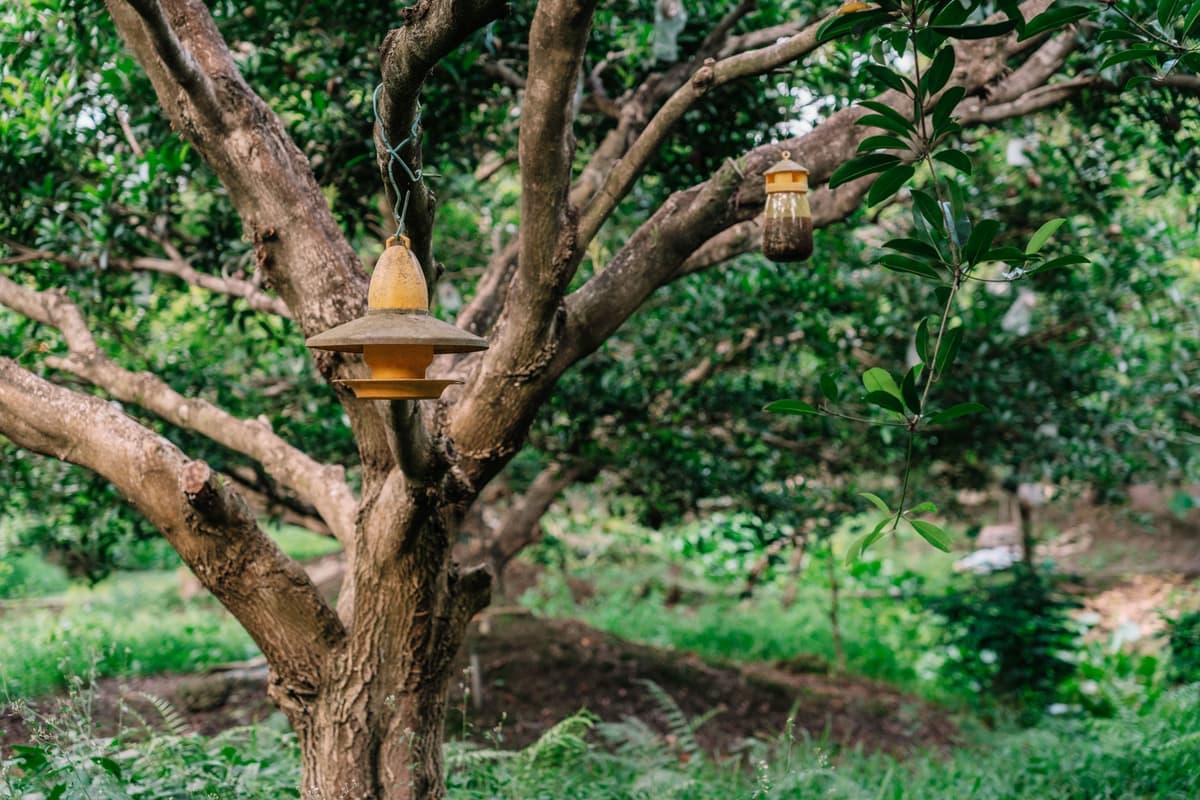
Start with one. Add a suet cage as the second, and an open tray as the third — that combination covers almost every feeder bird. Beyond three or four in an average yard you are mostly adding cleaning work and crowding, not species.
Seed & Sprig earns a commission when you buy through the links on this page, at no extra cost to you. It does not change which products we pick or the order we put them in — here is how we pick and here is how we are funded.
The honest answer to how many feeders you should have is that it depends on what you are trying to add, and that most people ask the question for the wrong reason — they are not seeing many birds and assume the fix is more equipment.
It usually is not. But there is a genuine sequence here, and it is short: three feeders covers almost the entire cast of birds a typical yard can attract, and a fourth is a specialist decision rather than a general improvement.
Start with one
One feeder, one seed, one location, for at least a few weeks. This is not frugality, it is diagnosis. If you put up three feeders at once and nothing comes, you have no idea which variable is wrong. If you put up one and nothing comes, the list of possible causes is short and works through in a predictable order.
Make it a tube of black-oil sunflower on a baffled pole. Project FeederWatch calls black-oil sunflower the most common seed offered at feeders in North America and names it among the favorite feeder foods of cardinals, chickadees, finches and sparrows — it is the single food with the widest appeal, so it is the fairest test of your yard. The full first-setup walkthrough is here.
Give it time before you judge it. A new feeder commonly takes days to a few weeks to be found, and the most common mistake at this stage is moving it repeatedly, which resets that clock every time.
The second feeder: a suet cage
Once the first feeder is working, a suet cage is the highest-value addition in the whole hobby. FeederWatch credits a suet cage with attracting woodpeckers, nuthatches and chickadees, and the first two of those are birds a seed tube will essentially never bring you.
It is also the cheapest feeder on the shelf, and autumn is the natural moment for it — fat matters most as the insects disappear. Which suet cage to buy is covered here, and the short version is to get one with a tail prop or, if starlings are around, one that opens only from underneath.
The third feeder: an open tray
The third addition is the one that completes the set, and it is the one most people skip. A tube feeder excludes large birds by design — FeederWatch notes that short perches accommodate small birds such as finches but exclude larger birds such as grackles and jays. Cardinals, doves and juncos are on the wrong side of that line too.
An open tray on the same baffled pole fixes it in one purchase. Cardinals, jays and the ground-feeding birds all arrive through this one piece of equipment, which is why it is the third thing to buy and not the tenth.
| Feeder | Adds | Rough cost |
|---|---|---|
| 1. Tube of black-oil sunflower | Chickadees, titmice, nuthatches, finches, sparrows | Low |
| 2. Suet cage | Woodpeckers, nuthatches — birds a tube never brings | Lowest of all |
| 3. Open tray | Cardinals, jays, doves, juncos, towhees | Low |
| 4. Nyjer feeder | Goldfinches specifically, and only if they are local | Low feeder, expensive seed |
| 5+ | Usually nothing new | Cleaning time, mostly |
When a fourth makes sense
A nyjer feeder is the usual fourth, and it is worth it only if goldfinches are actually in your area — nyjer is the most expensive seed on the shelf and it goes stale quickly, so a feeder of it that nobody visits is pure waste. The finch feeder page covers how to tell.
The other honest reason for a fourth is separation rather than variety. If jays or grackles dominate your main station, a second tray placed well away from it gives the big birds somewhere to be. That is a real use of an extra feeder, and it is different from adding one and hoping.
The number that is too many
There is one, and the limit is not aesthetic. Feeders concentrate birds, and concentrated birds spread disease — which is why cleaning guidance exists at all. FeederWatch asks for seed and suet feeders to be cleaned every week or two, and more often in heavy use or wet weather.
That is the real constraint. Multiply it by the number of feeders you own and be honest about the result: six feeders is roughly an hour of scrubbing a fortnight, forever, and the practical outcome for most people is not six clean feeders but six dirty ones. Two feeders that get cleaned beat six that do not, by a wide margin. The cleaning routine is here.
Spacing matters as well. Feeders crowded together concentrate droppings in one spot and create the crowding that causes squabbling. If you are running three or more, spread them out and move the whole station occasionally so no patch of ground takes the full load.
One pole, not three placements
The practical trap with multiple feeders is that every one of them needs its own solved placement — far enough from a jumping-off point, high enough, near enough to cover. Solving that three times is three chances to get it wrong, and in most yards there is only one genuinely good spot anyway.
A pole system with several arms and an integrated baffle is the answer, and it is the reason it appears in the picks above alongside actual feeders. One correct placement, one baffle, three or four feeders hanging off it. Pole systems are compared here, and the heights and distances that make a placement correct are here.
If your yard is small
Two is plenty, and one plus a suet cage is a complete setup for a balcony or a courtyard. The constraint in a small space is not how many birds you can attract but how much spillage the ground below can take, and every extra feeder makes that worse. Small-space feeding has its own rules, and hull control matters more there than variety does.
The disease argument, stated properly
It is worth being precise about this rather than vaguely ominous, because it is the only reason there is an upper limit at all.
A feeder does something that does not otherwise happen in nature: it brings birds from a wide area into repeated close contact at a single fixed point, and it does it every day for months. That concentration is the mechanism. Anything transmitted between birds — at the feeder itself, or through droppings on the ground beneath it — has a much easier route than it would in a hedge.
This is why cleaning guidance exists, and why FeederWatch's ask scales with use rather than being a flat rule: every week or two, and more often in heavy use or wet weather. More feeders means more birds means heavier use means the interval gets shorter, not longer. The commitment compounds in the wrong direction.
The practical rule we would give: own the number of feeders you will genuinely clean on that schedule in the worst week of the year, not the best one. For most people that is two or three. What cleaning actually involves, including the bleach dilution is worth reading before you decide the number.
Adding and removing across the year
The count does not have to be constant, and treating it as seasonal solves the hygiene problem and the variety problem at once.
Autumn is when to add. The suet cage goes up as the insects go, and it is the moment the widest range of birds is looking for a reliable source. The fall calendar covers the timing.
Winter is peak count — this is what the setup exists for, and it is also when consistency matters most, because birds come to rely on a source. Winter feeding is here.
Summer is when to take some down. Natural food is abundant, feeders are used less, and warm damp weather is exactly when a lightly-used feeder turns into a hygiene problem. Running one or two through the summer rather than four is the sensible version, and summer feeding covers what to change — including swapping plain suet for a no-melt dough.
Nothing is lost by scaling down. Birds do not forget a feeding station over a summer, and you will get the same population back in September with cleaner equipment.
What we would buy for this
#1 · Feeder one
Droll Yankees Onyx Clever Clean 18" Sunflower Tube Feeder
Droll Yankees · A plain, well-made first tube feeder
A straightforward polycarbonate tube whose base twists off in seconds, which is the single feature that decides whether a feeder gets cleaned or quietly turns into a health problem.
Published specifications
- Seed capacity
- 2 lb
- Height
- 18"
- Feeding ports
- 4
- Materials
- UV-stabilized polycarbonate tube; powder-coated metal cap, base and ports
- Cleaning
- Twist-and-release removable base; one-touch top opening
What it does well
- The removable base turns cleaning from a chore into a two-minute job
- Metal ports resist squirrel chewing better than all-plastic tubes
- Short perches keep grackles and jays off without excluding finches
What it does not
- No squirrel mechanism at all, so this feeder needs a baffle or a pole
- Four ports fill up quickly at a busy station
Specifications above come from the manufacturer's own published listing: Droll Yankees Onyx Clever Clean published specifications.
#2 · Feeder two
Nature's Way Tail-Prop Suet Feeder (CWF1)
Nature's Way · Woodpeckers, including the big ones
A single-cake suet cage with an extended cedar back panel that gives a woodpecker somewhere to brace its tail, which is the difference between a visit and a feeding session.
Published specifications
- Dimensions
- 12" H x 7.875" L x 3" W
- Capacity
- 1 standard suet cake
- Materials
- Premium cedar with rust-free hardware
What it does well
- The tail prop is not marketing: woodpeckers brace their tails when they feed
- One cake at a time means suet does not sit out going rancid
What it does not
- The open cage is easy for squirrels and starlings
- Holds one cake, so it needs refilling in cold weather
Specifications above come from the manufacturer's own published listing: Nature's Way CWF1 published specifications.
#3 · Feeder three
Nature's Way Cedar Platform Tray Feeder (CWF3)
Nature's Way · Cardinals, jays, doves and anything that will not use a tube
An open cedar tray with a removable screen bottom, which is the honest answer for the big ground-feeding birds a tube feeder quietly excludes.
Published specifications
- Dimensions
- 12" x 12" x 2.25"
- Capacity
- 3 quarts
- Materials
- Premium cedar, stainless steel screws, powder-coated galvanized steel seed tray
- Drainage
- Removable screen tray for drainage and airflow
What it does well
- Cardinals and jays use it immediately; they often will not use a small tube port
- The screen bottom drains, which is the difference between a tray and a puddle
- Nothing to break, and it cleans in a minute
What it does not
- Completely open to squirrels, so this one belongs on a baffled pole or nowhere
- Seed is exposed to rain even with drainage, so put out small amounts
Specifications above come from the manufacturer's own published listing: Nature's Way CWF3 published specifications.
#4 · What to hang them on
Squirrel Stopper Sequoia Pole System
Squirrel Stopper · Building the whole feeding station in one purchase
A steel pole with an integrated moving baffle and four hanging arms, and the closest thing to a complete answer, because it fixes the placement problem and the climbing problem at once.
Published specifications
- Pole
- 1.25" diameter, 16-gauge tubular steel
- Hanging stations
- 4 arms, 19" of clearance from the pole
- Height above ground
- Listed as 8 ft 2 in by some sellers and 7 ft 6 in by others — see note
- Baffle
- Integrated baffle that moves up, down and side to side
What it does well
- Four arms means seed, suet, nyjer and peanuts all run from one baffled pole
- The moving baffle defeats squirrels that would grip a fixed one
- Solves the real problem, which is placement, rather than only the feeder
What it does not
- Published height figures disagree between sellers (8 ft 2 in vs 7 ft 6 in), so measure before assuming it clears the 9-foot drop rule
- Needs 10 feet of clear space around it to work as advertised, which many small yards do not have
- The most expensive single item in a beginner setup
Specifications above come from the manufacturer's own published listing: Squirrel Stopper Sequoia published specifications (seller listing), Squirrel Stopper Sequoia specifications (second seller, conflicting height).
Common questions
How many bird feeders should I have in my yard?
One to start with, three for a complete setup: a seed tube, a suet cage and an open tray. That combination covers almost every feeder bird. A fourth is a specialist decision rather than a general improvement.
Can you have too many bird feeders?
Yes, and the limit is hygiene rather than taste. FeederWatch asks for cleaning every week or two, so every extra feeder is a permanent recurring commitment. Two clean feeders beat six dirty ones.
Will a second feeder bring more birds?
Only if it is a different kind of feeder holding a different food. A second tube of sunflower next to your first tube of sunflower adds capacity, not species.
How far apart should bird feeders be?
Far enough that droppings and hulls are not concentrated in one spot, and far enough that big birds at one are not sitting on top of small birds at another. On a multi-arm pole, spread the arms and move the whole station occasionally.