Bird Seed
Buying bird seed in bulk
Cheaper per pound is not the same as cheaper. The difference is whether you can keep it dry for three months.
By Scooter M. · Published · Last updated
Bulk seed is worth it when you can store it sealed, cool and dry, and when you will use it within a few months. A 25 lb bag that goes moldy costs more than four 5 lb bags. Judge cost per pound actually eaten, not cost per pound bought.
Seed & Sprig earns a commission when you buy through the links on this page, at no extra cost to you. It does not change which products we pick or the order we put them in — here is how we pick and here is how we are funded.
The per-pound price on a 25 or 40 pound sack is genuinely much lower than on a 5 pound bag, and that is a real saving that real people really make. It is also the single easiest way to spend more money on bird seed than you needed to, and which of the two happens has almost nothing to do with the seed and almost everything to do with where you put it.
The arithmetic, properly
The number that decides this is not cost per pound bought. It is cost per pound actually eaten, and there are two separate leaks between the two.
Leak one: filler. If the bulk bag is a mix, some fraction of it lands on the ground uneaten. FeederWatch is blunt that milo is often a major component of cheap mixes and is not a favorite of most birds, and that cracked corn attracts doves, quail and sparrows — fine if those are your birds, waste if they are not. How to read the panel is here.
Leak two: spoilage. Seed that goes moldy in month three is a total loss, not a partial one, because moldy seed should be discarded rather than put out.
| Scenario | What you bought | What the birds got |
|---|---|---|
| 25 lb single-ingredient, used in 2 months | 25 lb | About 25 lb — the saving is real |
| 25 lb cheap mix, part filler | 25 lb | Maybe half, the rest on the lawn |
| 40 lb bag, last third goes moldy | 40 lb | About 27 lb, at full price |
| 5 lb bags bought as needed | 5 lb at a time | Nearly all of it, at a higher unit price |
Run your own version of the bottom two rows before buying the big sack. If the honest answer is that you will not finish it before the weather turns, the smaller bag is the cheaper purchase even though it costs more per pound. We publish the cost formula rather than a made-up monthly figure — the inputs are your feeder, your refill rate and your local prices.
How we judged what to buy in bulk
Three criteria, in order: whether every ingredient is edible to the birds you have, whether the seed keeps, and whether you can store the volume properly. Anything that fails the third one fails, whatever the price says. Full criteria here.
What keeps, and what does not
Not all seed ages at the same rate, and this is where most bulk regret comes from.
Black-oil sunflower in the shell keeps best. The hull is packaging — it protects the kernel from damp, which is exactly why it is the seed we recommend buying large. One ingredient, nothing to reject, and the most robust in storage.
Nyjer is the worst bulk buy on the shelf. It dries out and goes stale quickly, and stale nyjer is the commonest reason a finch feeder sits ignored. Buy the small bag, always. The nyjer page explains why.
Hulled and no-mess mixes are the paradox. Every pound is edible so nothing is wasted to filler, but with no shell the seed absorbs damp and spoils faster. Worth buying in quantity only if your storage is genuinely good. The no-mess trade-off is here.
Peanuts and suet are short-dated. Both are high-fat and both go rancid. Neither belongs in a bulk purchase unless you are running several feeders.
Storage is the whole decision
Bulk buying is a storage commitment disguised as a price decision. If you cannot meet the storage requirement, you are not saving money, and the requirement is not complicated: sealed, rigid, cool, dark, off the floor.
The paper sack it arrives in is not storage. It is permeable, mice open it in a night, and a garage floor is exactly where condensation collects. Our storage page covers containers, shelf life and the warning signs, and the short version is that a galvanized bin with a lid turns a risky 25 lb purchase into a safe one.
There is a second-order benefit worth mentioning: sealed storage is also rodent prevention. A sack of seed in an open garage is a food source, and spilled and accessible seed is what actually draws mice and rats — not the feeder outside.
What size actually suits you
Work backwards from your feeder rather than forwards from the price.
- One small tube feeder — a 5 lb bag at a time. A 25 lb sack will outlast its own freshness.
- Two or three feeders through autumn and winter — this is the sweet spot for a 25 lb sack of straight sunflower, provided you have a bin.
- A big hopper plus satellites, in cold weather — bulk is clearly worth it, and consumption is high enough that spoilage is not the risk.
- Summer, anywhere warm and humid — buy smaller than you think. Warm damp months are when stored seed fails. Summer feeding changes the maths.
What each pick costs you
- The 25 lb sunflower leaves hulls that will kill the grass under the feeder, and squirrels like it as much as the birds do.
- Safflower costs more per pound than sunflower and attracts fewer species — which is why we suggest a small bag until you know it works in your yard.
- Nyjer is expensive per pound and the one seed where buying small is strictly correct, so it is on this page as a warning rather than a bulk recommendation.
- The shell-free mix is the priciest per pound here and spoils fastest — it only makes sense in bulk with proper storage.
The pattern, as ever on this site: the cheapest purchase is the one where nothing is wasted, and that is usually a single-ingredient bag in a size you will actually finish.
Splitting a bulk bag properly
If you do buy the sack, the single habit that protects the investment is decanting it once rather than dipping into it for three months.
Fill a smaller, lidded container as your working supply and keep the bulk bin sealed and unopened between refills. Every time a large container is opened in humid weather it takes on moisture, and the damage accumulates at the bottom where you will not see it until the last third of the bag is the part that smells sour.
Two details worth the trouble. Keep the bin off a concrete floor — concrete sweats, and that is where condensation forms. And do not top up an old batch with a new one: finish the working container, tip out any dust and fragments, then refill. Layering fresh seed onto stale seed is how a whole bin turns over. Containers and shelf life in full.
Buying for more than one feeder
Bulk arithmetic changes once you are running a few feeders, and mostly in its favor — but not for every seed at once.
The pattern that works is one bulk staple plus small specialist bags. Straight black-oil sunflower is the staple: it goes in the tube, the hopper and the tray, so a large sack turns over quickly across three feeders instead of aging in one. Everything else — nyjer, safflower, mealworms, suet — stays in small quantities, because each serves one feeder and one set of birds.
That is also the cheapest way to run a multi-feeder yard, and it is the opposite of what the per-pound prices push you toward, which is a large bag of everything. How many feeders to run is its own decision, and it drives this one.
A note on where you buy it
Bulk seed is one of the few things in this hobby where the local farm store or feed merchant frequently beats anything shipped, for an unglamorous reason: seed is heavy, and shipping weight is expensive. A 25 or 40 pound sack bought locally often costs less delivered-to-your-garage than the same sack online.
We are an affiliate site and we would rather say that than not. Check a local feed store before assuming the online price is the good one — and if you do buy online, compare the delivered price rather than the sticker, because that is the number that decides whether bulk was worth it at all.
The spoilage signs to check before you refill
The whole case for bulk rests on the seed still being good in month three, so it is worth knowing what you are looking for rather than discovering it at the feeder.
- Smell first. Sour, musty or sharply oily means the fats have turned. Sunflower is high in oil and that is the first thing to go.
- Clumping. Seed that has bound into lumps has taken on moisture, and moisture is the precondition for everything worse.
- Visible mold, any color. Discard the container rather than sieving the good part out — moldy seed can genuinely harm birds.
- Webbing or moths. Pantry moths get into stored seed readily; the webbing is usually visible before the insects are.
Do not scatter a spoiled batch on the ground as a way of not wasting it. That converts a storage problem into a ground problem, and the ground under a feeder is already working hard enough.
The honest summary
Bulk buying is not a trick and it is not a trap. It is a straightforward trade: a real discount per pound, in exchange for taking responsibility for keeping the seed good.
If you have a dry place, a rigid bin and two or three feeders running through autumn and winter, take the discount — it is one of the few genuine savings available in this hobby. If you have one small feeder, a damp garage, or a habit of buying whatever is on the shelf, the smaller bag is cheaper in the only sense that matters, which is cost per pound the birds actually eat.
What we would buy for this
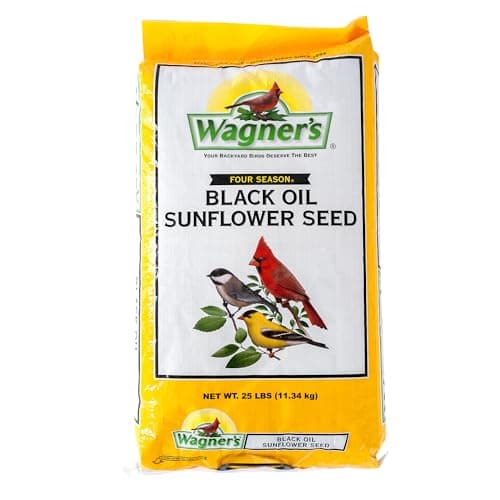
#1 · Best bulk buy
Wagner's Black Oil Sunflower Seed
Wagner's · The first bag of seed you should buy
One hundred percent black oil sunflower with nothing else in the bag, which is the seed the widest range of feeder birds actually eats, at the lowest cost per bird you will find.
Published specifications
- Ingredients
- 100% black oil sunflower
- Crude protein
- 14.0% min
- Crude fat
- 24.0% min
- Crude fiber
- 35.0% max
- Moisture
- 15.0% max
What it does well
- One ingredient, so there is nothing in the bag birds will throw on the ground
- Cardinals, chickadees, finches and sparrows all take it
- The cheapest way to fill a feeder that birds will actually empty
What it does not
- The hulls make a mess under the feeder and can kill the grass
- Squirrels like sunflower as much as birds do
Specifications above come from the manufacturer's own published listing: Wagner's Four Season black oil sunflower published analysis, Project FeederWatch — seed preferences.
#ad How we are funded · Price as of September 16, 2026
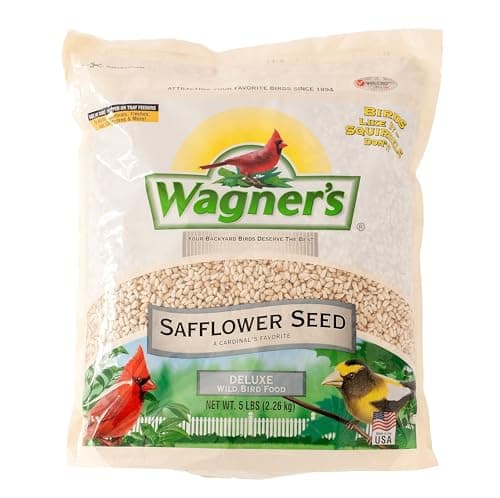
#2 · Best mid-size bag
Wagner's Safflower Seed
Wagner's · Cardinals, when squirrels have taken over
A single-ingredient seed cardinals and finches take readily and squirrels usually leave alone, which is the closest thing to a no-hardware squirrel answer, with an honest caveat.
Published specifications
- Ingredients
- 100% safflower seed
- Crude protein
- 17.0%
- Crude fat
- 25.0%
- Crude fiber
- 32.0%
- Moisture
- 13.0%
What it does well
- Cardinals, house finches, chickadees and titmice all eat it
- Most squirrels prefer sunflower and will move on if safflower is all there is
What it does not
- 'Squirrels do not like safflower' is a tendency, not a law — hungry squirrels eat it
- Costs more per pound than black oil sunflower and attracts fewer species
Specifications above come from the manufacturer's own published listing: Wagner's safflower published analysis.
#ad How we are funded · Price as of September 16, 2026
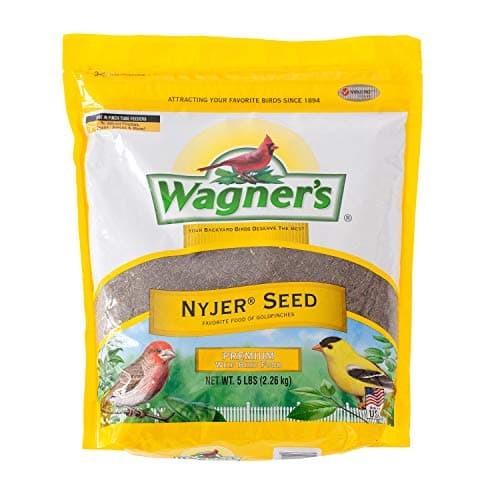
#3 · Never buy this in bulk
Wagner's Nyjer Seed
Wagner's · Goldfinches and nothing else
Straight nyjer, which is the only thing a finch feeder should ever be filled with. Buy the smallest bag that suits your traffic, because it goes stale.
Published specifications
- Ingredients
- 100% nyjer seed
- Crude protein
- 13.5% min
- Crude fat
- 8.0% min
- Crude fiber
- 7.0% max
- Moisture
- 15.0% max
- Ash
- 4.25% max
What it does well
- The seed that reliably brings in American Goldfinch, Pine Siskin and Common Redpoll
- Too small for most other birds, so a nyjer feeder stays a finch feeder
What it does not
- Expensive per pound and it dries out; old nyjer is the most common reason a finch feeder sits ignored
- Needs its own narrow-port feeder or most of it lands on the ground
Specifications above come from the manufacturer's own published listing: Wagner's nyjer published analysis, Project FeederWatch — nyjer and finches.
#ad How we are funded · Price as of September 16, 2026
#4 · The exception worth the premium
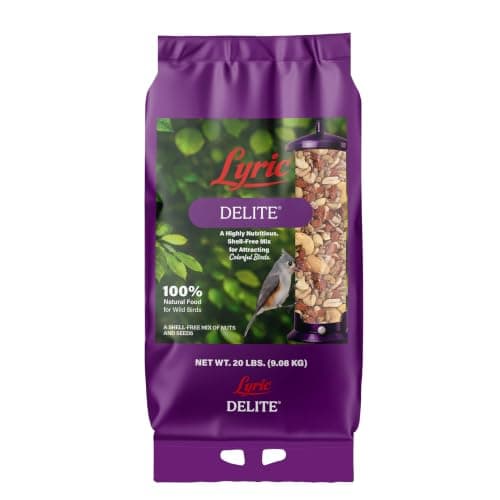
Lyric Delite No Waste Mix
Lyric · The genuinely filler-free no-mess bag
Shelled peanuts, sunflower kernels, pecans, pistachios and pumpkin seed: an expensive bag with no corn, no millet and nothing that ends up on the ground.
Published specifications
- Ingredients
- Shelled peanuts, sunflower kernels, pecans, pistachios, shelled pumpkin seed
- Crude protein
- 20% min
- Crude fat
- 35% min
- Crude fiber
- 10% max
- Moisture
- 12% max
What it does well
- No corn, no millet, no milo — nothing in the bag is filler
- Shell-free seed will not sprout under the feeder
- The highest fat content of any mix here, which matters in cold weather
What it does not
- Expensive per pound, though far less of it is wasted
- Nut-heavy mixes are exactly what squirrels want most
Specifications above come from the manufacturer's own published listing: Lyric Delite published ingredients and analysis.
#ad How we are funded · Price as of September 16, 2026
Common questions
Is buying bird seed in bulk worth it?
Yes if you can store it sealed and dry and will use it within a few months. A large bag that spoils costs more than several small ones. Judge cost per pound eaten, not per pound bought.
How long does bird seed keep?
It depends on the seed and the storage — in-shell sunflower keeps best, hulled mixes and nyjer keep worst. See how to store bird seed for shelf life and warning signs.
What is the best seed to buy in bulk?
Straight black-oil sunflower in the shell. One ingredient so nothing is rejected, and the hull protects the kernel in storage.
Should I buy nyjer in bulk?
No. Nyjer goes stale quickly and stale nyjer is the most common reason a finch feeder is ignored. Buy the smallest bag that covers a few weeks.
Does stored bird seed attract mice?
An open sack does. A sealed rigid bin does not. That is a second reason to solve storage before buying in quantity.