Feeder Types
The best bird feeders for woodpeckers
A woodpecker feeds hanging off the side of something, tail braced. Buy for that, and the rest of this is detail.
By Scooter M. · Published · Last updated
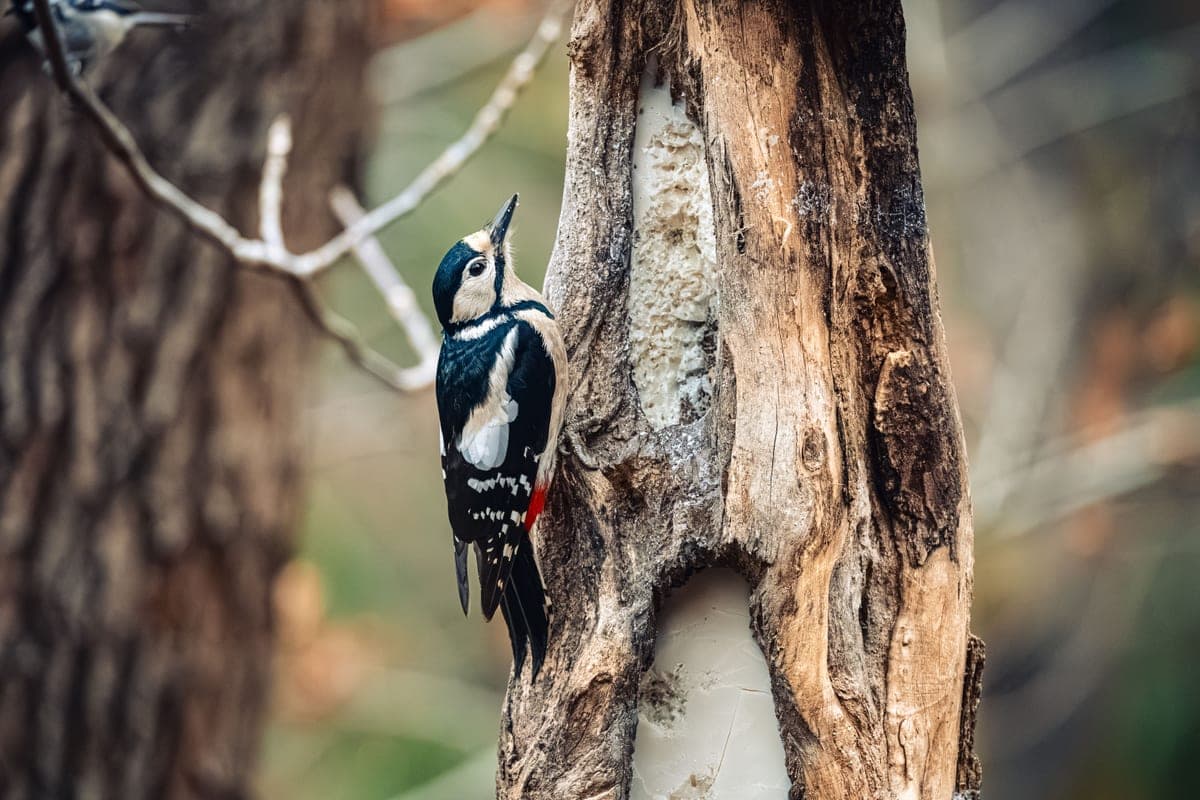
Woodpeckers want fat and a vertical surface to brace against. A tail-prop suet cage is the best single buy; an upside-down cage is the answer if starlings take over. A weight-closing peanut feeder covers the same birds and is the faster draw in autumn.
Seed & Sprig earns a commission when you buy through the links on this page, at no extra cost to you. It does not change which products we pick or the order we put them in — here is how we pick and here is how we are funded.
Quick picks
| # | Product | Best for | Price |
|---|---|---|---|
| 1 | NWno photo Nature's Way Tail-Prop Suet Feeder (CWF1) The extended cedar back panel is the whole point: a woodpecker braces its tail to feed. | Best feeder for woodpeckers | |
| 2 | NWno photo Nature's Way Upside-Down Suet Feeder (CWF2) Access from underneath only — the design FeederWatch specifically recommends. | Best if starlings have taken over | |
| 3 | 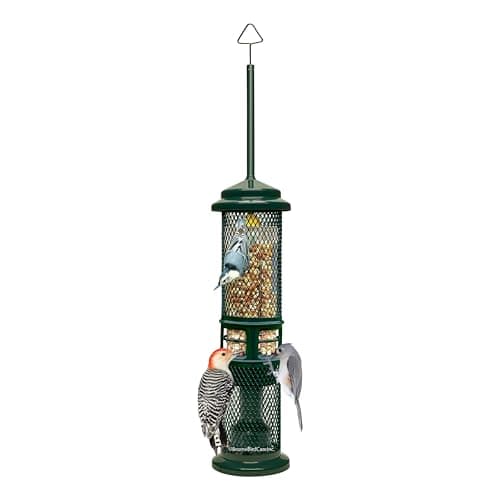 Brome Squirrel Buster Nut Feeder Peanuts pull woodpeckers in faster than suet, and this one closes under a squirrel. | Best peanut feeder | $92.01 · View on Amazon #ad How we are funded · Price as of October 22, 2026 |
| 4 | 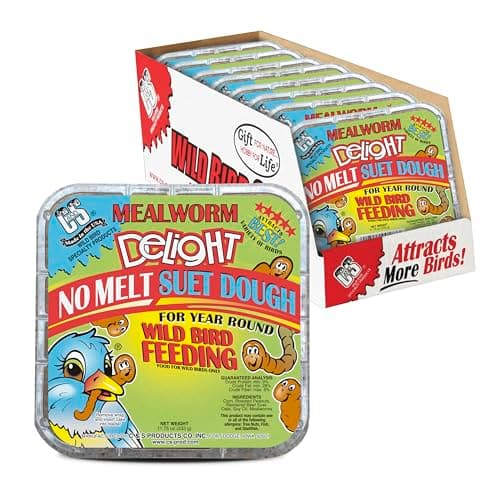 C&S Mealworm Delight No Melt Suet Dough No-melt dough at 24% minimum fat, so it holds shape into a warm afternoon. | Best suet to put in it | $19.69 · View on Amazon #ad How we are funded · Price as of October 22, 2026 |
| 5 | Cno photo Cole's Hot Meats Suet Cake Habanero-infused no-melt cake. Cole's is honest that chilies are not a repellent. | Best when squirrels take the cake | |
| 6 | NWno photo Nature's Way Cedar Hopper with Suet Cages (CWF19) Seed hopper with a suet cage on each end, off a single hook. | Best two-in-one |
Rows link to the full write-up further down this page. The price button goes to Amazon.
Most advice about attracting woodpeckers starts with food. It is the wrong end of the problem. Food gets a woodpecker to arrive; posture decides whether it stays long enough to matter, and posture is a property of the feeder, not the cake.
Audubon describes the Downy Woodpecker — the one almost everyone gets first — as foraging on trunks and major limbs but also on minor branches and twigs, often climbing about acrobatically and hanging upside down. It is a bird built to work a vertical surface while holding on. Give it a flat perch and it is out of its element. Give it something to grip and brace against and it will feed for minutes at a time.
The good news is that this is one of the cheapest problems in bird feeding to solve. A suet cage is the least expensive feeder on the shelf, and the version that works costs barely more than the version that does not.
What a woodpecker needs from a feeder
| Requirement | Why it matters | What fails it |
|---|---|---|
| A vertical surface with grip | Woodpeckers cling and climb rather than perch. Wire mesh or a cedar back panel both work. | Flat perches and open trays |
| A tail prop, for the bigger species | A hairy, red-bellied or pileated woodpecker braces its stiff tail feathers against the surface below it. | A bare cage with nothing under the cake |
| High-fat food | Audubon has the Downy as mostly an insect eater that will eat suet at feeders. Fat is the substitute for insects. | Filler-heavy seed mixes |
| A roof, or at least shade | Rain ruins a suet cake and warm sun turns plain suet greasy. | Open wire cages in the open |
How we ranked these
On published manufacturer specifications and on what institutional sources say about woodpecker behavior — there is no testing claim here, because we have not run a test program. Within that we weighed whether the design gives a woodpecker something to brace against, whether the food it holds is a food woodpeckers actually take, how badly it leaks to starlings and squirrels, and how quickly it can be cleaned. Full criteria on the methodology page.
Cleaning matters more with suet than with seed, because suet is animal fat. Project FeederWatch asks for cleaning every week or two and more often in heavy use or wet weather, and a cage caked in old fat is a genuinely unpleasant thing to leave in a yard.
Suet or peanuts?
Both, eventually, but they do different jobs. Project FeederWatch credits a suet cage with attracting woodpeckers, nuthatches and chickadees when it is designed with access from the bottom, and suet is the classic cold-weather offering because energy density is what counts when it freezes.
Peanuts are the faster draw. FeederWatch notes that smaller birds like chickadees, nuthatches and titmice have more success on shelled peanuts, and in practice a peanut feeder is often the thing that gets a woodpecker to notice your yard at all. The catch is that peanuts are the single most squirrel-attractive thing you can hang up, which is why the peanut pick here has a weight mechanism rather than being the cheapest option. The full peanut feeder comparison is here.
The starling problem
Starlings love suet, arrive in groups, and can empty a cake in a day. This is the single most common reason people give up on suet, and it has a specific fix that FeederWatch names directly: provide suet in starling-proof feeders, meaning feeders that allow access to the suet only from the bottom.
An upside-down cage is exactly that. Woodpeckers, nuthatches and chickadees hang underneath without difficulty because hanging is what they do; starlings largely cannot manage it. It is not perfect and some woodpeckers take a week to work it out, but it is the one design change that reliably shifts the balance. The wider bully-bird problem is covered here.
The squirrel problem
A suet cage is the easiest thing in a feeding station for a squirrel to defeat, because the cake is a solid object it can simply pull through the wire or carry off with the feeder attached. There are three honest answers, in order of how well they work.
- Put it on a baffled pole. The same answer as everything else. A cage on a hook on a branch is a squirrel feeder with extra steps. Baffle sizing is here.
- Buy the mechanism. A weight-closing peanut feeder covers most of the same birds and fights back on its own.
- Change the cake. A habanero-infused suet cake is the last resort, and worth reading the honest version of before you buy it — hot pepper seed and suet, examined.
Which woodpeckers you can realistically expect
Downies are the common one and the easy one: Audubon calls the Downy Woodpecker a permanent resident in many areas, found from wilderness to suburban yards, and generally favoring deciduous trees. If you have any mature broadleaf trees within sight, downies are probably already nearby.
Bigger species are a function of your trees, not your feeder. Hairy and red-bellied woodpeckers turn up in well-wooded neighborhoods, and a pileated woodpecker needs large mature timber and will ignore a small cage even if it visits. No purchase changes this. What the tail-prop design does is make sure that when a larger bird does arrive, it can actually feed rather than scrabbling for a grip and giving up.
Where to put it
Against or near a tree trunk if you have one, because that is the surface woodpeckers are already working. FeederWatch asks for feeders close to natural cover such as trees or shrubs at roughly ten feet from dense branches, which for suet is an easy brief to meet — the whole point is to be near the trees.
Height is less critical than for seed feeders; chest height is fine and makes refilling and cleaning realistic. What matters more is that the cake is shaded for part of the day. The full placement rules are here.
Which suet, and which format
The cage decides who can feed. What goes in it decides whether they come back, and the formats are not interchangeable.
Plain rendered suet is the cheapest and the highest in fat, and it is a cold-weather product only. Above roughly room temperature it softens and turns greasy, and soft fat can coat a bird's feathers — which is a real problem for a bird that relies on them for insulation, not a fussy one.
No-melt dough is suet cut with corn, oats and vegetable oil so it holds its shape in warm weather. It is the sensible default for most of the year, and it is what both of our suet picks are. The trade shows up on the ingredient panel: corn is usually first, and corn is what starlings and grackles are there for.
Plugs and balls are the same material in different shapes, for log feeders and for hanging holders respectively. They are not better food. They are a different mounting system, and the standard rectangular cake fits the widest range of cages, which is a reason to stay with it unless you have a specific feeder. Suet formats and what goes in them are covered in full here.
One thing worth knowing about all of them: suet is animal fat and it does go rancid. Buy the small pack rather than the value box unless you are running several cages, and store the spare somewhere cool — the storage rules apply to suet as much as seed.
When to start
Autumn, and there is a reason beyond tradition. Woodpeckers are mainly insect eaters — Audubon has the Downy on mostly insects, especially beetles and ants, with seeds and berries secondary — so the moment a suet cage becomes genuinely valuable to them is the moment the insects disappear.
That also happens to be when you get the best result. A cage put up in September is established before the first hard cold, and the birds that find it then are the ones that use it all winter. The fall calendar covers the timing in full.
Summer suet is fine too, with one change: switch to a no-melt dough and take it down entirely in a genuine heatwave. Summer feeding has its own considerations. Peanuts are the other woodpecker food worth buying well.
What each pick costs you
- The tail-prop cage is an open cage, so it is easy for both squirrels and starlings, and it holds one cake — which means refilling often in cold weather.
- The upside-down cage is not squirrel-resistant in any way, and some woodpeckers take a week to work out how to use it.
- The peanut feeder is expensive for something that holds 1.3 lb, and shelled peanuts spoil in damp weather.
- The no-melt suet has corn as its first ingredient, so a share of it still goes to starlings and grackles.
- The hot pepper cake carries a real handling caveat: Cole's recommends rubber gloves and advises against children handling chili-infused products.
- The combination hopper has no squirrel mechanism at all, and its end-mounted suet cages put the cakes within easy reach.
The picks in full
#1 · Best feeder for woodpeckers
Nature's Way Tail-Prop Suet Feeder (CWF1)
Nature's Way · Woodpeckers, including the big ones
A single-cake suet cage with an extended cedar back panel that gives a woodpecker somewhere to brace its tail, which is the difference between a visit and a feeding session.
Published specifications
- Dimensions
- 12" H x 7.875" L x 3" W
- Capacity
- 1 standard suet cake
- Materials
- Premium cedar with rust-free hardware
What it does well
- The tail prop is not marketing: woodpeckers brace their tails when they feed
- One cake at a time means suet does not sit out going rancid
What it does not
- The open cage is easy for squirrels and starlings
- Holds one cake, so it needs refilling in cold weather
Specifications above come from the manufacturer's own published listing: Nature's Way CWF1 published specifications.
#2 · Best if starlings have taken over
Nature's Way Upside-Down Suet Feeder (CWF2)
Nature's Way · Keeping starlings off the suet
Suet reachable only from underneath, which woodpeckers, nuthatches and chickadees manage easily and starlings mostly do not.
Published specifications
- Dimensions
- 8.5" L x 8.5" W x 4.13" H
- Capacity
- 1 suet cake (8 oz)
- Materials
- Premium cedar with rust-free hardware
What it does well
- Genuinely reduces starling monopolies without excluding the birds you want
- The roof shades the cake, which slows melting
What it does not
- Some woodpeckers take a week to work it out
- Not squirrel-resistant in any way
Specifications above come from the manufacturer's own published listing: Nature's Way CWF2 published specifications.
#3 · Best peanut feeder
Brome Squirrel Buster Nut Feeder
Brome · Shelled peanuts without feeding the entire local squirrel population
A peanut feeder with the weight-closing shroud, which matters more here than anywhere else, because peanuts are the single most squirrel-attractive thing you can hang up.
Published specifications
- Capacity
- 1.3 lb
- Food
- Shelled peanuts, other nuts, or dried fruit
- Mechanism
- Weight-closing shroud
What it does well
- Peanuts draw woodpeckers, jays, titmice and nuthatches faster than seed does
- The mechanism is the only realistic way to run peanuts near squirrels
What it does not
- Expensive for a feeder that holds 1.3 lb
- Shelled peanuts spoil in damp weather and have to be kept dry
Specifications above come from the manufacturer's own published listing: Brome — Squirrel Buster Nut Feeder (manufacturer store).
#ad How we are funded · Price as of October 22, 2026
#4 · Best suet to put in it
C&S Mealworm Delight No Melt Suet Dough
C&S · Suet that survives a warm afternoon
A no-melt suet dough with mealworms in it, which is the version to buy whenever the temperature climbs, because plain rendered suet turns to grease and coats birds' feathers.
Published specifications
- Ingredients
- Corn, roasted peanuts, rendered beef suet, oats, soy oil, mealworms
- Crude protein
- 11.0% min
- Crude fat
- 24.0% min
- Crude fiber
- 12.0% max
- Format
- Standard cake, fits a single-cake cage
What it does well
- The no-melt formulation holds its shape in warm weather, unlike plain suet
- Mealworms in the dough pull in birds that ignore a plain seed cake
What it does not
- Corn is the first ingredient, so a share of it goes to starlings and grackles
- No suet is truly heatproof; in a hot spell, take it down
Specifications above come from the manufacturer's own published listing: C&S Mealworm Delight published ingredients and analysis.
#ad How we are funded · Price as of October 22, 2026
#5 · Best when squirrels take the cake
Cole's Hot Meats Suet Cake
Cole's · Keeping a suet cage for the woodpeckers rather than the squirrels
The same habanero idea in a no-melt cake, which matters because a suet cage is the easiest thing in the yard for a squirrel to simply carry away.
Published specifications
- Ingredients
- Corn, roasted peanuts, rendered beef suet, oats, sunflower meats, red pepper, soy oil
- Size
- 11.75 oz cake
- Format
- No-melt, sold for year-round feeding
- Guaranteed analysis
- Not published by Cole's
What it does well
- No-melt, so it holds shape in warm weather when plain suet turns greasy
- Cole's names bluebirds, woodpeckers, nuthatches, finches and cardinals among the birds it attracts
What it does not
- Corn is the first ingredient, so a share of it still feeds starlings and grackles
- Same handling caveat as the seed — Cole's recommends gloves with chili-infused products
Specifications above come from the manufacturer's own published listing: Cole's Hot Meats Suet Cake — published ingredients and size.
#6 · Best two-in-one
Nature's Way Cedar Hopper with Suet Cages (CWF19)
Nature's Way · Running seed and suet from one hook
A six-quart cedar hopper with a suet cage on each end, which covers seed-eaters and woodpeckers from a single hanging point.
Published specifications
- Dimensions
- 8" L x 12" W x 8" H
- Capacity
- 6 quarts of seed plus 2 suet cakes
- Materials
- Premium cedar with rust-free hardware
What it does well
- Two food types from one hook, which suits a small yard
- The roof keeps seed dry, which is the whole point of a hopper
What it does not
- No squirrel mechanism whatsoever
- Suet cages on the ends put suet within easy reach of squirrels and raccoons
Specifications above come from the manufacturer's own published listing: Nature's Way CWF19 published specifications.
Common questions
What is the best bird feeder for woodpeckers?
A suet cage with an extended back panel that a woodpecker can brace its tail against. If starlings are already a problem, buy the upside-down version instead, which allows access only from underneath.
Do woodpeckers eat from bird feeders?
Yes. Audubon notes that the Downy Woodpecker will eat suet at bird feeders, and Project FeederWatch credits suet cages with attracting woodpeckers, nuthatches and chickadees. Peanuts work as well as suet, often faster.
What do you put in a bird feeder for woodpeckers?
Suet or peanuts. Both are high-fat, which is the point — woodpeckers are mainly insect eaters, and fat is the winter substitute. See suet and suet cakes.
How do I keep starlings off my suet feeder?
Use an upside-down cage. FeederWatch's guidance is to provide suet in starling-proof feeders that allow access to the suet only from the bottom.
How long does it take woodpeckers to find a suet feeder?
Days to a few weeks, like any new feeder. If nothing has come after a fortnight, the usual causes are placement or a lack of mature trees nearby rather than the food — work through the checklist here.