Care & Season
Solar bird bath fountains, wigglers and drippers
Still water gets ignored. Moving water gets found. The three ways to move it have completely different requirements.
By Scooter M. · Published · Last updated
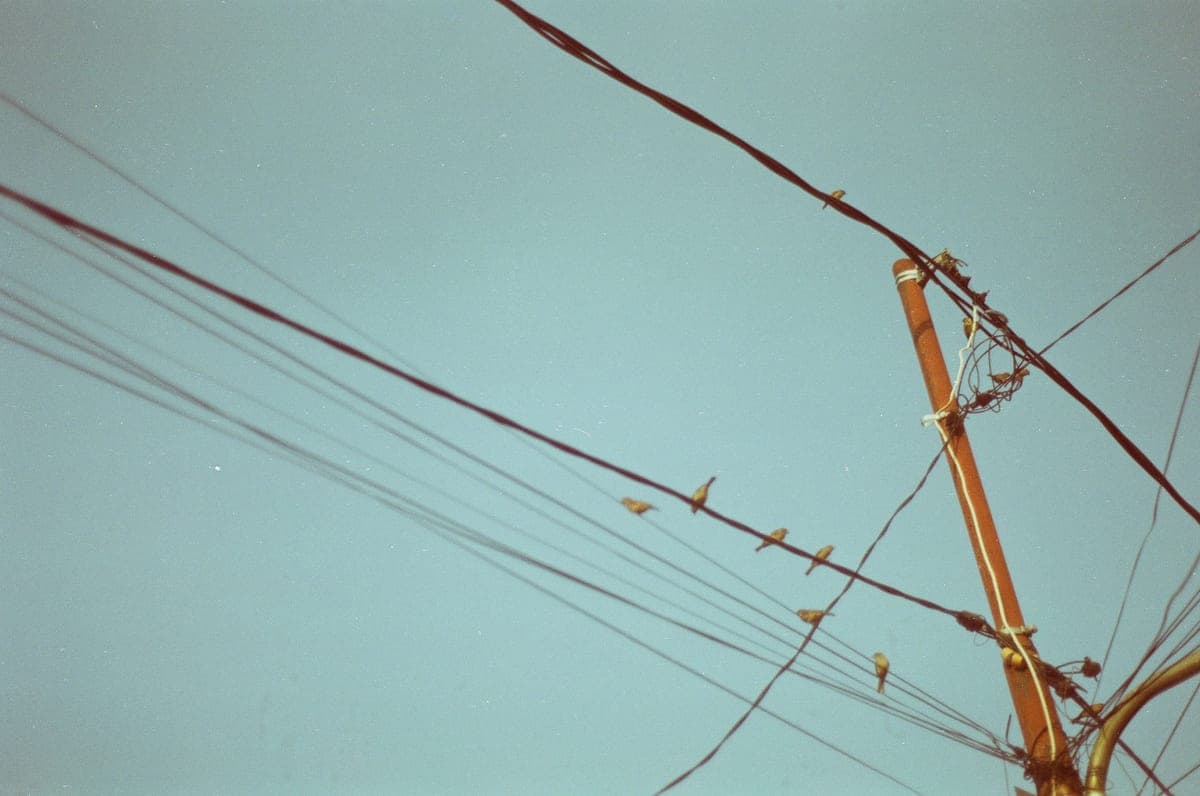
A solar fountain pump is the cheapest moving water and needs direct sun; a battery wiggler ripples the surface in shade and in winter; a hose-fed dripper makes the sound that pulls birds in but needs an outdoor faucet. Match the method to what your yard actually has.
Seed & Sprig earns a commission when you buy through the links on this page, at no extra cost to you. It does not change which products we pick or the order we put them in — here is how we pick and here is how we are funded.
Quick picks
| # | Product | Best for | Price |
|---|---|---|---|
| 1 | 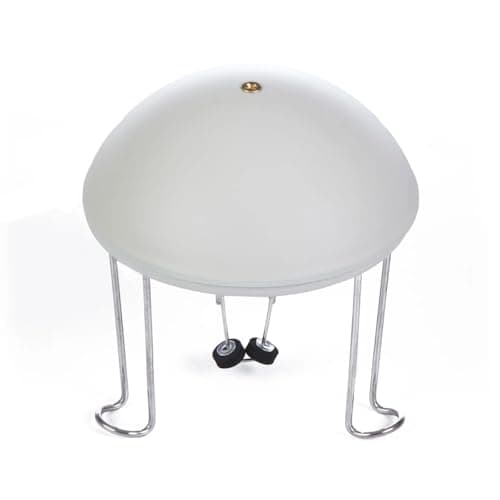 API 4WW Water Wiggler Battery agitator that works in shade and in a heated bath. The only option that runs all winter. | Best overall | $44.99 · View on Amazon #ad How we are funded · Price as of October 3, 2026 |
| 2 | 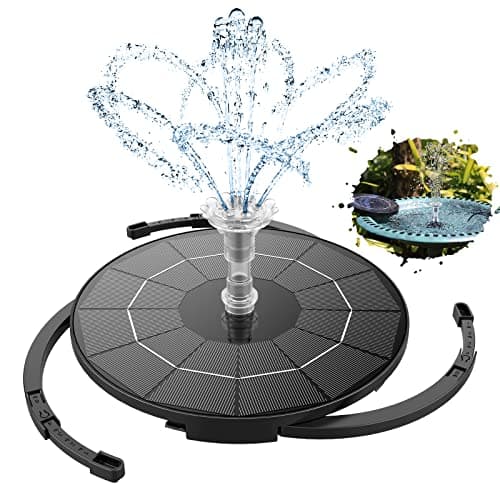 AISITIN 3.5W Solar Fountain Pump 3.5 watts with the panel on a separate cable, so the bath can sit in shade while the panel sits in sun. | Best solar fountain | $19.99 · View on Amazon #ad How we are funded · Price as of October 3, 2026 |
| 3 | 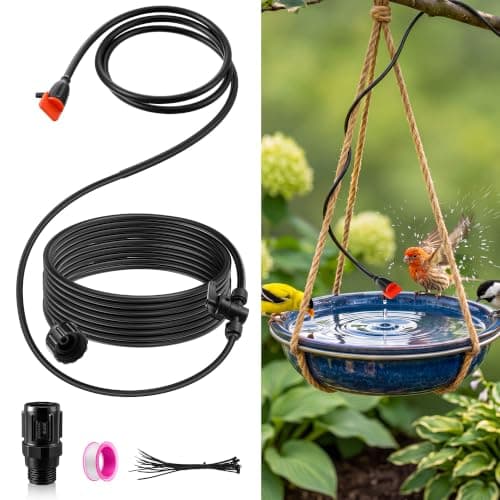 Saillong Bird Bath Dripper Kit A hose-fed dripper with a pressure regulator. Sound plus ripple, if you have an outdoor faucet. | Best for drawing new birds in | $16.99 · View on Amazon #ad How we are funded · Price as of October 3, 2026 |
| 4 | 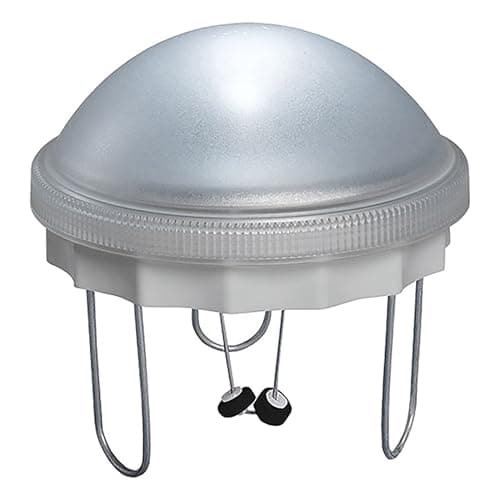 API Bird Scene 8WW Solar Water Wiggler The same ripple without D-cells, at the cost of stopping whenever the sun does. | Best no-battery wiggler | $61.27 · View on Amazon #ad How we are funded · Price as of October 3, 2026 |
| 5 | 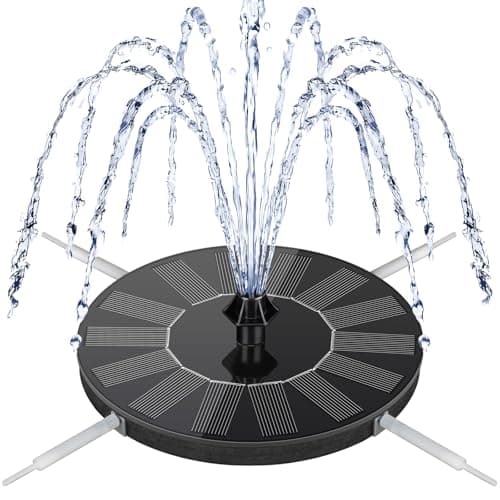 Mademax 1.4W Floating Solar Fountain Pump A floating disc with brackets. Modest spray, dies under cloud, costs very little. | Cheapest way to try it | $16.79 · View on Amazon #ad How we are funded · Price as of October 3, 2026 |
Rows link to the full write-up further down this page. The price button goes to Amazon.
A bird bath is the cheapest way to add a species to your yard, and a still bird bath is the most ignored object in it. Birds find water by sight and sound, and a flat, motionless disc of water gives them neither — which is why the accessory aisle is full of things whose only job is to make the surface move.
They work. They also have requirements that the listings bury, and buying the wrong one for your yard is the usual outcome: a solar fountain in a shaded corner, or a dripper with no faucet in reach. This page is about matching the method to the site. If you are still choosing a basin, our bird bath and winter water guide covers depth, placement and the freezing problem, and hanging and deck-rail baths covers the no-ground options.
Three methods, three completely different requirements
| Method | Needs | Gives you | Runs in winter? |
|---|---|---|---|
| Solar fountain pump | Direct sun on the panel; a basin deep enough to submerge the pump | A visible spray, and the most movement for the money | No |
| Battery wiggler | Two D-cells, replaced every month or two | A rippled surface, no spray, no splash-out | Yes — and it can go in a heated bath |
| Solar wiggler | Full sun, nothing else | The same ripple with no batteries to buy | No |
| Hose dripper | An outdoor faucet and a hose run | Sound as well as movement, which travels furthest | No — drain it before a freeze |
Read the last column before the price. In most of the country the months when open water is hardest for birds to find are exactly the months when solar is weakest and a hose is a liability. That is why our top pick is a battery device: it is the only one of the four that works in January, which is when water matters most.
How we chose these
On published manufacturer and listing specifications, checked against live listings in October 2026 so that every pick is currently purchasable. We have not run these in a yard and make no claim to have measured spray height, battery life or bird response. Ranking went: what the device needs to work at all (sun, batteries, plumbing), then whether it suits a shallow basin rather than a pond, then what the maker publishes — wattage, battery life, pressure regulation — and then price. Where a maker publishes nothing useful, we say so. Our full criteria are here.
One category-wide caveat worth stating up front: this is a cheap, high-churn corner of the market. Solar pumps in particular are sold under dozens of near-identical brand names, and the ones we picked are the listings that publish a wattage and a spray height rather than the ones with the best photography.
Why moving water works
Two mechanisms, and they are worth separating because they point at different products.
Movement is visible. A glint of moving water is visible from much further away than a flat surface, especially from above, which is where birds are. Any of these devices does this.
Sound carries. The irregular tick of water dripping is the oldest trick in the hobby, and it is the one people report working on species that otherwise ignore a yard. Only the dripper does this properly: a fine solar spray is close to silent, and a wiggler is deliberately silent.
We are describing hobby practice rather than a controlled study, and it is worth saying that plainly. What is not in doubt is the underlying need: birds require drinking and bathing water year-round, and Project FeederWatch treats water as part of a feeding station rather than an ornament.
The mosquito question, answered properly
Standing water in a yard breeds mosquitoes, and a bird bath is standing water. Moving water does genuinely help — larvae need still water at the surface — and one of our picks advertises exactly that. But a wiggler is not a substitute for the one habit that actually controls it.
The CDC's guidance for a yard is specific and includes bird baths by name: once a week, empty and scrub, turn over, cover, or throw out any items that hold water like tires, buckets, planters, toys, pools, birdbaths, flowerpot saucers, or trash containers. Weekly emptying and scrubbing is the control. An agitator reduces the risk between cleanings; it does not replace them.
That weekly scrub is also the hygiene floor for the birds. Water fouls faster than seed — droppings, feathers, algae — and a dirty bath is a disease risk in the same way a dirty feeder is. The cleaning routine we use for feeders applies here too, and a bath with a lift-out bowl makes it a two-minute job.
Solar fountains: what the wattage means
Solar pumps are sold on wattage, and the number matters more than the nozzle count.
A 1.4-watt floating disc produces a modest plume — our cheap pick publishes a range from four inches to twenty-seven, which tells you how much the light conditions decide the result. A 3.5-watt pump pushes noticeably more water, and more importantly our pick at that wattage puts the panel on a cable, separate from the pump.
That separation is the single most useful feature in the category, because it resolves a contradiction. Baths belong in part shade near cover, where birds feel safe approaching and the water stays cooler. Solar panels belong in open sun. A floating all-in-one forces you to choose; a separated panel does not.
Two honest limits on all of them. They stop when the sun does, including under passing cloud, so the fountain you admire at noon is off at six. And small pumps clog — algae, feathers, grit, seed hulls blown off the feeder — so expect to rinse the impeller regularly or watch it die.
Wigglers: the unglamorous winner
A wiggler is a small sealed device that sits in the water and oscillates. No spray, no plumbing, no splash: just a continuously disturbed surface.
It is our top pick for three reasons the fountains cannot match. It works in shade, so the bath can go where the birds want it. It does not empty a shallow basin through splash and evaporation, which a spray in a twelve-inch bowl absolutely will. And the battery version runs through winter — API's own listing says it may be used in a heated bath, which makes it the one moving-water product that works in the season when open water is scarcer than food.
The cost is D-cells every month or two, and the silence. If your goal is to pull in birds that are not yet visiting, the dripper does more.
Drippers: the best results, the most plumbing
A dripper is a hose-fed arm that releases single drops into the bath. It adds sound and ripple together, and it is what people reach for when they want to attract migrating birds rather than entertain residents.
The engineering detail that separates a good kit from a bad one is pressure regulation. Mains pressure through a bare tube is a squirt, not a drip; our pick includes a 25 PSI regulator and a flexible arm so the rate can be tuned down to actual drops. The kit also runs thirty-plus feet of tubing, which is what you need to reach a bath sited away from the house.
The costs are real: you need an outdoor faucet, you are leaving a tap partly open while it runs, and in a cold climate it has to be drained and disconnected before the first freeze. Three seasons of excellent results, one season of storage.
Keeping a pump alive
Solar fountain pumps have a reputation for dying in a season, and most of the time the cause is maintenance rather than manufacturing. These are tiny impellers in open water that collects everything the yard produces.
- Rinse the impeller weekly in summer. Algae, feather barbs, grit and seed hulls blown off a nearby feeder are what seize a pump. Both of our solar picks tell you to keep the pump in clean water and clear it regularly, and that instruction is the difference between one season and several.
- Never run it dry. A pump that keeps spinning in an empty bowl on a hot afternoon is a pump with a cooked motor. This is the strongest practical argument for a wiggler in a small basin: it does not care about water level the same way.
- Lift it out before the first freeze. Water expanding inside a pump body cracks it. Store the pump and panel indoors over winter and the same unit comes back in spring.
- Keep the panel clean too. A dusty or pollen-filmed panel loses output, and the symptom looks exactly like a failing pump — weak spray that stops early in the afternoon.
Battery wigglers need less: fresh D-cells, and a wipe when the housing gets slimy. That simplicity is most of why our top pick is the dullest product on the page.
Siting it for sound
If you buy the dripper — the option with the best results — where you put it matters as much as the hardware, because you are buying sound and sound is directional.
Hard surfaces carry it. A bath against a fence, a wall or a dense hedge reflects the drip outward instead of letting it dissipate, which is why a bath tucked into a corner of a yard often outperforms one in the open middle. Height helps too: a drop falling a few inches into shallow water is louder than one falling a few millimeters.
The counter-pressure is safety. Birds want an escape route and a view, so a bath pressed into a dense shrub where a cat could wait is worse than a slightly quieter spot with clear sightlines and cover a short flight away. The compromise most people land on: a few feet out from cover, with a hard surface behind it, where cats cannot stage an ambush.
And run it on a schedule rather than continuously. An hour in the morning, when birds are most active, uses a fraction of the water and produces most of the benefit.
Matching the device to the basin
The commonest disappointment here is a mismatch of scale, so work from the bath you own.
- A shallow 10-12 inch bowl, hanging or on a rail: a wiggler. A spray will throw water over the edge and leave the bowl dry in an afternoon.
- A traditional pedestal bath, 18-20 inches: a solar fountain works, and the separated-panel version works wherever the bath is sited.
- A ground-level basin near a faucet: the dripper, for the best results of anything on this page.
- A heated bath in winter: the battery wiggler, which is rated for it.
And a reminder from the basin side of the decision: depth is what decides whether birds use a bath at all. Two inches at the deepest point is plenty, and if your bath is deeper, flat stones in the bottom fix it for free — the detail covered in our water guide.
What we would buy
- One purchase, year-round, any yard: the battery wiggler. Unexciting and the most useful thing here.
- You want a visible fountain and have a decent basin: the 3.5-watt separated-panel pump.
- You want new species, and have a faucet: the dripper kit, run on a timer habit rather than continuously.
- You are not sure any of this works in your yard: the cheap floating disc. Two weeks of evidence for very little money.
Whichever you choose, the water underneath it still has to be clean and shallow. Moving water is an amplifier: it makes a good bath far more effective, and it makes a neglected one a more visible neglected one.
The picks in full
#1 · Best overall
API 4WW Water Wiggler
API · Moving water in any bath, including a heated one in winter
A battery agitator that sits in the bath and keeps the surface rippling. No pump, no hose, no sun required — the only moving-water option that works in a shaded yard and through a freeze.
Published specifications
- Power
- Two D-cell batteries, not included
- Battery life
- Up to two months of continual use, per API
- Action
- Agitator creates continuous ripples rather than a spray
- Winter use
- May be used in a heated bird bath, per the listing
- Size
- About 5" across
- Model
- 4WW
What it does well
- Works in shade, under cloud and in winter, which no solar product here does
- Ripples rather than spray, so it does not empty a small bath or soak a deck
- API also makes the heated baths we recommend, and says this can go in one
What it does not
- D-cells are a recurring cost and the listing does not include them
- It moves water without filtering it, so you still change and scrub the bath
- No spray means no sound of falling water, which is part of what draws birds from a distance
Specifications above come from the manufacturer's own published listing: API 4WW Water Wiggler — published listing (power, battery life, action, winter use).
#ad How we are funded · Price as of October 3, 2026
#2 · Best solar fountain
AISITIN 3.5W Solar Fountain Pump
AISITIN · A real fountain spray, with the panel out of the water
A 3.5-watt pump with the solar panel on a separate cable, so the panel can sit in sun while the pump sits in a shaded bath. The separated design is what makes it more useful than the cheap floating discs.
Published specifications
- Power
- 3.5W solar panel, separated from the pump on a cable
- Nozzles
- Eight: two rotating, four double, four vertical, per the listing
- Stand
- Retractable one-piece stand to hold the pump centered in a basin
- Requirements
- Pump must be fully submerged; needs regular cleaning to avoid clogging
- Model
- 3.5wPump
What it does well
- The separate panel solves the real problem: baths belong in part shade, panels belong in sun
- Highest wattage of the solar pumps here, which means a spray you can actually see
- Nozzle choice lets you drop the spray height until it stops splashing out
What it does not
- Any solar pump stops when the sun does, including under passing cloud
- Small pumps clog with algae, feathers and grit; expect to rinse it weekly in summer
- A spray loses water to evaporation and splash, so a small bath needs topping up more often
Specifications above come from the manufacturer's own published listing: AISITIN 3.5W Solar Fountain Pump — published listing (wattage, separated panel, nozzles, stand).
#ad How we are funded · Price as of October 3, 2026
#3 · Best for drawing new birds in
Saillong Bird Bath Dripper Kit
Saillong · The dripping sound that pulls migrating birds in, if you have an outdoor faucet
A hose-fed dripper on a flexible arm, with a pressure regulator so it drips rather than squirts. Dripping water is the most effective moving-water trick there is, and this is the hardware for it.
Published specifications
- Tubing
- 39" serpentine arm with adjustable dripper, plus 33 ft of extension tubing
- Pressure
- 25 PSI preset regulator included
- Fittings
- 3/4" coupler and on/off valve; connects to an outdoor faucet
- Materials
- PVC hose, aluminum alloy and PE arm, PP connectors
- Installation
- No tools; wrap connectors with tape, per the listing
- Model
- SL-Saillong-1918
What it does well
- Sound plus ripple, which is the combination that brings birds in from outside the yard
- The pressure regulator is the part cheap drippers omit, and it is why this drips instead of splashing
- Works in full shade, unlike every solar option here
What it does not
- It needs an outdoor faucet and a hose run, which rules out balconies and most front yards
- It uses mains water continuously while running, so it is a tap you have to remember
- Freezing weather means draining and disconnecting it, so it is a three-season product in cold climates
Specifications above come from the manufacturer's own published listing: Saillong Bird Bath Dripper Kit — published listing (tubing, regulator, fittings, materials).
#ad How we are funded · Price as of October 3, 2026
#4 · Best no-battery wiggler
API Bird Scene 8WW Solar Water Wiggler
API · Rippling water with no batteries to buy
The solar version of the same idea: drop it in, leave it, and it agitates whenever the sun is on it. Convenience bought at the price of working only in full light.
Published specifications
- Power
- Solar; no batteries or wiring
- Light needs
- Full sunlight for best results, per API
- Assembly
- None required
- Size
- 5"
- Model
- 8WW
What it does well
- No batteries to replace, ever
- Nothing to assemble and nothing to plug in: it floats and runs
- Same ripple-not-spray behavior that suits small and shallow baths
What it does not
- Needs full sun, so it stops in the shade and on heavy overcast days — the opposite of the battery version
- Costs more than the battery model up front
- API publishes no run-on time after the sun goes, so treat it as a daylight device
Specifications above come from the manufacturer's own published listing: API Bird Scene 8WW Solar Water Wiggler — published listing (solar power, light needs, size).
#ad How we are funded · Price as of October 3, 2026
#5 · Cheapest way to try it
Mademax 1.4W Floating Solar Fountain Pump
Mademax · The cheapest way to find out whether moving water helps in your yard
A floating disc that starts spraying within seconds of direct sun, with brackets to stop it drifting into the rim. The least you can spend on moving water, with the limits that implies.
Published specifications
- Power
- 1.4W integrated solar panel; no battery or wiring
- Spray height
- 4" to 27.5", depending on nozzle and light, per the listing
- Included
- 8 nozzles and 4 adjustable brackets
- Start-up
- Runs within about 3 seconds of direct sun, per Mademax
- Limitation
- Mademax states it does not work without direct sunlight
- Model
- AS10B-YJ001
What it does well
- Cheap enough to treat as an experiment rather than a commitment
- The brackets fix the usual floating-pump problem of drifting and spraying over the edge
- Starts almost instantly in sun, so you can see immediately whether birds respond
What it does not
- No separate panel: the pump has to sit where the sun is, which is rarely where the bath should be
- At 1.4W the spray is modest, and it dies the moment a cloud passes
- Mademax recommends a larger bath to stop splash-out, which rules out the small basins songbirds prefer
Specifications above come from the manufacturer's own published listing: Mademax 1.4W Solar Bird Bath Fountain — published listing (wattage, spray height, nozzles, sun requirement).
#ad How we are funded · Price as of October 3, 2026
Common questions
Do solar bird bath fountains work in the shade?
No. Solar pumps need direct sun on the panel and stop under cloud. A pump with the panel on a separate cable lets the bath sit in shade while the panel sits in sun, which is the practical workaround.
What is a water wiggler and is it better than a fountain?
It is a small device that agitates the surface without spraying. It is better for shallow baths, shaded sites and winter use; a fountain is better if you want a visible plume and have a larger basin in sun.
Does moving water stop mosquitoes in a bird bath?
It helps, because larvae need still water, but it is not the control. The CDC's advice is to empty and scrub items that hold water — bird baths included — once a week.
Will a fountain empty my bird bath?
In a small or shallow bowl, yes: spray and splash-out lose water fast, and evaporation adds to it. Use a wiggler in a 12-inch bowl and save the fountain for a full-size basin.
Can I run moving water in winter?
Only the battery wiggler, which API lists as usable in a heated bath. Solar stops in poor light and a hose dripper must be drained before a freeze.